
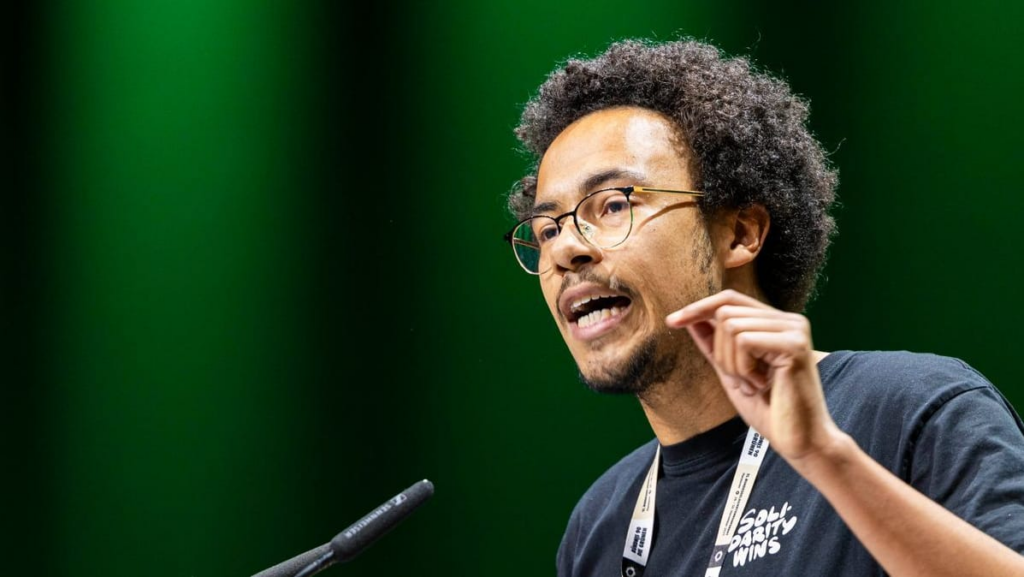
Luis Bobga, the head of the Green Youth party in Germany, is embroiled in a growing controversy following his infamous “Son of a Whore” video, which has drawn significant media attention and public outrage. The Green Party scandal erupted when Bobga was accused of indirectly insulting CSU leader Markus Söder through his lip-syncing of a rapper’s lyrics, spurring backlash from various political factions. As the Munich public prosecutor’s office investigates the situation, Bobga’s actions have led to a criminal complaint being filed, marking a potential turning point in his burgeoning career. Critics within his party and beyond are calling for accountability, as accusations of hate speech and insult circulate widely online. Meanwhile, Bobga himself expresses confusion over the severity of the backlash, questioning why this incident has overshadowed serious issues within German politics, including Söder’s policies that he opposes.
In recent developments in German political discourse, Luis Bobga has become a focal point of public and media scrutiny due to a controversial social media post that has sparked a scandal within the Green Party. This incident, involving allegations of insult and online video criticism, illustrates the growing tensions in German politics surrounding freedom of speech and accountability. Bobga’s remarks have invoked a strong response, particularly from the Christian Social Union (CSU), with leaders demanding an apology and consequences for what they deem hate speech. As the situation unfolds, discussions around the implications of political expressions in the digital age become increasingly prevalent, reflecting the intricate relationship between social media and political reputations.
The Luis Bobga Insult Controversy Explained
Luis Bobga, a prominent figure in the Green Party, has become embroiled in a scandal that has captured the attention of German media and politics. The controversy centers around an online video in which Bobga lip-syncs to a song that features a derogatory phrase aimed at CSU leader Markus Söder. This action has sparked outrage not just from political opponents, but also within his own party, highlighting the delicate balance politicians must maintain in an age where social media can amplify any misstep instantly. The ensuing backlash has led to criminal charges being filed against Bobga due to the perceived insult, raising questions about the implications of such digital expressions in the realm of professional discourse and public life.
This incident has sparked broader discussions about the responsibilities of politicians in their public expressions, especially regarding language that is deemed offensive or inappropriate. The backlash that Bobga is facing underscores the fact that political figures are increasingly held to higher standards by both their peers and the public. The expectations for political communication, particularly concerning sensitive topics, have escalated, leaving young politicians like Bobga in precarious positions whenever they engage with popular culture in their messaging.
Bobga’s situation serves as a cautionary tale for emerging political leaders on the use of social media and the potential fallout from controversial content. Critics have pointed out that while Bobga might have seen his actions as light-hearted or a reflection of contemporary culture, the repercussions illustrate how quickly things can spiral out of control. The groundswell of criticism from within his own party indicates that the Green Party is not willing to shield its members from accountability, a stance that may further complicate Bobga’s political future.
Moreover, the attention this incident has drawn raises fundamental concerns about freedom of expression in politics. Can politicians express themselves freely in artistic or humorous ways without facing severe backlash? The intersection of media consumption, political expression, and public response is a complex issue that Bobga’s video has illuminated, prompting discussions about how to navigate political discourse in the modern age.
Markus Söder’s Response to the Controversy
In the wake of Luis Bobga’s video insensitivity, Markus Söder has found himself at the center of media scrutiny, as the public reacts to the insult directed towards him. Söder, as the leader of the CSU and a prominent figure in German politics, has faced criticism for his policy decisions and rhetoric. This incident offers a unique lens through which to view Söder’s challenge of maintaining his political image amidst rising tensions and media sensationalism. His response is crucial not only to address the insult but also to reaffirm his stance on maintaining decency in political discourse, especially when attacked by younger, up-and-coming politicians like Bobga.
The criticism from Bobga highlights a deeper rift in the political landscape, as the younger generation may be emboldened to challenge the status quo through provocative and sometimes incendiary commentary. With Söder’s background as a seasoned politician, he must navigate this situation deftly. His public commentary will likely serve to maintain his party’s reputation while also potentially undermining Bobga, who is perceived as a product of a less formal and more chaotic political environment.
Söder’s response to this controversy could also impact the larger narrative surrounding CSU policies, especially given that Bobga’s original comments were not solely about the insult but connected to broader criticisms of governmental policies on immigration and social welfare. In the ongoing discourse, it is essential that Söder addresses not only the personal insult but also the underlying issues raised by Bobga regarding policy direction in Germany. His ability to compartmentalize personal grievances and political debates will determine whether the CSU can move past this scandal or if it will fester into a lasting issue in Germany’s political arena.
As discussions surrounding this controversy continue to evolve, Söder’s responses will likely shape public opinion and set the tone for how political figures interact with each other moving forward. By engaging constructively with Bobga’s criticisms, Söder could potentially transform a personal attack into an opportunity for meaningful political dialogue.
Backlash in German Politics: The Green Party’s Response
The Green Party has positioned itself at the forefront of the backlash against Luis Bobga’s actions. Party leaders, including Felix Banaszak and Franziska Brantner, have been vocal about their disapproval, emphasizing the need for accountability among their members. This situation presents a pivotal moment for the Green Party, as they must navigate public perception while supporting their youth wing. Leaders within the party are likely recognizing that Bobga’s actions reflect broader challenges among young politicians attempting to establish their voice without straying into disrespectful territory.
The party’s response is critical; they must reinforce a zero-tolerance policy towards hate speech and insults while allowing for the necessary growth and learning experiences that come with youth in politics. The backlash may also provide the Green Party an opportunity to strengthen its internal culture, stressing the importance of professionalism amidst the evolving landscape of political communication.
Moreover, the incident poses tough questions regarding the implications of youthful exuberance in the political domain. As young politicians like Bobga leverage social media as part of their campaign strategies, the potential for backlash increases, necessitating a thoughtful approach from the Green Party. The leadership must balance the innovative drive of the youth wing with the expectations that come with responsible representation. Maintaining credibility in the face of such controversies will be crucial for the party as it looks to rally voter support in future elections. Hence, how they manage the discourse surrounding this scandal may shape their political trajectory significantly.
Online Video Criticism: Impact on Political Discourse
The rise of online video as a platform for political expression has transformed how political conversations unfold, making it easier for messages—be they positive or derogatory—to spread rapidly. Luis Bobga’s video, which has led to significant backlash, exemplifies this phenomenon and highlights the potential pitfalls that come with digital self-expression among politicians. The nature of social media encourages a blend of entertainment and politics, often blurring the lines of acceptable discourse. As politicians produce content aimed to resonate with a younger audience, the risk of missteps like Bobga’s only grows, underscoring an issue of digital literacy in the political arena.
This incident calls into question the responsibility that comes with using platforms like TikTok and Instagram for political engagement. Politicians must be acutely aware of how messages can be received and misinterpreted, especially in an environment where memes and clips can be taken out of context. The backlash from Bobga’s video is a lesson on the necessity of careful messaging in the digital age, where political figures cannot afford to be casual about the consequences of their online presence.
Furthermore, the response to Bobga’s video has sparked discussions around the ethics of political commentary in digital formats. The criticism received not only serves as caution for the Green Party and Bobga but also poses a challenge for all political parties in Germany. As online platforms create spaces where political dialogue often devolves into sensational criticism rather than constructive conversations, maintaining a focus on substantive discourse becomes paramount. This scandal serves as a poignant reminder of the need for clear communication strategies that uphold mutual respect and seek to engage in genuine debate rather than devolving into personal attacks, echoing the greater challenges of navigating German politics in a digital world.
Frequently Asked Questions
What is the Luis Bobga Green Party scandal about?
The Luis Bobga Green Party scandal revolves around a controversial online video where he lip-synced to a song containing the phrase “Son of a Whore,” indirectly insulting CSU leader Markus Söder. This action prompted a criminal complaint for insult, leading to a significant backlash from both his party and the opposition.
How did the Bobga insult controversy arise?
The Bobga insult controversy arose from a video posted by Luis Bobga, head of the Green Youth, where he mimicked lyrics from a rap song that included derogatory language aimed at Markus Söder. The video has since drawn criticism and a legal complaint for insult under German law.
What was Markus Söder’s response to the Luis Bobga incident?
Markus Söder has not directly addressed Luis Bobga’s comments publicly, but his party, the CSU, has condemned the remarks as hate speech. CSU group leader Alexander Hoffmann called for Bobga to apologize and remove the video, emphasizing that such behavior is unacceptable.
What impact has the German politics backlash had on Luis Bobga?
The backlash in German politics against Luis Bobga has been intense, leading to public and party criticism, as well as a criminal complaint filed against him. Bobga has faced calls for accountability from political figures and has attempted to clarify that he did not intend to insult Söder personally.
What does Luis Bobga say about the online video criticism he received?
Luis Bobga has expressed confusion regarding the level of criticism he has received for the online video. He highlighted that he feels the public concern should be directed more towards government policies rather than the lyrics of a song he lip-synced. He has admitted responsibility for the attention his actions received.
| Key Points |
|---|
| Luis Bobga, head of Green Youth, faces a criminal complaint for insult (Sections 185, 188 of the German Criminal Code) related to a controversial video. |
| The video involved Bobga miming to a song lyric that included the phrase ‘Son of a Whore,’ leading to backlash from both the public and within his party. |
| Bobga expressed confusion regarding the media outrage, suggesting that other government policies deserve more scrutiny. |
| Critics, including CSU group leader Alexander Hoffmann, have demanded an apology from Bobga, calling his actions unacceptable. |
| Bobga acknowledged the controversy and expressed regret that the focus shifted from important societal issues to his video. |
Summary
Luis Bobga has become the center of a media storm following the filing of criminal charges against him based on his controversial video. The backlash highlights the complexities politicians face in the digital age, where social media is both a platform for expression and a source of potential scandal. As Bobga navigates this tumultuous situation, his response and future actions will be critical in shaping his political career.

