
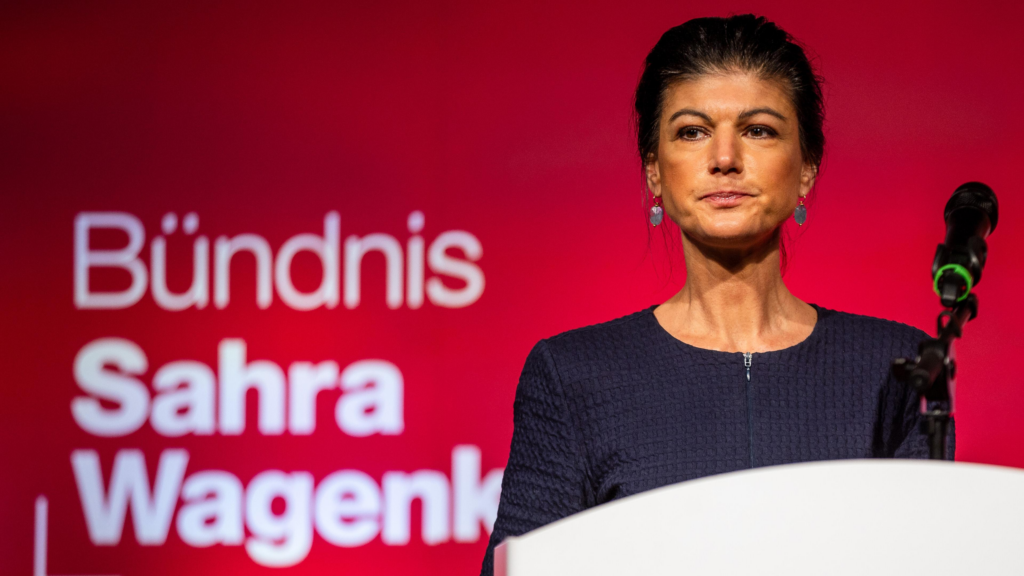
The Wagenknecht AfD position has sparked considerable discussion within the German political landscape, particularly as BSW Chairwoman Sahra Wagenknecht openly defends engagement with the controversial Alternative for Germany party. At the recent BSW party conference in Magdeburg, she described calls for the exclusion of the AfD as “endless stupidity,” emphasizing the importance of addressing their policies rather than alienating them. With over 20% of the national vote and even higher support in parts of Eastern Germany, Wagenknecht argues that dismissing the AfD simply empowers them to adopt a victim narrative, which could enhance their appeal. Her approach represents a significant shift in political engagement in Germany, advocating for discussions that focus on the substance of AfD positions rather than their exclusion from the political discourse. By taking this stance, Wagenknecht underscores her belief that a factual and open dialogue is essential for addressing the complexities of contemporary German political challenges.
The positioning of Wagonknecht regarding the Alternative for Germany reflects a pivotal moment in the ongoing debate about the role of far-right parties in modern politics. With Sahra Wagenknecht at the helm, the BSW is navigating the contentious waters of political affiliation, particularly in light of the AfD’s substantial electoral support across Germany. Her critiques of the current exclusionary rhetoric suggest a more inclusive strategy that insists on recognizing the legitimacy of all political voices, despite their controversial viewpoints. In doing so, Wagenknecht advocates for a more nuanced political engagement that could redefine how parties interact with each other amidst rising populism. This development signals a potential shift in the strategies used by left-leaning factions to engage with their oppositional counterparts in the German political landscape.
Wagenknecht’s Stance on the AfD Exclusion Debate
Sahra Wagenknecht, the chairwoman of the BSW, has sparked considerable debate with her controversial stance on the exclusion of the Alternative for Germany (AfD) from political discussions. During the federal party conference in Magdeburg, she articulated her belief that the exclusion of the AfD represents “endless stupidity,” asserting that such actions only bolster the party’s narrative as a victimized entity. This viewpoint highlights Wagenknecht’s commitment to engaging with all political factions, even those that are widely criticized, asserting that to ignore them is a strategic error in the democratic landscape of Germany.
Her position invites a broader discourse on how political engagement should unfold in the contemporary German political landscape. By advocating for the inclusion of parties like the AfD in open dialogue, Wagenknecht aims to steer the conversation towards their actual policies rather than the sensationalism that often dominates media narratives. This approach urges fellow politicians to confront controversial issues directly instead of resorting to exclusion, thereby reinforcing or empowering extremist positions through perceived victimization.
The Impact of AfD’s Policies on German Society
Wagenknecht’s engagement with the AfD also brings attention to the specific policies they advocate, especially regarding social welfare and rearmament. She has made it clear that while she opposes certain AfD policies, such as their proposed social cuts and militarization efforts, it is vital to address these policies thoughtfully instead of demonizing the party as a whole. By focusing on the implications of their policies, Wagenknecht underscores the necessity of critical discussions that consider the socioeconomic factors driving the AfD’s support in Eastern Germany, where their approval exceeds 30%.
This perspective is especially pertinent in times of economic uncertainty, as the policies the AfD promotes can resonate with industrial workers and disenfranchised citizens. Wagenknecht’s critique highlights the importance of understanding these dynamics within the context of political engagement in Germany. It is not enough to label the AfD as merely extremist; instead, the challenges presented by their policies must be examined thoroughly to provide effective counterarguments that resonate with voters, thus helping to diminish the party’s influence through informed political debate.
Reorganizing BSW: A New Vision for German Politics
As the BSW undergoes restructuring, Wagenknecht’s leadership transition signifies a pivotal moment for the party’s future direction within the German political landscape. Although she will not run for chairmanship again, she has pledged to continue shaping the party’s ideology as the head of a new fundamental values commission. This move indicates her commitment to the party’s foundational principles while pivoting towards a more inclusive and strategic approach to political dialogue, particularly regarding controversial topics like the AfD.
The future of the BSW, under Wagenknecht’s influence, appears to focus on bridging gaps within German society, fostering discussions that challenge both mainstream and fringe political narratives. This endeavor may position the BSW as a moderating voice in a polarizing political environment, allowing for productive engagement with a range of viewpoints, including those of the AfD. The reshaping of the party could ultimately lead to a renewed platform that addresses the core issues facing the nation while maintaining a respect for democratic processes.
Engaging with Controversial Political Views
Wagenknecht’s dedication to engaging with controversial political views, especially those espoused by the AfD, raises vital questions about the nature of democratic engagement in Germany. By challenging her peers to recognize the legitimacy of the AfD as a legal party with considerable electoral support, she advocates for a form of political discourse that does not shy away from difficult conversations. This stance is essential in a functioning democracy, where the inclusion of diverse viewpoints can lead to richer discussions and more nuanced policy-making.
However, it is crucial to engage constructively rather than destructively. Wagenknecht’s insistence on avoiding demonization speaks to the challenges political leaders face in balancing respect for democratic principles while opposing policies they fundamentally disagree with. As Germany continues to grapple with polarizing ideologies, her call for a more fact-based and substantive engagement could serve as a guiding principle for political discourse moving forward.
The Role of Sahra Wagenknecht in BSW’s Future
Sahra Wagenknecht’s transition away from the chairmanship of BSW does not signify her retreat from the political arena but rather a strategic step toward redefining her influence within the party’s framework. By taking on the role of leading a new values commission, she aims to maintain her voice in shaping party ideology while addressing contemporary challenges posed by rising populist sentiments, including those represented by the AfD. This approach demonstrates her commitment to engaging ongoing political discourse and advocating for principles that may resonate with a diverse electorate.
Her continuing involvement as a potential faction leader in the Bundestag indicates her ambition to remain a significant figure within German politics. Wagenknecht’s dynamic role reflects a shift in how political leaders can adapt to changing landscapes while remaining relevant and impactful. Her focus on fostering factual discussions, especially regarding contentious political issues such as the AfD, highlights an evolving strategy necessary for navigating the complexities of Germany’s political system.
Community Reactions to Wagenknecht’s Views
The reactions from the community regarding Wagenknecht’s stance on the AfD reveal the deep divisions present in contemporary German politics. Many appreciate her willingness to engage with a party that is often labeled as extreme, viewing her approach as a refreshing call for inclusivity and dialogue. However, others criticize her for giving a platform to the AfD, fearing that her views might legitimize positions that are fundamentally opposed to the values of equality and social justice.
This discourse reflects the broader tension within German society, where the rise of populist parties like the AfD has prompted fierce debates about political legitimacy and representation. Wagenknecht’s remarks invite a necessary examination of how political engagement can address the fears and frustrations of voters, particularly in marginalized regions. The community’s reactions to her opinions underscored the importance of navigating these sensitive issues with care and responsibility.
The Importance of Constructive Debate in Politics
In light of her controversial remarks, Wagenknecht emphasizes the necessity for constructive debate in the political arena. This type of engagement serves not only to clarify partisan distinctions but also to foster a deeper understanding of the concerns driving voters to support parties like the AfD. Constructive debate allows political leaders to discuss policies and ideological differences in a manner that challenges misperceptions and seeks common ground.
Furthermore, fostering a culture of constructive debate is vital for mitigating polarization within the German political landscape. It encourages a focus on substantive issues rather than personal attacks, promoting an atmosphere where varied opinions can be expressed and scrutinized properly. As political engagement continues to evolve, such a constructive approach may enhance the democratic process by encouraging informed decision-making among constituents.
Navigating the Future of Political Engagement in Germany
As the landscape of political engagement shifts in Germany, highlighted by the emergence of parties like the AfD, figures like Wagenknecht play an essential role in shaping discourse. Her calls for a more inclusive and fact-based discussion around contentious issues demonstrate a progressive approach to politics, one that acknowledges the legitimacy of diverse viewpoints while still upholding core values. This effort in navigating the complexities of the current political climate could inspire other leaders to adopt similar stances.
Looking ahead, the challenge will be to balance constructive dialogue with a strong stance against policies that may marginalize certain populations. Wagenknecht’s blueprint for political engagement may pave the way for a more open and responsive political landscape in Germany, where parties can engage on critical issues without resorting to exclusion or demonization. The ability to navigate these discussions will be key to achieving a more collaborative and effective political environment.
Frequently Asked Questions
What is Sahra Wagenknecht’s position on the exclusion of the AfD in the German political landscape?
Sahra Wagenknecht, the chairwoman of the BSW, strongly opposes the exclusion of the AfD (Alternative for Germany). She argues that excluding the AfD is counterproductive and allows them to position themselves as victims, which may increase their support among voters.
How did Sahra Wagenknecht respond to criticisms regarding the AfD exclusion debate?
In response to the criticisms surrounding the AfD exclusion debate, Wagenknecht asserted that the AfD is a legal political party that commands significant support, particularly in Eastern Germany. She believes that it’s essential to engage with the substance of the AfD’s policies rather than demonize the party.
What key issues did Wagenknecht highlight regarding the AfD’s political positions?
Wagenknecht criticized the AfD for their support of rearmament and social cuts, expressing concern that their policies could disproportionately affect industrial workers. She emphasized the need for a factual discussion of these issues instead of resorting to demonization.
What did Sahra Wagenknecht state about the importance of engaging with the AfD in political discourse?
Wagenknecht highlighted the importance of engaging with the AfD’s positions and refraining from exclusion. She believes discussions about their impact on social policies and defense strategies are crucial and should be approached with a factual lens.
What was the context of Wagenknecht’s comments at the BSW party conference regarding the AfD?
At the BSW party conference in Magdeburg, Wagenknecht made her comments regarding the AfD to advocate against their exclusion from political discourse. She stressed the importance of not demonizing the party while also addressing its problematic policies.
What future role does Sahra Wagenknecht aim for in the BSW following her chairmanship?
Sahra Wagenknecht announced her decision to step back from the chairmanship of the BSW, intending to lead a new fundamental values commission while aiming to secure the position of faction leader in the Bundestag if the party gains seats.
Why does Wagenknecht believe that excluding the AfD is “endless stupidity”?
Wagenknecht refers to the exclusion of the AfD as ‘endless stupidity’ because she believes it undermines democratic principles and allows the party to cultivate a victim narrative that could garner them more support among disillusioned voters.
What criticisms has Sahra Wagenknecht faced regarding her stance on the AfD?
Wagenknecht has faced differing views and criticism from the community for her positions on the AfD, with some challenging her approach to engage in discussions rather than strictly oppose the party’s presence in political dialogue.
| Key Point | Details |
|---|---|
| Wagenknecht’s Position on AfD | Wagenknecht opposes the exclusion of the AfD, calling it ‘endless stupidity’ and urges factual engagement. |
| Demographic Support for AfD | The AfD is legally recognized, with over 20% of national support and over 30% in some Eastern German regions. |
| Criticism of AfD Policies | Wagenknecht critiques AfD’s positions on social cuts and rearmament policies, emphasizing the need for factual discussions. |
| Wagenknecht’s Future Role | While stepping back from chairmanship, she aims to lead a new values commission and hopes to become the faction leader in Bundestag. |
Summary
The Wagenknecht AfD Position is centered around the belief in constructive dialogue rather than exclusion of the AfD from political processes. By advocating for open discussions about the substantial issues the AfD presents, such as their impact on social policies and rearmament, Wagenknecht emphasizes the importance of acknowledging the party’s legitimacy in democratic discourse. Her approach seeks to prevent the AfD from capitalizing on victim narratives by highlighting the significance of addressing their policies directly. This stance showcases a commitment to engaging with all political entities in a meaningful way.

