
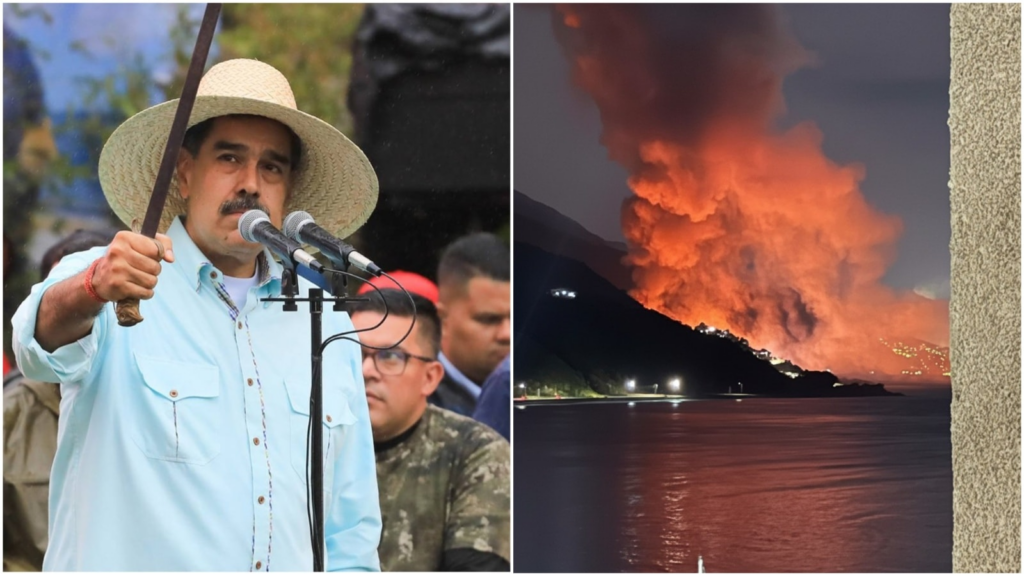
The recent U.S. attack on Venezuela marks a pivotal moment in the realm of international relations, echoing the tensions of past interventions in Latin America. This extensive military operation, the most significant since the U.S. involvement in Panama in 1989, reportedly resulted in the capture of President Nicolás Maduro, a controversial figure accused of numerous crimes by Washington. As U.S. foreign policy takes a decisive turn, the implications for Venezuela’s sovereignty hang in the balance, particularly with the expectation that U.S. oil companies will soon play a vital role in the nation’s economy. The attack raises critical questions about the legitimacy of military actions taken against sovereign nations, and the potential for destabilization in the region. With repeated calls for a partnership that could reshape Venezuela’s future, the true motives behind this aggressive maneuver remain a topic of fierce debate.
In what can be described as a military intervention in Venezuela, the unfolding situation has drawn global attention and sparked intense discussions on sovereignty and interventionism. The U.S. military operation, aimed at prominent figures in the Venezuelan government, particularly Nicolás Maduro, signals a major shift in how foreign powers engage with Latin American politics. Following the U.S. strike, accusations of dictatorship and corruption continue to linger over the Venezuelan leadership, raising ethical questions about foreign influences and the overarching narrative driving such actions. As America redefines its stance on Venezuela, the long-term consequences for regional politics, sovereignty, and international relations will unfold in the coming weeks. The resonance of Trump’s bold proclamations regarding Venezuelan resources suggests a complex interaction between military strategy and economic ambitions.
Understanding the U.S. Attack on Venezuela
The recent military operation by the U.S. against Venezuela signals a pivotal moment in U.S. foreign policy, marking what appears to be the most significant intervention in Latin America since the fall of Manuel Noriega in Panama. This attack was meticulously planned, with intelligence operations spanning several months that allowed U.S. forces to track Nicolás Maduro’s movements to ensure a successful extraction. The operation launched at the break of dawn involved extensive aerial bombardment and troop deployment, targeting key military installations and communication hubs within the country.
The U.S. attack on Venezuela highlights the ongoing U.S. strategy to influence political regimes in Latin America deemed hostile to American interests. Following the operation, President Trump’s statements emphasized a commitment to reshaping Venezuela with American innovation and capital, both in government and economic reform. However, the consequences of such actions raise critical questions about the doctrines of international law concerning sovereignty and the ethical implications of intervening in sovereign nations under claims of restoring democracy.
The Overthrow of Nicolás Maduro: What Lies Ahead?
In the aftermath of the U.S. attack, the future of Nicolás Maduro and the Venezuelan government remains uncertain. With Maduro’s reported capture, the focus now shifts to what potential governance structures might emerge. Trump has communicated intentions of integrating U.S. oil companies into the Venezuelan economy to revitalize its infrastructure, indicating a strategic interest in controlling the country’s vast oil reserves. This raises concerns about post-intervention governance and whether these moves genuinely align with assisting Venezuelans, or if they serve predominately American economic interests.
The notion of stabilizing Venezuela post-Maduro is riddled with complexity. Whilst Trump posits that partnerships with U.S. companies may lead to a flourishing economy, critics argue it’s essential to consider whether these actions reflect genuine determination for Venezuelan autonomy or a veiled agenda for U.S. dominance in the Western Hemisphere. The future leadership may face immense challenges, including unifying a divided populace, re-establishing democratic norms, and addressing the substantial humanitarian crises exacerbated by lengthy mismanagement of resources.
U.S. Accusations Against Maduro: The Corruption Narrative
The U.S. government’s assertions against Nicolás Maduro have predominantly focused on claims of illegitimacy and corruption within his administration. The narrative here is not only about the alleged electoral fraud that led to his presidency but also extends to accusations of facilitating drug trafficking at state levels. Such serious indictments aim to provide a justification for the U.S. intervention amid rising domestic and international scrutiny of Venezuela’s political practices under Maduro’s leadership.
Within this context, the charges against Maduro are not taken lightly by Venezuelan officials, who vehemently deny these allegations, labeling them as fabricated narratives aimed at undermining national sovereignty. The indictment of Maduro and his associates isn’t solely about combating corruption; it also serves a strategic purpose in the larger framework of U.S. foreign policy, reinforcing their commitment to countering what they perceive as threats from rogue regimes.
Venezuela’s Response to U.S. Military Actions
In the wake of the U.S. attack, the Venezuelan government has expressed unequivocal outrage, labeling the military aggression as a direct assault on its sovereignty and democratic principles. Interior Minister Diosdado Cabello has rallied citizens, urging them to resist any collaboration with what he terms ‘the terrorist enemy.’ This framing not only seeks to unify the populace against external threat but also aims to fortify the narrative of resistance and resilience against imperialistic forces.
Furthermore, the Venezuelan government’s response has also triggered substantial international discourse regarding sovereignty and self-determination. Leaders from several nations have echoed sentiments condemning foreign intervention, emphasizing the need for dialogue over force. This geopolitical fallout represents a deep-seated division in how nations interpret the right to intervene in the affairs of other states, reflecting on past U.S. interventions and their long-term implications.
Global Reactions to the Attack on Venezuela
The U.S. attack on Venezuela has prompted varied reactions from the international community, highlighting deep-seated geopolitical divides. Brazilian President Luiz Inacio Lula da Silva’s condemnation of the assault emphasizes concerns over breaching national sovereignty and the legitimacy of foreign intervention. Such statements underscore a significant pushback against what many perceive as the U.S. overstepping its boundaries in Latin America.
Additionally, global reactions have not been limited to rhetoric; nations like Russia have labeled the U.S. operation as an act of aggression, reigniting discussions on global power dynamics and the role of superpowers in local disputes. This incident not only illuminates tensions in U.S.-Latin American relations but also raises questions about the future of diplomatic resolution amidst rising militarism in international politics.
Consequences of U.S. Intervention in Venezuela
As U.S. forces secure control in Venezuela, the ramifications of their intervention remain uncertain. Historically, military operations have led to long-lasting instability and conflict, often resulting in power vacuums or heightened violence, as seen in previous U.S. interventions across Central and South America. Critics warn that interventionist policies might further entrench divisions within Venezuela, exacerbating existing humanitarian crises rather than resolving them.
Removing Maduro from power, while a significant military victory for the U.S., does not guarantee a peaceful transition to democracy or economic stability. Future governance will require astute negotiation tactics and genuine collaboration with Venezuelans to foster a united political landscape. The implications of this military action could reverberate across the region, influencing how other nations react to perceived threats from the U.S. and shifting the balance of power in Latin American politics.
Potential Impact on U.S.-Latin America Relations
The U.S. attack on Venezuela introduces a pivotal shift in relations with Latin America, potentially defining a new chapter in the hemisphere’s geopolitical landscape. Such military interventions often ignite backlash, leading to a resurgence of anti-American sentiment among neighboring countries. As nations reassess their alliances and strategies, the notion of U.S. influence could diminish, enabling alternative powers, such as Russia and China, to assert their presence in the region, thereby reshaping international alliances and trade relationships.
Moreover, the critics of the U.S. intervention argue that this aggressive stance could force countries to adopt more stringent policies against American influence, potentially leading to a consolidated bloc opposing U.S. interventionism. The long-term effects on diplomacy and trade could consequently result in diminished U.S. leverage in negotiations related to economic cooperation, climate change initiatives, and human rights advocacy across Latin America.
The Role of International Law in U.S. Military Operations
The recent U.S. attack on Venezuela raises significant legal questions surrounding international law, sovereignty, and the moral implications of military intervention without explicit United Nations approval. Many legal scholars argue that the principle of non-intervention is fundamental to international relations, challenging the legitimacy of American actions and highlighting potential violations of treaties that uphold national sovereignty against foreign aggression.
Furthermore, the evolving nature of international law as it pertains to state sovereignty and humanitarian intervention must be critically analyzed. While the U.S. may argue its actions are justified under the guise of restoring democratic order, the consequences of such operations often contradict their stated objectives, resulting in civilian casualties and deepening crises, thereby contravening the very principles they purport to uphold.
Prospects for Recovery and Rebuilding Venezuela
In the aftermath of the U.S. intervention, discussions regarding the recovery and rebuilding of Venezuela emerge as pivotal for its long-term stability. Trump’s emphasis on U.S. investment into Venezuelan infrastructure paints an optimistic picture, yet it conceals the challenges that lie ahead, including the restoration of trust in governance and economic systems that have been eroded over years of mismanagement.
The potential involvement of international aid organizations and genuine cooperative efforts with local actors will be critical to ensure the rebuilding process is equitable and inclusive. Sustainable recovery will depend on recognizing the diverse voices within Venezuela and fostering a participatory approach to governance, moving beyond merely transactional relationships established by foreign dominance.
Frequently Asked Questions
What led to the US attack on Venezuela and the capture of Nicolás Maduro?
The US attack on Venezuela stemmed from accusations against Nicolás Maduro of illegitimacy in his presidency and involvement in drug trafficking. Following months of intelligence gathering, the US launched a military operation on January 2, 2026, resulting in Maduro’s capture and an extensive operation aimed at stabilizing the country under US oversight.
How is US foreign policy influencing the situation in Venezuela?
The US foreign policy regarding Venezuela is focused on regime change and economic restructuring. By capturing Maduro, the US aims to establish control over Venezuela’s resources, particularly in the oil sector, and to maintain dominance in the Western Hemisphere, as underscored by President Trump and his administration.
What are the implications of the US military operation on Venezuela’s sovereignty?
The US military operation has been widely criticized as a violation of Venezuela’s sovereignty. Many countries, including Brazil and Russia, condemned the attack as an aggressive act that undermines Venezuela’s political independence and territorial integrity.
What accusations does the US government have against Nicolás Maduro?
The US government accuses Nicolás Maduro of leading a corrupt regime that has engaged in drug trafficking and other illegal activities. Following Maduro’s capture, the US Justice Department announced indictments accusing him of collaborating with drug traffickers and manipulating the elections to maintain power.
What has been the international reaction to the US attack and Maduro’s capture?
International reactions to the US attack on Venezuela have been predominantly negative, with leaders like Brazil’s President Lula de Silva condemning it as a severe violation of sovereignty. Countries such as Russia have characterized the US military action as an act of armed aggression, highlighting a divided global response.
What will be the future of US-Venezuela relations following the military operation?
The future of US-Venezuela relations is expected to be characterized by increased economic involvement from US companies in the Venezuelan oil sector, as President Trump has indicated plans to invest significant resources in the country. However, ongoing geopolitical tensions and the presence of anti-US sentiments among Venezuelans could complicate this relationship.
How did Nicolás Maduro’s capture impact the stability of Venezuela?
Nicolás Maduro’s capture has created uncertainty in Venezuela, with fears of civil unrest and military retaliation against US forces lingering. The US attack, while aimed at establishing control, has also led to concerns about potential escalation of violence and the humanitarian situation amidst military operations.
What military tactics were used in the US attack on Venezuela?
The US attack on Venezuela involved extensive airstrikes targeting military bases, airfields, and communication facilities. A total of 150 aircraft were deployed in a well-coordinated military operation that had been in preparation for months, aimed at neutralizing Maduro’s defenses.
What has the US said about the future governance of Venezuela after Maduro’s capture?
Following Maduro’s capture, US officials expressed intentions to oversee the transition of power in Venezuela. President Trump has advocated for the involvement of US oil companies to aid in rebuilding the country’s infrastructure, promoting a narrative of prosperity and independence for Venezuela under US influence.
| Key Point | Details |
|---|---|
| U.S. Military Action | The U.S. launched a major attack on Venezuela, capturing President Nicolás Maduro. |
| Nature of the Attack | The operation involved airstrikes on military bases and communication facilities. |
| Casualties | Reports indicate both military and civilian casualties; exact numbers are unclear. |
| U.S. Novelties | This operation is the most significant U.S. military involvement in Latin America since 1989. |
| Economic Plans | Post-Maduro, the U.S. aims to boost oil production in Venezuela through American firms. |
| Political Accusations | Maduro is accused of corruption and drug trafficking by the U.S. government. |
| International Reactions | Brazil and Russia condemned the U.S. actions, viewing them as aggressive. |
Summary
The U.S. attack on Venezuela marks a significant escalation in military involvement in Latin America, drawing international condemnation and raising serious questions about the implications of U.S. foreign policy. The operation, which successfully captured the authoritarian leader Nicolás Maduro, raises alarms about sovereignty and the potential for increased violence. As the U.S. plans for economic control and rebuilding efforts in Venezuela, the situation remains complex, with widespread accusations and differing geopolitical perspectives.

