
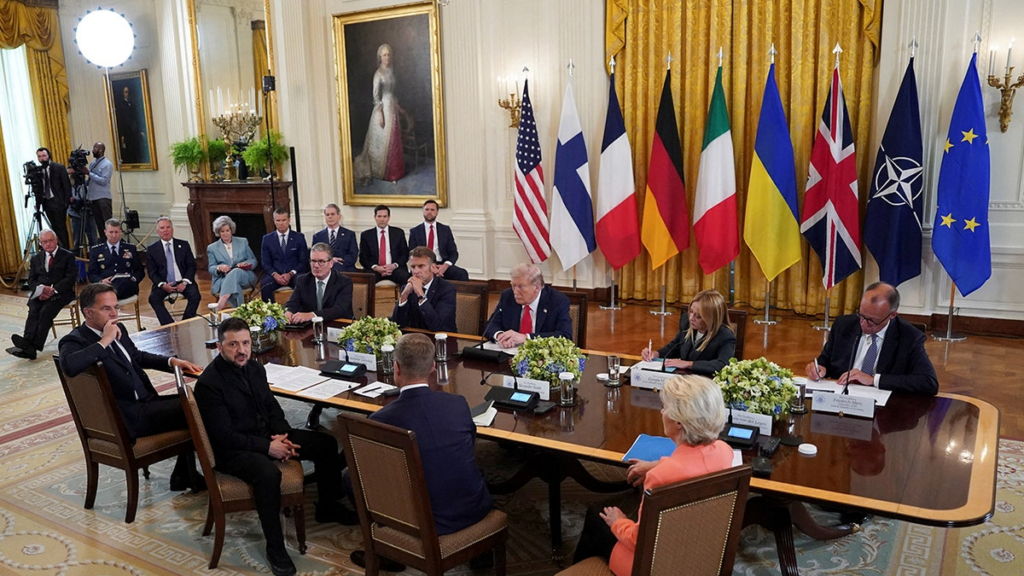
Trump and EU relations have undergone a tumultuous transformation since the start of his presidency, impacting the political dynamics across Europe. The shift in American security strategy has positioned the European Union as a potential adversary rather than a longstanding ally, raising serious concerns about the future of transatlantic cooperation. With the rise of right-wing populism in Europe, Trump’s influence is shaping a new political landscape, leading to increased tensions and shifts in allegiances. Analysts have noted that the Trump presidency’s impact goes beyond mere rhetoric; it signals a reorientation of U.S. priorities, favoring engagement with populist movements within Europe. As the EU grapples with these changes, the implications for American security strategy could redefine how Europe navigates its relationship with the United States and its political future.
The evolving dynamics between the United States and the European Union reflect a significant realignment in international relations under Trump’s leadership. With America’s current foreign policy favoring nationalist agendas, the EU faces unique challenges influenced by rising populism on the continent. This shift raises questions about the stability of bilateral ties and the effectiveness of collaborative efforts in addressing global issues. As European nations adapt to this new political reality, the repercussions are felt in their governance and alliances, potentially leading to shifts in public sentiment and electoral outcomes. Understanding the implications of this transformation is crucial for both American and European policymakers as they work to redefine their respective roles in a changing geopolitical landscape.
Understanding Trump and EU Relations
The relationship between Donald Trump’s administration and the European Union (EU) marks a significant shift in transatlantic dynamics. Trump’s national security strategy has been fundamentally adversarial towards the EU, reflecting his perception that the Union is a threat to American interests. By characterizing the EU as a ‘foe’, Trump has not only undermined years of diplomatic goodwill but has also set the stage for a new era characterized by tensions over trade tariffs and military commitments. This emerging divide illustrates how Trump’s policies prioritize national interests over traditional alliances, prompting a reassessment of European security and political strategies.
Moreover, Trump’s approach has emboldened right-wing populist movements within Europe. As the EU grapples with internal challenges, including migration and economic disparities, Trump’s rhetoric resonates with populist leaders who capitalize on anti-EU sentiment. This situation poses a critical question for European unity: will countries band together in response to external pressures, or will they succumb to divisive populist agendas that threaten the foundation of the EU? The implications of this rupture extend beyond immediate political landscapes, potentially reshaping alliances and political ideologies across the continent.
The Impacts of Trump’s Presidency on European Unity
Trump’s presidency has significantly impacted the political landscape within the EU, revealing fractures that have long been obscured. Following the election, a wave of right-wing populism surged across member states, challenging the liberal democratic norm and altering public discourse. The perception of the EU as a bureaucratic entity has been fanned by Trump’s denunciations, leading to increased skepticism among citizens. This environment of distrust has fueled movements like Italy’s Lega Nord and France’s National Rally, both vying for a more eurosceptic dialogue, which complicates efforts for unity among EU nations.
This evolving political climate has also prompted EU leaders to reevaluate their responses to external pressures, particularly from the U.S. The notion of a united European front is increasingly put to the test as leaders grapple with domestic populist pressures while trying to maintain a cohesive response to Trump’s administration. The EU’s struggle to balance its internal challenges, such as the rise of right-leaning parties, with the need for a robust transatlantic partnership illustrates the precarious state of European politics in the age of Trump. The direction in which this relationship evolves will have profound implications for collective security strategies across the region.
Right-Wing Populism and its Influence on the EU
The ascent of right-wing populism in Europe has been significantly exacerbated by Trump’s foreign policy and rhetoric. By openly supporting parties like Germany’s AfD and Italy’s League, the Trump administration seems to have validated their agendas, promoting narratives that challenge liberal values across the continent. This emboldenment not only threatens the stability of established political parties but also puts the future of the European project at risk. As populist leaders gain traction, their policies often oppose EU guiding principles, which further complicates the EU’s ability to address broader issues like migration and economic disparity.
Additionally, Trump’s favorable stance towards these parties signals a strategic pivot that could alter European political dynamics for years to come. The most noticeable impact is seen in the way national governments react to populist pressures; they are often forced to adopt more nationalist rhetoric to remain relevant in the shifting political landscape. This entrenchment of right-wing ideologies, alongside Trump’s influence, creates a cycle of polarization that could hinder efforts toward comprehensive reform within the EU. As traditional party lines blur, the potential for renewed conflict within the EU grows, making cooperative strategies between member nations increasingly difficult.
Repercussions on American Security Strategy
The United States’ shifting security strategy under Trump has profound repercussions for Europe, as allies find themselves redefined as rivals. Instead of cooperating on shared threats like terrorism or cybersecurity, the EU is now seen through a lens of suspicion. Trump’s redefinition of NATO and his emphasis on ‘America First’ have led to growing concerns about the reliability of American support for European security. As a result, European nations are forced to reassess their defense policies and military capabilities, fostering a more self-reliant security approach that could further fracture transatlantic ties.
Moreover, Trump’s inclination to back populist movements within the EU presents a dual challenge; on one hand, it generates vulnerabilities within member states, and on the other, it complicates collective security initiatives. This strategy not only alienates traditional European partners but also emboldens those who resist EU unity, potentially destabilizing the region. The need for the EU to develop a cohesive security strategy independent of U.S. interests is now more critical than ever, as Europe looks to navigate an increasingly turbulent global landscape without the steadfast support it once relied upon.
Impact of Trump’s Policies on the EU Political Landscape
Trump’s leadership style has significantly altered the political landscape within the European Union, showcasing a clear rift between U.S. and European values. The embrace of right-wing populism in the EU, encouraged by Trump’s policies, has led to a legislative environment fraught with contention. Populist parties are gaining influence as they echo Trump’s sentiments against established political norms and institutions, often blaming the EU for national grievances. This shift not only challenges the political status quo but also raises questions about the EU’s future as an institution designed to promote collective governance and unity.
In responding to Trump’s divisive rhetoric, European leaders have had to navigate a complex political minefield. Embracing a more assertive stance, figures like Ursula von der Leyen have sought to reinforce the EU’s autonomy from American pressures. This balancing act aims to preserve the essential principles of democracy and rule of law within the EU while facing external populist challenges. As parties push for more nationalist policies, the EU must act decisively to reaffirm its commitment to integration and cooperation, ensuring it remains relevant in a quickly evolving geopolitical climate.
The EU’s Response to American Criticism
In light of President Trump’s derogatory remarks about the EU, European leaders must carefully craft their responses to maintain credibility and solidarity among member states. Ursula von der Leyen’s comments reflect an awareness that blunt criticism requires a balanced and robust rebuttal. By emphasizing the EU’s sovereignty and democratic values, she aims to rally member states to resist U.S. pressures while fostering collective unity. Critiques from the U.S. also open opportunities for the EU to reassess its internal policies and bolster its resolve against external interference, laying a foundation for long-term resilience.
The effects of Trump’s rhetoric go beyond mere words; they serve as a catalyst for change within the EU that could strengthen its institutional frameworks. European leaders are echoing a message of self-determination and calling for policies that prioritize European identity and values over American directives. The potential for a unified response could very well set the stage for new alliances within Europe, allowing member states to emerge stronger against external pressures, reasserting the EU’s role in global politics, and reinforcing its commitment to democratic principles in an increasingly polarized world.
Media’s Role in Shaping Right-Wing Narratives
The media plays a pivotal role in shaping the narratives surrounding right-wing populism in Europe, especially in the context of Trump’s presidency. Platforms that support populist agendas, such as Musk’s endorsement of the AfD, create an environment where extremist viewpoints gain undue legitimacy. The proliferation of misinformation and biased reporting can distort public perceptions and entrench divisive ideologies, leading to a more polarized political climate. As these narratives gain traction, they challenge the ability of mainstream media to present a balanced view, complicating efforts to promote unity within the EU.
Furthermore, collaborations among right-wing media outlets across Europe signify a coordinated effort to amplify populist messages. This ‘media network’ not only disseminates propaganda but also influences voter perceptions, potentially swaying elections in favor of populist candidates. The implications of this media landscape are far-reaching; public opinion becomes increasingly susceptible to manipulation, and democratic institutions face jeopardy as informed debate diminishes. By recognizing these trends, EU leaders must formulate strategies to counteract the influence of populist media narratives to safeguard democratic values and ensure stability.
The Future of European Security in a Post-Trump Era
As the EU looks toward a future potentially devoid of Trump’s influence, the evolution of its security strategy becomes paramount. European leaders are tasked with recalibrating their defense frameworks, ensuring that sovereignty remains intact while adapting to new geopolitical realities. The importance of establishing a distinct European defense identity, separate from U.S. interests, is gaining traction as nations reassess their military collaborations. This enhanced focus on collective European security is crucial if the EU is to respond effectively to emergent global threats.
Moreover, the lessons learned during Trump’s presidency regarding American commitments can serve as an impetus for deeper defense cooperation among EU member states. As Europe reevaluates its role on the global stage, investments in joint defense initiatives, intelligence-sharing, and rapid response capabilities will be essential for fostering resilience. This shift not only strengthens the EU’s position internationally but also reinforces its internal cohesion, ultimately building a more secure environment in which member states can thrive independently of external influences.
Challenges Facing the EU Amidst Rising Populism
The EU now faces significant challenges as rising populism threatens to destabilize its core values. The pushback against established political institutions, inspired by Trump’s rhetoric, has fueled divisive sentiments among member states, complicating efforts toward unity and collaboration. Discontent rooted in economic disparities and migration has become the breeding ground for right-wing parties to gain influence and sway public opinion, directly challenging the democratic principles that underpin the EU.
Confronting this tide of populism requires a multifaceted approach where EU leaders must address citizens’ grievances while promoting a cohesive narrative that underscores the benefits of integration. This involves enhancing communication strategies, embracing transparent governance, and reinforcing policies that prioritize social cohesion. As member states grapple with the allure of populist rhetoric, the necessity for a stronger, united front becomes more pressing to combat the fragmentation that threatens to undermine the EU’s integrity and purpose.
Frequently Asked Questions
How has Trump’s presidency impacted EU relations?
Trump’s presidency has significantly impacted EU relations by promoting a national security strategy that criticizes European cooperation and emphasizes American unilateralism. The strategy suggests that the EU is under threat from within, highlighting concerns about migration and internal cohesion. This stance has led to increased tensions between the U.S. and the EU as Trump shifts focus toward right-wing populism in European politics.
What are the effects of Trump’s national security strategy on the EU political landscape?
Trump’s national security strategy has altered the EU political landscape by framing the European Union as a failing entity, promoting right-wing populism, and creating divisions among member states. His administration’s support for far-right parties in Europe reflects a broader strategy to undermine traditional European unity and bolster nationalist movements that align with American interests.
What is the role of right-wing populism in Europe during Trump’s presidency?
Right-wing populism in Europe has gained momentum during Trump’s presidency, largely due to the perceived support from the U.S. government. Trump’s rhetoric and policies have encouraged populist leaders and parties, reinforcing their narrative against the EU and fostering a political environment that challenges established democratic norms in several member states.
How does Trump’s approach to European security differ from past administrations?
Trump’s approach to European security marks a departure from past administrations by explicitly questioning the value of NATO and U.S. commitments to European allies. His national security strategy downplays collaboration with EU partners and seeks to engage more with right-wing populist movements, which poses a risk to the longstanding transatlantic alliance.
What implications does Trump’s presidency have for American security strategy in relation to the EU?
Trump’s presidency has implications for American security strategy in relation to the EU by redefining threats and allies. His strategy de-emphasizes collective security with traditional European partners and instead seeks to establish bilateral relationships that could empower right-wing populist movements, fundamentally altering the landscape of American foreign policy towards Europe.
How has the EU responded to Trump’s criticism and security strategy?
In response to Trump’s criticism and security strategy, the EU has emphasized its commitment to sovereignty and democratic values. Leaders like Ursula von der Leyen have rejected external pressures, highlighting Europe’s ability to enact its own laws and choose its political direction. This stance represents a pushback against the narrative of decline promoted by Trump.
What does Trump’s support for right-wing parties mean for the future of the European Union?
Trump’s support for right-wing parties poses challenges for the future of the European Union, as it may lead to increased fragmentation and instability within member states. By empowering these movements, Trump could amplify anti-EU sentiments, threatening the bloc’s cohesion and complicating its ability to deal with common issues like migration and economic policy.
In what ways has Trump’s presidency strengthened nationalist movements in Europe?
Trump’s presidency has strengthened nationalist movements in Europe through direct support and rhetoric that resonates with populist sentiments. By aligning with leaders of far-right parties and validating their messages, Trump has provided these movements with a sense of legitimacy, encouraging them to push for policies that challenge EU integration and promote national sovereignty.
What should we expect from EU relations under the Trump administration?
Under the Trump administration, EU relations are expected to remain strained, characterized by skepticism towards European institutions and increased advocacy for nationalist agendas. This dynamic could result in a reconfiguration of alliances, with the U.S. potentially backing parties that oppose EU unity, altering the trajectory of transatlantic relations for years to come.
| Key Point | Details |
|---|---|
| Trump’s New Security Doctrine | The USA is realigning its partnerships, prioritizing right-wing and populist parties in Europe over traditional alliances. |
| EU’s Response | Ursula von der Leyen emphasizes European autonomy and the right to self-determination against US influence. |
| Perception of the EU | The US sees the EU as weakened by internal issues, labeling it as decrepit in its national security strategy. |
| Far-Right Support | The Trump administration is fostering ties with far-right parties in Europe, weakening traditional political structures. |
| Impact on European Unity | The increasing support for populist parties threatens the cohesion of the European Union. |
Summary
Trump and EU relations have taken a dramatic turn, characterized by a perceived shift away from traditional alliances. The new security doctrine has sparked concerns in Europe, where leaders like Ursula von der Leyen are voicing their defiance against American influence. This estrangement signals a fundamental change in transatlantic ties, highlighting the EU’s struggle to maintain sovereignty against US pressures. As Trump’s administration continues to bolster right-wing movements across Europe, it challenges the very fabric of the EU, leaving it to navigate a complex landscape of internal and external pressures.

