
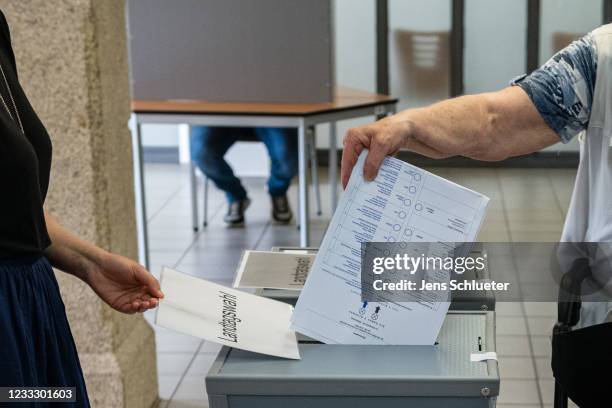
The Saxony-Anhalt elections are approaching, creating an intense atmosphere as candidates prepare for a pivotal showdown. Sven Schulze, the Minister of Economics and the CDU’s leading candidate, has raised alarm bells about the potential consequences of an AfD victory. His concerns extend beyond local ramifications, as he warns that Ulrich Siegmund’s ascendance could lead to governance issues not only in Saxony-Anhalt but across Germany. The political landscape of Germany hangs in the balance, with the AfD currently polling at an astonishing 40 percent, compared to the CDU’s 26. As the elections loom on September 6, understanding the state election results has never been more crucial for voters looking to safeguard democratic values in the region.
As the political scene in Saxony-Anhalt heats up, anticipation builds for the forthcoming state elections. The campaign, dominated by figures like Sven Schulze of the CDU and his adversary Ulrich Siegmund from the AfD, highlights a crucial moment for the state’s future. The implications of these elections extend beyond local politics; they resonate throughout the broader scope of Germany’s political framework. With the AfD’s popularity rising dramatically, it is essential for those concerned with the balance of power to stay informed about the implications of the evolving political dynamics. This election will not only determine the fate of Saxony-Anhalt but also signal the direction of Germany’s governance in the years to come.
The Rising Influence of AfD Saxony-Anhalt in State Elections
The Alternative for Germany (AfD) party has significantly altered the political landscape in Saxony-Anhalt, currently polling at around 40 percent in the lead-up to the state elections. This surge in support is indicative of broader trends in the Germany political landscape, where populist sentiments are becoming increasingly prevalent. This shift has raised alarm bells among traditional parties like the CDU, which is now vying for only 26 percent of the votes according to recent polls. The potential of the AfD to gain governmental power is seen not just as a local issue but as a significant challenge to the fabric of governance across Germany.
Sven Schulze, the CDU’s leading candidate and the current Minister of Economics, has been vocal about his concerns regarding an AfD victory. He argues that such an outcome could render the state ‘virtually ungovernable,’ echoing sentiments held by other party leaders who view the AfD’s radical positions as detrimental to democratic processes. The political climate indicates a critical juncture for Saxony-Anhalt, one that could set a precedent for federal elections if the AfD continues to rise.
Implications of AfD Policies on Saxony-Anhalt’s Governance
The ramifications of an AfD-led government in Saxony-Anhalt could extend far beyond local politics. Sven Schulze has projected a vision where the influence of Ulrich Siegmund and his party could lead to what he described as ‘indescribable damage’ to both the state and Germany as a whole. With Schulze firmly rejecting any coalition with the AfD or Left Party, he emphasizes the critical nature of this election for maintaining stability and governance in Saxony-Anhalt. The CDU’s strategy focuses on preserving democratic values and ensuring that the policies steering the state remain inclusive and constructive.
The hesitance around forming alliances with the AfD reflects a broader concern within Germany about the party’s agenda, which many critics argue leans towards xenophobia and nationalism. Schulze’s warnings serve as a rallying call for the CDU, urging voters to consider the long-term implications of their electoral choices. As Saxony-Anhalt moves towards its state elections, the urgency to halt the AfD’s momentum could shape not just the future of the state but potentially its role in the larger context of the Germany political landscape.
Sven Schulze’s Vision for Saxony-Anhalt’s Future
Sven Schulze has positioned himself as a staunch defender of Saxony-Anhalt’s future, proposing a sustainable pathway that ensures political stability and economic progress. His vision, as articulated in an interview with the ‘Neue Osnabrücker Zeitung’, focuses on addressing the underlying fears that may be driving voters towards the AfD. By highlighting the potential risks associated with an AfD victory, he pledges to work tirelessly to forge policies that resonate with the electorate’s needs while preserving the integrity of governance.
Despite the negative sentiment around current polling figures, Schulze remains optimistic about the CDU’s ability to compete effectively in the upcoming elections. His strategy emphasizes connecting with voters on critical issues such as economic insecurity and social cohesion, which he believes are pivotal in swaying public opinion away from the AfD. By asserting a commitment to transparency and responsible governance, Schulze aims to build a bridge between the electorate’s concerns and a hopeful vision for the future of Saxony-Anhalt.
Polls and Predictions: Saxony-Anhalt Elections Ahead
Recent polling indicates a fierce competition in Saxony-Anhalt as the state approaches its pivotal elections on September 6. The rise of the AfD has created a seismic shift in the political dynamics, prompting the CDU to reassess its strategies diligently. Schulze has been urging party members to respond proactively to voter concerns, as the opportunity to regain lost ground could significantly alter the state’s future legislative agenda. These elections are essential in measuring the viability of traditional parties against rising populist forces.
However, the current political environment is fraught with challenges, as the AfD’s growing influence could result in a fragmented parliament. This scenario could complicate coalition-building efforts, presenting a major hurdle for the CDU and its allies. The state election results are increasingly critical, not just for local governance but for shaping the trajectory of Germany’s political climate in the coming years.
Voter Concerns: The Driving Force Behind AfD Support
A key element contributing to the AfD’s popularity is rooted in voter anxiety regarding the future. Concerns over economic stability, migration, and national identity have driven many to seek alternative parties that promise decisive action. Schulze acknowledges these fears but warns against the destructive potential of the AfD’s radical policies. By framing the conversation around responsible governance, Schulze aims to redirect voters’ concerns back towards actionable solutions rather than divisive rhetoric.
Moreover, Schulze emphasizes that fear-based politics can only lead to greater instability. He believes that rather than succumbing to these anxieties, the voters of Saxony-Anhalt should consider leadership that emphasizes unity and constructive engagement over discord. By fostering dialogue that addresses these critical issues, Schulze hopes to mitigate the conditions that allow the AfD to thrive.
Coalition Dynamics: Challenges Ahead for the CDU
The challenges facing the CDU in forming a stable government in the aftermath of the Saxony-Anhalt elections are substantial. With the growing support for the AfD, any potential coalition dynamics will likely shift dramatically as traditional alliances may crumble under pressure. Schulze’s firm denial of any partnerships with the AfD or the Left Party illustrates his commitment to maintaining the governing integrity and ideological purity of the CDU.
Navigating these coalition dynamics will require both strategic foresight and adaptability. The CDU must proactively engage with voters to reinforce a sense of stability and unity, while simultaneously countering the narrative pushed by the AfD. Schulze’s leadership will be pivotal as he strives to secure not only a victory at the polls but also a functioning and effective government that addresses the needs of all Saxony-Anhalt’s citizens.
Examining the Historical Context of Saxony-Anhalt’s Political Landscape
Understanding the historical context of Saxony-Anhalt’s political landscape can provide insights into the emergence of the AfD as a political force. The region has experienced economic hardship and transformation, leading many to feel alienated from traditional parties. Analyzing past election cycles reveals the shifting allegiances and the factors that have historically influenced voter behavior. Schulze references these historical trends to underscore the need for the CDU to innovate and reconnect with constituents.
This historical perspective also sheds light on the cyclical nature of political support. The rise of the AfD may highlight unresolved issues and discontent among voters that have persisted over previous elections. By addressing these long-standing grievances through meaningful policy, Schulze believes the CDU can reestablish itself as the party of choice for those looking for stability amidst uncertainty.
Lessons from Past Elections: A Strategy for the Future
Reflecting on past election outcomes provides vital lessons for current campaigns in Saxony-Anhalt. As Sven Schulze prepares for the state elections, analyzing the reasons behind the shifts in voter allegiance is crucial. The CDU’s historical stronghold has waned partly due to failures to address critical local issues and misjudgment of the electorate’s shifting priorities. Moving forward, Schulze’s campaign emphasizes learning from these past mistakes to reforge the party’s connection to voters.
To reclaim voter trust, Schulze advocates for a proactive agenda that focuses on key issues such as economic development and social justice. By incorporating feedback from constituents into policy formulation, the CDU can present a constructive alternative to the AfD’s divisive narratives. This strategic pivot aims not only to gather votes but to create a healthier, more inclusive political environment in Saxony-Anhalt.
Looking Ahead: The Future of Saxony-Anhalt Beyond Elections
As the Saxony-Anhalt elections approach, the future of the state hangs in the balance, with implications that could reverberate throughout Germany. Regardless of the election outcomes, the political landscape will undoubtedly face transformative challenges. Post-election, Schulze and his counterparts will need to engage in cooperative governance that transcends party lines to address issues that affect all citizens. Finding common ground may hold the key to restoring stability.
Furthermore, the next government will face the task of cultivating an inclusive dialogue in a politically fragmented environment. Fostering collaboration among diverse political factions could help mitigate the polarizing effects of the AfD’s rise. As Saxony-Anhalt moves forward, the commitment of leaders like Schulze to uphold democratic principles will be critical in shaping a resilient and unified future.
Frequently Asked Questions
What are the implications of the AfD Saxony-Anhalt election results on Germany’s political landscape?
The AfD’s strong polling in Saxony-Anhalt, with current estimates at 40% of the vote, poses significant challenges for the political landscape of Germany. Sven Schulze, the CDU’s leading candidate, warns that an AfD victory could lead to a situation where the government becomes virtually ungovernable, impacting not only Saxony-Anhalt but the entire country.
Who is Sven Schulze and what is his stance on the AfD in the Saxony-Anhalt elections?
Sven Schulze is the Minister of Economics of Saxony-Anhalt and the leading candidate for the CDU in the upcoming state elections. He has been vocal against the AfD, stating that their potential victory could cause severe damage to governance in both Saxony-Anhalt and Germany at large. He firmly rejects any coalition with AfD or Left Party politicians.
What are the key factors driving the AfD’s support in the Saxony-Anhalt elections?
The AfD’s rise in popularity, capturing significant support in Saxony-Anhalt, can be attributed to increasing public fears about the future. Sven Schulze believes that the party’s success is based on these fears, although he views their potential victory as irresponsible and damaging to the state’s governance.
When are the Saxony-Anhalt elections scheduled and what is at stake?
The Saxony-Anhalt elections are scheduled for September 6. The election results are critical, as they will determine the political makeup of the state parliament, with substantial implications for the CDU’s ability to govern and the overall stability of the German political landscape.
What are the current polling figures for the Saxony-Anhalt elections?
Current polls indicate that the AfD is leading with approximately 40% of the votes, while the CDU is trailing at around 26%. These figures highlight the urgency for the CDU, led by Sven Schulze, to secure a win to mitigate the impact of the AfD in local and national politics.
How does Sven Schulze plan to address the challenge posed by the AfD in Saxony-Anhalt?
Sven Schulze aims to combat the AfD’s rise by focusing on governance challenges and emphasizing the risks associated with an AfD victory. He seeks to unify support among CDU, SPD, and FDP voters to ensure effective governance and to position his party as a viable alternative to the AfD.
What warnings has Sven Schulze issued regarding an AfD government in Saxony-Anhalt?
Sven Schulze has warned that an AfD government would result in an ‘indescribable amount of damage’ to Saxony-Anhalt and Germany. He stresses the importance of maintaining a stable governance structure and argues against any coalition with the AfD as detrimental to responsible political leadership.
| Key Points | Details |
|---|---|
| Leading Candidate | Sven Schulze (CDU), Minister of Economics of Saxony-Anhalt. |
| AfD Warnings | Victory for the AfD could make Saxony-Anhalt “virtually ungovernable.” |
| AfD’s Impact | Siegmund’s team considered unsuitable for government responsibility. Potential damage to Saxony-Anhalt. |
| Polling Results | AfD at 40%, CDU at 26%. |
| Election Date | Next state elections in Saxony-Anhalt on September 6. |
| Government Composition | Current government: CDU, SPD, FDP. AfD is the second strongest faction. |
| Schulze’s Goals | Aim to win the election and position CDU ahead of AfD. |
| Feedback to Federal Government | Schulze urges government to manage public expectations better. |
Summary
The Saxony-Anhalt elections are poised to be a pivotal moment in the state’s political landscape, with Sven Schulze of the CDU warning that a victory for the AfD could severely hinder governance. The recent polling suggests a substantial support for the AfD, raising concerns about the future political stability in Saxony-Anhalt. Schulze’s statements illustrate the urgency of addressing voters’ fears and the implications of AfD’s potential rise in power. As the state prepares for elections on September 6, the CDU is focused on reinforcing its position to ensure effective governance and avoid significant disruptions that an AfD victory might entail.

