
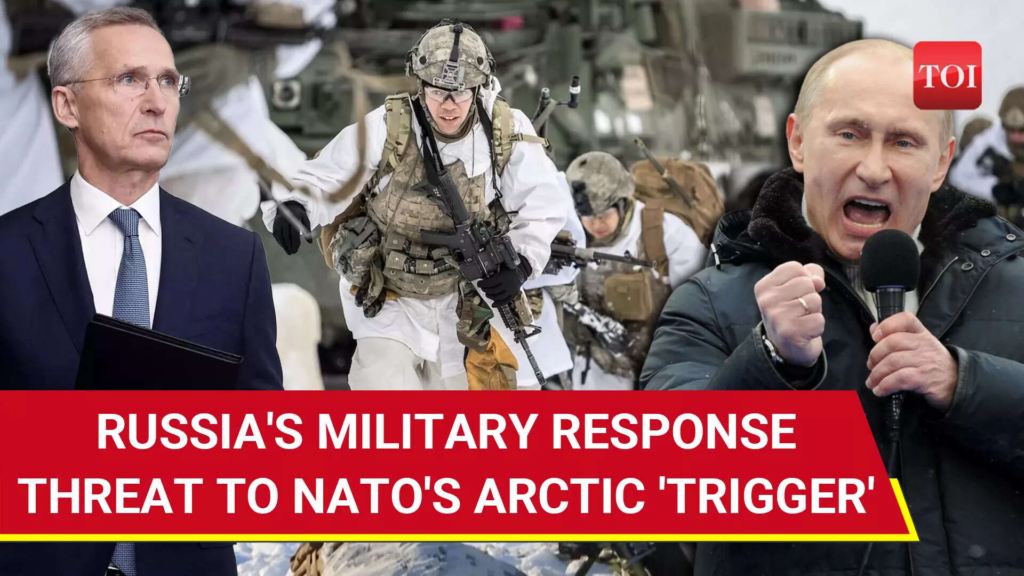
The recent tensions surrounding Russia NATO provocation have sparked significant concerns regarding Arctic security and the militarization of this critical region. As NATO states bolster their military presence near Greenland, Russian interests in the Arctic come under scrutiny, creating a volatile atmosphere where accusations and threats abound. Moscow vehemently denounces these developments as provocations, warning that any attempts to undermine its influence will result in severe repercussions. The Russian Foreign Ministry has criticized the reconnaissance missions conducted by NATO countries, expressing apprehension about the potential escalation of NATO tensions in the area. With the Arctic’s strategic importance on the rise, the interplay between Russia and NATO will undoubtedly shape the future of regional stability and international relationships in this key global frontier.
As geopolitical dynamics shift, the Arctic region has become a focal point of contention, particularly between Russia and NATO nations. The ongoing Greenland conflict exemplifies the broader security issues at play, where military maneuvers by Western allies are viewed as direct threats to Russian sovereignty and stability in the polar domain. Russia’s assertions regarding its right to maintain a strong military presence in the Arctic are matched by an increasing NATO involvement, which is interpreted as an aggressive posture towards its strategic interests. This clash of military ambitions raises important questions about the future of Arctic governance and the potential for conflict as nations vie for control and influence over one of the planet’s most resource-rich areas.
Understanding Russia’s Military Presence in the Arctic
Russia’s military presence in the Arctic has grown significantly in recent years, reflecting its strategic interests in the region. With long coastlines bordering the Arctic Ocean, Russia has made substantial investments in its military infrastructure, including bases, air defense systems, and naval assets. This increased military capability is viewed as essential for asserting its claims over Arctic resources and shipping routes, critical as global warming opens up previously inaccessible areas. Consequently, Moscow’s actions are often interpreted as a response to perceived threats from NATO nations who have ramped up their military activities, further escalating tensions in the polar region.
Aside from military expansion, Russia’s focus on the Arctic stems from its vast natural resources, including oil and gas reserves. The Kremlin sees the region as vital for economic growth and national security, prompting a proactive approach to military readiness and strategic partnerships. As NATO’s footprint expands in nearby regions, Russia remains vigilant, viewing NATO tensions as a direct challenge to its sovereignty and influence in the Arctic. This dynamic relationship raises questions about the balance of power in the area and the potential for conflict as different nations vie for control over these valuable resources.
The Greenland Conflict: A Catalyst for NATO-Russia Tensions
The Greenland conflict exemplifies the growing friction between NATO and Russia, particularly in the context of the Arctic. U.S. ambitions to assert control over Greenland, a strategically important location, have not gone unnoticed by Moscow. The Russian Foreign Ministry has characterized these actions as provocative, arguing that they disregard Russia’s legitimate interests in the region. This conflict does not merely revolve around territorial claims but extends into a broader narrative about geopolitical influence where Russia perceives NATO’s encroachment as a threat to its security.
Moreover, the involvement of NATO allies, including Denmark and other European nations, in military reconnaissance missions in Greenland only exacerbates the situation. Russia interprets these maneuvers as efforts to militarize the Arctic, which could destabilize the long-standing balance of power in the polar region. The rhetoric from Russian officials indicates that such actions will face significant repercussions, as Moscow considers any disregard for its interests as a direct provocation. Thus, the Greenland conflict has not only highlighted the vulnerabilities of Arctic diplomacy but has also become a flashpoint for NATO and Russia’s strategic rivalry.
Challenges to Arctic Security: The Militarization Debate and Its Consequences
The debate surrounding the militarization of the Arctic has emerged as a focal point of concern for all nations involved. NATO states, under the pretext of countering potential threats from Russia, have been ramping up their military presence and activities in the region. This increase in military assets and joint exercises is perceived by Russia as an aggressive stance, putting the Arctic’s long-term security at risk. The overarching narrative of Russian military threat serves to justify NATO’s strategic expansion, raising alarm among Arctic inhabitants and policymakers alike who fear a spiral of militarization.
In response to NATO’s actions, Russian officials warn that this militarization will lead to an unstable security environment and could undermine peaceful cooperation in areas vital to both nations and indigenous communities. Without clear communication and trust-building measures, the risk of miscalculations and accidental encounters between military forces in the Arctic increases, potentially leading to conflict. As nations assert their territorial claims over resources and strategic passageways, it is crucial to address these security concerns through diplomatic channels to avoid exacerbating already tense relations in the Arctic.
NATO Tensions: Navigating the Arctic Geopolitical Landscape
The current NATO tensions with Russia illustrate the complex interplay of geopolitical dynamics in the Arctic. As more countries show interest in Arctic security, driven by the melting ice caps and open sea routes, the stakes are higher than ever. NATO’s approach to enhance security measures around Greenland signals a shift towards active military preparedness, which directly challenges Russian claims and intentions in the region. In this context, both sides must navigate a careful balance of power to prevent escalation of hostilities.
Russia’s opposition to NATO’s activities comes from a long-standing view that its security interests must be respected. The Arctic is viewed as essential to national defense, and any perceived encroachment by NATO allies is met with stern rhetoric and military readiness. The Arctic’s importance extends beyond mere territorial sovereignty; it encapsulates broader strategic interests that could influence global power dynamics. The tension created by NATO’s involvement may compel Russia to further entrench its military activities, thus reinforcing a cycle of mistrust that could hinder cooperative efforts in climate change, fishery management, and other critical areas.
Russian Interests in the Arctic: Resource Control and Security Dynamics
Russia has a vested interest in maintaining its control over the Arctic resources, which are crucial for its economic development. The region is rich in oil and gas reserves, which can potentially alleviate some of the country’s economic challenges while increasing its geopolitical leverage. Moscow’s emphasis on securing these resources is regularly articulated by various government spokespersons as paramount to national security, especially against the backdrop of increasing military presence from NATO states that heightens competition over Arctic territories.
The strategic importance of the Arctic is not only about resource extraction but also about securing shipping lanes that are becoming more accessible due to climate change. These routes are vital for trade and military logistics, positioning Russia at a significant advantage if tensions remain high. Hence, the emphasis on military readiness complements its economic aspirations, creating a holistic approach to its Arctic policy. The interplay of these factors creates a delicate situation where cooperation could yield dividends for all parties, yet ongoing tensions with NATO risk overshadowing these opportunities.
The Role of NATO in Arctic Defense: Strategic Implications
NATO’s involvement in Arctic defense reflects a strategic pivot in global military dynamics, focusing on the implications of Russia’s increasing assertiveness in the region. The alliance’s collective defense principle applies here, as members seek to protect their interests from perceived threats posed by Russia’s expanding military capabilities in the Arctic. This realignment has sparked a series of military drills and collaborative projects targeting not only traditional military readiness but also emergency response and environmental protection efforts in the region.
However, NATO’s actions have been met with stern opposition from Russia, which perceives these initiatives as encroachment upon its sphere of influence. The competition to dominate Arctic security could lead to a fractious relationship, undermining chances for peaceful coexistence in a region prone to shared interests in topics such as climate change and natural resource management. Thus, while NATO’s actions may serve to reassure member states, they also risk complicating diplomatic relationships with Russia, revealing the duality of security interests in a globalized Arctic landscape.
Climate Change and Its Impact on Arctic Security Dynamics
Climate change in the Arctic presents a profound challenge to global security, adding layers of complexity to already heightened geopolitical tensions. The thawing of ice caps is enabling new shipping routes and access to untapped resources, driving both NATO states and Russia to assert their interests more aggressively. The potential for increased resource competition due to climate change underscores the urgency for cooperative frameworks in addressing both security concerns and environmental preservation. As each side advances its military capabilities, the risk of miscommunication increases, potentially leading to confrontations in these sensitive areas.
Moreover, the shared destiny of Arctic nations in the face of climate change necessitates dialogue and collaborative responses to protect the environment. Efforts such as the Arctic Council, which promotes cooperation among countries in the region, are crucial. However, the conflicting narratives of military threats and national interests complicate these initiatives, as states grapple with balancing their security strategies with the need for joint efforts in environmental stewardship. Therefore, understanding the interplay between climate dynamics and security policy will be essential in shaping future Arctic governance.
The Strategic Importance of Arctic Shipping Routes
The opening of Arctic shipping routes due to climate change has fundamentally altered geopolitical strategies in the region. The Northwest Passage and the Northern Sea Route provide quicker pathways for international shipping, which brings with it both economic opportunities and security concerns. These changes are prompting NATO and Russia to enhance their maritime capabilities, with Russia enhancing its icebreaker fleet while NATO conducts patrols to assert its presence. The stakes are high, as control over these vital shipping lanes could define economic power dynamics in the coming decades.
As countries vie for influence over these routes, the potential for conflict escalates. Oversight of these shipping lanes is not merely about protecting trade routes but also about maintaining national security in an area increasingly characterized by military posturing and territorial claims. Ensuring these routes remain free for passage while respecting sovereignty becomes a critical issue for all Arctic states. Thus, the interplay between economic interests and security imperatives will shape the future of Arctic governance and geopolitical stability.
Building Diplomatic Relations: The Path Forward for Arctic Governance
In light of the escalating tensions in the Arctic, building diplomatic relations among Arctic nations is paramount for maintaining stability and peace. Arctic governance has historically relied on collaborative mechanisms, but these are increasingly threatened by nationalistic tendencies and military posturing. Establishing dialogue platforms focused on mutual interests, environmental protection, and sustainable development can help create a more conducive environment for cooperation. It is crucial for both NATO and Russia to find common ground regarding security guarantees that recognize each party’s legitimate interests without escalating tensions.
By prioritizing diplomacy over military confrontation, Arctic nations can fortify their collaborative frameworks and address overarching issues like climate change and resource management. Engaging in shared security dialogues, hosting joint exercises focused on emergency responses, and committing to transparency can help diffuse tension and build trust. The future of the Arctic relies on nations acknowledging that cooperative governance is essential to reaping the benefits of this resource-rich region while maintaining security and ecological integrity.
Frequently Asked Questions
What are the implications of Russia NATO provocation related to Arctic security concerns?
The implications of Russia NATO provocation include heightened tensions in the Arctic region as NATO states engage in military reconnaissance missions, which Russia perceives as a direct threat to its security interests. This provocation can lead to an escalation of military presence and a potential arms race in the Arctic, impacting regional stability and security.
How does Russia’s military presence affect NATO tensions in the Arctic?
Russia’s military presence in the Arctic significantly impacts NATO tensions as it asserts its influence over the region’s resources and shipping routes. NATO’s response, including military build-up and reconnaissance missions, is seen by Russia as a provocation, leading to a cycle of military escalation and increased geopolitical friction.
What are the Russian interests in the Arctic amid NATO provocation?
Russian interests in the Arctic revolve around resource exploitation, control of shipping lanes, and maintaining security in its northern territories. Amid NATO provocation, Russia emphasizes its sovereignty and the need to protect its interests, fearing that U.S. and NATO activities might undermine its status as a key Arctic player.
How does the Greenland conflict highlight Russia NATO provocation?
The Greenland conflict showcases Russia NATO provocation as tensions arise from the U.S. claims to Greenland, which Russia views as an infringement on its Arctic interests. Moscow’s warnings against NATO military activities reinforce the perception that this conflict is part of a broader struggle for influence in the Arctic.
What role does military reconnaissance play in the context of Russia NATO provocation?
Military reconnaissance by NATO states in the Arctic is seen as a provocative action by Russia, as it attempts to monitor and counter perceived threats to its national security. Such missions contribute to increased militarization of the region, exacerbating tensions between NATO and Russia and prompting reciprocal military responses.
What consequences does Russia threaten in response to NATO provocation in the Arctic?
Russia threatens ‘far-reaching consequences’ in response to NATO provocation in the Arctic, which could involve escalating military responses, increased naval patrols, and the deployment of additional military assets to assert its dominance and counter perceived aggressions from NATO member states.
| Key Points |
|---|
| Russia accuses NATO states of engaging in provocations regarding the Arctic region. |
| Russian Foreign Ministry warns that U.S. claims on Greenland will have consequences for ignoring Russian interests. |
| Military reconnaissance missions by NATO countries are viewed as provocative actions by Russia. |
| Russia claims to have no aggressive plans towards Arctic neighbors despite NATO’s military build-up. |
| Greenland, contested in terms of control and resources, is significant in U.S.-Russia relations. |
Summary
The topic of Russia NATO provocation dives into the rising tensions in the Arctic region, particularly surrounding Greenland. The escalating military presence and reconnaissance missions by NATO are perceived by Russia as direct threats to its security and interests, prompting strong warnings from the Russian government. As NATO allies move to bolster their stance in areas contested by Russia, the dialogue surrounding Arctic control and sovereignty becomes increasingly precarious.

