
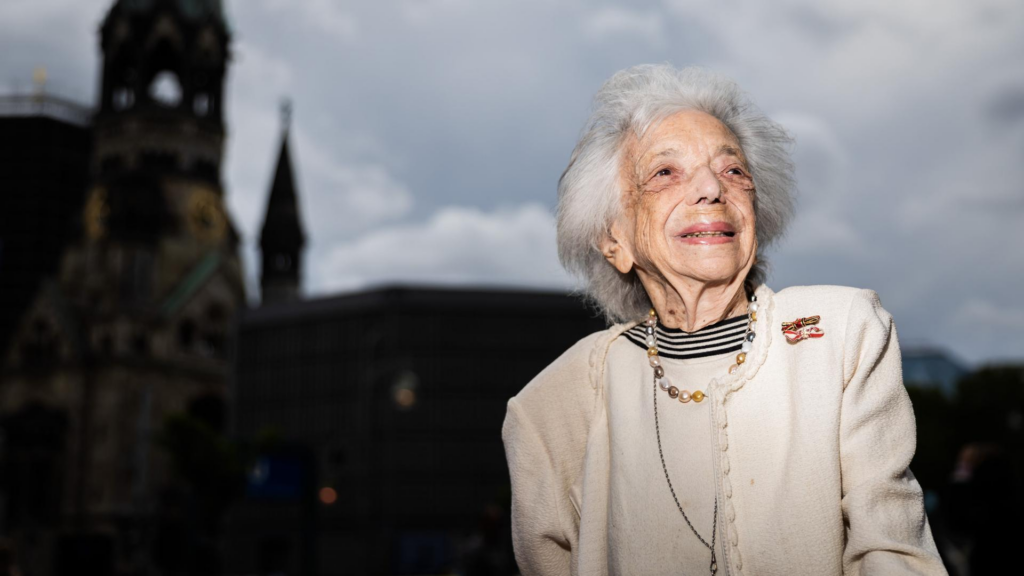
Margot Friedländer Square is set to become a significant landmark in Berlin, symbolizing Holocaust survivor commemoration and the resilience of Jewish history in Berlin. Officially named in honor of Friedländer by the Berlin House of Representatives, this square serves as a poignant reminder of her enduring legacy and dedication to fighting anti-Semitism awareness. As an influential voice against forgetting, Friedländer, who lived to be 103, represents the spirit of those who perished during the Holocaust, including her family members who were tragically lost. The square will officially bear her name on May 9, 2026, marking the first anniversary of her passing, a day that promises to honor her life’s work in an area deemed a “special place of democracy.” By renaming this previously unnamed square, the city lays a cornerstone for remembrance and recognition of the vital contributions of Holocaust survivors like Friedländer to the fabric of society.
The newly designated Margot Friedländer Square will not only reflect the history of Jewish survivors but also serve as a hub for anti-Semitism awareness and education on Jewish experiences in Berlin. This memorial site honors the courageous testimonies of those who lived through the atrocities of the Holocaust, reminding current and future generations of the importance of remembering and confronting discrimination. As such, the establishment of this public space represents a commitment toward fostering understanding and compassion within the community, highlighting the ongoing relevance of Friedländer’s advocacy. With its location in front of the Berlin House of Representatives, the square stands as a testament to democratic values and human rights, celebrating the strength and resilience of individuals like Margot Friedländer. This initiative encourages collective remembrance and reinforces the role of public spaces in commemorating history while combating anti-Semitism.
Honoring Margot Friedländer: A Legacy Remembered
The square in front of the Berlin House of Representatives has taken on a profound significance as it is renamed to honor Holocaust survivor Margot Friedländer. This decision reflects not only a tribute to her life and struggles but also serves as a reminder of the ongoing fight against anti-Semitism. The commemoration of Friedländer is essential in ensuring that the stories of Holocaust survivors are not forgotten as they carry invaluable lessons of resilience, endurance, and humanity. As a prominent voice against the atrocities committed during the Nazi regime, naming this square serves to preserve her legacy and encourage future generations to stand against hate.
With the naming of the Margot Friedländer Square scheduled for May 9, 2026, coinciding with the first anniversary of her passing, there is an opportunity for the community to engage with Jewish history in Berlin. Ruins of the past lay bare the importance of such commemorations in public spaces, where dialogue about the Holocaust and anti-Semitism can be fostered. This initiative underscores the social responsibility to remember impactful figures like Friedländer who courageously shared their stories. Her voice must resonate, leading the way for education on moral values in our democracy.
Margot Friedländer Memorial: An Symbol of Resilience
Establishing the Margot Friedländer memorial in a prominent location underscores the need to confront anti-Semitism and its lingering effects in contemporary society. Through her lifelong advocacy work, Friedländer exemplified the importance of remembering the past to prevent its repetition. The Berlin House of Representatives’ commitment to honoring her memory serves as a strong public statement against intolerance. Such memorials are not only vital in preserving history but also in promoting awareness and understanding of Jewish experiences during the Holocaust.
The memorial stands as a testament to the resilient spirit of Friedländer and countless other victims. It creates a space for reflection and remembrance, igniting dialogues across diverse communities about the significance of fostering a society where anti-Semitism and discrimination have no place. This not only pays homage to her personal narrative but also positions Berlin as a city that embraces its complex history while actively promoting peace, understanding, and coexistence.
The Role of the Berlin House of Representatives
The Berlin House of Representatives plays a critical role in shaping public memory and political consciousness, especially regarding Jewish history in Berlin. By renaming the square after Margot Friedländer, the institution acknowledges its responsibility to educate citizens about the Holocaust and its survivors. This initiative signifies an important step in parliamentary support for anti-Semitism awareness, creating a commitment to uphold her legacy and those of others who suffered during this dark period.
Moreover, this location will become a focal point for commemorative events, discussions, and programs that highlight the experiences of Holocaust survivors. The involvement of political leaders like Mayor Wegner reinforces the message that the fight against anti-Semitism is not solely a community endeavor but also a governmental responsibility. It provides an opportunity for collective remembrance and an ongoing dialogue about the impact of historical injustices on our present-day society.
A Community United Against Hate
The renaming of the square serves as a rallying point for the community to come together in solidarity against hate and bigotry. By honoring Margot Friedländer, the Berlin House of Representatives invites individuals from all backgrounds to engage in the pursuit of justice and equality. This act of remembrance emphasizes the importance of empathy and understanding in combating anti-Semitism. In a city rich with history, honoring figures like Friedländer enables a collective commitment to foster an inclusive environment.
Such initiatives encourage active participation from various civic groups, seeking to inspire a new generation to advocate for the values of diversity and inclusion. Public remembrance, particularly of Holocaust survivors, brings together multiethnic communities, educating them on the ramifications of prejudice. As we center on the past to build a better future, honoring Friedländer reinforces the belief that unity can triumph over division.
Educational Opportunities at Margot Friedländer Square
The Margot Friedländer Square is poised to become an essential educational hub for exploring Holocaust history and understanding the dangers of anti-Semitism. Positioning the memorial alongside the Berlin House of Representatives allows for a blend of legislative action and historical awareness. This site can host educational programs, workshops, and discussions aimed at enlightening visitors about the atrocities faced by Jewish communities during the Holocaust, thus educating them on the importance of vigilance against intolerance.
As students and citizens gather to learn about Margot Friedländer’s story, they will immerse themselves in the broader narrative of Jewish heritage in Berlin. Facilitating dialogue around her experiences will empower individuals to confront current societal issues related to anti-Semitism and racism. By engaging in these essential conversations, we ensure that the lessons from history inform our modern values, promoting a culture of respect and understanding.
A Permanent Reminder in Public Space
The decision to honor Margot Friedländer by naming the square in front of the Berlin House of Representatives illustrates a commitment to keeping her memory alive in the public consciousness. Public spaces are vital for communal reflection, providing a platform for memory and discussion about the Holocaust and its ongoing implications. This dedication ensures that the narrative of Holocaust survivors remains integrated into daily life, prompting ongoing conversations about human rights and dignity.
Such memorials challenge us to remain vigilant against the resurgence of hate and discrimination. The installation of the Margot Friedländer memorial aims to inspire passersby to acknowledge the past actively while fostering a culture of remembrance. It compels communities to honor their history and confront modern-day injustices, illustrating that the fight against anti-Semitism and other forms of persecution is an enduring responsibility shared by all.
Margot Friedländer’s Impact on Society
Margot Friedländer’s impact extends beyond her personal narrative as she epitomizes the resilience of Holocaust survivors in the face of adversity. Her public testimonies and advocacy work resonate deeply within the community, shedding light on the importance of remembrance in combatting anti-Semitism. The acknowledgment of her contributions through the naming of the square symbolizes a collective commitment to uphold the moral imperatives she championed throughout her life.
Friedländer’s legacy urges us to reflect on our collective social responsibilities, particularly concerning marginalized communities. By honoring her memory, society not only ensures that her experiences are not forgotten but also reinforces the call for human rights and justice in today’s world. The dialogue surrounding her life encourages everyone to engage actively with the lessons learned from the past, providing clarity on the necessity for empathy and activism.
The Importance of Commemoration in Modern Berlin
Commemorating figures like Margot Friedländer plays a crucial role in shaping modern Berlin’s identity as a city that grapples with its historical complexities. The renaming of the square enables citizens and visitors alike to engage with the ramifications of the Holocaust, fostering respect for those who endured persecution. Berlin’s transformation into a space that acknowledges its past while promoting inclusivity is essential in inspiring a culture that values diversity and understanding.
Through public commemorations, Berlin seeks to prevent the erasure of history, reminding residents of the potential consequences of hatred and division. This commitment to honoring Margot Friedländer reinforces the narrative that the city stands united against anti-Semitism and any form of discrimination. The memorial becomes a symbol of hope, facilitating critical discussions that bridge the past with a more compassionate future.
The Future of Anti-Semitism Awareness in Berlin
As the Margot Friedländer Square becomes a pivotal location for awareness campaigns, it opens the door for future initiatives focused on eradicating anti-Semitism. Educational programs and community events can be organized to leverage this public space, promoting dialogues on tolerance and understanding. The future of anti-Semitism awareness in Berlin relies on community engagement, ensuring that lessons from the past inform efforts to create an inclusive society.
The memorial will serve as a foundation for collective action against discrimination, inspiring the next generation to advocate for justice and human rights. Margot Friedländer’s story and her unwavering commitment to remembrance can be harnessed to promote proactive measures against hate in all forms. By investing in awareness efforts, Berlin aspires to foster a vibrant and inclusive community that honors the sacrifices of its past while paving the way for a more equitable future.
Frequently Asked Questions
What is Margot Friedländer Square and why was it named after a Holocaust survivor?
Margot Friedländer Square is a newly designated name for the square in front of the Berlin House of Representatives, honoring Holocaust survivor Margot Friedländer. This commemoration serves to remember her life and fight against anti-Semitism, while also highlighting the importance of preserving Jewish history in Berlin.
When will the Margot Friedländer memorial be officially named?
The Margot Friedländer memorial, which involves the naming of the square in front of the Berlin House of Representatives, will officially take effect on May 9, 2026, marking the first anniversary of her passing.
How does Margot Friedländer Square contribute to anti-Semitism awareness?
By naming the square after Margot Friedländer, the site will serve as a permanent reminder of her experiences and efforts against forgetting the Holocaust. It stands as a clear sign for anti-Semitism awareness and the ongoing fight against hatred toward Jewish communities.
What significance does the location of Margot Friedländer Square hold?
The location of Margot Friedländer Square in front of the Berlin House of Representatives is significant as it represents a special place of democracy. It reinforces the importance of remembering Holocaust survivors and their contributions to Jewish history in Berlin.
Who was Margot Friedländer and what was her impact on Jewish history in Berlin?
Margot Friedländer was a prominent Holocaust survivor and witness to the persecution of Jews during the Nazi regime. Her impact on Jewish history in Berlin includes her activism against forgetting the Holocaust, her return to Berlin after living in the USA, and her recognition as an honorary citizen of the city. Her legacy continues through the naming of Margot Friedländer Square.
Why is it important to honor Holocaust survivors like Margot Friedländer?
Honoring Holocaust survivors like Margot Friedländer is crucial for remembrance, education, and awareness of the atrocities committed during the Holocaust. It helps to ensure that future generations understand the importance of combating anti-Semitism and preserving Jewish history.
What role will the Berlin House of Representatives play in the ongoing commemoration of Margot Friedländer?
The Berlin House of Representatives will take an active role in the commemoration of Margot Friedländer by naming the square in her honor and promoting her legacy. They aim to keep her voice visible in public discourse, reinforcing the message against anti-Semitism and for human rights.
| Key Point | Details |
|---|---|
| Location | Square in front of the Berlin House of Representatives. |
| Commemorative Figure | Margot Friedländer, a Holocaust survivor and witness to the Nazi regime. |
| Naming Date | Official naming will take effect on May 9, 2026, the first anniversary of her death. |
| Significance | The square will serve as a reminder of her life and fight against anti-Semitism. |
| Historical Context | Friedländer was an active witness of the Holocaust and worked to ensure the memory of her family and others. |
| Legacy | Friedländer died at 103, she was an honorary citizen of Berlin and… remained a voice against forgetting. |
Summary
Margot Friedländer Square is set to be a poignant reminder of the life and legacy of Holocaust survivor Margot Friedländer. As a symbol of hope and resilience, it will not only honor her remarkable story but also stand as a testament to the ongoing fight against anti-Semitism. This square will embody the values of humanity and democracy, promoting awareness of the past while inspiring future generations to remember the lessons of history.

