
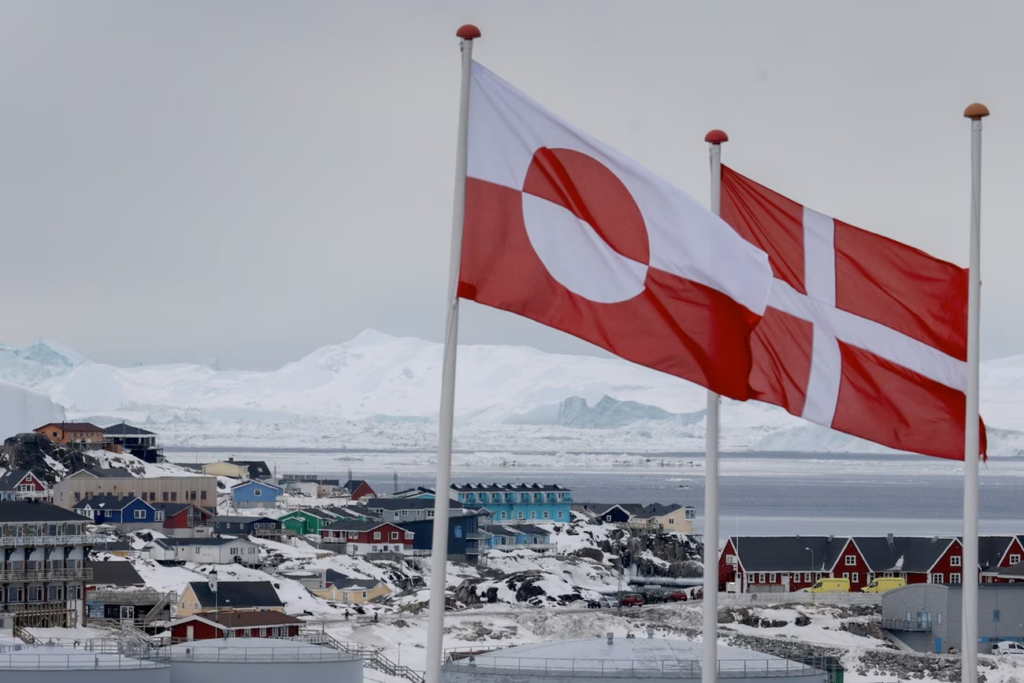
The topic of Greenland annexation has resurfaced in international discussions, particularly following comments from US President Donald Trump that have sparked widespread concern. Trump’s assertions that the United States seeks to acquire Greenland for its strategic importance pose both diplomatic and security challenges. German Defense Minister Boris Pistorius addressed these remarks, emphasizing the improbability of such an annexation. As he pointed out, engaging in speculations about Greenland’s fate can detract from critical geopolitical work and cooperative security efforts among NATO allies. With issues surrounding Greenland becoming intertwined with international relations, Pistorius advocates for maintaining composure in discussions about this unique territory.
The ongoing discourse surrounding the potential acquisition of Greenland, often referred to as the ‘Danish territory,’ raises significant implications for global diplomacy and security. The remarks attributed to Donald Trump have shifted focus toward the strategic interests that the island holds in the Arctic region. Boris Pistorius, highlighting Germany’s commitment to NATO, insists that any military arrangements should align with the broader strategic framework, advocating for joint efforts to enhance the island’s defenses. The complex interplay between military presence and territorial sovereignty continues to influence perceptions in international relations. As discussions evolve, the significance of Greenland in security dialogues remains a crucial point of analysis.
The Implications of Greenland Annexation
The discussions surrounding the potential annexation of Greenland have raised eyebrows within the international community. Many experts believe that such a move, if ever pursued, would have severe implications for diplomatic relations, particularly between the United States and Denmark. The remarks made by President Trump regarding Greenland align with a historical perspective of territorial acquisition—though firmly rejected by leaders like German Defense Minister Boris Pistorius. He reassures stakeholders that the likelihood of an annexation remains slim, emphasizing the importance of addressing real security concerns rather than hypothetical scenarios.
Moreover, the implications of Greenland’s annexation extend beyond just U.S. and Danish relations; they could significantly impact NATO dynamics as well. As highlighted by Boris Pistorius, Germany remains committed to NATO, understanding that stability in Greenland directly influences the security of the North Atlantic region. Therefore, fostering international cooperation is essential rather than engaging in divisive rhetoric that could exploit vulnerabilities within the alliance.
Boris Pistorius on U.S. Comments and NATO’s Role
Boris Pistorius has addressed the rising tensions provoked by U.S. President Trump’s comments about Greenland, stressing a composed approach to the unfolding situation. During interviews, he reinforced that the concern does not stem from antagonism towards the U.S. its military presence in Greenland, but from a need for clarity in international relations. His perspective resonates with the understanding that NATO should work collectively to enhance security in regions such as Greenland while preventing any destabilizing behavior from outside forces.
Pistorius’s assertion reflects NATO’s commitment to maintaining global security through cooperation rather than division. The German Defense Minister urges member states to maintain focus on joint military efforts, such as deploying personnel to bolster security in Greenland, instead of becoming entangled in unproductive debates about territorial claims. This approach is crucial for ensuring that NATO remains steadfast against potential threats and does not inadvertently feed into the agendas of adversaries looking to undermine the alliance.
The Security Concerns Surrounding Greenland’s Strategic Position
Greenland’s strategic position has increasingly garnered attention as a focal point of security for NATO allies. Given its proximity to North America and Europe, any geopolitical changes involving Greenland could have extensive ramifications for international relations. The U.S. continues to assert its interest in the region, a sentiment echoed by Trump’s comments, which suggests a heightened focus on military presence and resources in the Arctic. Pistorius has been clear about the need for NATO to coordinate actions concerning security in Greenland, indicating Germany’s readiness to support these efforts.
This proactive approach to security emphasizes that maintaining stability in Greenland isn’t solely about military might; it involves multilayered strategies that integrate diplomacy and cooperative measures. As Pistorius and his counterparts navigate this evolving scenario, understanding Greenland’s significance as a buffer in maritime routes becomes not only relevant but critical in the broader narrative of NATO’s collective defense obligations.
International Reactions to Trump’s Greenland Remarks
International reactions to Trump’s remarks regarding the possible annexation of Greenland have varied widely, showcasing divergent outlooks on sovereignty and territorial integrity. Leaders globally have been quick to dismiss the idea, citing international law and the current governance by Denmark over Greenland. Minister Pistorius exemplifies this consensus by advocating for respect and diplomatic dialogue rather than entertain controversial propositions that could escalate tensions. His stance signifies a desire for strategic communication amongst international allies, particularly with the U.S.
The dialogue surrounding these remarks emphasizes a larger discourse on global governance and the respect for national boundaries. The professional responses from European leaders, including those within NATO, align towards reinforcing existing treaties and partnerships, advocating for mutual interests without infringing on sovereignty. This indicates a collective understanding that while discussions on security are valid, they must be framed within respect for international agreements and norms.
Maintaining Calm Amidst Political Provocations
In politically charged environments, maintaining calm is crucial, as stressed by Boris Pistorius. His comments reflect a professional approach to the international dialogue regarding Greenland, where he encourages avoiding knee-jerk reactions to provocative statements from leaders like Trump. By advocating for a composed and methodical evaluation of political discourse, Pistorius aims to preserve the unity and effectiveness of NATO in addressing security concerns, particularly as they relate to territory and sovereignty.
Furthermore, Pistorius’s calls for calm serve a dual purpose: they reassure allies while simultaneously disarming adversaries eager to exploit political dissent. In times of uncertainty, the notion of collective strength within NATO becomes increasingly significant, as it reinforces shared values and collective security measures. Thus, a calm, resolute response under Pistorius’s guidance aims to foster stronger NATO relations in confronting external pressures and threats.
NATO’s Response to Global Security Challenges
As the global landscape shifts, NATO’s response mechanisms become critical in adapting to emerging security challenges. The recent comments by U.S. President Trump about Greenland underline a growing urgency for NATO to solidify its strategies surrounding geopolitical hotspots. Boris Pistorius has articulated the essential role of NATO in navigating these complexities, emphasizing the necessity for coordinated efforts to ensure collective security in strategic areas like Greenland.
Addressing security challenges requires a multifaceted approach, where military readiness is balanced by diplomatic channels. Pistorius’s commitment to NATO signifies a recognition that cooperation among member states is vital to counter any threat, whether it be territorial claims or misinformation. In this context, NATO’s stance regarding Greenland must be robust yet considerate of existing treaties and relationships with countries like Denmark.
The Future of Greenland in Global Politics
Looking to the future, Greenland’s role within the sphere of global politics will remain pivotal, particularly concerning security dynamics in the Arctic. As Arctic routes open and geopolitical interest intensifies, the international community, including NATO, must be prepared for various scenarios that could alter the balance of power in the region. Boris Pistorius’s approach underscores the need for ongoing dialogue and joint exercises to solidify allies’ presence and capabilities in Greenland.
Moreover, international relations concerning Greenland will likely hinge on cooperative agreements among key players looking to manage the implications of climate change, resource exploration, and strategic military positioning. The importance of Greenland will continue to elevate as nations seek to navigate shared interests and prevent potential conflicts, making the dialogue about its future a critical component of NATO’s overall strategy in an evolving geopolitical landscape.
Germany’s Role in Securing Greenland
Germany’s active role in securing Greenland reflects its commitment to NATO and the strategic stability of the region. Chancellor Angela Merkel and representatives like Boris Pistorius advocate for Germany’s increased presence in global security discussions, emphasizing military deployments aimed at reinforcing peace and cooperation. Germany’s willingness to send personnel to Greenland underlines the nation’s proactive approach to being an integral part of NATO’s operational strategies.
This focus on proactive security illustrates Germany’s understanding of collective defense and the necessity of working alongside allies to address emerging challenges in the Arctic. Engaging in joint operations in Greenland serves to signal solidarity among NATO members and acts as a deterrent against any potential geopolitical threats, highlighting Germany’s integral role in maintaining security while respecting the sovereignty of Denmark.
The Impact of Trump’s Comments on NATO Cohesion
The ripples of President Trump’s comments regarding Greenland resonate throughout NATO, highlighting potential fractures that could impact the cohesion of the alliance. Boris Pistorius warns against allowing divisive rhetoric to detract from NATO’s core mission. His leadership suggests that member nations focus on shared goals rather than speculation that could weaken trust and collaboration among allies. Maintaining NATO’s integrity hinges upon addressing talk of territorial expansion without allowing it to sow discord.
The importance of solidarity among NATO members cannot be overstated, as external threats and internal discord can jeopardize operational effectiveness. By reframing the conversation towards unity and mutual security, leaders like Pistorius can help build resilience against challenges posed by rhetoric such as Trump’s. This approach frees NATO to concentrate on the pressing issues at hand and fortifies the alliance against those who wish to exploit tensions within it.
Frequently Asked Questions
What are Boris Pistorius’s views on the annexation of Greenland following Trump’s comments?
Boris Pistorius, the German Defense Minister, has expressed skepticism about the possibility of the United States annexing Greenland, despite former President Donald Trump’s remarks advocating for such a move. He stated, ‘I do not see such an action happening,’ indicating that the idea of Greenland annexation is unlikely and should not distract from actual international relations.
How do Trump’s comments on Greenland relate to international relations and NATO?
Trump’s comments on Greenland have sparked discussions about international relations involving NATO countries. While emphasizing Greenland’s security concerns, Boris Pistorius highlighted that the situation is focused on cooperation rather than aggression, asserting that Germany supports maintaining NATO’s unity without engaging in hypothetical annexation scenarios.
What role does Germany play in the context of Greenland’s security amid talks of annexation?
Germany, under NATO guidelines and following Trump’s remarks about Greenland, plans to send 13 to 15 military personnel to Greenland to bolster the region’s security. Boris Pistorius mentioned that any further actions regarding Greenland would require coordination with the USA.
Why is it important for NATO not to overreact to the idea of Greenland annexation?
Boris Pistorius cautioned against overreacting to the suggestions of Greenland’s annexation, stating that doing so could create uncertainty and give advantage to NATO’s adversaries. He emphasized the need for calm and focused discourse to prevent unnecessary panic within the alliance.
What significance do Trump’s comments about Greenland hold for NATO and Germany?
Trump’s comments on Greenland have significant implications for NATO and Germany in terms of security strategy and international relations. German Defense Minister Boris Pistorius clarified that while the United States has a military presence in Greenland, NATO allies must remain united and not get distracted by provocative discussions about annexation.
| Key Point | Details |
|---|---|
| Boris Pistorius’ Statement | Pistorius believes the annexation of Greenland is unlikely. |
| U.S. President Trump’s Remarks | Trump has suggested that the U.S. should acquire Greenland for security. |
| NATO’s Role in Greenland | Germany, as part of NATO, plans to send military personnel to Greenland. |
| Avoiding Hypotheticals | Pistorius advises against engaging in hypothetical scenarios concerning annexation. |
| Caution Against Speculation | Debates over annexation can benefit NATO’s adversaries and create uncertainty. |
Summary
The Greenland annexation has become a topic of international concern following remarks by U.S. President Donald Trump, suggesting a U.S interest in acquiring the territory. However, German Defense Minister Boris Pistorius has firmly stated that such an annexation is unlikely and urged against getting distracted by hypothetical situations. He emphasized NATO’s commitment to ensuring Greenland’s security, which seems to be a shared responsibility rather than an isolated transaction. The discourse surrounding the potential annexation should be approached with caution to avoid feeding into the narratives of NATO’s enemies.

