
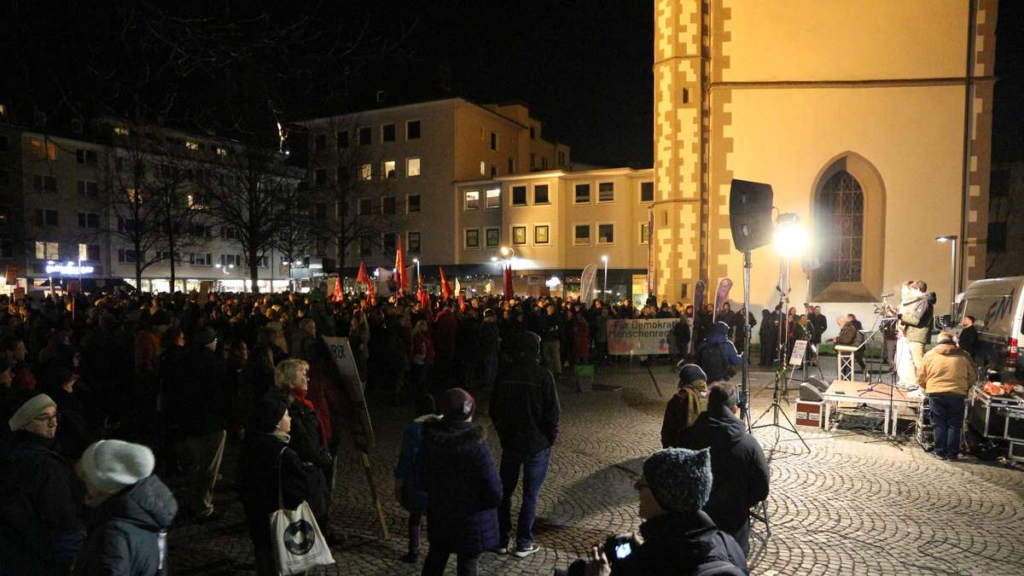
The Gießen protests this weekend are shaping up to be a pivotal moment in Germany’s political landscape, as mass gatherings are expected in response to the new AfD youth congress. With over 50,000 anticipated participants in counter-protests Gießen, the atmosphere is charged with tension and emotions run high. Authorities, including Gießen’s Mayor Frank-Tilo Becher, have urged for peace amidst fears of violence, reflecting the intense divisions in society over the far-right’s presence. Even the Bundeswehr is warning its soldiers about potential risks associated with the anti-AfD demonstrations, highlighting the gravity of the situation. As the protests unfold, Gießen serves as a microcosm of the broader struggles over identity and political expression in contemporary Germany.
This weekend, Gießen is set to become the epicenter of political activism as citizens mobilize against the founding of the youth branch of a controversial right-wing party. The upcoming assembly has incited widespread concerns, prompting counter-movements and legal challenges against the authority governing these public gatherings. Additionally, local officials, including Mayor Frank-Tilo Becher, are navigating the complex dynamics of protests that juxtapose supporters of the newly formed youth organization with those advocating for a more inclusive society. As public safety remains a top priority, forces are strategically deployed to manage the anticipated demonstrations, aiming to ensure peace amidst a historically fraught backdrop. Thus, Gießen’s climate this weekend is emblematic of a larger national dialogue about freedom of speech, civic responsibility, and the fight against extremism.
Understanding the Gießen Protests Against the AfD Youth Congress
The upcoming protests in Gießen surrounding the AfD youth congress are stirring significant public interest and concern. This weekend marks the founding of the new youth organization ‘Generation Germany,’ which has been met with robust counter-protests organized by various activist groups. Activists aim to voice their opposition to the AfD’s ideology, making the city a focal point for anti-AfD demonstrations. City officials anticipate massive crowds, with reports suggesting over 50,000 people may participate in the protests throughout the weekend.
Gießen’s protests represent a microcosm of Germany’s broader struggle with far-right populism, leading to a notable clash on the streets. With both civil authorities and law enforcement braced for unrest, the stark division among citizens is palpable. The police union’s statement underscores the tensions, affirming their readiness to take necessary actions to prevent violence. Activists and their supporters wish to make a bold statement against the AfD’s influence, reflecting growing concerns about democratic integrity and social cohesion.
Counter-Protests in Gießen: A Response to Rising Tensions
As protests are set to unfold in Gießen, the counter-protests signify a powerful response to the AfD’s agenda. The local government, along with Gießen’s Mayor Frank-Tilo Becher, is calling for calm amongst participants, emphasizing the need for peaceful demonstrations. Becher’s recent statements reveal that he has faced backlash from both sides of the political spectrum, highlighting the complexities of navigating public sentiment during such charged events. Many citizens are uneasy about the potential for violence, with calls for a ban on the AfD’s event juxtaposed against fears of extreme measures taken by opposing protestors.
The legal disputes over spatial restrictions for protests illustrate the contentious climate Gießen is experiencing. Court rulings granting permission for various gatherings indicate a commitment to upholding democratic rights, yet confusion remains regarding enforcement and the safety of participants. The city’s balancing act between allowing free expression and ensuring public safety is a daunting challenge, further fueled by warnings issued to military personnel from the Bundeswehr regarding their safety amid these demonstrations.
The Role of Security Forces in Gießen
Amid rising tensions, law enforcement and military presence are heightened in Gießen this weekend. The Bundeswehr has proactively warned its soldiers to exercise caution, a reflection of the seriousness of the anticipated counter-protests. Their focus on ensuring military personnel avoid contact with protestors demonstrates an effort to mitigate potential altercations. With police forces mobilizing from various states to manage the situation, the scale of law enforcement engagement highlights the complexity of maintaining order during politically charged events.
Security officials emphasize that while the freedom to protest is paramount, it must be balanced with the need for public safety. Their strategies involve a robust engagement plan to prevent potential clashes and escalate difficulties that arise from heightened emotions. As tensions linger, the presence and readiness of law enforcement will play a crucial role in shaping the outcomes of this significant weekend in Gießen, where protestors are set to challenge the rise of populism and the ideology promoted by the AfD.
Mayor Frank-Tilo Becher’s Leadership During Crisis
Mayor Frank-Tilo Becher remains at the forefront of Gießen’s response to the protests, advocating for peaceful dialogue amid the chaos. His appeals for non-violence resonate with many in the community who seek constructive engagement rather than confrontation. His experience in local governance and handling delicate situations positions Becher as a critical figure in promoting stability during what could be a volatile weekend.
Furthermore, his remarks on the fears expressed by residents showcase the anxieties circling around the protests, illustrating a community strained by division. Becher’s characterizations of the recent emails he has received—from both pro-AfD supporters and counter-demonstrators—depict a city grappling with polarized views. His leadership will be pivotal as Gießen attempts to navigate through these protests, seeking to preserve the democratic spirit while safeguarding public order.
Concerns Over Police Preparedness and Violence Potential
The heightened state of alert among police forces in Gießen is largely motivated by fears of escalating violence. The police union has voiced readiness to use immediate force if necessary, indicating the seriousness of the situation. With groups mobilizing for both sides, the potential for conflicts becomes a chilling prospect. Citizens have expressed unease about the kinds of actions that may unfold, with many hoping for a peaceful resolution amidst the tension.
Moreover, authorities have voiced their concerns over the anticipated numbers of participants in various demonstrations, suggesting that the potential for unrest could outstrip available resources. The call for large contingents from neighboring regions emphasizes the need for a coordinated response to any outbreaks of violence during the events. Thus far, police preparation seems robust, but the unpredictable nature of public protests means that careful management will be critical this weekend in Gießen.
Legal Challenges Around Protest Restrictions
The legal entanglements surrounding the protests in Gießen indicate broader implications for democratic rights and expressions within public spaces. Several groups have taken the initiative to challenge city-imposed restrictions on protest areas, drawing attention to the delicate balance between safety and civil liberties. These legal disputes serve as a reminder of the ongoing tensions between governmental authority and the right to assemble, particularly in the context of politically charged events.
The city of Gießen’s ongoing appeals against certain rulings to allow protests adds another layer of complexity to an already fraught atmosphere. With over 30,000 expected participants in various planned assemblies, courtroom battles reflect the urgency that activists feel in asserting their rights against perceived infringements. These legal dynamics may shape public sentiment about the governance of protest, emphasizing the necessity of solidarity among citizens for their voices to be heard amidst the noise of political division.
Gießen’s Community Response: A Call for Peace
In the face of rising tensions and split opinions, Gießen’s community is rallying around a message of peace and understanding. Many locals are urging participants in the counter-protests to advocate for their beliefs without resorting to violence, emphasizing that the fight against extremism can be conducted through peaceful means. Community leaders are emphasizing the importance of unity in diversity, calling for citizens to stand together regardless of political allegiance.
The notion of Gießen as a platform for progressive values is increasingly drawn upon by residents who want to counter the narrative promoted by the AfD. Events like these often serve as a reminder of the strength found in community solidarity, as diverse groups join forces to present a united front against hate. Activists and citizens alike are working to ensure that any dissent voiced during the protests remains respectful, setting a powerful example of peaceful opposition.
The Impact of the Bundeswehr’s Warning on Local Sentiment
The Bundeswehr’s warning to its soldiers is an unusual move that underscores the seriousness of the situation in Gießen. With the military advising soldiers to avoid protest areas and to act sensibly, it reflects a growing concern about potential clashes and escalating violence. The move has sparked discussions about the implications of such military involvement in civilian protests, raising questions about the appropriate role of state protection during times of civil unrest.
Public reactions to the Bundeswehr’s warning illustrate a range of sentiments, from appreciation for the precautionary measures to criticism regarding military overreach into civilian affairs. The warning has heightened awareness among local residents of the urgency surrounding the protests, creating an atmosphere of apprehension. As citizens consider how these dynamics might play out, the messages sent from the Bundeswehr highlight the deep divisions and potential dangers stemming from political tensions in Gießen.
Post-Protest Reflections: Healing and Moving Forward
As the dust settles after the weekend of protests in Gießen, the community must reflect on the events’ impact and implications. The process of healing begins with recognizing the fears and divisions that have surfaced, facilitating conversation on how to rebuild trust among residents. The protests can serve as a springboard for constructive dialogues addressing the root causes of the current political climate in Germany, allowing for a deeper understanding of how to move forward together.
Moving forward, Gießen has the opportunity to emerge as a beacon of democratic engagement, fostering an environment where citizens can actively participate in shaping their community’s future. Emphasizing peace and reconciliation in post-protest discussions is crucial for restoring a sense of community amid the heightened tensions experienced in the lead-up to the AfD youth congress. Through collaborative efforts, Gießen can learn from this experience and reinforce the values of open dialogue and mutual respect.
Frequently Asked Questions
What are the main concerns surrounding the Gießen protests at the AfD youth congress?
The Gießen protests are primarily centered on fears of violence surrounding the AfD youth congress. Authorities anticipate massive counter-protests, with more than 50,000 participants planning to demonstrate against the formation of the AfD’s youth organization. Additionally, the Bundeswehr has issued warnings to its soldiers about potential threats during the protests.
How is Gießen’s Mayor Frank-Tilo Becher responding to the unrest linked to the AfD protests?
Gießen’s Mayor Frank-Tilo Becher has urged protest participants to remain peaceful amidst increasing tensions. He has expressed concern over the alarming messages he received, including hate mail from both left and right factions, and emphasized the need for a dialogue that preserves democratic values without resorting to violence.
What security measures are being taken during the Gießen protests against the AfD youth congress?
In response to the anticipated Gießen protests, local authorities have prepared for a large-scale security operation involving police forces from 14 federal states. The Bundeswehr has also advised soldiers to avoid areas of potential conflict and act cautiously to prevent escalations.
What legal disputes are affecting the Gießen protests related to the AfD youth congress?
There are several legal battles ongoing regarding the Gießen protests, including appeals concerning the city’s restrictions on protest locations. The Administrative Court of Gießen has granted permissions for certain assemblies, leading to a complex legal landscape as organizers challenge city decisions in an effort to secure protest rights.
What impact are the Gießen protests expected to have on local schools and services?
Due to the anticipated protests and roadblocks in Gießen, the city has suspended mandatory school attendance in affected areas. Parents have the option to keep their children home, reflecting the city’s efforts to ensure safety amidst the unrest during the AfD youth congress.
How have counter-protests been organized in response to the AfD youth congress in Gießen?
Counter-protests in Gießen have been organized by various groups, including trade unions and political parties, with more than 20 registered assemblies expected. The Left Party is particularly notable, being granted permission for its gathering near the AfD congress venue amid an overall atmosphere of heightened alert.
What statements have been made by political figures regarding the Gießen protests?
Political figures like AfD leader Alice Weidel and Gießen’s Mayor Frank-Tilo Becher have made statements addressing the potential for violence and the need for order during the Gießen protests. Weidel expressed concern for her party members’ safety, while Becher emphasized the importance of maintaining civility and democratic dialogue.
| Key Point | Details |
|---|---|
| Mass Protests Expected | More than 50,000 people expected to protest against the founding of AfD’s youth organization. |
| Security Concerns | Even Bundeswehr soldiers are warned about potential violence during protests. |
| Containment Measures | Police and civil authorities are in a state of emergency, prepared to use force to prevent crimes. |
| Legal Challenges | Multiple legal disputes ongoing regarding restrictions on protests and public assemblies. |
| Mayor’s Concerns | Mayor Frank-Tilo Becher is worried about the city’s atmosphere and the spread of violence. |
| School Attendance | Mandatory school attendance suspended in central areas due to expected unrest on the protest days. |
Summary
The Gießen protests have emerged as a significant focal point of public dissent against the AfD’s youth congress, highlighting deep-seated tensions in German society. With a police readiness to deploy force and warnings from military authorities, the protests underscore concerns over public safety and civil discourse. The actions of civil society and government in response to these protests are pivotal in shaping the future dialogue surrounding political ideologies in Germany.

