
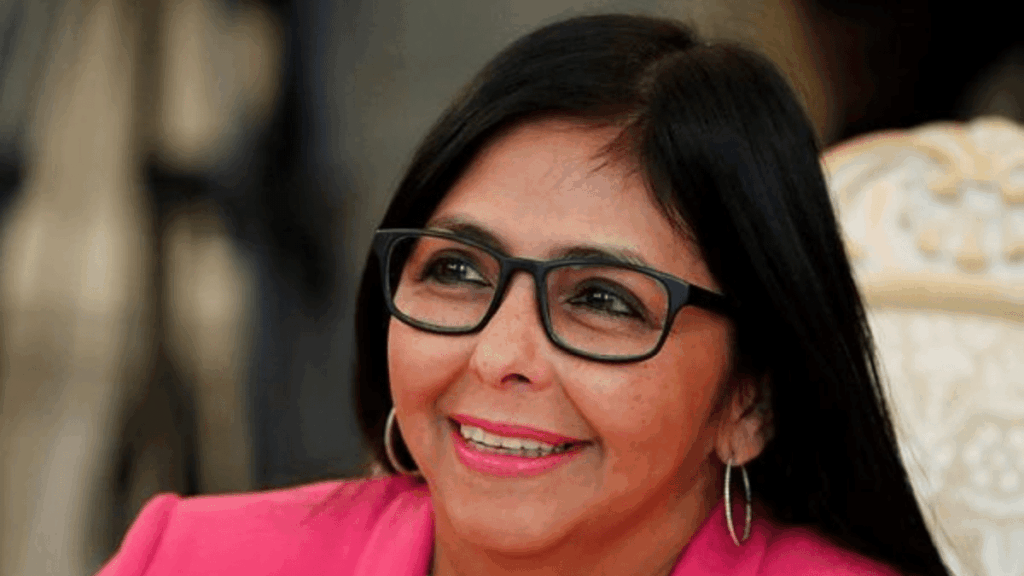
Delcy Rodriguez, the newly appointed acting president of Venezuela, has made headlines with her firm stance against external intervention in the nation’s affairs. In response to President Trump’s controversial claims regarding US control over Venezuela, Rodriguez asserted, “There is no external actor governing Venezuela,” emphatically affirming the authority of the local government. As the political climate in Venezuela heats up amid heightened tensions, Rodriguez’s leadership signals a resilient front against what many view as unwarranted US intervention. With the backdrop of Nicolás Maduro’s recent capture by US forces, the Caracas government is determined to navigate its sovereignty amidst international scrutiny. This pivotal moment in Venezuela politics raises critical questions about self-governance versus foreign oversight, positioning Delcy Rodriguez at the forefront of a tense geopolitical landscape.
In the wake of escalating tensions regarding Venezuela’s governance, Delcy Rodriguez emerges as a key figure within the political landscape of the South American nation. Following international attention, particularly surrounding the allegations of US intervention, Rodriguez’s administration strives to maintain control over the complexities of the nation’s political dynamics. As Venezuela’s leadership grapples with the ramifications of US claims and the capture of former President Maduro, discussions on national sovereignty become increasingly vital. The role of local officials, coupled with global aspirations for change, forms a compelling narrative for understanding the future of the Caracas government. This ongoing saga highlights the delicate balance of power and the implications of foreign influence within Venezuela.
Understanding Delcy Rodriguez’s Position on Venezuela’s Sovereignty
Delcy Rodriguez, the acting president of Venezuela, has been at the forefront of communication regarding the sovereignty of her nation amidst claims of US intervention. During a meeting in Caracas, she asserted firmly, ‘The government of Venezuela governs our country. No one else.’ This declaration aimed at quelling any notions that external forces, particularly the United States, had any control over Venezuelan affairs, especially following the dramatic events that led to the capture of President Nicolás Maduro.
Rodriguez’s statement highlights the resilience of the Caracas government, emphasizing that Venezuela’s political landscape will not bend to foreign influence. This stance is significant in the context of ongoing tensions between Venezuela and the US, particularly after Trump’s controversial claims suggesting the US would take a leading role in restructuring Venezuela’s oil industry. By rejecting these assertions, Rodriguez underscores her administration’s commitment to national sovereignty and reiterates the notion that any foreign intervention will not be tolerated.
The Impact of US Claims on Venezuela’s Political Climate
The political landscape in Venezuela is heavily influenced by the ongoing confrontation with the United States, especially in light of recent claims made by former President Trump regarding the US’s intentions to manage the Venezuelan government post-Maduro. Such statements have led to widespread backlash and a unifying call to defend the nation’s sovereignty from perceived foreign control. Trump’s claims, particularly those related to managing Venezuela’s oil industry and the assertion of temporary governance, have not only sparked outrage domestically but also brought international scrutiny.
As a result, the Venezuelan government, led by officials like Delcy Rodriguez, has worked to consolidate power and reinforce the narrative that the Caracas administration is capable of governing without outside interference. The implications of US interventionist rhetoric extend beyond mere political posturing; they impact the economic sanctions imposed on Venezuela and heighten the existing tensions within Venezuela’s governance. Rodriguez’s recent comments reflect a strategic effort to rally support both within Venezuela and from its international allies, steering the narrative to highlight resilience against external pressures.
The Role of Nicolás Maduro in Venezuela’s Future
Nicolás Maduro, despite his recent capture during the US military operation, remains a pivotal figure in Venezuela’s political narrative and the future of the country. His leadership, characterized by economic turmoil and political strife, prompts discussions about the direction Venezuela should take in the aftermath of his detainment. While the US has signaled a desire to influence the political direction of Venezuela, the local government’s commitment to Maduro’s legacy complicates any attempts at restructuring the political framework.
The ongoing debates surrounding Maduro’s governance highlight the deep divisions within Venezuela and the influence of international politics in shaping its future. As figures like Delcy Rodriguez take charge, the acting president’s strategy appears to focus on preserving the ideals of the Maduro administration while navigating the challenges posed by foreign claims and intervention attempts. The ongoing discourse around Maduro’s legacy and the Caracas government’s response to US interventions will play a significant role in determining the stability and sovereignty of Venezuela moving forward.
US Intervention and Its Consequences for Venezuelan Politics
The prospect of US intervention in Venezuela has long been a contentious issue, escalating significantly with Trump’s recent statements regarding governance following military actions in the country. The implications of such intervention are profound, as they threaten to undermine Venezuela’s political stability while also instigating a potential backlash from the Caracas government. Delcy Rodriguez’s administration faces the dual challenge of asserting national sovereignty while managing the internal strife exacerbated by foreign claims.
The consequences of US intervention extend beyond immediate political reactions; they also affect Venezuela’s economy and social fabric. Sanctions and blockades imposed by the US have led to severe economic challenges that the Caracas government must navigate as it emphasizes national independence in the face of external pressures. Rodriguez’s leadership is critical in negotiating these complexities, rallying citizens to support national governance and defending against perceived threats from the US.
Strategic Responses by the Caracas Government
In light of US claims to govern Venezuela, the Caracas government has developed a series of strategic responses aimed at reinforcing its position on sovereignty. Delcy Rodriguez, embodying this strategy, has sought to present a united front against external pressures, emphasizing diplomatic dialogues that prioritize independence. Her approach includes gestures of willingness to engage constructively while firmly rejecting any notion of capitulation to foreign demands, highlighting the government’s priority to maintain control over Venezuelan affairs.
Furthermore, the administration’s responsiveness to the evolving political landscape reflects a keen awareness of the dynamics at play in Venezuelan politics. By fostering alliances with sympathetic international actors and framing their narrative within the context of national pride and resilience, the Caracas government aims to mitigate the impact of external interventions. This strategy is essential not only for navigating current tensions but also for solidifying Rodriguez’s leadership as a stabilizing factor in Venezuela’s foreseeable future.
Delcy Rodriguez’s Leadership Amidst Political Turmoil
As acting president, Delcy Rodriguez has had to navigate the tumultuous waters of Venezuela’s political environment following the capture of Nicolás Maduro. Her leadership has come to symbolize a critical point in Venezuelan politics where themes of resilience and defiance against foreign control are at the forefront. Rodriguez’s approach involves asserting the legitimacy of the Caracas government and instilling confidence in the country’s ability to govern without outside influence.
In various addresses, she has articulated a vision of collaboration with international partners who respect Venezuela’s sovereignty while firmly opposing any attempts by the United States to undermine the existing political structure. This balancing act is crucial as Rodriguez positions herself and her administration as key players in defining Venezuela’s future amidst adversarial international relations. Her leadership style reflects the necessity for political innovation in addressing both internal pressures and external threats.
The Consequences of Trump’s Venezuela Claims
Trump’s claims regarding US intervention in Venezuela have had far-reaching effects not only politically, but economically and socially as well. The assertion that the US would temporarily oversee governance following Maduro’s capture has further polarized opinions within Venezuela, leading to intensified scrutiny of the responses from the Caracas government. As officials grapple with these developments, the rhetoric surrounding national sovereignty has taken center stage, galvanizing support for Rodriguez’s administration.
The fallout from Trump’s statements has contributed to an already complex political landscape marked by economic hardship and social unrest. Delcy Rodriguez and her allies have positioned their response to highlight an unwavering commitment to Venezuelan autonomy, strategically using the narrative to rally citizens around the government amidst uncertainty. Moving forward, the challenge will be for the Caracas administration to translate these political declarations into tangible improvements for the Venezuelan populace while countering ongoing foreign interference.
Reflections on Venezuela’s Political Future Post-Maduro
The future of Venezuela remains uncertain, particularly following the events surrounding Nicolás Maduro’s capture and the ensuing US intervention claims. Delcy Rodriguez, as the acting president, faces the monumental task of steering the country towards stability in a climate marked by both domestic unrest and external threats. The administration’s ability to navigate this political minefield while promoting national unity is vital for its prospects of enduring governance.
In addressing the challenges ahead, Rodriguez’s leadership will be pivotal in reframing the narrative around Venezuela’s political future. As the Caracas government seeks to advance its objectives, efforts to cultivate economic resilience and social cohesion will determine the potential for recovery. The ongoing political dynamics will require a careful balance of diplomacy and sovereignty assertions, essential for charting a new path for Venezuela in a post-Maduro era.
Impacts of Global Politics on Venezuela’s National Strategy
Global political dynamics significantly shape Venezuela’s national strategy, particularly in the context of US claims regarding the governance of the country. As international relations fluctuate, the Caracas government, under Delcy Rodriguez, must adeptly maneuver through the changing political landscape. The narrative of sovereignty has been consistently invoked to reinforce resistance against perceived imperialistic tendencies, transforming the regional discourse surrounding Venezuela into a global focal point.
Rodriguez’s administration must also contend with the impact of sanction policies and international diplomatic strategies deployed by the US, which complicate Venezuela’s ability to engage with the global economy effectively. Structured responses that highlight Venezuelan independence and foster regional partnerships can help mitigate adverse effects. Ultimately, the administration’s strategies in responding to these external pressures will be crucial for shaping Venezuela’s future on the world stage.
Frequently Asked Questions
What are Delcy Rodriguez’s views on US intervention in Venezuela?
Delcy Rodriguez has strongly condemned US intervention in Venezuela, asserting that ‘no external actor governs’ the country. As the acting president, she emphasizes that the Caracas government is the legitimate authority despite claims from the US, particularly those made by former President Trump.
How does Delcy Rodriguez respond to Trump’s claims about Venezuela?
Delcy Rodriguez firmly rejects Trump’s claims of US governance over Venezuela. In her official statements, she maintains that the Venezuelan government, led by Nicolás Maduro and now herself as acting president, is solely responsible for the nation’s affairs.
What actions did Delcy Rodriguez take after the US military’s involvement in Venezuela?
After the US military’s capture of Nicolás Maduro, Delcy Rodriguez was sworn in as acting president. She positioned herself as a steadfast leader against US claims of control while indicating a potential willingness to engage in negotiations with the United States regarding Venezuela’s future.
What is Delcy Rodriguez’s political stance following the US attack on Venezuela?
Following the US attack, Delcy Rodriguez has taken a strong anti-interventionist stance, reinforcing the message that the Caracas government remains in charge. She remains focused on unifying the country and resisting external pressures, particularly from the Trump administration.
How has Delcy Rodriguez’s leadership been perceived in the context of Venezuela politics?
Delcy Rodriguez’s leadership as acting president is seen as a continuation of Nicolás Maduro’s policies, aimed at countering US interventions and bolstering national sovereignty. Her public assertions emphasize stability and control within Venezuela, aiming to mitigate external influences.
What implications does Delcy Rodriguez’s presidency have for US-Venezuela relations?
Delcy Rodriguez’s presidency is likely to complicate US-Venezuela relations further, as her administration rejects cooperation under terms dictated by the US, particularly those put forth by Trump and his administration. This may lead to increased tensions and a prolonged standoff.
What role does Delcy Rodriguez play in the ongoing crisis in Venezuela?
Delcy Rodriguez plays a pivotal role in managing the ongoing crisis in Venezuela post-Maduro’s capture, maintaining a focus on internal governance and resisting US pressures. She aims to uphold the Caracas government’s authority while addressing calls for political stability.
How does Delcy Rodriguez view the future of Venezuela amid US claims?
Delcy Rodriguez envisions a future for Venezuela that is free from external control, emphasizing the importance of national sovereignty. She believes the Caracas government will lead the country toward recovery and stability, despite the challenges posed by US claims and sanctions.
| Key Point | Details |
|---|---|
| Delcy Rodriguez’s Leadership | Delcy Rodriguez has assumed the role of acting president following the US military operation. |
| Rejection of US Claims | The Venezuelan government, led by Rodriguez, rejects claims of control by the United States. |
| Trump’s Statements | Trump claimed that US companies would rebuild Venezuela’s oil industry and suggested temporary governance. |
| US Government Involvement | Key US figures, including VP JD Vance and Secretary of State Marco Rubio, are implicated in managing US intervention. |
| Rodriguez’s Response | Initially inflexible, Rodriguez has shown a willingness to cooperate with the US after the military action. |
Summary
Delcy Rodriguez firmly states that there is no external actor governing Venezuela, highlighting the country’s autonomy amidst recent US military actions. This position reflects her commitment to maintaining national sovereignty.

