
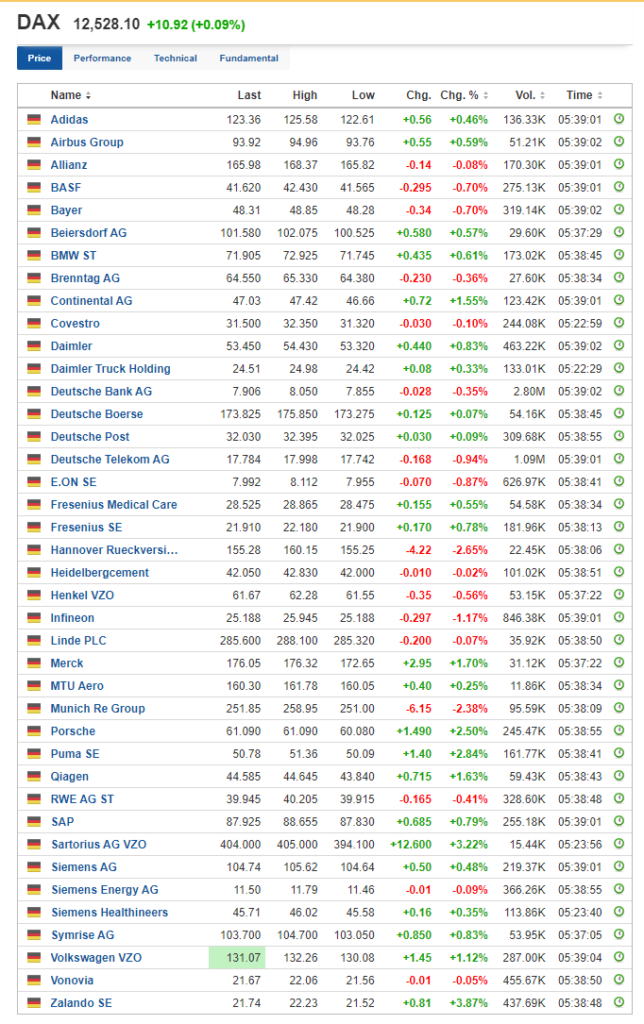
The DAX market report is turning heads as we embark on the final trading week before Christmas. Analysts are optimistic about the DAX index, which is projected to open with a notable gain of 0.5 percent, reaching 24,315 points. This follows a challenging week where, influenced by concerns over tech stocks performance and AI investments, the index closed down by 0.5 percent. As the European Central Bank prepares for its upcoming interest rate decision, attention is drawn to how these moves could sway the German economy news and overall investment sentiment. With December historically favoring stock market gains, investors are hopeful for a year-end rally that could reinforce this positive trend within the DAX market.
In this week’s market overview, the latest insights into DAX’s performance underscore potential upward momentum amid a bustling trading atmosphere. As market participants anticipate the forthcoming decisions from central banks, the implications for the German stock market and broader financial landscape are substantial. Observers are closely monitoring the DAX index and its trajectory, with particular emphasis on the interplay between tech stocks and the performance metrics that typically characterize the end of the trading year. Given the looming interest rate announcements by the European Central Bank, the global economic outlook, alongside significant developments in the German economy, remains a vital aspect of stock market analysis. As the DAX trends upward, investors are cautiously optimistic, hoping for a compelling finish to 2025.
Overview of the DAX Market Report
The DAX index, representing Germany’s premier stock market performance, is gearing up for a potentially robust trading week. As market analysts anticipate a gain of 0.5 percent, the index is expected to commence Xetra trading at approximately 24,315 points. Investor sentiment has shifted positively following recent downturns, with many speculating that the DAX could benefit from a year-end rally. This optimism aligns with historical market performance, as December tends to be a favorable month for stock enthusiasts.
Emerging from a challenging last week, where the DAX experienced a slight decline of 0.5 percent to close at 24,186 points, the current projections illustrate a potential rebound. This increase could extend the DAX’s gains for the month to an impressive one and a half percent, following a significant six percent rise from November’s lows. Investors are optimistic, and many are closely monitoring this market report as they prepare for potential investment opportunities.
ECB’s Impact on DAX Performance
The upcoming decisions by the European Central Bank (ECB) will be pivotal for the DAX and the broader stock market in Europe. Market participants are particularly alert to the ECB’s stance on interest rates, especially after the recent cuts by the U.S. Federal Reserve. Analysts expect that the ECB will maintain current rates during its meeting, which could provide stability to the DAX and reassure investors of a steady economic framework.
Furthermore, Jürgen Molnar’s insights emphasize the significance of the ECB’s decisions in shaping investor expectations. The DAX’s performance, buoyed by seasonal trends, is now dependent on external economic indicators and the central bank’s policy. With the German economy closely tied to the outcomes of central bank meetings, the market’s trajectory will be closely linked to the ECB’s announcements.
Monitoring Tech Stocks and Their Influence on the DAX
In the context of the DAX market performance, tech stocks have recently played a crucial role in shaping overall sentiment. Following a downturn in U.S. markets, reflected by losses in the tech-heavy Nasdaq, investors are keen to see how similar trends might affect European tech stocks. While the DAX does not heavily feature tech stocks compared to U.S. indices, their performance is nonetheless critical in shaping the broader market outlook.
Current fluctuations in tech stock performance also raise questions about the sustainability of the recent rally in the DAX. As many traders analyze the potential bust of the AI bubble, attention must be paid to how this will influence investor confidence in Germany’s leading companies. Enhanced performance from the tech sector could lead to increased investment in the DAX, supporting a more robust end-of-year rally.
The Role of German Economic Indicators
Economic indicators from Germany provide vital context for analyzing the DAX’s outlook. Reports showcasing declining profits, particularly in the automotive sector, lend credence to concerns about economic health. The significant drop in operating profits underscores the challenges faced by key industries in the German economy, placing additional pressure on the DAX index. With automotive manufacturing projected to decline further, this sector’s struggles could weigh heavily on investor sentiment.
Moreover, the automotive industry’s crisis ties into broader economic narratives influencing the DAX. As automakers grapple with reduced investments and potential job losses, these economic shifts could lead to volatility within the DAX. Thus, following German economic news closely is crucial for investors looking to navigate the stock market landscape effectively in the days leading up to Christmas.
Global Market Trends and Their Effects on DAX
Global market dynamics have a profound effect on the DAX, as evidenced by the recent downturn in U.S. indices. With the Dow Jones and the S&P 500 experiencing notable declines, European markets are closely monitoring these trends to gauge potential implications for the DAX. As investors assess the direction of global markets, there exists a palpable connection between performance in the United States and sentiment in European markets.
As the global economic climate remains unpredictable, these trends can cause ripples across European indices, including the DAX. Market observers need to be vigilant in observing international shifts, particularly regarding tech stocks and interest rates, as these factors will undoubtedly influence the DAX’s stability and growth as we approach year-end trading.
Year-End Trading Volatility Ahead
As we approach the year’s end, trading volatility is expected to intensify for the DAX as investors position themselves for a potential rally. Given that December often sees increased trading volume and fluctuating stock prices, the DAX could experience significant swings as it responds to various economic signals. Speculation around central bank policies and external economic factors will continuously shape market sentiment.
With many investors hopeful for a year-end correction to soaring stock prices, the upcoming weeks will be crucial for the DAX. This period will not only test investors’ sentiments but will also lay the groundwork for investment strategies entering the new year. Those keen on stock market analysis will be paying close attention to market trends and performance indicators.
Sector Analysis: Focus on Automakers
The ongoing crisis within the German automotive sector is a crucial element for analysts monitoring the DAX index. As automakers report a dramatic decline in profits, these developments may further influence the DAX’s trajectory. The implications of the European ban on combustion engines by 2035 highlight significant challenges for the automotive industry, exacerbating the current pressures faced by German manufacturers.
In light of these factors, investors should consider the broader implications of the automotive sector’s struggles on the DAX. As more than a third of vehicles are produced in China now, German automakers may find themselves increasingly vulnerable, impacting their contribution to the DAX and overall market performance. Thus, understanding sector shifts becomes vital for comprehensive stock market analysis.
Impact of International Markets on DAX Dynamics
International market trends are essential to consider when evaluating the DAX index’s performance. As Japan’s Nikkei 225 and China’s Shanghai Stock Exchange report losses, global investor sentiment may also shift, further impacting the DAX. The interplay between these markets emphasizes the interconnectedness of the global economy and its influence on the German stock market.
Understanding the correlations between international benchmarks and the DAX allows traders to make more informed decisions. As volatility spreads across major Asian markets, the DAX may feel similar pressures unless offset by strong domestic performance or favorable economic news. Thus, continued monitoring of global signals will be pertinent for future trading strategies.
Looking Ahead: Investor Sentiment and DAX Opportunities
Investor sentiment plays a pivotal role in the expected performance of the DAX index as we approach the year’s end. Perspectives on economic conditions, coupled with the anticipation surrounding central bank meetings, will greatly influence trading strategies. Positive developments or expectations could potentially lead to a surge in DAX performance, offering opportunities for bullish investors.
Furthermore, as the German economy grapples with uncertainty, opportunities may still exist for discerning investors. As analysts speculate on market movements, those willing to take calculated risks in light of the DAX’s forthcoming developments could see significant returns. Engaging with updated stock market analysis will be critical for identifying these opportunities and gauging future market conditions.
Frequently Asked Questions
What does the latest DAX market report indicate about the DAX index’s performance?
The latest DAX market report suggests a positive outlook for the DAX index, with expectations of a 0.5% gain at the market opening, potentially reaching 24,315 points. This follows a strong performance in December, where the index has increased by 1.5% so far.
How does the European Central Bank’s upcoming interest rate decision influence the DAX index?
The European Central Bank’s interest rate decision is crucial for the DAX market report as it influences investor sentiment. With no further rate cuts expected, analysts anticipate that stability in rates may contribute to further gains in the DAX index before Christmas.
What impact did tech stocks have on the DAX market report this week?
This week, tech stocks have weighed heavily on overall market performance, particularly impacting U.S. indices like the Nasdaq. However, the DAX market report indicates that despite external pressures from tech stock performances, the German index is showing resilience and may capitalize on a year-end rally.
How do recent developments in the German economy affect the DAX market report?
Recent developments in the German economy, particularly concerning the automotive industry, are critical in the DAX market report. A significant decline in profits among automakers signals economic challenges, yet optimism remains as the DAX index shows positive momentum, potentially offsetting these concerns.
Why is December considered a strong month for stock market analysis regarding the DAX?
December is traditionally regarded as a strong month for stock market analysis, including the DAX index, due to historical trends of year-end rallies. According to analysts, December’s performance often reflects favorable outcomes, contributing to a bullish sentiment among investors.
| Key Points | Details |
|---|---|
| DAX Opening Prediction | Expected gain of 0.5% at 24,315 points. |
| Recent Performance | Closed down 0.5% last Friday at 24,186 points. |
| Market Trends Before Christmas | December typically sees a strong market performance. |
| Interest Rate Decisions | ECB and Bank of England decisions expected next Thursday. |
| U.S. Market Reaction | Dow Jones and S&P 500 closed down due to AI bubble concerns. |
| Asian Markets Performance | Nikkei 225 fell by 1.7%. Shanghai slightly down. |
| Automotive Industry Crisis | Operating profits fell over 70% in Q3, lowest since 2009. |
| Production Shifts | Predicted production shrink in German auto manufacturing. |
Summary
The DAX market report indicates a positive outlook for the German stock market, signaling a potential year-end rally with gains expected at the start of the week. Following a challenging period marked by investor uncertainty surrounding AI profitability, market participants are hopeful for a recovery. The upcoming decisions from central banks, particularly the ECB, will further influence market dynamics. As we approach the holiday season, December’s historical trend of strong performance suggests that the DAX may build momentum. However, the looming crisis in the automotive sector remains a concern, potentially impacting production and broader economic stability.

