
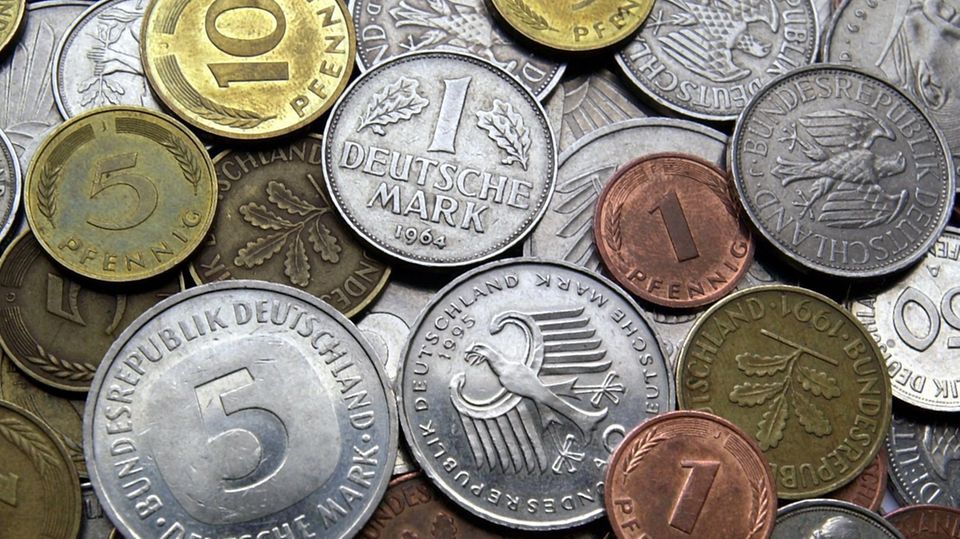
D-Mark, the former German currency, remains a compelling symbol of nostalgia in Germany, even decades after its transition to the Euro. Despite the shift to Euros in 2002, over twelve billion D-Marks are still hoarded by consumers who cherish their old German currency, often bringing them to the Bundesbank for exchange. The D-Mark represents not only financial value but also sentimental memories tied to personal and national history, with many recalling their experiences as they exchanged their coins and notes. Recent data shows that people frequently discover these treasures while clearing out old belongings, especially from parents or grandparents’ estates. As individuals continue to convert D-Marks to Euros, they often reminisce about a time when this currency was a staple in their daily lives, and the emotional weight it carries enhances its significance.
The legacy of the old German currency, known as the Deutsche Mark, continues to resonate among Germans long after the Euro’s introduction. This cherished currency symbolizes more than just monetary worth, representing a pivotal period in Germany’s economic history. Many people are still uncovering hidden caches of these notes and coins, largely during seasonal clean-ups or while sorting through family heirlooms. The exchange process at the Bundesbank offers a seamless transition from Deutsche Mark to Euros, allowing individuals to not only recover some monetary value but also to revisit fond memories associated with the D-Mark. This interplay of historical significance and personal sentiment makes the D-Mark an enduring topic of interest in contemporary discussions.
Understanding the D-Mark’s Enduring Value
The D-Mark, once the resilient currency of West Germany, holds a unique place in the hearts of many Germans even years after its replacement by the Euro. This is particularly evident as individuals continue to bring large quantities of D-Mark to the Bundesbank for exchange. Over 12 billion D-Marks are estimated to still be circulating in various forms, revealing a significant attachment to this old German currency. The nostalgia associated with D-Mark often goes beyond just monetary value; it is intertwined with personal history and collective memory, making it difficult for many to part with their old notes and coins.
The sentimental value attached to the D-Mark cannot be overstated. For many Germans, it signifies a time of economic stability and national identity before the switch to the Euro. As individuals sift through family heirlooms or remnants from their past, it’s common to encounter D-Mark notes hidden in old wallets and boxes. These findings often evoke a wave of nostalgia, prompting many to not only exchange the currency at the Bundesbank, but also to reminisce about the stories they hold. This emotional connection underlines the importance of preserving historical currencies in a quickly evolving economic landscape.
Exchanging D-Mark for Euro: A Simple Process
For those still in possession of old D-Mark, the exchange for Euros through the Bundesbank remains a straightforward and accessible option. As reported, last year alone saw the exchange of approximately 53 million Marks across Germany, despite the currency transition having taken place nearly two decades ago. Individuals can visit any of the 31 Bundesbank branches to convert their cash at no cost. Surprisingly, the value received often exceeds expectations, as many D-Mark coins, particularly the five-mark pieces, can accumulate significant sums.
The Bundesbank has made it easy for citizens to turn in their old currency. With no deadline for exchanges, this initiative not only allows individuals to convert their D-Mark to Euros but also facilitates the cleaning out of personal spaces, often revealing forgotten treasures. Many people choose to exchange these funds not for personal gain, but to remember loved ones and their legacy by spending the returned Euros on meaningful activities, such as enjoying coffee with friends in memory of shared times.
The Role of Bundesbank in Currency Exchange
The Bundesbank plays a pivotal role in the management of currency exchange in Germany, particularly concerning the D-Mark and its transition to the Euro. This institution not only oversees the physical exchange of old German currency but also provides insights into the historical significance and ongoing public interest in the D-Mark. Bundesbank board member Burkhard Balz highlights how numerous people discover D-Mark when clearing out their relatives’ belongings, often leading to emotional encounters as these individuals reflect on their childhood experiences with the currency.
As the custodian of German financial history, the Bundesbank continues to uphold the legacy of the D-Mark through its unwavering commitment to facilitating exchanges. Each transaction provides a glimpse into the past for many Germans, evoking feelings of nostalgia as they convert their old notes for contemporary use. The long-lasting demand for D-Mark exchange services showcases not just the inconvenience of change, but also the unwavering connection many have to their historical currency, emphasizing the role of institutions like the Bundesbank in maintaining this link.
Nostalgia and the D-Mark: More Than Just Currency
The D-Mark holds a nostalgic value that transcends its role as mere currency, embodying a significant period in Germany’s economic and cultural history. Many Germans, like Brunhilde Reimann-Lukas, associate personal memories with their old D-Marks, recounting stories of their upbringing and the changes they witnessed over the years. As individuals today find and convert these treasured notes, they are also engaging in a powerful act of remembrance tied to family history and national identity.
This emotional attachment to the D-Mark often spurs conversation about its impacts on personal lives. For many, D-Mark evokes not only a sense of pride but also reminders of significant life events. From family gatherings to significant purchases, the currency represents a tangible connection to their past. By exchanging D-Mark at the Bundesbank for Euros, individuals are able to honor their history while stepping into the modern economy. This unique relationship showcases how currencies can serve as vessels of memory and legacy.
The Value of Collecting D-Mark Coins and Notes
Collecting D-Mark coins and notes has become not only a nostalgic pastime but also a potential investment for many individuals. While the primary function of these collectibles remains their ability to be exchanged for Euros at the Bundesbank, collectors often value them for their historical significance and aesthetic appeal. Many enthusiasts seek out rare denominations and commemorative issues that might carry extra value, reflecting a thriving community dedicated to preserving the D-Mark’s legacy.
The collecting of D-Mark currency acts as both a tribute to a significant historical period and a potential future investment. As the years progress and fewer D-Marks are exchanged or circulated, some collectors believe that the rarity of these old notes will increase their value over time. Thus, holding onto these pieces of history not only retains sentimental value but could also offer monetary benefits. This blend of nostalgia with potential financial foresight fuels an ongoing interest in the D-Mark, showcasing its enduring importance in the fabric of German culture.
The Economic Impact of D-Mark on Modern Germany
Despite the shift to the Euro, the D-Mark continues to influence economic discussions in Germany. The psychological impact of the D-Mark period on German consumers is still evident today, shaping their spending habits and perceptions of value. Many older generations find it challenging to adapt their financial mindset to the Euro system, often converting prices and expenditures back to D-Mark equivalents in their minds, revealing a lingering trust and familiarity tied to their former currency.
The D-Mark represents a phase of economic robustness that many Germans yearn for; thus, its legacy plays a role in shaping current economic behavior. With over twelve billion D-Marks still unaccounted for, there remains a substantial connection to this currency, illustrating how economic efficiency is interwoven with personal history. As discussions about inflation, currency stability, and consumer confidence continue, the nostalgic pull of the D-Mark serves as a reminder of Germany’s financial evolution and resilience.
Discovering Hidden D-Mark Treasures
The thrill of discovering hidden D-Mark treasures adds an element of excitement to the process of exchange at the Bundesbank. Stories of individuals unearthing old currency while cleaning or sorting through belongings often surface, highlighting the unexpected rewards of engaging with one’s history. From dusty wallets to ancient boxes, these hidden finds can result in significant sums, evoking a sense of adventure and nostalgia for those who delve into their past.
Such discoveries not only provide a financial windfall but also reignite fond memories tied to the D-Mark. As people recount their stories of how they stumbled upon these concealed notes and coins, they reaffirm the importance of maintaining connections to their personal and national history. The process of discovering and exchanging D-Mark serves as a delightful reminder that while times change, the memories associated with old currency remain firmly entrenched in the hearts of many.
The Future of D-Mark in a Euro-Centric Economy
The future of the D-Mark in Germany’s Euro-centric economy is uncertain, yet continues to spark interest among those who remember its significance. The fact that individuals still have the opportunity to exchange their D-Mark for Euros at the Bundesbank without a set deadline keeps the old currency alive amidst a modern financial landscape. This flexibility allows those with cultural and sentimental ties to the D-Mark to maintain their connection while transitioning to contemporary financial practices.
As society moves further into a Euro-centric future, the D-Mark’s role may shift from functional currency to an artifact of national identity and pride. Exchange services provided by the Bundesbank ensure that this piece of history does not vanish completely, allowing future generations to learn about the D-Mark’s significance and impact. The enduring interest in the D-Mark illustrates how former currencies can continue to represent cultural narratives, connecting people to their heritage while adapting to ongoing changes in the economy.
Frequently Asked Questions
What are the current options for exchanging D-Mark to Euros at the Bundesbank?
As of now, you can exchange your old D-Mark for Euros at any of the 31 Bundesbank branches across Germany, free of charge. There is no deadline for exchanging D-Mark notes or coins.
Why do many Germans still hold onto their D-Mark despite the introduction of the Euro?
Many Germans retain their D-Mark due to sentimental value and the memories associated with the old German currency. Items often resurface during household cleaning, fostering a connection to the past.
Is there a limit to how much D-Mark can be exchanged for Euros?
There is no limit to the amount of D-Mark you can exchange at the Bundesbank, although the exchange rate is set at approximately two D-Mark for one Euro.
What is the significance of D-Mark in relation to Germany’s economic history?
The D-Mark represents a significant era in Germany’s economic history, as it was the main currency before the Euro was introduced. It symbolizes stability and economic growth in post-war Germany.
Can I still find D-Mark coins and notes in circulation?
While the Euro has been the official currency since 2002, there are still an estimated twelve billion D-Mark in circulation that individuals have not exchanged. Many of these may still be found in homes during cleaning or organizing.
How does the Bundesbank process the exchanged D-Mark?
Upon exchanging D-Mark, the Bundesbank sorts the old currency using advanced machines. The exchanged amounts often surprise individuals, as many uncover hidden collections of coins and notes.
What historical factors led to the transition from D-Mark to Euro in Germany?
The transition from D-Mark to Euro was driven by the desire for a unified currency within the European Union, intended to enhance economic stability and reduce currency exchange costs across member states.
Why is it important for the Bundesbank to continue accepting D-Mark exchanges?
Accepting D-Mark exchanges helps preserve the historical significance of the old German currency and provides an opportunity for individuals to finally convert their forgotten currency into modern usage.
What are the advantages of exchanging D-Mark for Euros now?
Exchanging D-Mark for Euros now allows individuals to find new uses for their old currency, as it can be exchanged for cash that holds contemporary purchasing power, giving those forgotten D-Mark a meaningful role again.
What should I do if I find D-Mark notes while cleaning my home?
If you find D-Mark notes, you should take them to your nearest Bundesbank branch for exchange. Remember, you can do this at any time, as there is no expiration date on the exchange process.
| Key Points |
|---|
| Despite the introduction of the Euro in 2002, over 12 billion D-Marks are still in circulation in Germany. |
| Many Germans continue to hoard D-Mark, exchanging them for Euros at the Bundesbank. |
| Last year, approximately 53 million Marks were exchanged at the Bundesbank, consistent with trends from previous years. |
| Consumers frequently discover old D-Mark when clearing out family belongings or during spring cleaning. |
| The Bundesbank reports that some D-Mark are likely lost or destroyed and are unlikely to reappear. |
| There is no deadline for exchanging D-Mark for Euros; the exchange remains free of charge at Bundesbank branches. |
Summary
D-Mark continues to hold sentimental and monetary value in Germany, as evidenced by the fact that substantial amounts remain in circulation despite the Euro being introduced as cash over two decades ago. The ongoing desire to exchange D-Mark reflects both nostalgia and financial opportunity for many Germans. This phenomenon highlights the lasting impact of currency on personal and collective memories.

