
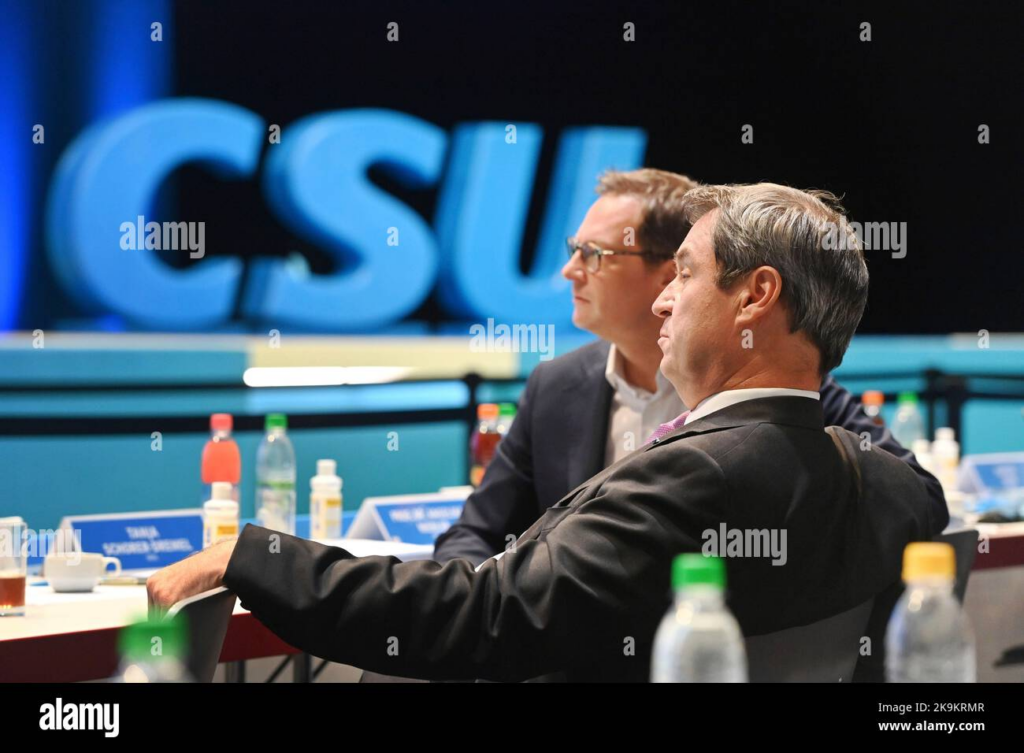
The CSU party congress has commenced amid heightened tensions in the Germany political climate as CSU leader Markus Söder prepares to address critical issues facing the nation. Speaking in Munich, Söder delivered a stark message highlighting the profound challenges from economic pressures and escalating AfD criticism. He emphasized that the fabric of Germany’s prosperity and democracy is currently under siege, calling for a collective defense against these threats. With a looming recession in Germany, Söder pointed out the urgent need for political action to protect citizens from fears of downward mobility and old-age poverty. As he prepares for his fifth re-election as party leader, the focus remains on the party’s strategy to navigate these tumultuous times effectively.
The assembly of the Christian Social Union, commonly known as the CSU party congress, serves as a pivotal platform for discussing the future political direction amid a challenging landscape. As the Bavarian party gathers, themes of economic adversity and rising populist sentiments take center stage, reflecting broader concerns within German society. Markus Söder, the prominent figure at this event, underlines the importance of addressing the public’s anxieties regarding the financial downturn and increasing criticism from right-wing factions, particularly the AfD. He warns against complacency as the nation grapples with not just internal strife but also significant international pressures. Through this congress, the CSU aims to reaffirm its commitment to safeguarding democratic values while tackling the pressing socioeconomic issues that define Germany today.
Markus Söder’s Vision for Germany Amid Challenges
In his recent keynote address at the CSU party congress, Markus Söder articulated a stark view of the current political landscape in Germany. With a tone of urgency, he highlighted the multiple pressures facing the nation, stating, “We are being attacked like never before.” This sentiment reflects not just a political challenge, but a profound concern over the erosion of Germany’s traditional values, including democracy and social welfare. Söder’s plea for resilience underscores a critical call to action for his party as they navigate economic uncertainties and societal fears associated with downward mobility and old-age poverty.
Söder emphasized the necessity for political leaders to address the rising fears among Germans, amidst growing economic difficulties and a looming recession. The challenges, intensified by external factors such as trade tariffs and shifting dynamics in international relations, have significantly impacted the German economic landscape. The need for a steadfast response and effective governance is paramount, as the CSU aims to reassure citizens of its commitment to maintaining social stability and protecting the nation’s democratic integrity.
The Economic Landscape: Challenges Ahead for Germany
The economic discourse during the CSU party congress reflected the escalating concerns regarding a potential recession in Germany. Markus Söder, as the party leader, pointed out that the challenges to Germany’s export model have become increasingly evident, particularly with the pressures arising from the USA and China. Tariffs that once seemed manageable have transformed the relationship dynamics, indicating a shift where Germany is now more reliant on imports from China rather than leading the export charge. This reversal not only threatens economic stability but also raises alarms about Germany’s future competitive edge in a globalized market.
Söder’s insights on the economy align with broader trends observed within the political climate in Germany, where economic instability breeds uncertainty and fear. The potential implications of these challenges are vast, affecting employment rates, social welfare systems, and the overall prosperity model that many Germans cherish. As the nation grapples with these economic trials, the role of the CSU becomes critical in providing leadership and innovative solutions to restore confidence among the populace.
CSU Party Congress: A Call to Unity Against Radicalization
During the CSU party congress, Söder’s remarks aimed to unify the party’s stance against radical ideology, particularly in light of the rise of the AfD party. By stating, “The AfD wants a different country, a different society,” Söder draws a distinct line between conventional political discourse and the extremist views that seek to erode foundational democratic principles. His categorical rejection of any collaboration with the AfD resonates deeply within the party, aiming to consolidate support against what he views as a direct threat to Germany’s democratic fabric.
Söder’s argument against the AfD underscores a growing trend in European politics where mainstream parties are facing existential pressures from radical factions. In his speech, he called for an intellectual confrontation with the AfD rather than legislative restrictions, emphasizing the importance of arguments and facts over blanket bans. The party congress functioned not merely as a platform for campaigning but as a critical assembly for reaffirming the CSU’s mission to protect the country from divisive politics, ensuring the values of democracy and societal cohesion are upheld.
Addressing Foreign Relations and Security Challenges
Markus Söder’s address at the CSU party congress also tackled pressing foreign policy issues, particularly regarding the ongoing conflict in Ukraine. He condemned any proposals for a peace treaty that would come at the expense of Ukraine, likening such an agreement to the catastrophic Munich Agreement of 1938. This historical analogy serves as a powerful reminder of the consequences of appeasement in geopolitics. By advocating for unwavering support of Ukraine, Söder not only positions the CSU as a party of strong internationalist principles but also emphasizes the strategic role Germany must play in European security.
Söder’s reflections on the geopolitical landscape highlight the complex interplay between national interests and the urgency of collective European action. Describing Europe as a mere bystander in negotiations between the USA and Russia, he calls for a reevaluation of Germany’s role on the global stage. The CSU, under Söder’s leadership, must navigate these treacherous waters by strengthening alliances and asserting influence to ensure Germany remains a key player in international discussions surrounding security and economic cooperation.
Rejecting the AfD: A Stand for Democratic Values
The repudiation of the AfD by Markus Söder at the CSU party congress reflects a broader strategy to counteract the growing influence of right-wing populism in Germany. By declaring, “There can never be cooperation: ‘We must not become helpers,'” Söder positioned the party firmly against any ideology that undermines democratic principles. This stance is crucial not only for maintaining party integrity but for ensuring that the core values of freedom and democracy are preserved in the face of radical opposition.
Moreover, Söder’s commitment to confronting the AfD with rational discourse rather than draconian measures reflects a sophisticated approach to political engagement. Rather than resorting to outright bans that may backfire, focusing on substantive debates presents an opportunity for the CSU to attract moderate voters who may feel disillusioned. This strategy is vital as the party seeks to reinforce its identity as a protector of democratic values, fostering a political environment that values reasoned discussion over divisive rhetoric.
The Role of Leadership in Navigating Germany’s Future
As Markus Söder prepares for his fifth term as CSU leader, the emphasis on strong leadership is paramount in navigating Germany through its current array of challenges. The political landscape is fraught with instability, and the expectations from the electorate are high. With his experience, Söder is positioned to provide direction during these turbulent times, drawing on his past successes while also adapting to the evolving political climate.
Leadership in this context is not only about political maneuvering but also involves fostering trust within the community. Building bridges with various demographics, addressing economic fears, and ensuring people feel heard are critical components of his leadership strategy. As the CSU party congress concludes, the reaffirmed leadership of Söder stands as a beacon of hope and reassurance amid an increasingly complex geopolitical and economic environment.
A Future Focused on Economic Prosperity
Despite the current economic turmoil, Söder’s vision for a prosperous Germany is resolute. Addressing the economic challenges head-on, he elaborated on strategies aimed at revitalizing the export model that has historically been a backbone of the German economy. Modernizing infrastructure, investing in technology, and nurturing future-oriented industries are outlined as priorities for his leadership, as the CSU seeks to adapt to the changing global economic environment.
In parallel, Söder also acknowledges the necessity of supporting small and medium-sized enterprises, which are crucial for job creation and local economies. By implementing policies that stimulate innovation and reduce bureaucratic hurdles, the CSU aims to reinforce economic resilience. The party’s commitment to economic prosperity resonates with voters who are increasingly concerned about their futures, reinforcing the need for a forward-thinking political agenda.
Building Consensus Among Political Forces
In the face of mounting criticisms from both the AfD and other political entities, Söder underscored the importance of building consensus among the established political parties to counteract radical ideologies. By advocating for a united front, he aims to galvanize a broader coalition that can effectively challenge the divisive narratives presented by the AfD. This call for unity is crucial, particularly as Germany strives to maintain its democratic integrity in an era marked by polarization.
As the CSU positions itself as a moderate alternative to radical voices, the emphasis on collaboration becomes vital. Establishing communication channels among various parties not only aids in combating the AfD’s rhetoric but also fortifies the political landscape against extremism. The CSU’s recognition of the need for collaboration represents a strategic pivot that seeks to reinforce democratic governance and ensure societal stability amidst increasing pressures from radical factions.
Markus Söder and the CSU’s Path Forward
Markus Söder’s election to continue leading the CSU comes at a critical juncture for both the party and the nation. As he reflects on past successes, the party is presented with an opportunity to redefine its future amid evolving challenges. The forthcoming period is imperative, not just for recovery from current socio-economic difficulties but also for re-establishing Germany’s position as a leader on the European stage.
Söder’s leadership will be pivotal in navigating the complexities of domestic and foreign challenges. Ensuring that the CSU remains proactive and responsive to the needs of its constituents will be essential in fostering a sense of community and shared purpose. With a commitment to uphold the party’s core values and an unwavering focus on Germany’s prosperity, Söder aims to steer the CSU toward a brighter, more sustainable future.
Frequently Asked Questions
What did Markus Söder emphasize in his speech at the CSU party congress regarding Germany’s political climate?
In his keynote speech at the CSU party congress, Markus Söder highlighted the challenges facing Germany’s political climate, stating that the country is under unprecedented attack on its model of prosperity, social state, and democracy. He emphasized the need for the CSU to defend these principles against both domestic and international threats.
How does the recession in Germany impact the message presented at the CSU party congress?
Markus Söder addressed the economic challenges at the CSU party congress, noting that Germany is facing an increasingly serious recession. He pointed out that the traditional German export model is under threat from international factors, such as tariffs in the USA and shifting trade dynamics with China, which are crucial issues for the party’s agenda.
What criticism did Markus Söder express towards the AfD during the CSU party congress?
During the CSU party congress, Markus Söder strongly criticized the AfD, stating that the party promotes a fundamentally different understanding of state and society. He categorically ruled out any potential collaboration, indicating that the AfD aligns itself with interests contrary to Germany’s democratic values and NATO commitments.
How does Markus Söder’s speech reflect on the economic challenges facing Germany?
Markus Söder’s speech at the CSU party congress reflected the economic challenges facing Germany by addressing the severe recession and the impact of global trade dynamics. He warned that Germany’s previous reliance on a stable export model is being challenged, necessitating a response that reassures citizens about their economic future.
What position does Markus Söder seek to confirm during the CSU party congress, and what significance does this hold?
Markus Söder aims to confirm his position as the CSU leader during the party congress, marking his fifth election at the age of 58. This confirmation is significant as it symbolizes continuity in leadership amidst various national challenges, including political dissent and economic recession.
What stance did Markus Söder take regarding international relations and the war in Ukraine at the CSU party congress?
At the CSU party congress, Markus Söder took a firm stance against a peace treaty that would compromise Ukraine’s sovereignty, denouncing any agreement that resembles the historical Munich Agreement. He advocated for a strong European voice and reiterated support for Chancellor Olaf Scholz and CDU leader Friedrich Merz in navigating these complex international relations.
| Key Point | Details |
|---|---|
| Opening Remarks | Söder addressed the current challenges facing Germany and the CSU party. |
| Attack on Democratic Values | Söder emphasized that the nation is under attack, urging the need for defense of democracy and prosperity. |
| Economic Concerns | Söder highlighted a recession, the effects of US tariffs, and China’s changing trade dynamics. |
| War in Ukraine | Söder rejected peace negotiations that would sacrifice Ukraine’s independence, citing the importance of solidarity with Ukraine. |
| Position on AfD | Söder firmly opposed cooperation with the AfD, criticizing their policies and connection to Putin. |
| Leadership Election | Söder anticipated his re-election as party leader during the congress, aiming for continued leadership. |
Summary
The CSU party congress serves as a crucial platform for discussing the challenges and future direction of Germany under the leadership of Markus Söder. As he navigates through a landscape marked by economic uncertainty and geopolitical tensions, Söder’s call to defend democratic values resonates strongly. With a firm stance against radical forces like the AfD and a commitment to supporting Ukraine, the congress not only reaffirms the CSU’s position but also sets the stage for its strategic responses to contemporary issues. As the congress unfolds, the CSU is poised to solidify its leadership in addressing both internal and external threats to the nation.

