
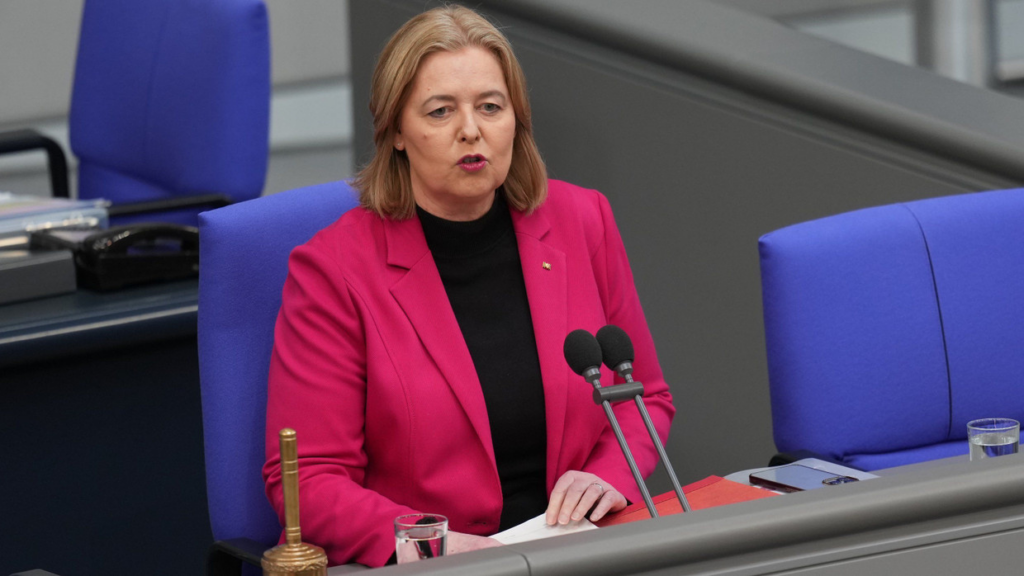
The recent conflict involving Labor Minister Bärbel Bas has stirred significant controversy among employers and industry representatives alike. During her remarks at the Juso congress, Bas fiercely defended the contentious pension package while disparaging entrepreneurs, describing them as adversaries rather than allies. This bold stance has sparked outrage, leading to a united response from 15 middle-class associations who criticized her statements and emphasized the importance of collaboration for the German economy. In their joint letter, they urged Bas to clarify her position, asserting that employers are not the enemy but crucial players in maintaining social stability. As the backlash grows, the middle class’s response reflects a demand for respect and constructive dialogue rather than division and criticism.
The ongoing dispute surrounding Labor Minister Bärbel Bas highlights a critical rift between government perceptions of employers and the realities faced by the middle class. At a recent event, Bas’s comments not only targeted the pension package but also framed business leaders as opponents in a socio-economic battle. This has led to fierce backlash from various associations representing entrepreneurs who argue that cooperation, rather than confrontation, is essential for the health of the German economy. Many believe that constructive dialogue and recognition of the vital role played by the middle class are necessary to foster a more collaborative approach to government policy. As this situation unfolds, it serves as a reminder of the importance of bridging gaps between political figures and the business community for a more unified economic future.
Bärbel Bas Employer Conflict: A Critique of Statements
Labor Minister Bärbel Bas recently faced significant backlash for her remarks at the Juso congress, where she portrayed employers as adversaries rather than partners in the economy. Her statements have sparked outrage among business representatives who argue that such rhetoric undermines the cooperative spirit essential to Germany’s social market economy. The criticism highlights a growing concern that portraying entrepreneurs and the middle class in a confrontational light could erode the trust that underpins economic prosperity and social stability.
The reactions from the business community have been swift and harsh. Several associations representing the interests of the middle class expressed their shock in a joint letter, demanding clarification from Bas regarding her stance on employers. They emphasized that entrepreneurs are critical to the economy, responsible for creating jobs, driving innovation, and maintaining social services. By framing these figures as opponents, Bas runs the risk of alienating an entire sector that contributes significantly to the country’s stability and growth.
Frequently Asked Questions
What did Bärbel Bas say at the Juso congress regarding her views on the German economy?
At the Juso congress, Labor Minister Bärbel Bas criticized employers, indicating a need to ‘fight together’ against certain adversaries. Her statement has sparked controversy, prompting significant criticism from business representatives and the middle class, who feel such remarks undermine the collaborative spirit essential for fostering a healthy German economy.
How has Bärbel Bas’s employer conflict affected middle-class perceptions?
The employer conflict ignited by Bärbel Bas’s statements has led to sharp backlash from middle-class associations. They argue that her rhetoric alienates essential contributors to the German economy, emphasizing a need for respect and cooperation rather than division and confrontation.
What is the pension package controversy associated with Bärbel Bas?
The pension package controversy linked to Bärbel Bas centers around her defense of social security measures at the Juso meeting, which was met with derision by employers. Critics demand clarity from Bas on her stance toward the middle class, arguing that her comments create an adversarial impression that undermines the collaborative efforts needed in the German economy.
Why did associations criticize Bärbel Bas’s remarks at the employers’ day?
Associations criticized Bärbel Bas’s remarks at the employers’ day because they perceived her comments as disrespectful towards entrepreneurs, suggesting that they are adversaries rather than partners in the economy. This criticism reflects deep concerns among the middle class about maintaining a cooperative political dialogue vital for economic stability.
What do middle-class associations expect from Bärbel Bas after her controversial statements?
Following her controversial statements, middle-class associations expect Bärbel Bas to clarify her position, stressing that she recognizes entrepreneurs as vital players in the German economy. They seek a commitment from her to foster respect and dialogue instead of division, urging her to avoid rhetoric that paints the business sector as an opponent.
How did Christoph Ahlhaus react to Bärbel Bas’s statements about employers?
Christoph Ahlhaus, the federal managing director of the Middle Class Association BVMW, criticized Bärbel Bas for engaging in what he called ’employer-bashing’ during her address at the Juso congress. He described her remarks as an imposition on contributors in Germany, reflecting broader discontent with her stance in the employer conflict.
What is the response from the Association of the Chemical Industry regarding Bärbel Bas’s employer conflict?
The Association of the Chemical Industry, represented by Wolfgang Große Entrup, expressed strong disapproval of Bärbel Bas’s statements, questioning whether the SPD still serves as a workers’ party. He emphasized that cooperation, rather than hostility, is essential for overcoming current challenges in the German economy.
What do the middle-class associations represent in the context of Bärbel Bas’s employer conflict?
In the context of Bärbel Bas’s employer conflict, middle-class associations represent the interests of small and medium-sized businesses that contribute significantly to the German economy. They advocate for collaborative dialogue and respect, challenging any narrative that positions them as adversaries in the socio-economic landscape.
| Key Points | Details |
|---|---|
| Bärbel Bas’s Appearance | Mocked for defending the pension package at employers’ day and criticized in response at the Juso congress. |
| Employer Reactions | Business representatives and middle-class associations expressed anger over Bas’s remarks, arguing that entrepreneurs deserve respect, not confrontation. |
| Joint Letter of Condemnation | Fifteen associations sent a public letter expressing concern over Bas’s statements and urging clarification on employer relationships. |
| Call for Cooperation | Associations emphasize the importance of collaboration between government and middle class, stating they are vital for economic stability. |
| Criticism from Industry Leaders | Notable figures from various industries condemned Bas’s comments as damaging and distasteful to the middle class’s contributions. |
Summary
The Bärbel Bas employer conflict has sparked significant controversy within the business community, highlighting the widening rift between government and the middle class. Bas’s comments at the Juso congress, where she suggested a combative stance against employers, have drawn strong backlash. Fifteen middle-class associations condemned her remarks, reminding her that entrepreneurs enable the economy and deserve mutual respect. This discourse emphasizes the need for political dialogue that uplifts rather than divides, ensuring that the essential contributions of the middle class are recognized and valued.

