
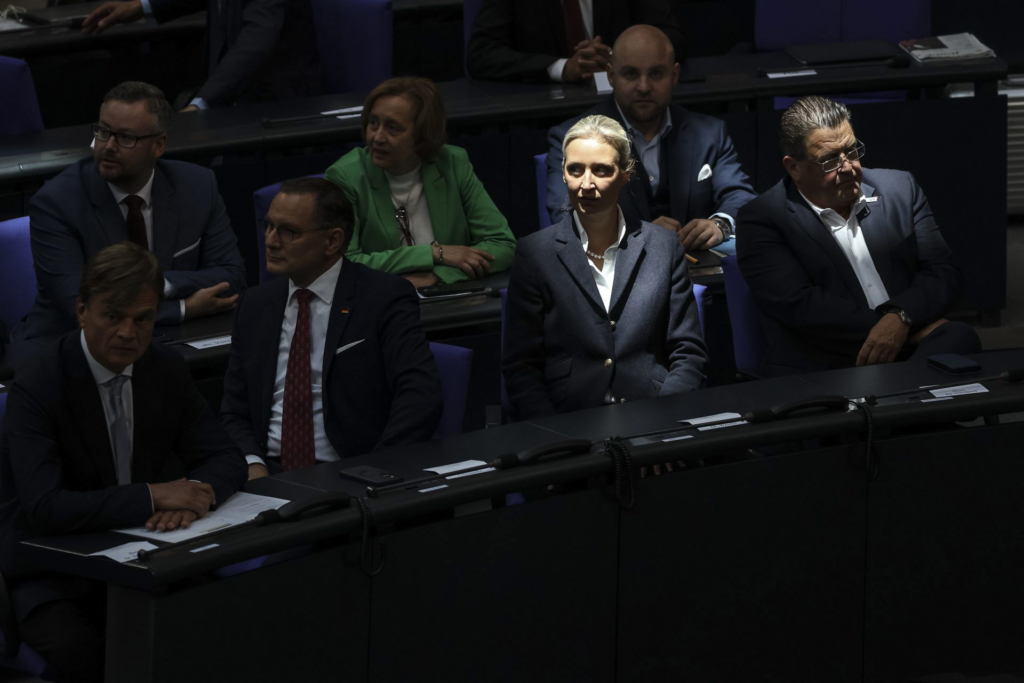
Alice Weidel’s criticism of Verfassungsschutz has sparked intense discussion in political circles, highlighting the tensions between the AfD and Germany’s federal security agency. During the WELT talk “BURGARD,” the AfD parliamentary group leader didn’t hold back, labeling Verfassungsschutz as “slimy Stasi informants,” igniting further AfD criticism and creating ripples in the dialogue about political parties in Germany. Weidel’s statements bring to light the growing frustrations with perceived state surveillance and interference, which resonate deeply with some segments of the electorate. Meanwhile, political scientist Volker Kronenberg counters the AfD’s narrative, suggesting that their approach lacks a willingness to collaborate or build bridges with other parties. As debates continue, the underlying issues of trust and transparency in government institutions and their role in shaping political discourse remain crucial in the context of Verfassungsschutz criticism.
The ongoing scrutiny of the Federal Office for the Protection of the Constitution has become a focal point for discussions around far-right politics in Germany. Alice Weidel’s forceful remarks paint a picture of a contentious relationship between the AfD and state authorities, exposing the fractures within the political landscape. In this heated atmosphere, the claims of being surveilled by ‘Stasi-style’ informants highlight the party’s narrative against what they perceive as oppressive oversight. Conversely, the criticisms from experts like Volker Kronenberg underscore a lack of constructive engagement from the AfD, indicating the party’s strategy may favor confrontation over cooperation. This evolving dynamic illustrates not only the challenges faced by political parties in Germany today but also the implications of such rhetoric on public perception and policy.
Alice Weidel’s Sharp Critique of Verfassungsschutz
In a recent appearance on the WELT talk show “BURGARD,” Alice Weidel, the leader of the Alternative for Germany (AfD) parliamentary group, did not hold back in her condemnation of the Federal Office for the Protection of the Constitution, commonly known as Verfassungsschutz. Describing the agency as ‘slimy Stasi informants,’ Weidel’s rhetoric aimed to discredit the institution tasked with monitoring extremist activities in Germany. This statement is particularly significant, considering the historical context of the Stasi in East Germany, which operated as a secret police organization notorious for espionage against its own citizens.
Weidel’s criticisms have illuminated a broader discourse surrounding the role of Verfassungsschutz in monitoring political parties in Germany. As an agency that many perceive as a watchdog against far-right extremism, its actions are often met with skepticism from parties like the AfD. This antagonistic relationship begs the question: can the Verfassungsschutz maintain its integrity while facing accusations from political figures who feel targeted by its oversight?
The AfD’s Approach to Political Discourse
Political scientist Volker Kronenberg has recently voiced his concerns regarding the AfD’s approach to political discourse within Germany. He argues that instead of fostering inclusivity or seeking common ground, the AfD has adopted a confrontational stance. By eschewing dialogue and compromise, the party not only alienates potential allies but also reinforces the critical narrative of their critics, who describe the party as divisive. Kronenberg’s observations highlight the current landscape of political parties in Germany, where collaboration is essential for effective governance.
Furthermore, this polarization has implications for the AfD’s political strategy. Their reliance on controversy and engagement in skirmishes with institutions like Verfassungsschutz may prove detrimental in the long term. By positioning themselves as perpetual outsiders or victims of a biased system, the AfD risks alienating moderate voters who favor pragmatic solutions over inflammatory rhetoric. This dynamic continues to raise questions about the future of political collaboration in Germany.
Verfassungsschutz and its Role in Modern Politics
The Federal Office for the Protection of the Constitution, or Verfassungsschutz, plays a critical role in safeguarding the democratic principles of Germany. Tasked with monitoring extremism and providing relevant intelligence, the agency’s methods and effectiveness have come under scrutiny, particularly by the AfD and other far-right factions. With accusations of employing tactics reminiscent of the Stasi, questions arise about the balance between national security and civil liberties in a democratic society. As political parties in Germany navigate this landscape, the Verfassungsschutz’s approach remains a contentious topic.
Moreover, the agency’s vigilance in identifying potential threats has made it a focal point for criticism from various political quarters. The AfD’s disparagement of Verfassungsschutz as ‘slimy informants’ not only reflects their strategy of undermining state institutions but also raises ethical concerns regarding surveillance and the public perception of security forces. The ongoing debate emphasizes the need for transparency and accountability within the agency to maintain public trust and respect for democratic processes.
The Impact of Criticism on the AfD’s Public Image
The unrelenting criticism faced by the AfD, particularly from political analysts like Volker Kronenberg, has profound implications for the party’s public image. Conversations around their refusal to engage in constructive dialogue resonate negatively with voters who prioritize cooperation in politics. By reinforcing their narrative of victimhood and disdain for established institutions like Verfassungsschutz, the AfD risks solidifying its reputation as a fringe party rather than a viable alternative to traditional political parties in Germany.
Moreover, such criticism does not solely stem from external observers. Internally, factional disputes over strategy and ideology can manifest as dissent among party members, potentially destabilizing their support base. If the AfD continues down this path of antagonism, it may find itself isolated in an increasingly dynamic and collaborative political environment, where cooperation and compromise become paramount for survival and success.
Connections Between AfD Criticism and Historical Context
The term ‘Stasi informants’ has a considerable historical weight that Alice Weidel invoked during her criticism of Verfassungsschutz. This reference not only paints a clear picture of the AfD’s feelings toward this monitoring agency but also draws on Germany’s complex history with surveillance and state control. The memories of the oppressive Stasi regime evoke strong reactions among the public, and by paralleling Verfassungsschutz with this historical entity, Weidel aims to galvanize support based on shared fears of governmental overreach.
This historical context significantly influences how contemporary political narratives are shaped in Germany. For the AfD, leveraging this kind of charged language serves to frame their political struggles as a fight for freedom against repressive oversight. However, it also has the potential to backfire, alienating moderate constituents who might view these comparisons as extreme or inappropriate. This delicate balance illustrates the multifaceted relationship between past and present in German politics.
Volker Kronenberg’s Perspective on the AfD
Volker Kronenberg’s assessment of the AfD as a party that ‘does not build bridges’ starkly contrasts with the expectations of many constituents who desire collaboration among political factions. His insights underscore a critical evaluation of the AfD’s strategies, suggesting that their focus is more on confrontation than on problem-solving. This aligns with a growing sentiment that German politics requires more cooperative engagement, especially within a coalition-driven landscape.
Kronenberg’s critique highlights a significant issue for the AfD moving forward: their inability or unwillingness to cultivate relationships with other political parties may limit their effectiveness and acceptance within the broader spectrum of German politics. As parties increasingly seek alliances to address pressing national issues, the AfD’s isolationist tendencies could hinder their prospects for future success and diminish their influence.
The Challenge of Surveillance in Democratic Systems
The dialogue surrounding the Verfassungsschutz shines a light on the larger issue of how democracies reconcile the need for surveillance with individual rights. As tensions rise between political factions like the AfD and oversight bodies, the question of whether such institutions are overstepping their boundaries becomes critical. The historical stigma associated with institutions reminiscent of the Stasi fuels public apprehension, challenging the legitimacy of modern surveillance practices in protecting constitutional order.
Ultimately, the role of Verfassungsschutz must be continually reassessed to ensure it effectively serves its purpose without infringing on civil liberties. This ongoing evaluation is not just vital for maintaining public trust but also for ensuring that political opposition, including parties like the AfD, can exist without fear of undue governmental scrutiny. Achieving that balance remains one of the central challenges in contemporary German governance.
Navigating the Political Landscape Amid Criticism
As political parties in Germany grapple with the heightened scrutiny and criticism from both their opponents and watchdog organizations like Verfassungsschutz, the challenge of navigating this landscape becomes palpable. The AfD, in particular, faces the dual challenge of maintaining its base while addressing valid concerns raised by analysts like Kronenberg. The party’s approach to criticism can define its future trajectory in a rapidly changing political environment where collaboration is increasingly necessary.
Consequently, the AfD must reassess its strategy to engage in more constructive political dialogue. A shift from confrontational messaging to a more responsive and cooperative tone could potentially attract broader support while diminishing the perception of being a fringe party. By addressing the criticisms head-on and demonstrating a willingness to collaborate on issues, the AfD could redefine its role within the German political sphere.
Future Implications of Political Strategies
The political strategies employed by the AfD and the responses from figures like Alice Weidel and Volker Kronenberg signal a critical juncture for the party and its place in German politics. As pressure mounts from both governmental entities and public sentiment, how the AfD chooses to adapt—or resist adaptation—will significantly influence its viability in future elections. The need for a reflection on the implications of their current strategies is evident, as failure to shift could result in diminishing returns.
Moreover, these dynamics serve as a broader lesson in political strategy, illustrating the importance of responsiveness in an era defined by shifting public sentiments and increasing calls for accountability. For the AfD, recognizing that confrontation can sometimes breed isolation rather than solidarity may be the key to forging pathways toward broader acceptance among the electorate. The future of the AfD will largely hinge on its ability to navigate these challenges while remaining true to its core principles.
Frequently Asked Questions
What were Alice Weidel’s main criticisms of the Verfassungsschutz during the WELT talk?
Alice Weidel criticized the Federal Office for the Protection of the Constitution (Verfassungsschutz) by labeling them as “slimy Stasi informants.” This criticism reflects her perspective on the agency’s surveillance methods and perceived political bias against her party, the AfD.
How does Alice Weidel’s criticism of the Verfassungsschutz relate to AfD’s political stance?
Alice Weidel’s criticism of the Verfassungsschutz underscores the AfD’s broader stance against governmental institutions they view as hostile. By denouncing the agency, the AfD seeks to rally support by framing themselves as victims of political persecution from Germany’s state structures.
What does political scientist Volker Kronenberg say about the AfD in response to Alice Weidel’s criticisms?
Volker Kronenberg offered a critique of the AfD, noting that they are not seeking to build bridges or cooperate with other political parties in Germany. He emphasized that the AfD’s approach is characterized by a rejection of compromise, which contrasts with the democratic process.
How does the term ‘slimy Stasi informants’ fit into the context of AfD criticism of the Verfassungsschutz?
The phrase ‘slimy Stasi informants’ used by Alice Weidel reflects the AfD’s longstanding criticism of the Verfassungsschutz as an institution reminiscent of East Germany’s secret police. This comparison is intended to evoke distrust and highlight perceived overreach by the agency in monitoring political dissent.
In what ways has the criticism of Verfassungsschutz impacted the AfD’s political narrative?
The AfD’s criticism of the Verfassungsschutz has bolstered its narrative of being under siege by left-leaning institutions. This strategy aims to consolidate support among voters who feel disillusioned with the political establishment and who are concerned about state surveillance.
What are the implications of Alice Weidel’s comments for the relationship between the AfD and other political parties in Germany?
Alice Weidel’s comments may further alienate the AfD from other political parties in Germany. By using incendiary rhetoric against agencies like the Verfassungsschutz, it positions the AfD outside the mainstream political discourse, making collaboration unlikely.
What role do accusations of surveillance play in the AfD’s criticisms of the German government?
Accusations of surveillance, particularly against the Verfassungsschutz, are central to the AfD’s criticism of the German government. They tap into fears about overreach and civil liberties, framing the AfD as a defender of individual rights against state intrusion.
| Key Points |
|---|
| Alice Weidel’s Criticism of the Verfassungsschutz |
| Weidel labels the agency as “slimy Stasi informants.” |
| Criticism from Political Scientist Volker Kronenberg. |
| Kronenberg argues that the AfD fails to build bridges and seeks no cooperation. |
| The AfD’s strategy is characterized by contempt for compromise. |
Summary
Alice Weidel’s criticism of Verfassungsschutz sheds light on her contentious views regarding the agency’s role in German politics. During the WELT talk “BURGARD,” Weidel boldly labeled the Verfassungsschutz as “slimy Stasi informants,” highlighting her strong opposition to its activities. This stance was further countered by political scientist Volker Kronenberg, who asserted that the AfD is not engaged in constructive political discourse, instead, they are perpetuating a divisive approach void of collaboration and compromise.

