
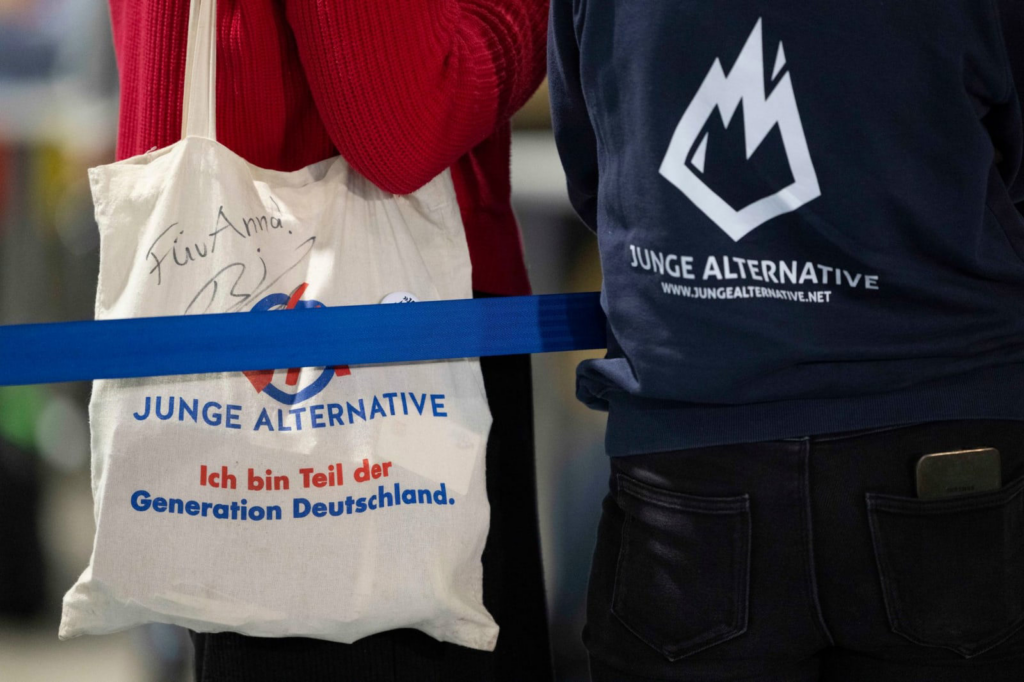
At the recent AfD youth congress held in Gießen, a speech by Alexander Eichwald ignited significant controversy and unrest, echoing themes reminiscent of Germany’s tumultuous past. With a performance that some described as eerily reminiscent of Hitler, Eichwald addressed the audience as “party comrades,” provoking concern over the implications of his rhetoric. His remarks centered around the notion of duty to preserve German culture from perceived foreign threats, stirring debate about national identity and belonging. As the party’s leadership scrambled to respond to this shocking performance, they announced an investigation into his background and membership status, raising questions about the serious nature of his speech versus a potential political satire. The aftermath has sparked widespread reactions, with many viewers left questioning Eichwald’s intentions and the broader implications for the AfD’s image in contemporary German politics.
During the recent assembly of the youth faction of the Alternative for Germany (AfD), an incident involving member Alexander Eichwald drew considerable attention. His provocative comments, styled similarly to infamous historical figures, have led many to ponder the integrity of his message regarding Germany’s cultural heritage and national responsibilities. Observers of this political gathering are keen to discern whether his delivery was genuinely earnest or a satirical critique of extremist rhetoric in modern governance. The leadership’s pledge to investigate his affiliations signals a broader dialogue on the boundaries of free speech within political youth gatherings. As discussions unfold, both supporters and critics are grappling with the ramifications of Eichwald’s statements on Germany’s political landscape.
Controversial Speech at AfD Youth Congress
At the recent AfD youth congress held in Gießen, the atmosphere quickly soured when Alexander Eichwald delivered a speech that invoked confusion and unrest among the attendees. His remarks, delivered with a pronounced rolling ‘R’ and addressing the crowd as ‘party comrades,’ echoed disturbing rhetoric reminiscent of historical fascist ideologies. This incident raises critical questions about the boundaries of political speech and the implications for the party’s image, especially in contemporary Germany where the conversation around nationalism and cultural identity remains highly sensitive.
Eichwald’s declaration of love and loyalty to Germany and the assertion that attendees had a national duty to shield German culture from foreign influences aligns with rising nationalist sentiments across Europe. However, it also risks alienating moderate party members and citizens concerned about the resurgence of far-right language. The leadership of the AfD swiftly announced plans to review Eichwald’s membership rights, suggesting that the party is keen on maintaining some semblance of control and integrity amidst the uproar.
Frequently Asked Questions
What happened at the recent AfD youth congress involving Alexander Eichwald?
At the AfD youth congress in Gießen, Alexander Eichwald gave a controversial speech reminiscent of Adolf Hitler’s style, referring to attendees as ‘party comrades’ and emphasizing national duty to protect German culture. This incident led to significant unrest and confusion among participants.
Why did Alexander Eichwald’s speech at the AfD youth congress raise concerns?
The speech raised concerns due to its Hitler-like rhetoric and the invocation of themes related to German nationalism and cultural preservation, which some attendees viewed as politically charged and controversial, prompting discussions on political satire versus serious intent.
How did the AfD leadership respond to the speech given by Eichwald at the youth congress?
The AfD leadership expressed concern over Eichwald’s speech and announced plans to review his membership rights and data due to the controversy surrounding his performance, signaling a commitment to address the issue internally.
Is Alexander Eichwald’s speech at the AfD youth congress being taken seriously or as a satire?
There is an ongoing debate about whether Alexander Eichwald’s speech was meant to be serious or if it was a form of political satire. Eichwald himself asserted that he was serious about his statements regarding national loyalty and the protection of German culture.
What are the implications of Eichwald’s speech on Germany’s political landscape?
Eichwald’s speech has sparked discussions on national duty and cultural identity within Germany, raising questions about the current political climate, the rise of right-wing sentiments, and the responsibilities of political parties like the AfD in maintaining their image amid controversy.
How has the public reacted to the events at the AfD youth congress?
The public reaction to the events at the AfD youth congress has been one of criticism and concern, with many questioning the appropriateness of Eichwald’s speech and the overall message of the party regarding national identity and cultural preservation.
What role does political satire play in discussions at the AfD youth congress?
Political satire at the AfD youth congress, as demonstrated by Eichwald’s speech, can serve as a tool for critique or dramatization of political issues. However, such performances can blur the lines between humor and serious political discourse, leading to confusion among the audience about the true intent behind the message.
| Key Points |
|---|
| An AfD youth congress was held in Gießen. |
| Participant Alexander Eichwald emulated Hitler’s speech style, leading to confusion and unrest. |
| He addressed attendees using terms like ‘party comrades’ and emphasized loyalty to Germany. |
| Eichwald’s speech urged attendees to protect German culture from foreign influences. |
| The party leadership announced a review of Eichwald’s membership status after the speech. |
| There were debates if Eichwald’s speech was serious or a satire. |
| Eichwald faced scrutiny, with claims he may be a mole for the Office for the Protection of the Constitution. |
| The incident led to various reactions and criticism from the audience. |
Summary
The AfD youth congress has become a focal point of controversy following Alexander Eichwald’s speech, which mimicked Hitler’s style and sparked considerable debate among attendees. His rhetoric regarding national duty and cultural protection raised alarms about the party’s direction and values, prompting leadership responses and further scrutiny. As the situation evolves, the AfD youth congress will likely continue to grapple with the implications of Eichwald’s performance on its image and future engagements.

