
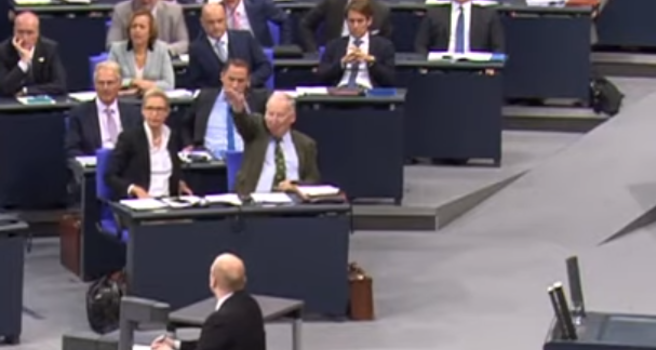
In a highly controversial incident that has captured public attention, the Berlin Prosecutor’s Office has officially filed charges against an AfD member for Nazi salute charges linked to a recent event in the Bundestag. Allegations surfaced that the 60-year-old politician, identified as Matthias Moosdorf, greeted a colleague with a Nazi salute inside the Reichstag building, raising serious concerns about ongoing issues within German politics. This action, which occurred in June 2023, has shocked many, considering the historical implications of such gestures associated with the banned National Socialist German Workers’ Party. The prosecutor’s press release emphasized that Moosdorf was aware of the salutation’s offensive nature and the potential for public backlash during the session. As the case unfolds, it further fuels the debate surrounding radical elements in German political discourse and the implications for democracy in the nation.
The recent actions involving an AfD representative facing charges for displaying Nazi symbols have sparked intense discussions about the integrity and direction of contemporary German politics. The documented incident, which took place within the confines of the national parliament, has highlighted a troubling trend within certain factions that invoke symbols of historical totalitarianism. This has raised pertinent questions not only about the individual’s accountability but also about the broader implications this has for the political landscape in Germany, particularly in light of the ongoing scrutiny from the Berlin Prosecutor’s Office. The seemingly casual acceptance of such behavior, particularly within a sacred political venue like the Reichstag, has prompted renewed calls for legislative action and social responsibility. As the legal proceedings progress, they will undoubtedly shed further light on the delicate balance between political expression and the boundaries of acceptable conduct.
Charges Filed Against AfD Member for Nazi Salute in Bundestag
The Berlin Prosecutor’s Office has initiated charges against a member of the Alternative for Germany (AfD) party, alleging the use of a Nazi salute within the Bundestag premises. This serious incident reportedly occurred in the cloakroom area of the Reichstag building, where the politician is said to have greeted a colleague using a gesture deeply associated with the Nazi regime. Such actions are not only inflammatory but violate Germany’s stringent laws against the use of Nazi symbols, which are considered unconstitutional under current German law.
The politician, identified as 60-year-old Matthias Moosdorf, is facing significant public scrutiny and legal repercussions for this behavior. The incident took place during a parliamentary session on June 22, 2023, further intensifying the existing controversies surrounding the AfD in German politics. Following an investigation, the Berlin Prosecutor’s Office has made it clear that this charge reflects their commitment to uphold the rule of law and maintain the integrity of Germany’s democratic institutions.
The Context of Nazi Salute Charges in German Politics
Germany has a fraught history that mandates extensive laws against the promotion of Nazi ideology or symbols, including Nazi salutes. The recent charges against AfD member Matthias Moosdorf have reignited discussions within the German political sphere about the ongoing influence of extremist views and the core values of democracy. The incident not only reflects on the individual actions of Moosdorf but highlights the broader implications for the AfD, a party often criticized for its far-right stance and nationalist rhetoric.
The charges filed by the Berlin Prosecutor’s Office underline a critical juncture in how German authorities approach symbols and gestures associated with totalitarian regimes. Events at the Reichstag building have historically been symbolic, and the reference to such gestures within its walls invokes a strong response from both the public and political figures. It raises questions about accountability and the responsibility of elected officials in representing democratic values. As the political landscape continues to evolve, this incident may serve as a catalyst for further discourse on extremism within German politics.
Reichstag Building Incident: A Reflection on Modern Politics
The Reichstag building, as the seat of the German Parliament, carries substantial historical weight. Its symbolism as a bastion of democracy makes any incident within its walls significantly impactful. The alleged Nazi salute by an AfD member marks a disturbing moment, demonstrating how far-right symbols can resurface in contemporary political culture. This incident adds to the challenges faced by German politics, where the balance between freedom of expression and the protection of democratic values is continuously contested.
In this context, the allegations against Matthias Moosdorf serve as a litmus test for Germany’s commitment to countering extremist rhetoric and actions. As charges are brought forward, it is crucial to examine how such gestures fit into the broader narrative of political dialogue in Germany today. The incident cannot be viewed in isolation; instead, it signifies ongoing tensions regarding nationalism, identity politics, and the boundaries of acceptable political conduct in a nation shaped by its past.
The Role of the Berlin Prosecutor’s Office in Political Accountability
The Berlin Prosecutor’s Office plays a vital role in maintaining legal and ethical standards within the political arena. Its decision to file charges against a member of the Bundestag for a Nazi salute signals a proactive approach to addressing potential abuses of power and public trust. The office’s actions not only serve justice but also act as a deterrent against future violations of constitutional norms, reinforcing the principle that no one, regardless of position, is above the law.
As the case against Matthias Moosdorf progresses, it will be essential to observe how the legal proceedings unfold and what implications they hold for the broader context of political behavior in Germany. The prosecution’s capability to navigate such complex cases can influence public perception of political integrity, impacting trust in legislative bodies. This incident may prompt other countries to reevaluate their own mechanisms for political accountability and the enforcement of laws against extremist behaviors.
Historical Precedent for Nazi Imagery in German Politics
The history of Nazi imagery in Germany is marked by strict laws prohibiting its use, established in the aftermath of World War II. The intention behind these laws is to cultivate a democratic society that learns from its past and actively rejects the ideologies of totalitarian regimes. The recent charges against AfD member Matthias Moosdorf draw attention to ongoing struggles with far-right movements that occasionally seek to normalize such historical references within modern political discourse.
Instances of Nazi gestures, like the one allegedly performed by Moosdorf in the Bundestag, are not mere footnotes in history—they serve as reminders of the past that must be confronted openly. As Germany deals with rising nationalism, events like this underscore the importance of vigilance against the resurgence of extremist ideologies. Historical responsibility, coupled with contemporary vigilance, forms the cornerstone of a democratic society committed to preventing the rise of totalitarianism.
Impact on the AfD Party’s Image in Germany
The Alternative for Germany (AfD) party has consistently found itself embroiled in controversy, primarily due to its far-right nationalist policies and rhetoric. The charges against Matthias Moosdorf for allegedly performing a Nazi salute only add fuel to the fire regarding the party’s public image. It raises critical questions about the leadership and direction of the party, as they must continually navigate the line between political expression and extremist ideology.
The incident has the potential to exacerbate existing divides within German society, serving as a rallying point for both critics and supporters of the AfD. As the political landscape continues to shift, this particular event may either catalyze a renewed focus on combating extremist ideologies or, conversely, serve to energize the party’s base by framing the charges as politically motivated. Ultimately, the AfD’s approach to this controversy will shape its future in German politics.
Legal Ramifications of Using Nazi Symbols in Germany
The legal framework surrounding the use of Nazi symbols in Germany is stringent, rooted in laws designed to protect democratic values and prevent the resurgence of extremist ideologies. The charges against Matthias Moosdorf highlight the serious nature of such offenses, which carry significant legal consequences, including potential fines or imprisonment. The government and judiciary’s unwavering stance against these symbols reinforces Germany’s commitment to addressing its troubled past head-on.
The implications of these laws extend beyond individual actions; they symbolize a broader societal agreement on the unacceptability of Nazi ideology. When a sitting member of the Bundestag becomes embroiled in such allegations, it raises alarms about the normalization of extremist gestures within the political landscape. The legal proceedings that follow this incident will serve as a critical test of Germany’s dedication to upholding its laws against hate and extremism.
Public Responses to the Nazi Salute Allegations
The public’s reaction to the allegations of Nazi salutes within the Bundestag has been one of outrage and disbelief. Many citizens view such gestures as not only historically insensitive but also as a betrayal of the democratic values that Germany strives to uphold. The incident involving Matthias Moosdorf has sparked widespread discussions on social media, reflecting the deep-seated concerns surrounding the influence of far-right movements within the political sphere.
As the German public grapples with this news, the incident emphasizes the responsibility of elected officials to foster a respectful and inclusive political environment. Many are calling for a thorough investigation and accountability, stressing the need to send a clear message that such behavior will not be tolerated in a democratic society. The outcome of this case may play a significant role in shaping public confidence in Germany’s political system.
Continuing Dialogue on Extremism in German Politics
The incident involving the AfD member’s alleged Nazi salute has reopened dialogues about the state of extremism in German politics. Scholars, activists, and citizens are calling for a collective reflection on how political discourse can drift into dangerous territory. By acknowledging the root causes of far-right ideology within the political landscape, there is hope for preventative measures to be put in place, ensuring that history does not repeat itself.
The ongoing debate about political extremism serves as a crucial reminder of the importance of civic engagement and education. By fostering informed discussions about past atrocities and current implications of extremist symbols, society can play a proactive role in countering such ideologies. The fallout from the Reichstag building incident may ultimately lead to enhanced political awareness and an increased commitment to uphold democratic values across Germany.
Frequently Asked Questions
What are the charges against Matthias Moosdorf related to the Nazi salute in the Bundestag?
The Berlin Prosecutor’s Office has filed charges against Matthias Moosdorf, an AfD member, for allegedly making a Nazi salute and greeting a colleague with a Nazi gesture in the Bundestag’s cloakroom area. This incident occurred on June 22, 2023, and is seen as a violation of laws against the use of unconstitutional symbols.
What incident led to the charges against the AfD member in the Reichstag building?
The charges against the AfD member, believed to be Matthias Moosdorf, stem from an incident in the Reichstag building on June 22, 2023, where he allegedly used a Nazi salute in a cloakroom area. The Berlin Prosecutor’s Office claims he was aware this gesture, linked to the banned Nazi party, may provoke public reaction.
How did the Berlin Prosecutor’s Office respond to the Nazi salute charges involving AfD member?
The Berlin Prosecutor’s Office took action by filing charges against the AfD member for displaying a Nazi salute within the Bundestag. The press release emphasized that the accused, Matthias Moosdorf, knowingly performed this gesture which is associated with the unconstitutional symbols of the National Socialist German Workers’ Party.
What actions were taken against the AfD member after the Nazi salute incident?
Following the Nazi salute incident in the Reichstag building, the immunity of the AfD member Matthias Moosdorf was lifted in October 2025, allowing the Berlin Prosecutor’s Office to file charges against him for using unconstitutional symbols during a formal session in the Bundestag.
Why is the Nazi salute incident significant in German politics?
The Nazi salute incident involving AfD member Matthias Moosdorf is significant in German politics as it reflects ongoing controversies regarding the far-right party’s ideologies and their connections to history, particularly the legacy of National Socialism in Germany. Such actions are critical in maintaining the nation’s stance against unconstitutional symbols and extremism.
What legal repercussions could the AfD member face for the Nazi salute charges?
If convicted, the AfD member facing charges for the Nazi salute could face significant legal repercussions, including fines or imprisonment. Such actions are taken seriously under German law as they relate to the display of unconstitutional symbols, which are strictly prohibited to combat the extremist ideologies associated with the Nazi regime.
| Key Points |
|---|
| The Berlin Prosecutor’s Office has filed charges against an AfD member for using Nazi symbols in the Bundestag. |
| The accused, a 60-year-old AfD member, allegedly greeted a party colleague with a Nazi salute in June 2023. |
| The incident occurred in the cloakroom area of the Reichstag during a parliamentary session, |
| Charges were filed at the Tiergarten District Court after the accused’s parliamentary immunity was lifted in October 2025. |
| The individual accused is believed to be Matthias Moosdorf. |
| The prosecutor’s press release stated that the accused was aware of the implications of his actions related to the banned Nazi party symbols. |
Summary
AfD member Nazi salute charges have been formally filed by the Berlin Prosecutor’s Office against a 60-year-old parliamentarian for displaying Nazi gestures within the Reichstag. This incident, which took place during a session on June 22, 2023, has drawn significant attention due to its serious implications involving unconstitutional symbols. The prosecution asserts that the accused, identified as Matthias Moosdorf, greeted a colleague with a Nazi salute in a restricted area, highlighting potential awareness of the gesture’s offensive nature tied to the historical National Socialist German Workers’ Party. The legal proceedings are now set in motion after the lifting of the politician’s immunity, underscoring the accountability of political figures in upholding democratic values.

