
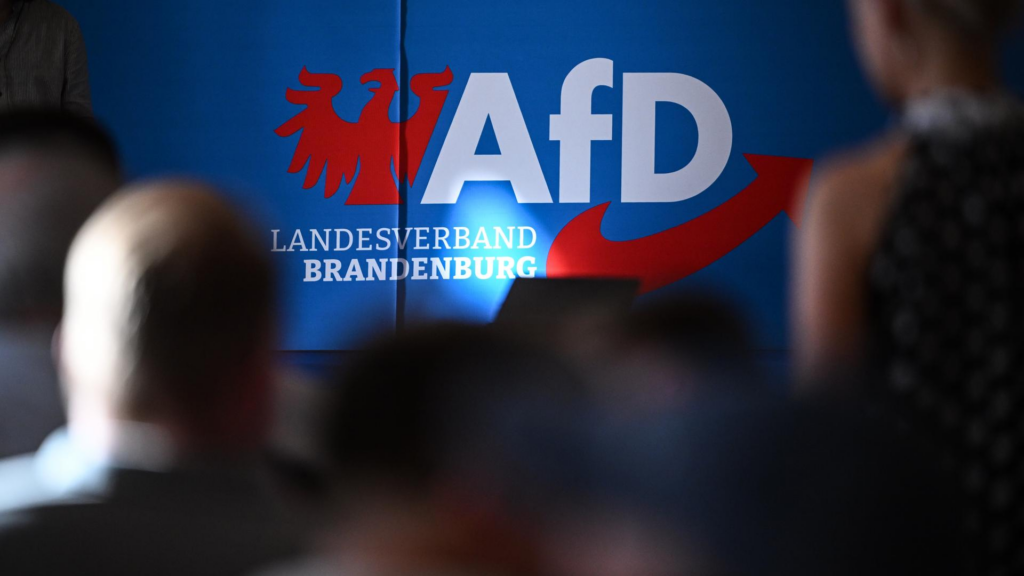
AfD Brandenburg is making headlines as its leader, Hans-Christoph Berndt, strongly contests the label of extremism often associated with the party. Instead, he refers to the AfD as “sometimes radical,” arguing that such a stance is necessary to confront the root issues troubling Brandenburg politics. Amid a coalition crisis involving the BSW faction, Berndt has pressed Prime Minister Dietmar Woidke (SPD) to initiate a confidence vote, aiming to clarify the government’s stability. This demand highlights the shifting dynamics within Brandenburg’s political landscape, as the AfD positions itself against the current administration. With recent controversies surrounding AfD extremism, Berndt’s rhetoric raises important questions about the future of governance in the state and the resilience of the existing coalition.
In the context of Brandenburg’s parliamentary landscape, the political maneuvering by the AfD—the Alternative for Germany party—is stirring debate. Known for its far-right affiliations, AfD Brandenburg is challenging the status quo, particularly through its leader’s insistence on a confidence vote against Prime Minister Woidke and his coalition. As the political climate heats up, with rising tensions related to the ongoing crisis within the BSW faction, the implications of such a vote could reshape the state’s governance. The AfD’s characterization as “radical” rather than extreme underscores its strategy to delve into fundamental issues affecting the electorate. The unfolding situation serves as a critical lens through which the dynamics of Brandenburg coalition politics are scrutinized and debated.
Understanding AfD Brandenburg: Radical vs. Extreme
The political landscape in Brandenburg has been increasingly influenced by the rise of the Alternative for Germany (AfD), particularly under the leadership of Hans-Christoph Berndt. Berndt’s assertion that the AfD is ‘not extreme at all, but sometimes radical’ underscores a crucial nuance in the party’s self-portrayal. This statement reveals the AfD’s strategy to challenge public perception and the classification of their ideology by government entities, including the state’s Office for the Protection of the Constitution, which label the party as securely far-right.
By framing radicalism positively, Berndt suggests that the AfD seeks to address the fundamental issues facing Brandenburg, such as economic challenges and public safety, positioned against a backdrop of a coalition government that has recently faced instability. It’s vital to differentiate between ‘radical’ approaches aimed at real reform and ‘extremism’ which often leads to political division and societal unrest. This distinction plays a pivotal role in the AfD’s narrative as they attempt to position themselves as a mainstream political option in Brandenburg.
The Confidence Vote Challenge in Brandenburg Politics
At the heart of the current political contention in Brandenburg lies the demand for a confidence vote against Prime Minister Dietmar Woidke, an request pushed by the AfD faction led by Hans-Christoph Berndt. The context for this political maneuver stems from a coalition crisis between the SPD and its partner, BSW. The AfD’s call for a confidence vote is not merely for show; it is rooted in what they perceive as a waning support for Woidke amidst growing dissatisfaction with the coalition’s ability to govern effectively.
Understanding the process is crucial: Article 87 of the Brandenburg State Constitution allows the parliament to dissolve itself should a majority not support the Prime Minister during a confidence vote. This provision adds gravity to the AfD’s demand and could potentially reset the political balance in Brandenburg. As the opposition voices their concerns through parliamentary channels, it will be essential to observe how this situation unfolds and the potential ramifications it may have on Brandenburg’s coalition dynamics.
The Role of Hans-Christoph Berndt in AfD’s Strategy
Hans-Christoph Berndt plays a vital role in shaping the AfD’s strategies and public messaging in Brandenburg. His leadership style and rhetoric can significantly influence both voter perception and the party’s positioning within the coalition landscape. By asserting that the AfD is merely radical instead of extreme, Berndt aims to carve a space for his party in a sociopolitical climate that is often unforgiving towards far-right ideologies. This approach reflects a broader strategy to appeal to disenchanted voters who might be concerned with the performance of the current government.
Moreover, Berndt’s statements during parliamentary sessions highlight a confrontational style that resonates with the frustrations of constituents who feel overlooked by traditional parties. As the crisis within the BSW faction unfolds, Berndt’s leadership may prove instrumental in influencing the dynamics of Brandenburg politics, particularly in how the AfD positions itself as a serious alternative to the status quo in the legislative process.
The Coalition Crisis: Impacts on Brandenburg’s Governance
The ongoing coalition crisis involving the SPD and BSW has left a palpable impact on governance in Brandenburg. As tensions rise and the AfD pushes for a confidence vote, questions surrounding the stability of the ruling coalition become paramount. This crisis not only challenges the authority of Prime Minister Woidke but also underscores the importance of a unified approach to addressing critical issues affecting Brandenburg’s citizens, from economic development to public safety.
As the coalition grapples with internal strife, the dynamics of power within the parliament shift, setting the stage for the AfD to capitalize on these vulnerabilities. The uncertainty surrounding the coalition’s strength could embolden the AfD’s radical proposals aimed at incentivizing a change in leadership or policy direction. How this crisis is navigated will ultimately shape the future of Brandenburg’s political landscape and the electoral prospects of all involved parties.
Brandenburg Politics: AfD’s Positioning Amidst Extremism Allegations
In the midst of rising concerns over extremism in German politics, the AfD’s positioning within Brandenburg remains a focal point of discussion. Despite being classified as far-right, the party seeks to portray itself as a legitimate voice in the political arena by rejecting the label of extremism. This is primarily articulated through the words of its leader, Hans-Christoph Berndt, who emphasizes a distinction between radicalism—which the AfD views as necessary for addressing deep-rooted issues—and extremism, which they contest as a mischaracterization of their intentions.
This self-representation strategy is part of the broader narrative employed by the AfD to attract a base that may feel disillusioned with traditional political factions. By redefining what it means to be radical, the AfD attempts to resonate with voters looking for authenticity and direct action on pressing issues in Brandenburg politics, hence making their rhetoric particularly potent in the context of coalition crises and calls for accountability.
Navigating the Political Landscape: AfD’s Strategic Moves
As Brandenburg faces mounting political challenges, the AfD is strategically navigating the complexities of the state’s governance landscape. By leveraging calls for a confidence vote, they aim to thrust themselves into the political limelight and challenge the existing power structures. This move is critical not only for amplifying their voice but also for reinforcing their presence as a viable political alternative to the ruling coalition of SPD and BSW.
Delving into the political intricacies, the AfD’s approach embodies a tactical understanding of voter sentiment, often emphasizing the urgency for accountability within the government. With Hans-Christoph Berndt at the forefront, the party’s efforts to spark a confidence vote can potentially reshape the future of governance in Brandenburg and highlight the fragility of coalition dynamics when facing public dissatisfaction.
The Future of Brandenburg: Coalition Stability vs. AfD’s Challenge
Looking ahead, the question of stability within the Brandenburg coalition remains a pressing issue as the AfD’s challenge to Prime Minister Woidke escalates. The coalition’s ability to withstand both internal discord and external pressures from the opposition will be a decisive factor in shaping the political future of the state. Woidke’s refusal to entertain the confidence vote proposed by the AfD underscores a commitment to coalition unity, but it also raises concerns regarding accountability and responsiveness to public sentiment.
The resulting political landscape could either strengthen the coalition’s resolve if they emerge from the crisis intact or destabilize it further, allowing the AfD to gain ground among voters seeking an alternative to traditional governance. This tug-of-war over confidence and credibility will likely influence both upcoming elections and the broader trajectory of governance in Brandenburg, making for a politically charged atmosphere.
Public Perception of AfD in Brandenburg: Radicalism vs. Responsibility
Public perception of the AfD in Brandenburg is increasingly shaped by the narrative constructed around radicalism and responsibility. While the AfD strives to distance itself from notions of extremism, the challenge lies in how they communicate their message to the electorate. The party’s insistence on being seen as radically addressing core issues can resonate with voters who feel the government has failed to deliver effective solutions, thereby enabling them to cultivate a following among disenchanted citizens.
However, balancing this radical image with a sense of responsibility remains crucial if the AfD aims to position itself as a credible alternative. The evolving political climate in Brandenburg necessitates that the party demonstrates how its radical proposals translate into practical benefits for the state’s residents, particularly in addressing pressing matters such as economic stability, social cohesion, and public safety. This dual narrative will be intrinsic for the AfD as they seek to redefine their place within Brandenburg’s political framework.
Analyzing the AfD’s Long-term Strategy in Brandenburg
As we analyze the AfD’s long-term strategy within Brandenburg, it becomes evident that the party is positioning itself for not just immediate electoral gains but for sustained influence in regional politics. The manipulation of coalition crises is a calculated maneuver aimed at highlighting the deficiencies of the current government while strengthening the AfD’s appeal as a radical yet responsible alternative. Berndt’s leadership is central in navigating these strategies in a way that resonates with an electorate yearning for change.
Moreover, the AfD’s ability to inspire confidence among potential supporters hinges on their capacity to articulate clear and pragmatic solutions to challenges faced by the state. Whether they can successfully strike a balance between their radical stance and the demands of responsible governance will play a crucial role in shaping their long-term relevance in Brandenburg’s political landscape.
Frequently Asked Questions
What is the stance of the AfD Brandenburg regarding accusations of extremism?
The AfD Brandenburg, led by Hans-Christoph Berndt, strongly rejects allegations of extremism, claiming they are ‘not extreme at all.’ Instead, Berndt describes the party as ‘sometimes radical,’ which he believes simply means addressing the root of political issues. This position has sparked debate regarding the party’s classification by the state’s Office for the Protection of the Constitution.
How does the AfD plan to address the coalition crisis in Brandenburg?
In light of the coalition crisis involving the BSW faction, the AfD Brandenburg has initiated a request for Prime Minister Dietmar Woidke to conduct a confidence vote. Hans-Christoph Berndt argues that this is crucial for clarifying the Prime Minister’s support and ensuring accountability within the coalition government.
What is the significance of a confidence vote in Brandenburg politics?
A confidence vote in Brandenburg politics, as outlined in Article 87 of the Brandenburg State Constitution, serves to ascertain the parliamentary support for the Prime Minister. If the vote fails to secure a majority, it may lead to the parliament’s dissolution if no new head of government is elected within 20 days, adding pressure to the current political landscape.
Who is Hans-Christoph Berndt and what role does he play in the AfD Brandenburg?
Hans-Christoph Berndt is the leader of the AfD parliamentary group in Brandenburg. He plays a critical role in shaping the party’s response to political challenges, including the ongoing coalition crisis, while advocating for a confidence vote against Prime Minister Woidke, highlighting the need for clarity in government support.
What challenges does the AfD Brandenburg face in the current political environment?
The AfD Brandenburg encounters several challenges, including being labeled as far-right by the state’s Office for the Protection of the Constitution. Additionally, the party faces internal pressure from ongoing coalition crises and debates on government stability, necessitating their push for a confidence vote to clarify leadership support.
What was Prime Minister Dietmar Woidke’s response to the AfD’s request for a confidence vote?
Prime Minister Dietmar Woidke has publicly declined to pose a confidence vote, asserting that his government remains stable and focused on addressing state challenges rather than engaging in what he perceives as ‘games’ instituted by the AfD Brandenburg.
| Key Aspects of AfD Brandenburg | |
|---|---|
| Leader | Hans-Christoph Berndt |
| Party’s Self-Identification | Not extreme, sometimes radical |
| Accusations | Rejection of extremism claims |
| Current Political Situation | Crisis in BSW faction, confidence question demand |
| Prime Minister | Dietmar Woidke (SPD) |
| Vote of Confidence Regulation | Article 87 of Brandenburg State Constitution |
| Government’s Position | Status quobut claims stability and effective governance. |
Summary
AfD Brandenburg asserts its identity by stating that it is not extreme but may appear radical at times. This statement highlights the party’s position within the political landscape, particularly amid calls for Prime Minister Dietmar Woidke to face a vote of confidence. With the ongoing crisis within the BSW faction, AfD Brandenburg is calling for clarity in government support and stability in its political dealings. As the situation evolves, the measures implemented by the government and the response from political opposition will be critical in determining the future course of governance in Brandenburg.

