
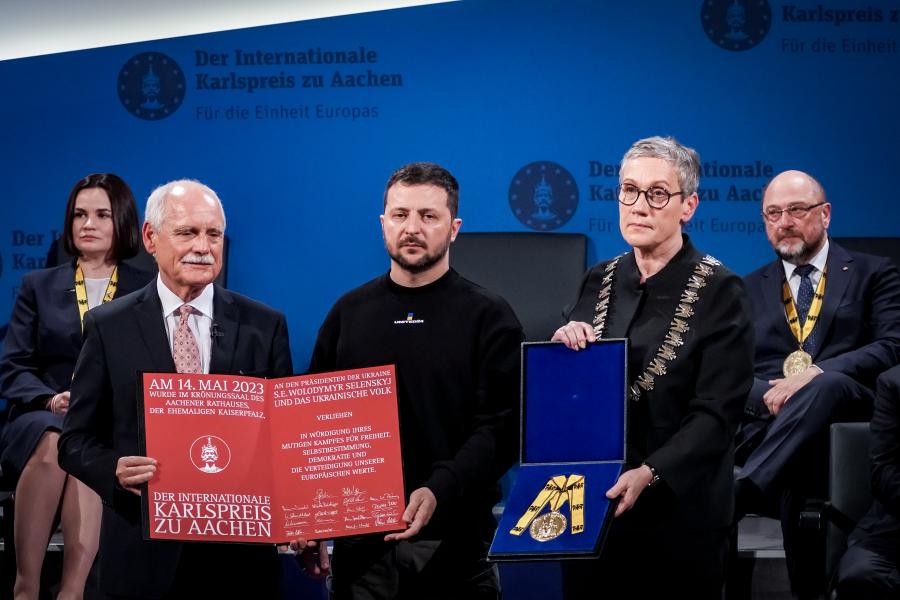
The Aachen Charlemagne Prize is one of the most prestigious awards in Europe, celebrating significant contributions to European unity and collaboration. In 2026, this esteemed accolade is bestowed upon Mario Draghi, the former President of the European Central Bank, recognized for his tireless commitment to advancing Europe’s interests. Draghi’s leadership during a tumultuous economic period has solidified his reputation as a guardian of the Euro and a champion of European competitiveness. The award highlights the urgent need for enhanced EU economic strength in a world where external threats abound, echoing Draghi’s own call for unity in the face of challenges. As we honor Draghi’s achievements, the Charlemagne Prize not only reflects individual excellence but also emphasizes the collective responsibility of all Europeans to foster a vibrant and resilient union.
Celebrating the rich heritage of European collaboration, the Aachen Charlemagne Prize signifies a recognition of leaders who have notably influenced the continent’s path. The accolade, named after King Charlemagne, stands as a reminder of the enduring values of partnership and integration within Europe. This year, the prize honors Mario Draghi, a pivotal figure in shaping the European financial landscape through his strategic roles at the helm of the European Central Bank. By awarding this prestigious recognition, we focus on the pressing need for economic innovation and competitiveness within the EU, as articulated by Draghi himself. As Europe navigates complex challenges, the importance of leadership in fostering unity and economic resilience has never been more significant.
Mario Draghi: A Turning Point for Europe
Mario Draghi’s appointment as the President of the European Central Bank marked a pivotal moment in European financial governance. During his tenure, he faced unprecedented challenges, particularly the Eurozone crisis, where many countries teetered on the brink of economic collapse. His bold statement, ‘Whatever it takes,’ coupled with decisive monetary policy actions, not only stabilized markets but also reinstated faith in the Euro. Draghi’s leadership helped to establish a clearer path toward economic recovery, playing a crucial role in maintaining the integrity of the European internal market, a key factor for the EU’s overall economic strength.
Furthermore, Draghi’s contributions extend beyond crisis management; he continuously advocated for policies aimed at enhancing European competitiveness. His emphasis on innovation and economic collaboration laid the groundwork for a more unified and resilient Europe. As he accepted the Aachen Charlemagne Prize in 2026, Draghi highlighted the need for Europe to adapt to a rapidly changing global landscape, particularly against powerful economies like the USA and China. His insights reflect the urgency for the EU to foster a robust economic framework that secures its place on the global stage.
Significance of the Aachen Charlemagne Prize
The Aachen Charlemagne Prize has become one of the most prestigious accolades in Europe, celebrating individuals who have made significant contributions to European unity and values. Since its inception in 1950, the prize has honored many influential leaders who have dedicated themselves to fostering collaboration and peace within the continent. By awarding this year’s prize to Mario Draghi, the board signals the importance of strong leadership in times of crisis, underscoring that Europe’s success relies heavily on the ability of its leaders to unite and innovate for collective prosperity.
This award, intrinsically tied to the legacy of Emperor Charlemagne, reflects the enduring vision of a united Europe. Prize winners not only receive recognition but also financial support for pro-European initiatives, underscoring the tangible commitment to fostering cooperation and economic dialogue across member states. The 2026 edition emphasizes the urgent need for enhanced economic strength within the EU—a theme resonant with Draghi’s own advocacy for increased innovation and competitiveness to ensure Europe remains a significant player on the global economic stage.
Strengthening EU Economic Competitiveness
The issue of European competitiveness is at the forefront of discussions among EU leaders, particularly in light of recent global economic shifts. Mario Draghi’s 2024 report on this topic resonated with the jury of the Charlemagne Prize, highlighting critical areas where the EU must enhance its standing. Focusing on innovation and collaboration among member states is key to preventing Europe from falling behind other economic powerhouses. As Draghi reminded the audience during his acceptance speech, the unity and strength of the EU are paramount to counteracting external pressures that threaten its integrity.
Enhancing competitiveness means addressing various challenges, including technological advancements, trade policies, and internal market integration. Draghi’s previous leadership at the ECB is a testament to the proactive approach needed to tackle these issues. For the EU to secure its economic strength and ensure its voices are heard within global conversations, it is essential that it prioritizes innovation and invests in future-oriented projects, potentially facilitated by the prize funds.
The Legacy of Charlemagne in Modern Europe
The legacy of Charlemagne, often referred to as the ‘Father of Europe,’ remains integral to the European Union’s identity today. His vision of unity and collaboration among different nations serves as a guiding principle for the EU’s foundation. The Aachen Charlemagne Prize itself symbolizes this ideal, recognizing individuals who strive toward these same goals in contemporary society. In an era marked by divisions and challenges, recalling Charlemagne’s commitment to unity offers hope and guidance for European leaders as they navigate complex geopolitical landscapes.
As we reflect on the historical figure of Charlemagne and the values he represented, we see parallels in the efforts of modern leaders and policymakers. The sustainable development of the EU hinges on its ability to embrace diversity while fostering a shared sense of identity and purpose among its member states. Awards like the Charlemagne Prize encourage this ethos, promoting initiatives that further enhance European solidarity and mutual support in pursuit of common goals, a concept mirrored in Draghi’s leadership philosophy and actions.
Future Prospects for the EU Economy
Looking ahead, the future of the EU economy depends significantly on how effectively it can adapt to changing global dynamics. Mario Draghi’s acceptance of the Charlemagne Prize serves not only to honor his past contributions but also to spotlight the need for ongoing reforms within the EU’s economic framework. Disruptions caused by global events necessitate a reevaluation of existing policies, emphasizing the importance of resilience and agility in economic strategies to bolster the EU’s position in the world.
By prioritizing innovation, fostering intra-EU cooperation, and investing in sustainable technologies, the EU can elevate its economic standing. The challenges posed by rival economic powers require a concerted effort to enhance internal competitiveness. Leaders like Draghi advocate that it is essential for all member states to engage collaboratively, embracing a unified approach to economic development that will benefit the entire region in the long run.
The Role of Leadership in Economic Recovery
Leadership plays a pivotal role in driving economic recovery, especially in a complex organization such as the European Union. Former ECB Chief Mario Draghi exemplifies the qualities necessary to navigate difficult economic waters, combining vision with decisive action. His leadership style, characterized by collaboration and open dialogue, fosters an environment where innovative solutions can flourish. As Draghi stated during his acceptance of the Aachen Charlemagne Prize, the ability for Europeans to ‘stand together’ is crucial in confronting both internal and external challenges.
The importance of strong, empathetic leadership is vital in building a resilient economic future for the EU. With the landscape of global finance continually evolving, current and future leaders must be willing to adapt and implement forward-thinking policies that prioritize economic sustainability and innovation. Draghi’s influence underscores the necessity for a transformative approach to leadership within EU institutions, ultimately guiding the region toward renewed economic growth and stability.
A Call to Action for EU Solidarity
As the EU faces unprecedented challenges, Mario Draghi’s call for solidarity resonates deeply with member states. His message emphasizes the urgency of standing united to effectively address not only economic threats but also social and political divisions that may undermine progress. The Aachen Charlemagne Prize serves as a reminder that collaborative efforts are essential for overcoming obstacles and advancing towards a common future. In his remarks, Draghi stressed that stronger ties among member nations could mitigate risks and enhance resilience in facing global uncertainties.
The call to action denoted by the Charlemagne Prize signifies a critical moment in shaping the EU’s collective identity and purpose. By championing pro-European projects and policies, leaders can mobilize support to strengthen economic ties and reinforce the bonds of solidarity among nations. The acknowledgment of Draghi as a visionary leader is not just a recognition of his past achievements but also an appeal for the current generation of leaders to commit to unity in the pursuit of shared objectives.
Innovation as a Catalyst for EU Growth
Innovation is essential to fostering economic growth within the European Union, making it a focal point of discussions around improving competitiveness. Mario Draghi’s advocacy for increased innovation echoes throughout the award ceremony for the Charlemagne Prize, highlighting the urgent need for the EU to invest in research and development initiatives. In competitive global markets, staying ahead requires nations to embrace technological advancements and transformative ideas. By prioritizing innovation, the EU can better position itself against formidable economic competitors.
Efforts to cultivate a culture of innovation also require collaboration among member states. Draghi’s emphasis on a unified approach reflects the need for joint ventures and partnerships that harness the intellect and resources of all European nations. By fostering environments where creativity and entrepreneurship can flourish, Europe can secure a sustainable economic future. Initiatives that promote innovation will not only contribute to economic resilience but will also strengthen the fabric of European unity and cooperation.
Financial Contributions to Pro-European Projects
The Aachen Charlemagne Prize not only acknowledges individual achievements but also provides critical financial support for pro-European initiatives. With a generous prize of one million euros awarded annually, this funding is directed toward projects that aim to promote European values, unity, and collaboration. The commitment to allocate these resources underlines the significance of enhancing economic, social, and cultural ties among EU nations, reinforcing the notion that collective progress is foundational for Europe’s future.
In the context of Mario Draghi receiving the prize, there is a clear link between financial contributions and the need for action-oriented programs focused on strengthening the EU’s competitiveness. The resources provided through the Charlemagne Prize can facilitate the implementation of transformative strategies that support innovation, education, and infrastructure. Ensuring that these funds reach impactful projects is vital for catalyzing growth and fostering deeper connections between member states, ultimately leading to a more robust European Union.
Frequently Asked Questions
What is the Aachen Charlemagne Prize and its significance?
The Aachen Charlemagne Prize, awarded since 1950, recognizes contributions to European integration and unity. It celebrates individuals who advance European values, making it one of the most prestigious awards in Europe.
Why was Mario Draghi awarded the Aachen Charlemagne Prize in 2026?
Mario Draghi received the Aachen Charlemagne Prize in 2026 for his exceptional contributions to Europe, particularly during his tenure as President of the European Central Bank (ECB), where he played a crucial role in ensuring the Euro’s stability and promoting European competitiveness.
How does Mario Draghi’s work relate to European competitiveness and the Aachen Charlemagne Prize?
Mario Draghi’s work, especially his 2024 report on European competitiveness, highlights the need for the EU to innovate and enhance its economic strength. His efforts align with the Aachen Charlemagne Prize’s mission to recognize those advancing Europe’s global standing.
What impact did Draghi’s leadership at the ECB have on Europe?
During his presidency at the ECB, Mario Draghi implemented significant measures to stabilize the Euro and preserve the European internal market, effectively preventing economic disaster and securing Europe’s monetary union.
What does the Aachen Charlemagne Prize symbolize in the context of the EU’s future?
The Aachen Charlemagne Prize symbolizes the commitment to European unity and strength. It serves as a reminder that for the EU to thrive, it must focus on its economic competitiveness and resilience against global challenges.
When is the Aachen Charlemagne Prize awarded and what is its prize money?
The Aachen Charlemagne Prize is traditionally awarded on Ascension Day, which in 2026 falls on May 14. The prize comes with one million euros, intended for investment in pro-European projects.
Who were some notable previous recipients of the Aachen Charlemagne Prize?
Notable recipients of the Aachen Charlemagne Prize include historical figures like Chancellor Konrad Adenauer, former British Prime Minister Winston Churchill, and more recently, EU Commission President Ursula von der Leyen in 2025.
What are the criteria for receiving the Aachen Charlemagne Prize?
Recipients of the Aachen Charlemagne Prize are selected based on their contributions to European unity, the promotion of democracy, and their commitment to European values and cooperation.
| Key Point | Details |
|---|---|
| Award Recipient | Mario Draghi, former President of the European Central Bank and former Italian Prime Minister. |
| Significance of the Award | Recognizes contributions to European unity and competitiveness. |
| Award History | Established in 1950, named after Emperor Charlemagne. |
| Recent Award Amount | One million euros, designated for pro-European projects. |
| Past Awardees | Includes Konrad Adenauer, Winston Churchill, and Ursula von der Leyen. |
| Upcoming Ceremony Date | Traditionally presented on Ascension Day; in 2026, it is on May 14. |
| Economic Competitiveness | Draghi emphasizes the need for Europe to innovate to remain globally competitive. |
Summary
The Aachen Charlemagne Prize honors exceptional contributions to European unity and represents a crucial recognition of efforts to enhance Europe’s competitiveness in the global landscape. This year’s award to former ECB Chief Mario Draghi underscores the vital importance of collective European action in facing internal and external challenges. As Draghi noted, standing united is essential for the EU’s survival, especially in an era where innovation is paramount to prevent Europe from becoming overshadowed by economic powers like the USA and China. The Charlemagne Prize, first awarded in 1950, serves as a beacon of hope and a call to action for all Europeans to collaborate towards a stronger, more unified continent.

