
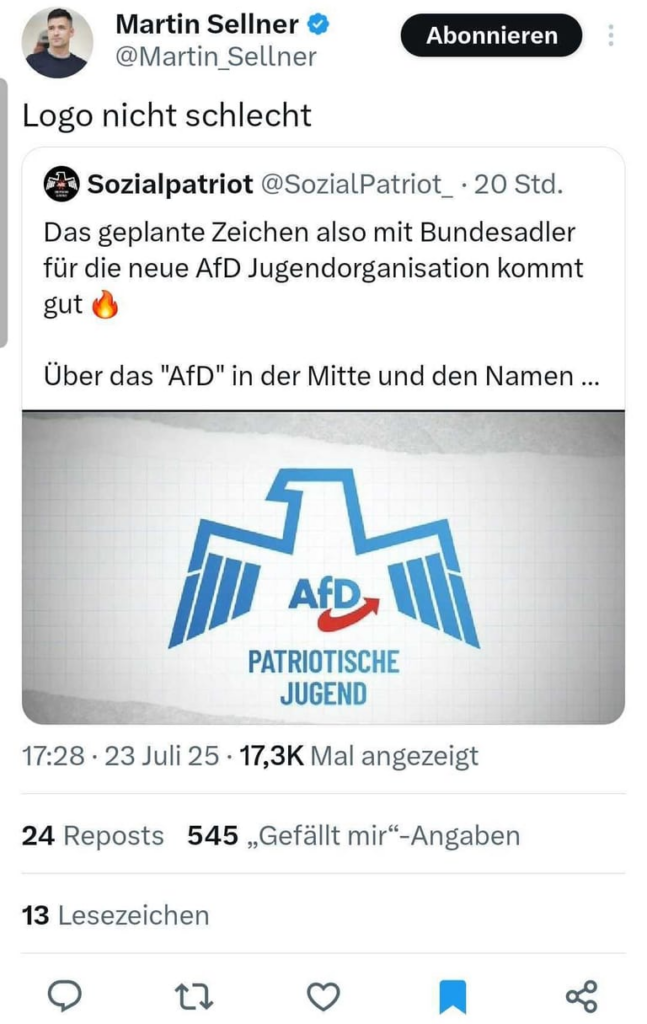
The recent AfD Sellner controversy has intensified political tensions in Germany, particularly within the ranks of the far-right AfD party. Prominent figures in the party like Steffen and Lena Kotré invited Martin Sellner, the controversial leader of the Identitarian Movement known for his radical views on remigration, leading to widespread backlash from party leadership. This incident underscores the ongoing conflict surrounding the AfD party’s relationship with extremist ideologies, as leaders Alice Weidel and Tino Chrupalla swiftly canceled the contentious meeting. The situation highlights the complexities of navigating far-right discussions in Germany, where affiliations with individuals like Sellner can provoke strong reactions. As the party grapples with its identity, the fallout from this controversy may have lasting implications for its future direction and unity.
The current situation regarding the controversy involving the Alternative for Germany (AfD) and Martin Sellner reflects broader issues of political ideology and extremist affiliations. Sellner, a significant figure in the far-right Identitarian Movement, has sparked intense debates over remigration policies which aim to reshape immigration narratives within the party. The friction between various factions of the AfD illustrates the internal struggles to balance controversial viewpoints while maintaining public image and adherence to political standards. As discussions unfold about this incident, it reveals the intricate dance of navigating relationships with far-right figures in Germany, showcasing the ongoing struggle for identity within the political landscape. Consequently, the implications of this conflict extend beyond party politics, touching on critical facets of societal attitudes toward immigration and nationalism.
The AfD and Martin Sellner: A Complex Relationship
The Alternative for Germany (AfD) party has had a tumultuous relationship with far-right figures, particularly Martin Sellner, the leader of the Identitarian Movement. Sellner is notorious for advocating the controversial concept of ‘remigration,’ which has become a focal point of political discussions in Germany. His recent attempts to engage with AfD members have exacerbated existing tensions within the party, leading to a public outcry from its leaders. With Sellner’s ideology closely aligned with certain factions within the party, the controversy surrounding his invitation highlights the fractures present in the AfD regarding its relationship with extreme right ideologies.
In early 2026, the AfD faced internal upheaval when Steffen and Lena Kotré, both members of the party, invited Sellner to discuss remigration—a topic that resonates deeply within radical right circles. This invitation was met with severe criticism from party leadership, including Alice Weidel and Tino Chrupalla, who swiftly canceled the event amid concerns about maintaining political decorum. The legal and ethical implications of engaging with Sellner raise significant questions about the AfD’s strategy moving forward, especially amidst ongoing scrutiny regarding its alignment with extremist views.
Implications of the AfD-Sellner Controversy on Party Unity
The controversy surrounding Martin Sellner’s invitation has significant implications for the AfD’s unity and public image. Leadership’s attempt to distance itself from Sellner reflects a broader desire to mitigate the potential fallout from overlapping relationships with radical elements. This internal strife echoes concerns about the AfD’s viability amid potential legal risks of being perceived as supporting far-right movements. The party’s officials are anxious about being viewed as too closely aligned with extremist beliefs, particularly given the risk of legal repercussions such as a ban on their activities, which could arise from associations deemed incompatible with Germany’s Basic Law.
Moreover, the AfD’s internal conflicts demonstrate the struggle between accommodating radical viewpoints and presenting a more moderate front to attract a broader electorate. While figures like Torben Braga advocate for engaging in dialogue with Sellner, the leadership clearly opposes overt connections that may alienate moderate voters. This tug-of-war exemplifies the deep-rooted political tensions within the party, revealing the challenges the AfD faces in navigating its identity as a far-right entity while trying to maintain organizational coherence and legal standing in a scrutinizing political landscape.
Understanding Remigration: The Far-Right’s Ideological Battleground
Remigration—a term popularized by Martin Sellner—serves as a battleground for ideological conflicts within far-right discussions in Germany. The concept of remigration suggests that non-native residents should either assimilate or be encouraged to leave the country, a notion that resonates with a segment of the AfD’s base. However, the implications of this ideology raise alarms about human rights and ethical treatment of individuals, particularly refugees and asylum seekers. As this theme gains traction in political dialogue, it further deepens the divides among party members and the public.
Sellner’s strategies for remigration, outlined in his controversial book and public speeches, involve categorizing groups for potential deportation, which underscores the harsh realities of his proposals. This dissection of identity within the migration framework complicates discussions at the national level and fuels ongoing debates on immigration policies. The AfD continues to grapple with how to approach this contentious issue, seeking to balance the demands of its more radical supporters while not entirely alienating moderate faction members who call for more humane policy considerations.
Political Tensions in Germany: The Far-Right’s Resurgence
Political tensions in Germany have intensified as the far-right gains a more prominent platform in the public discourse. The rise of movements like the AfD has led to widespread debates over national identity, immigration, and social cohesion. With controversies like the AfD-Sellner situation highlighting these tensions, many fear that extremist ideologies could gain further legitimacy. The infighting within the AfD regarding how to engage with figures like Sellner suggests that even within far-right politics, there is significant debate and uncertainty about the direction of the movement.
Events surrounding figures like Martin Sellner catalyze discussions on political radicalism in Germany, leading many to question how tolerant the broader political landscape can be towards extremist rhetoric. As tensions heighten, the mainstream political parties may be forced to rethink their approaches to far-right challenges, potentially leading to stronger policies against extremist movements. Additionally, the AfD’s internal struggles may limit its effectiveness in capitalizing on the current political climate, as infighting could detract from their messaging and policy initiatives.
The AfD’s Strategy Amid Controversies: Navigating Political Minefields
As the AfD continues to navigate the complex web of controversies surrounding members like Martin Sellner, its strategy must involve careful consideration of both party cohesion and its public image. The decision-making process indicates an acute awareness of the potential ramifications of associating with extremist figures. With growing concerns about being perceived as endorsing or legitimizing extreme positions, AfD leaders are tasked with finding a balance between appeasing radical elements within their base while protecting the party’s broader aspirations of gaining electoral support.
In the face of increasing scrutiny and potential legal challenges, the AfD must also recalibrate its approach to policy discussions. Selling controversial ideas like remigration without invoking the ire of judicial frameworks will demand deft political maneuvering. Ultimately, the party’s responses to these political minefields will not only shape its future trajectory but also influence the overall landscape of Germany’s political dialogue on immigration and national identity.
Lena Kotré: A Key Player in AfD’s Internal Dynamics
Lena Kotré, as a significant figure within the AfD, has become a focal point in the recent controversies involving Martin Sellner and his remigration agenda. Her decision to invite Sellner to discuss pressing issues on remigration illustrates her alignment with more radical viewpoints within the party, which has drawn sharp criticism from AfD leadership. This incident has spotlighted the internal divisions within the AfD, as members grapple with divergent ideological beliefs and the repercussions of public associations with controversial figures.
Her stance reflects broader trends within the factional disputes in the AfD, signaling that while party leaders attempt to project moderation, a considerable segment still embraces far-right rhetoric. Lena’s position also reveals the generational dynamics at play within the party, where younger members may be more inclined to engage with far-right ideology, further complicating the party’s image and affecting its strategy moving forward. As these internal debates continue, Lena Kotré’s influence may prove crucial in shaping how the AfD navigates its identity in an increasingly polarized political environment.
The Role of the Identitarian Movement in Current Politics
The Identitarian Movement, led by figures like Martin Sellner, has gained notoriety for its radical perspectives on immigration and national identity, directly influencing contemporary political discussions in Germany. The rise of such movements has emboldened certain factions within the AfD, fostering an environment where extreme ideas can flourish. The controversies surrounding Sellner’s involvement with the AfD indicate a growing normalization of hardline ideologies, raising questions about the future political landscape in Germany as these views gain traction in mainstream discussions.
As the Identitarian Movement continues to advocate for remigration and other far-right proposals, its integration into broader political narratives poses challenges for mainstream parties. The normalization of radical viewpoints calls for a critical reevaluation of how these ideas are disseminated within society, and how they can affect policy outcomes. Understanding the Identitarian Movement’s impact is essential for addressing the ideological struggles faced both within the AfD and the larger framework of German politics.
Youth Engagement within the AfD: Embracing Controversy or Seeking Change?
The role of youth within the AfD, particularly through organizations like Generation Germany, reflects a complex interplay between adherence to traditional far-right ideologies and a desire for change. Young members have shown mixed sentiments towards figures like Martin Sellner and the Identitarian Movement, advocating for engagement in controversial discussions while also striving to reshape the party’s future. This generational divide underscores a tension where youthful enthusiasm for radical ideas can conflict with the strategic necessities of a party seeking mainstream acceptance.
The embrace of controversial figures within the youth faction presents a strategic dilemma for the AfD. If the party aims to attract younger voters, it must balance staying true to its core ideologies while also appealing to a demographic that may be wary of overt extremism or associations with radical figures. This tension indicates the potential for both fragmentation and innovation within the party, as youth members navigate their political identity in relation to the greater narrative established by party leaders and older factions.
Future Prospects for the AfD: Reconciliation or Continued Division?
The future prospects for the AfD remain uncertain as internal divisions, such as those highlighted by the Sellner controversy, continue to challenge the party’s coherence. As factions vie for influence, the potential for reconciliation among differing ideological standpoints could either strengthen the party’s resolve or lead to further fragmentation. The leadership’s response to such controversies will play a critical role in shaping the party’s identity and its ability to appeal to a broader electorate.
Furthermore, as political tensions in Germany evolve, the AfD will need to strategize effectively in order to maintain its relevance amidst competing narratives. Whether the party chooses to distance itself from radical elements or embraces them will have profound implications for its electoral success and public perception. Moving forward, the AfD’s capacity to navigate these challenges may determine not only its survival but also the broader landscape of German politics in the coming years.
Frequently Asked Questions
What is the AfD Sellner controversy about?
The AfD Sellner controversy centers around the invitation extended to Martin Sellner, leader of the Identitarian Movement, by certain AfD politicians, which has sparked significant internal conflict and public backlash within the AfD party. Despite the cancellation of the meeting, the controversy remains due to ongoing discussions about ‘remigration’ and far-right ideologies.
How is the concept of remigration linked to the AfD Sellner controversy?
Remigration is a central theme in the AfD Sellner controversy. Martin Sellner promotes the idea of remigration as a solution for asylum seekers and non-assimilated citizens, which aligns with the AfD’s right-wing agenda. This concept has caused divisions among AfD leaders concerning their association with Sellner and his far-right ideology.
What are the political tensions in Germany surrounding the AfD and Martin Sellner?
Political tensions in Germany surrounding the AfD and Martin Sellner stem from the party’s struggle to balance its far-right ideologies with public perception and legal considerations. The controversy highlights internal disputes over the party’s alignment with extremist views and the potential implications for their political future.
What was the reaction of AfD leaders to the invitation of Martin Sellner?
AfD leaders, including party leader Alice Weidel, were reportedly surprised and displeased with the invitation extended to Martin Sellner by certain party members. The cancellation of the event reflects an attempt to distance the party from Sellner amidst concerns over legal repercussions and public backlash.
Why was Martin Sellner’s association with the AfD controversial?
Martin Sellner’s association with the AfD is controversial because he is recognized as a leader of the far-right Identitarian Movement, which promotes extreme nationalist views and has been linked to anti-immigration sentiments. His push for remigration has raised concerns about the party’s ideological stance and the risk of alienating moderate voters.
What did Lena Kotré say regarding Martin Sellner’s expertise on remigration?
Lena Kotré defended Martin Sellner’s invitation by describing him as an ‘internationally recognized expert on the topic of remigration.’ This statement underscores the ongoing debate within the AfD about engaging with figures associated with controversial far-right movements.
How does the AfD’s distancing from Sellner impact its members?
The AfD’s distancing from Sellner impacts its members by creating confusion and debate over whether the party should engage with far-right activists. While some members advocate for dialogue with Sellner, others emphasize the need for clear boundaries to maintain the party’s legitimacy amid growing scrutiny.
How does the AfD handle its relationship with the Identitarian Movement?
The AfD officially maintains a distance from the Identitarian Movement, placing it on an incompatibility list, which prevents former members from joining the party. However, there is a divide within the party regarding the permissibility of informal interactions with Sellner and his associates.
What implications does the AfD Sellner controversy have for future elections?
The AfD Sellner controversy could have significant implications for future elections, as internal conflicts over far-right associations may alienate moderate voters and attract scrutiny from regulatory bodies. The party’s response to this controversy will likely influence its public image and electoral viability.
| Key Points | Details |
|---|---|
| AfD Sellner Controversy | The party faces internal conflict over engaging with Martin Sellner, the leader of the Identitarian Movement, following his invitation to an event. |
| Internal Party Tensions | Party leaders, including Alice Weidel and Tino Chrupalla, disapprove of the invitation extended by AfD politicians Steffen and Lena Kotré. |
| Cancellation of Event | The event featuring Sellner has been canceled, but he continues to attract controversial attention within the party. |
| Sellner’s Ideology | Sellner promotes the idea of ‘remigration’, focusing on deporting asylum seekers, foreigners, and pressuring non-assimilated citizens. |
| Legal Concerns | AfD leadership worries that association with Sellner might provoke legal issues, including potential bans related to extremist ideologies. |
| Diverse Opinions within the Party | Some members, like Thuringian leaders, support discussing ideas from Sellner despite his controversial background. |
Summary
The AfD Sellner controversy highlights the growing tension within the Alternative for Germany party over its relationship with the far-right figure Martin Sellner. While some party members invite discussion around his controversial ideas on ‘remigration’, others, including top leaders like Alice Weidel and Tino Chrupalla, express strong disapproval and concern about potential legal ramifications. This conflict showcases the ongoing struggle within the AfD regarding its ideological boundaries and the implications of engaging with extremist figures.

