
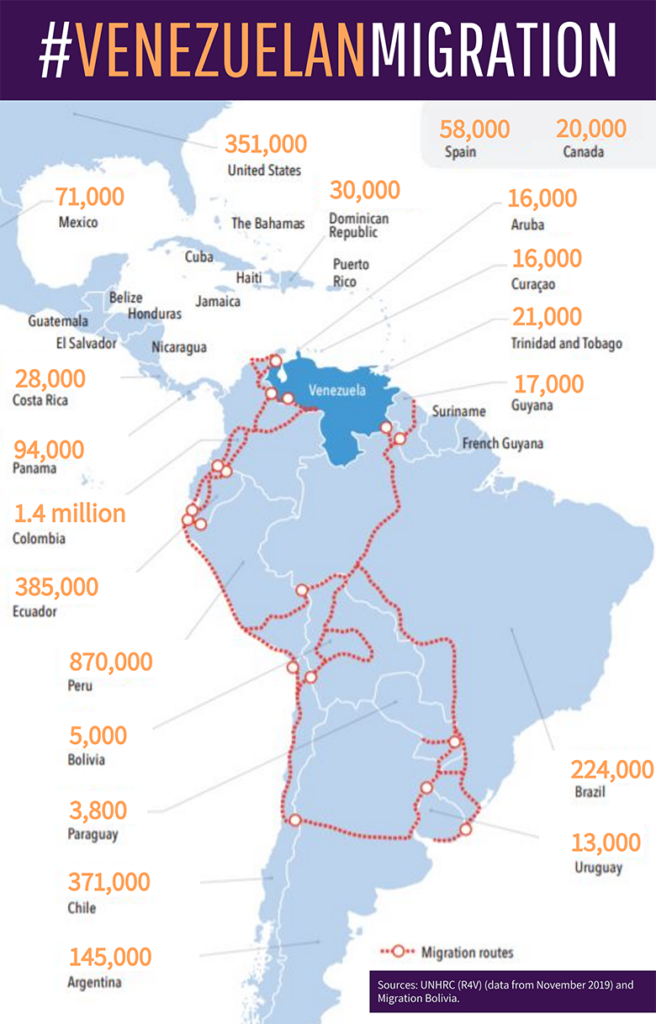
The recent bold statement by Venezuelan opposition leader María Corina Machado has sparked discussions about the so-called “Venezuela migration promise,” igniting hopes of political change in a nation long plagued by turmoil. During her visit to the White House, Machado presented her Nobel Prize medal to US President Donald Trump, signaling her intention to seek support for a peaceful transition of power in Venezuela. This meeting highlights the intersection of US foreign policy and local interests, underscoring the critical role of American support for Venezuela’s future. As many Venezuelan migrants yearn for a return to their homeland under a stable and democratic regime, Machado’s remarks resonate deeply, raising the question of whether the potential for change is finally on the horizon. The backdrop of this political landscape features the pressing need for genuine reform amid the chaotic power struggle involving Maduro and his adversaries.
The “Venezuela migration promise” reflects a renewed vision for the country’s future, as the political climate shifts under figures like María Corina Machado. Her advocacy for a democratic transition in Venezuela not only seeks US backing but also stirs the hope of a mass repatriation of Venezuelans who have fled. In her discussions with leadership in Washington, including President Trump, Machado’s intentions to spearhead political change highlight the significance of international influence on local governance. Venezuelans, currently residing abroad, are watching closely as these developments unfold, with aspirations of returning home once stability is restored. Ultimately, this proposed migration strategy envisions a united effort to rebuild the nation and restore its democratic processes.
María Corina Machado: A Leader for Change in Venezuela
María Corina Machado has emerged as a prominent voice in the Venezuelan opposition landscape, advocating for substantial political reform. With her recent accolade as a Nobel laureate, she has gained international acknowledgment that further amplifies her calls for democracy in Venezuela. Machado’s efforts to secure US support reflect a strategic alignment with American interests, particularly in a time of profound chaos in Venezuela. Her ability to articulate a vision for a better future energizes not only her supporters but also positions her as a credible alternative to the existing regime.
Amid the turmoil, Machado’s appeal appears to resonate with a significant portion of the Venezuelan populace, many of whom are disillusioned by the current leadership. Her focus on democratic values and the rule of law aims to restore citizens’ faith in governance. As acknowledged by the public sentiment in recent surveys, there is an increasing awareness that achieving freedom and stability will require decisive action both from local leaders and international partners. Her dialogues in Washington signal a serious commitment to rallying global support for Venezuela’s transformative agenda.
The US’s Role in Venezuela: Support for Change and Reform
The United States has historically played a pivotal role in Venezuelan politics, often seen as a strategic powerhouse capable of influencing change within the nation. As María Corina Machado interacts with US officials, including President Trump, there are expectations of renewed support for opposition forces in Venezuela. With the ongoing crisis leading to widespread suffering among Venezuelan migrants, US involvement may be crucial in fostering an environment conducive to genuine reforms that could replace the dictatorship with democratic governance.
Furthermore, US backing could extend beyond mere political tutelage to include humanitarian assistance aimed at alleviating the struggles of Venezuelan citizens. Unlike previous administrations, the current administration’s willingness to support opposition leaders like Machado can pave the way for significant political change. By fostering dialogue around economic support tied to democratic milestones, the US may act as a catalyst for revitalizing Venezuelan society, encouraging both domestic and external stakeholders to push for necessary reforms.
Venezuelan Migrants: Hopes for Return Amid Chaos
The plight of Venezuelan migrants is an ongoing tragedy marked by economic instability and political repression. Machado’s promise of conditions that could lead to the voluntary return of refugees remains a beacon of hope for millions displaced by the crisis. By envisioning a future where democracy replaces authoritarian rule, Machado capitalizes on the yearning for stability among those who have fled their homeland. Her assurances of a roadmap to a prosperous Venezuela could convince many to consider returning, hoping to contribute to the rebuilding of their country.
However, the reality remains complex, as the Venezuelan economy lies in shambles. The path to recovery involves not just political change but also extensive reforms to create an environment where migrants feel secure and valued. Machado’s optimism juxtaposes the harsh realities on the ground, prompting both cautious optimism and skepticism among those in exile. Addressing the systemic issues that forced migration will be key in winning back the confidence of these individuals, ensuring that when they do decide to return, they find a nation ready for revival.
Trump and Venezuela: A Controversial Relationship
The relationship between the Trump administration and Venezuela has often been a contentious topic, fraught with geopolitical implications. By supporting opposition leaders like María Corina Machado, Trump aims to reinforce his agenda of promoting democracy abroad. Machado’s recent visit to the White House, where she showcased her Nobel medal, amplifies the narrative of US leadership in advocating for political change. However, the efficacy of this relationship is subject to debate, with critics questioning whether such support translates into real progress on the ground.
Machado’s strategy of courting the US is particularly significant given the polarized political climate in Venezuela. With interim president Delcy Rodríguez still holding power, the dynamics of US support can either bolster Machado’s movement or risk conflict. This complexity emphasizes the need for a nuanced approach that considers the internal factions at play while pursuing external assistance. The evolution of US-Venezuela relations will likely hinge on the balancing act between supporting democratic forces and avoiding further upheaval.
Venezuelan Political Change: A Yearning for Democracy
The demand for political change in Venezuela is palpable, with citizens expressing a deep desire for democracy amidst ongoing repression. The uprising against the regime led by Nicolás Maduro has seen increased support for opposition figures like María Corina Machado, who offers a vision for reform that resonates with many disillusioned Venezuelans. The urgency for transformation is both a cry for freedom and an acknowledgment of the dire situation affecting daily life in Venezuela, reinforcing the need for international intervention to help stabilize the country.
Machado’s appeal for a democratic transition emphasizes the importance of transparent elections and the establishment of strong institutions. As her influence grows within the political arena, so too does the potential for a shift in Venezuelan governance. Through fostering alliances with international leaders, she hopes to pave the way for meaningful change that prioritizes the will of the people over dictatorial control. Such a shift will require sustained effort and support from both local actors and global partners dedicated to safeguarding democracy.
The Challenges of Democratic Transition in Venezuela
Transitioning from authoritarian rule to a functioning democracy in Venezuela is fraught with challenges that require careful navigation. With the current interim government lacking legitimacy, the political landscape is complex and ripe for contention. Machado’s determination to safeguard democratic principles is commendable, yet it is compounded by the pervasive fear among the populace regarding government retribution. Citizens continue to hesitate in voicing their opinions openly, illustrating the accumulated trauma of a decade-long struggle against oppression.
To facilitate a smooth transition, Machado and her allies must confront not only the regime forces but also their own internal divisions. As rival factions vie for control over the narrative of change, it becomes essential to foster unity among opposition forces to present a credible front. The path forward will necessitate strategic planning and decisive action to dismantle the existing power structures that have perpetuated human rights abuses while ensuring that citizens are empowered to participate in the rebuilding of their nation.
Public Sentiment on US Military Action in Venezuela
Public sentiment in Venezuela reflects a complex tapestry of opinions regarding US military action and its implications for national sovereignty. Many citizens, while fearful of external intervention, secretly support actions aimed at dethroning Maduro, viewing such measures as a potential turning point for their country. Surprising data from surveys indicates that a significant section of the Venezuelan populace holds a favorable view of US strategies aimed at bolstering democracy and dismantling authoritarian power. Machado’s association with these sentiments can play a crucial role in shaping future actions.
However, it remains critical to consider the ramifications of military involvement on the ground. History shows that foreign interventions can complicate rather than simplify nascent democratic movements, impacting local perceptions and potentially causing backlash. Navigating these complexities will be essential for Machado and her supporters as they advocate for a peaceful resolution to the Venezuelan crisis, focusing on building bridges rather than exacerbating divides.
The Future of Venezuela: Hope Amidst Despair
Despite the pervasive despair that characterizes life in Venezuela, the future holds glimmers of hope as opposition leaders like María Corina Machado rally for change. The desire for a better Venezuela resonates deeply among citizens, many of whom dream of seeing their country restored to its former glory. Machado’s vision encapsulates this hope, offering a roadmap for recovery that includes social justice and economic reform. As she gains traction on the international stage, the potential for a united front against tyranny looms ever larger.
Nevertheless, the path to a hopeful future is illuminated by the stark realities of daily struggle endured by Venezuelans. For those living in exile, the notion of returning to a free Venezuela signifies not just political change but total regeneration of their homeland. Given the current landscape, continuous support from both domestic allies and international partners will be pivotal in transforming hope into tangible progress, thereby empowering generations to actively shape their destiny.
Frequently Asked Questions
What is María Corina Machado’s migration promise related to Venezuelan migrants?
María Corina Machado has made a significant migration promise, stating that once Venezuela achieves political freedom, she expects millions of Venezuelan migrants to return to their homeland voluntarily. This commitment reflects her hope for a future where the economy can recover and provides opportunities for returning citizens.
How does US support for Venezuela relate to the migration promise made by María Corina Machado?
The US support for Venezuela, particularly under President Trump, is pivotal to Maria Corina Machado’s migration promise. She believes that US backing can lead to a political change in Venezuela, ultimately enabling a safe and encouraging environment for Venezuelan migrants to return home.
What impact did Trump’s meeting with María Corina Machado have on Venezuelan political change and migration?
Trump’s meeting with María Corina Machado has heightened hopes for political change in Venezuela. Her migration promise during this meeting emphasizes that free and democratic governance will allow Venezuelan migrants to return, linking US support directly to the future stability of the country.
Why are Venezuelan migrants hopeful regarding the promises made by María Corina Machado?
Venezuelan migrants are hopeful about María Corina Machado’s promises because they see her as a potential leader for a democratic transition in Venezuela. Her assurance that many would return home if conditions improve resonates strongly with their longing for stability and prosperity.
What challenges do Venezuelan migrants face regarding the promises of return made by political leaders like Machado?
Venezuelan migrants face significant challenges despite promises of return from political leaders like María Corina Machado. The current state of the Venezuelan economy is dire, and migrants are skeptical that political upheaval will translate into tangible improvements in their living conditions upon their return.
How does the political climate in Venezuela affect the migration promise of María Corina Machado?
The political climate in Venezuela remains unstable, as interim president Delcy Rodríguez represents a force resisting change. María Corina Machado’s migration promise hinges on overcoming this opposition; without significant political reform, the hope for Venezuelan migrants to return remains uncertain.
What do Venezuelans think about US intervention and its influence on migration promises?
Many Venezuelans harbor a positive view of US intervention, as reflected in surveys showing support for Trump and figures like María Corina Machado. They believe that US intervention could facilitate the political change necessary for the realization of migration promises, allowing them to consider returning home.
How does Machado’s Nobel Prize influence her migration promises to the US?
María Corina Machado’s Nobel Prize amplifies her credibility and leverage in discussions with US leaders, reinforcing her migration promises. Her recognition as a peace advocate asserts her commitment to a better future for Venezuela, encouraging both US support and Venezuelan migrants’ confidence in returning.
What are the implications of María Corina Machado’s controversial migration promise for Venezuelan political dynamics?
Machado’s migration promise is controversial as it embodies hope for many but also exposes the complexities within Venezuelan political dynamics. While it could galvanize support for her cause, it may also provoke resistance from current power holders like Delcy Rodríguez, complicating the path towards successful political change.
How might the relationship between Trump and Machado influence Venezuelan migrants’ decisions?
The relationship between Trump and María Corina Machado, characterized by mutual support, could significantly influence Venezuelan migrants’ decisions to return. A strong alliance indicates potential US backing for reforms, thus fostering a safer environment for repatriation among those longing to return to Venezuela.
| Key Points |
|---|
| María Corina Machado presented her Nobel medal to US President Donald Trump, highlighting her opposition to Nicolás Maduro’s regime. |
| Machado aims to gain US support to promote a political shift in Venezuela and has garnered a positive sentiment among Venezuelans for her and Trump’s actions. |
| Despite Machado’s hopeful promises, concerns remain regarding the current leadership of interim president Delcy Rodríguez, seen as lacking legitimacy. |
| A survey indicates many Venezuelans secretly support US military action against Maduro, but the fear of speaking out restricts public discourse. |
| Machado’s vision involves restoring democracy and inviting Venezuelan migrants back once the country stabilizes, though challenges lie ahead. |
| The current political situation is complicated by internal rivalries and external pressures as Rodríguez navigates her leadership amidst possible uprisings. |
Summary
The Venezuela migration promise made by María Corina Machado signifies her commitment to restoring democracy and stability in Venezuela. By appealing to the US and emphasizing a hopeful return for Venezuelan migrants, Machado seeks to inspire change while reflecting the complex political terrain of her country. As her efforts unfold, the international community watches closely, aware that true transformation requires overcoming significant hurdles.

