
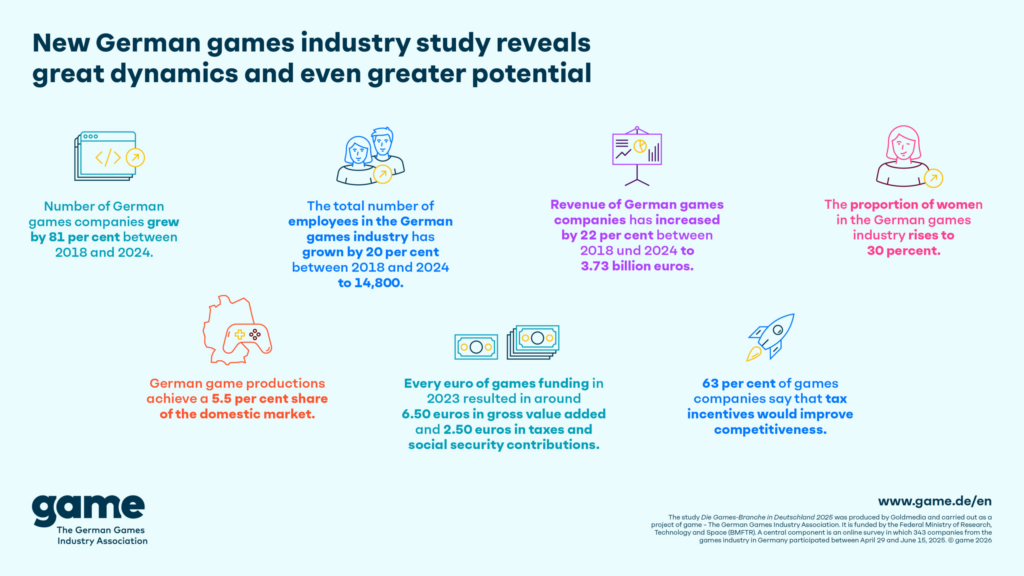
The German video game industry is experiencing significant growth, positioning itself as a developing powerhouse in the global gaming landscape. Recent studies from the Game Association reveal that the number of gaming companies in Germany has nearly doubled since 2018, showcasing the potential for further expansion in this dynamic field. With hotspots like Bavaria and North Rhine-Westphalia becoming operational hubs for innovation, the country is also strategically placing itself to benefit from an influx of game funding in Germany, amounting to a staggering 183 million euros earmarked for developers by the federal government. Despite this promising trend, challenges remain as German developers capture only a small fraction of the country’s enormous gaming market, where major titles often come from international giants. Nevertheless, the ongoing interest in video game development in Germany could signal a bright future for local gaming companies as they strive to enhance their competitive edge and contribute to the vibrant ecosystem of the sector.
The landscape of interactive entertainment in Germany is rapidly evolving, reflecting broader trends in the global gaming market. As the nation embraces emerging technologies and increasingly invests in its development infrastructure, it fosters an environment ripe for creativity and innovation. The surge in gaming enterprises across key regions like Hamburg and Baden-Württemberg is a testament to this shift, promising a bright horizon for local talent and aspiring developers. Enhanced by substantial state-backed financial support aimed at revitalizing local talents, the gaming scene is poised for remarkable advancements and profitability. As the appetite for video games continues to rise, the German gaming sector is strategically leveraging these developments to secure its place among leading markets.
The Rise of the German Video Game Industry
The German video game industry is experiencing remarkable growth, as revealed by recent findings from the Game Association. With approximately 950 gaming companies now operating across the country, regions like Bavaria and North Rhine-Westphalia have emerged as significant hubs for video game development. The numbers are impressive; from 2018 to the present, the industry has nearly doubled its presence, creating almost 15,000 jobs in various development studios. This boom has been heavily supported by government funding initiatives, totaling 183 million euros allocated to game developers from 2020 to 2025. Such investment not only showcases the potential of the German gaming market but also marks a turning point where the government recognizes the economic importance of nurturing this industry.
Nonetheless, amidst this upswing, the German video game sector is still in its infancy compared to its international counterparts. Although local growth is evident, German developers account for only a small fraction—5.50 euros of every 100 euros spent—of the total gaming market. This disparity illustrates the urgent need for enhanced support and strategic development to ensure that the industry can not only grow but also establish itself on a global scale.
In tandem with the industry’s increase, notable figures such as Felix Falk from the Game Association emphasize the urgency of expanding Germany’s position in the global market. There is a strong belief that with continued government support and more robust funding, the potential exists for Germany to cultivate a thriving video game ecosystem. Furthermore, the recent political recognition from high-ranking officials like Minister Dorothee Bär highlights the ongoing commitment to investing in the future of video gaming in Germany. Allocating 125 million euros for the upcoming year reflects a proactive approach aimed at nurturing home-grown talent and developing innovative games that can compete internationally.
Government Initiatives and Funding for Game Development in Germany
The crucial role of government funding in supporting video game development in Germany cannot be overstated. As noted in the recent studies and industry reports, financial assistance has been pivotal for many start-ups and mid-sized gaming companies seeking to bolster their offerings. With an allocation of 183 million euros from 2020 to 2025, the federal government aims to encourage innovation and growth among German developers. This funding allows them to invest in new technologies, talent acquisition, and marketing strategies, which are essential for competing against more established markets in the U.S., Canada, and the UK.
Together with federal funding, there is an increasing demand for complementary tax relief measures aimed at reducing financial burdens on developers. Although discussions about these incentives have been included in coalition agreements, the push for timely implementations remains a concern. Industry leaders underline that these incentives can significantly alter the landscape, enabling larger investments in game studios and encouraging the emergence of blockbuster titles from Germany.
The potential of government initiatives to foster a vibrant gaming ecosystem hinges not only on financial support but also on the creation of a stable political framework. Unlike other countries where support for the gaming sector has been consistently reinforced, Germany has faced challenges with shifting political priorities. This inconsistency poses hurdles for game developers who require long-term support to thrive. As highlighted by industry experts like Petra Fröhlich, the spillover effects of a robust gaming sector could benefit other industries, including film and automotive technology. The burgeoning talent in artificial intelligence, often sourced from gaming companies, has the potential to enhance various sectors, further driving economic growth.
Challenges Faced by German Gaming Companies
Despite the positive trends indicated in recent studies, German gaming companies still face significant hurdles on their path to maturity. The disparity in market share illustrates a critical challenge; only a fraction of consumer spending in the gaming sector benefits local developers. This competition from established gaming giants in countries like the USA and Canada puts pressure on German creators to innovate and differentiate their offerings. As the market matures, developers must focus on producing high-quality, engaging content that resonates with players both domestically and internationally. However, without substantial further investments and consistent funding from the government, many small studios may struggle to realize this ambition.
Additionally, the need for collaboration among companies is more pressing than ever. Developers often find themselves isolated in their efforts, lacking the connections to collaborate effectively with other industry players or access shared resources. Building a community where knowledge and resources are exchanged can be vital for fostering innovation and raising the profile of the German gaming sector globally.
The unpredictable nature of government support—due to political changes and varying levels of prioritization—further undermines the confidence of developers in the sustainability of the industry. Companies may be hesitant to take risks on new projects without assurances of financial backing or infrastructural support. Coupled with the ongoing discussions about tax incentives and the efficiency of funding mechanisms, this uncertainty can lead to a cautious approach where developers prioritize short-term gains over long-term strategies. Real change in the landscape will require a concerted effort from both the government and the industry, focusing not only on funding but also on fostering an environment conducive to sustainable growth.
The Future of Game Development in Germany
Looking to the future, the German gaming industry stands at a crossroads where opportunity meets challenge. With recent governmental pledges aimed at increasing financial support, there is a profound possibility for development studios to flourish. Industry leaders must capitalize on this momentum by innovating and leveraging emerging technologies like artificial intelligence and virtual reality. As global consumer interests evolve, developers who can produce adaptable and immersive experiences are likely to lead the charge in elevating Germany’s status as a gaming powerhouse.
Part and parcel of this evolution will also depend on fostering a culture of creativity and experimentation among developers. This encourages the kind of bold ideas and unique game concepts that can capture player interest and drive sales. Moreover, expanding partnerships—both within Europe and globally—can provide German studios with smarter insights into market demands and gaming trends. By aligning their objectives with those of their international counterparts, they can better position themselves in a competitive global landscape.
Furthermore, the long-term viability of the German gaming industry hinges on its ability to adapt to changes in consumer behavior and technological advancements. As more players turn towards mobile gaming and eSports, companies need to devise strategies that cater to these niches while maintaining their identity as developers of original content. Concerns surrounding monetization models, player engagement, and ethical gaming practices will also come into play as the industry matures. Overall, Germany’s journey towards becoming a dominant player in the global gaming market will require both strategic government support and unwavering creativity from its developers.
Why Germany’s Game Market is Set to Grow
The German game market is poised for substantial growth, supported by increasing consumer interest and advancements in technology. In recent years, the rise of mobile gaming and eSports has transformed the landscape, attracting new players and larger audiences. As Germany invests in the development of innovative gaming experiences, the market’s potential becomes increasingly evident. Reports indicate that video game revenue in Germany could surpass previous milestones, cementing its status as one of Europe’s leading gaming hubs.
Additionally, the influx of government funds and initiatives aimed at empowering development studios is anticipated to enhance market dynamics. By supporting diverse game genres and promoting local talent, the efforts can contribute to a flourishing ecosystem that encourages creativity, innovation, and international collaboration. All of these factors combined form a strong foundation for growth, leading to a more established and competitive gaming market in Germany.
Moreover, Germany’s strategic positioning within the European Union provides a unique advantage for its gaming companies. As part of the larger EU market, they can tap into a diverse pool of consumers while benefiting from collaborative opportunities within member states. This interconnectedness allows for shared resources, talent exchange, and cross-promotion of gaming products. As the industry matures, the integration and interdependency of European gaming markets are likely to drive innovation and consumption, fostering an environment where German games can thrive.
The Role of Artificial Intelligence in German Gaming
Artificial intelligence (AI) is increasingly becoming a cornerstone of video game development in Germany. As developers look to create more engaging and interactive gaming experiences, AI serves as an essential tool in crafting responsive and adaptive gameplay. From enhancing player decision-making processes to streamlining game design, the integration of cutting-edge AI technologies is not only improving the quality of games but also encouraging innovative development practices. The technical expertise found within Germany’s gaming companies positions them well to capitalize on this trend, potentially leading to groundbreaking advancements in the sector.
Furthermore, the spillover benefits of AI technology are significant, extending beyond the gaming industry to influence sectors like film production and automotive design. With a growing emphasis on partnerships between gaming studios and other industries, there’s a rich opportunity for collaborative projects that leverage gaming technologies in diverse applications. These partnerships can stimulate growth and research, fostering an environment ripe for technological advancements that will benefit the wider economy.
However, as AI technologies continue to evolve, German game developers must navigate the ethical implications that arise from their implementation. Concerns about data privacy, algorithmic bias, and player prevention will loom large as players become increasingly aware of how AI impacts their gaming experience. Addressing these issues will be crucial for maintaining trust and loyalty among gamers. Additionally, striking the right balance between cultivating innovation through AI while keeping the player experience at the forefront will define how well Germany can integrate these technologies into its dynamic gaming ecosystem.
Exploring Gaming Companies in Germany
Germany boasts a diverse array of gaming companies, ranging from large studios to indie developers, all contributing to the country’s growing reputation in the gaming industry. Notable companies such as Ubisoft Blue Byte, Crytek, and YAGER represent the country’s shift towards producing high-quality, globally competitive games. This variety enriches the gaming landscape, allowing for a range of genres and styles that appeal to different audiences. As these companies expand their reach, they further establish Germany’s identity as a key player in the international gaming market.
Small and mid-sized companies also play a vital role in driving innovation and creativity in the sector. Indie developers are increasingly gaining traction with unique gaming experiences and narratives, often funded by government initiatives aimed at supporting such endeavors. Through collaborations with larger firms or independent funding initiatives, these smaller companies are making significant contributions towards creating a vibrant gaming culture that seeks to define new trends and break conventional boundaries.
However, navigating the competitive landscape poses challenges for many developers. The competition from established game studios and the need to capture players’ attention means that smaller companies must carve out their niche in the market. Staying innovative and adaptable while effectively leveraging government support mechanisms is critical for their success. Additionally, building strong networks and partnerships within the industry will be essential to provide the exposure needed for growth and sustainability in an ever-evolving gaming environment.
Market Trends and Consumer Preferences in German Gaming
The evolution of consumer preferences plays a crucial role in shaping the gaming landscape in Germany. As players’ expectations increase, gaming companies must keep pace with trends that influence purchasing decisions. Recent shifts towards mobile gaming, interactive storytelling, and immersive experiences suggest that developers need to focus on innovation and audience engagement. This implies a greater emphasis on producing high-quality graphics, seamless gameplay, and compelling narratives that capture the attention of gamers.
Evolving demographics also affect market trends; with a growing number of female gamers and an increase in casual gamers, companies must adapt their products to meet varied interests. The potential for significant growth in the gaming market relies on understanding these demographic changes and tailoring game offerings to cater to wider audiences, ensuring that the enjoyment of gaming is accessible to everyone.
Additionally, the rise of social gaming and online multiplayer experiences has transformed how games are consumed in Germany. The demand for competitive and collaborative platforms has sky-rocketed, driven by the community-centric nature of gaming today. Developers are encouraged to create multifaceted gaming experiences that allow players to connect and interact, enhancing the social aspect of gaming. As this trend prevails, gaming companies in Germany must continuously innovate to meet the evolving needs of their player base, positioning themselves effectively within the rapidly expanding gaming market.
Frequently Asked Questions
What are the key facts about the German video game industry?
The German video game industry is rapidly expanding, with approximately 950 gaming companies currently operating, particularly concentrated in Bavaria and North Rhine-Westphalia. A study by the Game Association indicates that the industry has nearly doubled since 2018, creating around 15,000 jobs. Significant government funding of 183 million euros from 2020 to 2025 has also contributed to this growth.
How is game funding in Germany impacting video game development?
Game funding in Germany has become crucial for supporting video game development. The German federal government allocated 183 million euros to game developers from 2020 to 2025. This funding is intended to stimulate industry growth and enhance the competitive position of German developers in the global market, where they currently receive only a small fraction of total revenue.
Which regions are the hotspots for gaming companies in Germany?
The primary hotspots for gaming companies in Germany include Bavaria and North Rhine-Westphalia. These regions are home to many of the approximately 950 gaming companies operating in the country, with Hamburg and Baden-Württemberg also ranking highly in terms of video game development.
What challenges does the German video game industry face compared to international competitors?
The German video game industry struggles to compete with international markets because only 5.50 euros of every 100 euros spent on video games in Germany goes to local developers. The lack of established large gaming studios and the inconsistencies in government support have hindered the industry from matching the more reliable funding systems found in countries like the USA and Canada.
How does the German government plan to support the growth of the gaming industry?
To support the growth of the gaming industry, the German government, under Research and Technology Minister Dorothee Bär, has earmarked 125 million euros in the upcoming federal budget. This funding is part of a broader effort to encourage game development and attract high-quality game applications while also calling on developers to actively participate in industry growth.
What is the potential economic impact of the gaming industry in Germany?
The gaming industry has the potential to positively influence the German economy and research landscape, especially with advancements in technologies like artificial intelligence. As the industry grows, its technical expertise could spill over into sectors such as film production, series creation, and the automotive industry, enhancing overall economic development.
Are there any tax reliefs or incentives for gaming companies in Germany?
Currently, there are calls within the German gaming industry for tax reliefs and other incentives to foster growth and investment. Although these measures were mentioned in the coalition agreement between the Union and SPD, their implementation timeline remains unclear, leaving developers hoping for timely support.
| Key Point | Details |
|---|---|
| Growth of the Industry | The German video game industry is experiencing growth, with nearly 950 gaming companies established in key regions including Bavaria and North Rhine-Westphalia. |
| Job Creation | There are now almost 15,000 jobs in the sector, reflecting the industry’s expansion since 2018. |
| Government Support | The federal government has approved 183 million euros in funding for game developers from 2020 to 2025. |
| Comparison with Other Countries | German developers receive only 5.50 euros of every 100 euros spent on games in Germany, indicating limited market share compared to international competitors. |
| Political Focus | The new Research and Technology Minister, Dorothee Bär, has emphasized the importance of the gaming sector and allocated 125 million euros for funding in the federal budget. |
| Industry Needs | The gaming industry seeks not only federal funding but also tax relief to ensure sustainable growth and the development of larger market players. |
Summary
The German video game industry is on a trajectory of growth and development, as evidenced by an increase in companies and job opportunities. Although the sector has benefitted from significant government funding, German developers still struggle to compete internationally, commanding a small portion of the domestic market. As political support continues to evolve, there is hope that with the right incentives and investments, the industry can mature into a key player in the global gaming landscape.

