
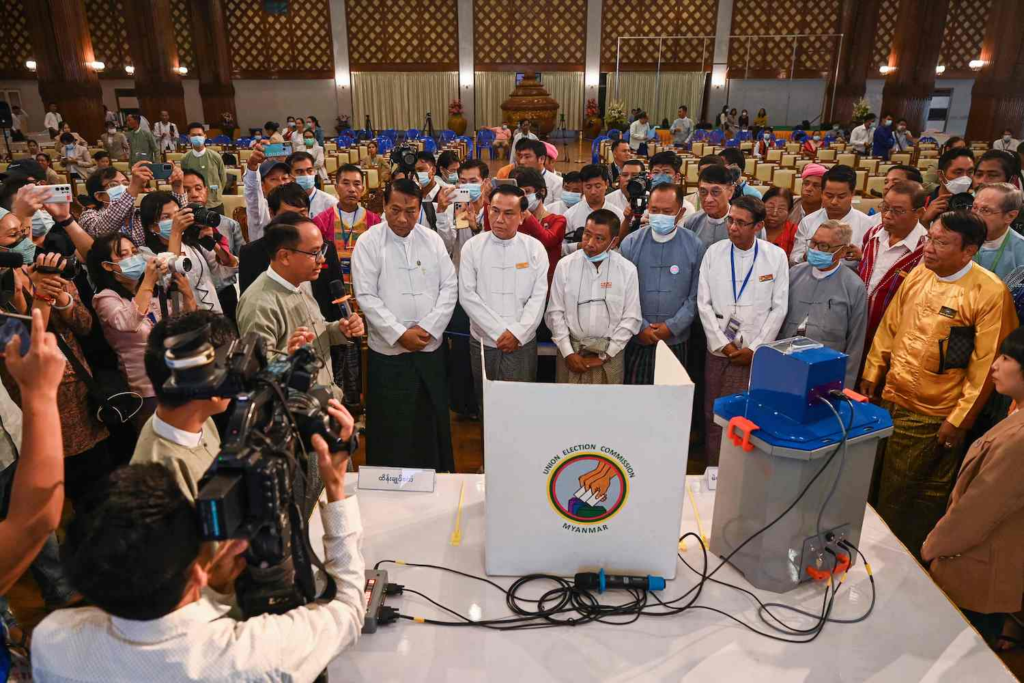
The Myanmar elections, held in the shadow of a military junta, are shaping up to be one of the most controversial political events since the 2021 coup that upended the nation’s democratic progress. These elections mark the first significant attempt at governance in Myanmar since the military seized power, a move that many critics argue aims to legitimize an illegitimate regime. With ongoing violence in many regions, the Myanmar voting process has faced numerous challenges, including attacks on polling stations and a lack of transparency. Observers from the UN have reported their concerns, labeling the elections a sham, further questioning the credibility of results touted by the military. Amidst these tensions, the elections raise crucial questions about the future of democracy and human rights in Myanmar.
The latest electoral developments in Myanmar, also referred to as Burma, illustrate a significant divergence from democratic principles following the military takeover in early 2021. These parliamentary elections, which have sparked widespread criticism, are seen as an attempt by the ruling junta to maintain its grip on power under the facade of legitimacy. Many regions are experiencing mounting unrest, complicating the voting process and raising doubts about the electorate’s participation. International observers, including those from the UN, have characterized these elections as deeply flawed, casting a shadow over the ruling party’s claims of support. As violence and political manipulation mar the landscape, the implications for the country’s governance and civil rights remain deeply concerning.
Understanding Myanmar’s Political Landscape Post-Coup
Since the military coup in February 2021, Myanmar’s political landscape has transformed drastically. The military junta, which took control after ousting the democratically elected government of Aung San Suu Kyi, is now attempting to solidify its power through a series of controversial parliamentary elections. This has raised significant concerns regarding the legitimacy of the elections and the inclusion of various political factions. The political process that emerged has been viewed critically by many international observers, who underscore that the junta’s actions raise serious questions about the future of democracy in Myanmar.
The elections, including the second phase recently completed, have been marred by violence and accusations of suppression of dissent. Critics emphasize that the current electoral framework favors the military and its affiliates, as evidenced by the automatic allocation of parliamentary seats to military representatives. Furthermore, only those political parties that align with the military’s agenda during the elections are allowed to participate, further delegitimizing the electoral process and undermining prospects for genuine democratic governance.
Violence and Stability in Myanmar During Elections
Myanmar’s elections have been profoundly influenced by ongoing conflict and violence in regions controlled by militant insurgents. As the military junta pushes forward with its parliamentary election agenda, clashes between military forces and ethnic insurgent groups continue to erupt, leading to significant instability in areas designated for voting. Reports of attacks on polling stations and the tragic loss of life among election officials highlight the dangers and challenges faced during this electoral process. This atmosphere of conflict not only raises questions about the safety of voters but also casts a shadow over the integrity of the elections.
The fallout from the violence has exasperated tensions among various communities in Myanmar, making it increasingly challenging for the junta to assert its authority. The ongoing strife further complicates the already contentious narrative surrounding the election, as many citizens fear repercussions for participating. In this context, the junta claims high voter turnout, but with violence and intimidation lurking in the background, the credibility of these numbers remains highly questionable. As international observers note, ensuring a fair voting process amidst such turmoil seems virtually impossible.
Media and International Reactions to Myanmar’s Elections
As Myanmar continues its complicated journey through this electoral phase, international observers, including the United Nations, have reacted strongly against the legitimacy of the elections. The UN Special Rapporteur Tom Andrews has condemned the elections as a sham, likening them to an exercise in the legitimization of military power rather than a genuine democratic process. Media reports from independent sources, including Myanmar Now, support these claims, citing incidents of violence orchestrated to intimidate voters, which blatantly contravene democratic principles.
The media coverage of the elections highlights not only the determination of the military junta to assert control but also the growing dissent among the population. As reports of irregularities and violence surface, public sentiment appears to lean increasingly toward opposition and resistance against the ruling powers. The international community’s response remains critical, with calls for transparency and accountability echoing through diplomatic channels, emphasizing the need for a restoration of democracy in Myanmar.
The Role of the Military Junta in Myanmar’s Elections
The military junta’s involvement in the electoral process defines the current political situation in Myanmar. With the military-backed Union Solidarity and Development Party (USDP) reportedly claiming a staggering 90 percent of contested seats in the first phase of elections, the junta’s control over the political sphere appears secured. This automatic allocation of seats to military personnel presents a stark challenge to any hopes for a pluralistic and representative government, fostering a political environment that is deeply skewed in favor of the military.
The 2008 constitution, which safeguards the military’s influence, further complicates the situation. By ensuring that a quarter of parliamentary seats are reserved for military representatives, the junta effectively monopolizes decision-making processes, sidelining any potential opposition. Such systemic biases have drawn sharp criticism from both local activists and international organizations, who argue that true representation cannot be achieved under these conditions. The overall effect is a deepened mistrust of the election process among the populace, who feel marginalized and disenfranchised.
Consequences of the 2021 Coup on Myanmar’s Electoral System
The 2021 coup fundamentally altered Myanmar’s electoral system, as the military seized control and eliminated the democratic framework established prior to the coup. This dramatic shift has resulted in the restructuring of electoral regulations and processes, now heavily favoring military interests. Subsequent elections, including the current phase, have been criticized for lacking basic democratic principles such as transparency, fairness, and open competition. With many political parties either disbanded or prohibited from participating, the potential for a vibrant and competitive political discourse seems all but extinguished.
As the junta continues to push forward with its elections despite widespread opposition, the ramifications on society and governance are profound. Many citizens remain skeptical of the validity of the electoral outcomes, viewing them as mere façades for the junta’s grip on power. This has the potential to incite further instability and unrest, as marginalized groups rally against a perceived illegitimate system. The survival and resilience of democracy in Myanmar hang precariously in the balance, pointing toward a troubled future if reforms are not enacted.
Assessing the Voter Turnout Claims by the Junta
In the aftermath of the recent elections, the military junta has reported a voter turnout of 52 percent, claiming increased participation compared to previous phases. However, independent verification of these figures remains elusive, raising deep concerns about their accuracy. International observers have pointed out that claims of high voter turnout are difficult to substantiate in an environment where voting is fraught with violence and intimidation, signaling that the reported numbers may be politically motivated rather than reflective of genuine citizen engagement.
Moreover, the context in which these elections are held further complicates assessments of voter turnout. Many voters in conflict zones may have been unable to participate due to safety concerns, while others might have been deterred by the threat of reprisals from military forces. This combined sense of fear, alongside previous experiences of political repression, cultivates an atmosphere where free expression of electoral choice is profoundly compromised. The junta’s claims, therefore, must be scrutinized against the backdrop of ongoing violence and civil unrest.
Implications of Restricted Political Participation in Myanmar
The ongoing electoral process in Myanmar reflects a significant restriction on political participation, as dissenting voices are silenced and only pro-military parties are allowed to contest. This severely limits the breadth of representation within the political framework, leading to a dilution of public interests in governance. By effectively outlawing opposition parties, the military junta undermines any potential for a stable political environment and prevents the emergence of an inclusive democracy that could represent the diverse needs of the Myanmar populace.
Such restrictions not only stifle political debate but also exacerbate social divisions, with various groups vying for recognition and influence in the absence of an open political discourse. The implications of this environment are profound, as disillusioned citizens may turn to alternative methods of expressing their dissatisfaction, including protests and uprisings. In the long term, the lack of political pluralism and the military’s unwavering control stymies the prospects for peace and reconciliation within the nation.
International Community’s Response to Myanmar Elections
The international response to Myanmar’s recent elections has been predominantly critical, highlighting the need for a coordinated approach to address the humanitarian crisis and political repression facing the country. Numerous countries and human rights organizations have called for accountability regarding the military’s actions, urging the reinstatement of democracy and respect for human rights. The ongoing dialogue among international stakeholders underscores a united front against the junta’s attempts to legitimize its rule through a façade of electoral processes.
In addition, the role of UN observers has become increasingly important in providing an impartial assessment of the elections. Their reports shed light on the challenges faced by voters and the obstacles to a free and fair electoral process. The broader international community is being urged to reconsider engagement with Myanmar’s leadership, promoting targeted sanctions and diplomatic measures aimed at exerting pressure on the junta to alter its course. The hope is that sustained global attention can instigate meaningful changes within the country’s political framework.
Future Prospects for Democracy in Myanmar
The future of democracy in Myanmar appears tenuous as the country grapples with the ramifications of military rule and the ongoing electoral process. With the military’s tight control and systematic repression of dissent, the road ahead seems fraught with challenges for those advocating for democratic reforms. The quest for freedom and representation is likely to face substantial obstacles, particularly given the military’s entrenched interests and the historical precedents of violence against pro-democracy movements.
However, the perseverance of grassroots movements and the resilient spirit of the Myanmar populace provide glimmers of hope. As citizens continue to voice their demands for change despite the risks, international solidarity and support can have a significant impact on fostering conditions conducive to dialogue and reform. While the path to democratization may be arduous, the aspiration for a democratic Myanmar endures, fueled by a commitment to justice, freedom, and human rights.
Frequently Asked Questions
What are the concerns surrounding the Myanmar parliamentary elections after the military coup of 2021?
The Myanmar parliamentary elections held after the 2021 coup are criticized as neither free nor fair. Observers argue that the military junta is attempting to legitimize its power through a sham election process. Many eligible voters face intimidation, and only pro-military parties are allowed to participate, raising significant concerns about the overall integrity of Myanmar’s voting process.
How is the military junta in Myanmar conducting the voting process for parliamentary elections?
The military junta in Myanmar is conducting the voting process for parliamentary elections in three phases, with the second phase recently completed. These elections are taking place amidst ongoing conflict and violence in various regions, with reports of polling station attacks. Critics have labeled the elections unfair, as numerous areas are not participating due to hostilities.
What is the role of UN observers in the Myanmar elections?
UN observers, including the Special Rapporteur on human rights in Myanmar, have condemned the elections as a sham, asserting that they lack fairness and credibility. They emphasize that the elections are being manipulated by the military junta to establish a facade of democratic legitimacy, particularly following the violent 2021 coup.
What was the voter turnout for the Myanmar elections, according to the military junta?
The military junta claims that the voter turnout for the first phase of the Myanmar elections was 52 percent. They report that participation increased in the second phase, although these figures are difficult to verify due to ongoing conflict and restrictions placed on the voting process, with many areas experiencing violence.
How does the military junta secure control in Myanmar’s parliamentary elections?
The military junta secures its control in Myanmar’s parliamentary elections through constitutional provisions that guarantee the military a quarter of all parliamentary seats automatically. This ensures their significant influence in both chambers of parliament regardless of electoral outcomes, contributing to the perception that the electoral process is designed to maintain military power rather than represent true democratic choice.
What implications does the ongoing conflict have on the Myanmar voting process?
The ongoing conflict in Myanmar significantly disrupts the voting process, with many municipalities facing violence and intimidation. As a result, some regions cannot participate in the elections at all, undermining the legitimacy of the military-led electoral proceedings and highlighting the dangers that residents face when trying to exercise their voting rights.
| Key Point | Details |
|---|---|
| Second Phase of Elections | Conducted amid ongoing conflicts and criticized as unfair. |
| Military Junta’s Claims | Reported 52% voter turnout; however, these numbers are unverified. |
| UN Criticism | UN Special Rapporteur termed the elections a “sham” lacking credibility. |
| Voter Participation Restrictions | Only military-friendly parties allowed, limiting genuine representation. |
| Military’s Legislative Power | Military gains at least 25% of parliamentary seats automatically. |
Summary
Myanmar elections have become a contentious topic following the military coup in 2021. The ongoing parliamentary elections are widely criticized for their lack of fairness and transparency, aiming primarily to legitimize military rule. As the situation develops, the international community remains watchful over the implications of these elections on Myanmar’s democratic future.

