
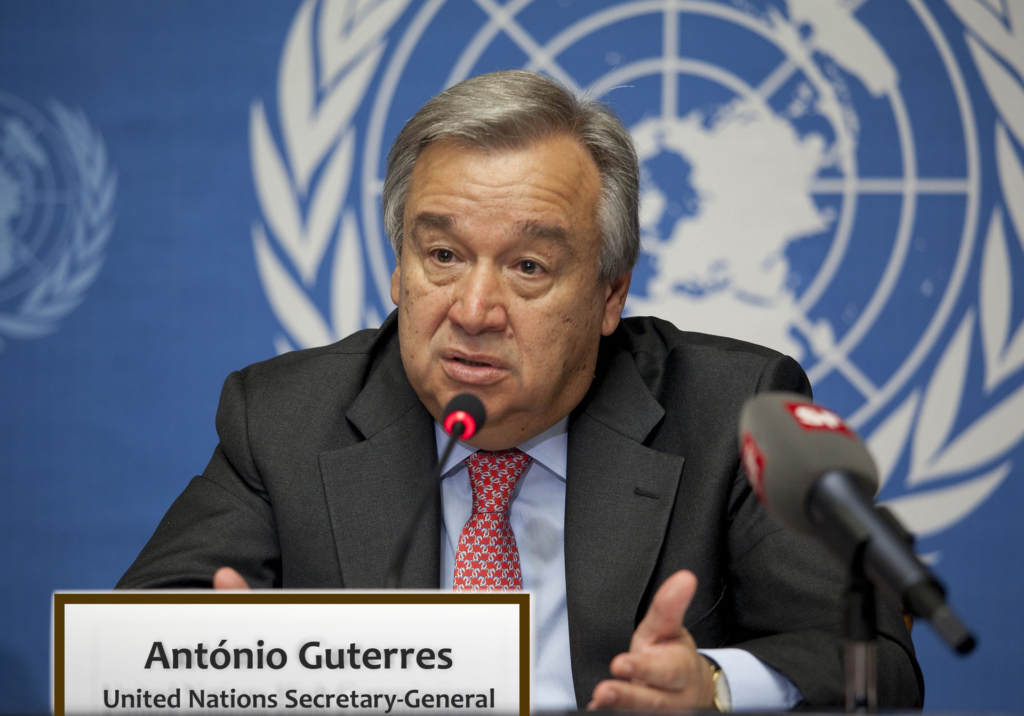
UN Secretary-General Antonio Guterres has found himself at the center of a global discussion following the recent announcements regarding the US withdrawal from international organizations. In a world that relies heavily on collaboration for addressing pressing issues, Guterres emphasizes the importance of adhering to UN obligations, particularly the financial commitments expected from member states. The recent decisions by Donald Trump’s administration to withdraw from 66 entities raise concerns about the future of international cooperation, with Guterres’ office reminding the US of its legal requirements to contribute to UN funding. As influential members like the USA take steps back from the international stage, Guterres’ urgent message is clear: commitment and contribution to global governance are not just preferences, but essential duties. His statements underscore the critical role of international organizations in maintaining peace, security, and effective diplomatic ties.
In light of recent geopolitical shifts, the role of the United Nations and its leaders, particularly Secretary-General Antonio Guterres, has become increasingly significant. With the announcement of the United States’ withdrawal from various international frameworks, Guterres’ responses highlight the legal responsibilities that member nations have towards supporting UN initiatives. The withdrawal of the US from numerous global organizations poses questions about the sustainability of cooperative international efforts and the implications for global governance. Guterres emphasizes that ongoing financial contributions are vital for the successful operation of the UN and the various missions it undertakes. As nations grapple with these changes, Guterres stands as a pivotal figure in defending the integrity and functionality of international relations.
Guterres Urges Compliance with UN Financial Contributions
In light of the recent announcements regarding the US withdrawal from 66 international organizations, UN Secretary-General Antonio Guterres’s office has emphasized the importance of adhering to UN obligations concerning financial contributions. The spokesperson, Stéphane Dujarric, reminded the Trump administration that financial commitments to the UN are not merely voluntary but legally binding obligations. This is crucial for maintaining the operational integrity and effectiveness of the UN, particularly in its peacekeeping and humanitarian efforts around the globe.
The financial contributions from the USA play a vital role in supporting various UN initiatives and programs, ranging from crisis response efforts to long-term sustainable development projects. With the withdrawal from key entities, including the UN Population Fund, there is a growing concern that American financial disengagement could undermine these critical missions. Guterres has indicated that the impact of such withdrawals could jeopardize not only international collaborations but also the foundational principles that guide the UN’s work.
Implications of US Withdrawal on Global Collaboration
The Trump administration’s decision to withdraw from multiple international organizations has significant repercussions for global collaboration on pressing issues. Many of these entities play crucial roles in addressing challenges like climate change, health pandemics, and international security. By stepping back, the USA risks diminishing its influence on these platforms and allows other nations to fill the vacuum left behind. This shift could lead to a reconfiguration of alliances and partnerships that were previously led by American interests.
Furthermore, the withdrawal signals a growing isolationism in US foreign policy, which could reduce its ability to shape international norms and standards. Many experts argue that cooperation on global challenges requires multilateral approaches rather than unilateral actions. The response from UN Secretary-General Guterres reflects a call for renewed dialogue and collaboration, highlighting that no country can effectively tackle global issues alone. The necessity of shared responsibility in funding and governance is crucial to sustaining the efficacy of international organizations.
Guterres’s Concern Over Redundant Institutions
While the Trump administration argues that many international organizations are redundant or poorly managed, Guterres’s perspective focuses on the value of these institutions in fostering diplomatic dialogues and resolving conflicts. The assertion that such bodies are wasteful overlooks their significant contributions to global peace and security. For instance, engagement with climate agreements and health cooperation frameworks can yield long-term benefits that far outweigh perceived inefficiencies.
Guterres’s expression of regret about the US withdrawal from climate negotiations underscores the potential consequences of diminishing multilateralism. Without the participation of a leading global power, efforts to address climate change may falter, impacting not only environmental sustainability but also economic stability globally. Thus, the call for collaboration rather than dissolution may be Guterres’s way of urging the US to reconsider its stance on global engagement.
The Role of International Organizations in US Sovereignty
The Trump administration’s rhetoric regarding international organizations has revolved around concerns of sovereignty and the perception that such bodies may threaten American interests. However, UN Secretary-General Antonio Guterres and other global leaders argue that these organizations are essential for promoting collective security and addressing transnational challenges. They serve as platforms where nations can negotiate and collaborate on issues that impact their citizens, thereby enhancing rather than infringing upon national sovereignty.
Moreover, engaging in these organizations allows the USA to exert influence over the global rule-making process. By withdrawing, the US may inadvertently empower rival states to shape these rules in ways that could be detrimental to American interests. Guterres emphasizes that participation does not equate to loss of sovereignty; rather, it’s a strategic choice that can enhance national security through cooperation on issues like arms control, climate action, and humanitarian assistance.
Future of UN with Reduced US Participation
The potential reduction of US participation in the United Nations raises questions about the future effectiveness and financial stability of the organization. The UN relies on contributions from its member states to sustain its operations, and a significant decrease in funding from the USA could hamper critical peacekeeping and humanitarian efforts worldwide. Guterres has already highlighted the vital role of each member state in fulfilling its financial commitments to ensure systemic stability and resilience.
Additionally, Guterres’s administration is actively exploring alternative funding sources to mitigate the financial impact of potential US withdrawal. Diversifying financial contributions from a broader range of countries could help sustain essential UN programs despite uncertainties. This forward-thinking approach reflects Guterres’s commitment to maintaining the operational capacity of the UN in the face of shifting political landscapes and financial challenges.
The Impact on Global Health Initiatives
Global health initiatives have been significantly influenced by US engagement in international organizations, such as the World Health Organization (WHO) and others combating pandemics and public health crises. The US withdrawal from these organizations, as indicated by the Trump administration, poses a risk to collaborative health efforts that depend on global coordination. UN Secretary-General Guterres has underscored the critical need for collective action in addressing health emergencies that cross national borders.
The withdrawal may lead to fragmented responses to health threats, potentially compromising the effectiveness of global health strategies. Guterres advocates for a unified approach to tackle public health issues, emphasizing that the complexities of health crises cannot be managed in isolation. By encouraging US re-engagement, he hopes to restore a collaborative spirit essential for promoting worldwide health security and rapid response to emerging health challenges.
America’s Leadership Role in UN Peacekeeping
As one of the founding members of the United Nations, the US has historically played a pivotal role in driving UN peacekeeping initiatives around the world. The recent decision to withdraw from various organizations underscores a shift in this leadership role, which has implications for global peace and stability. Secretary-General Antonio Guterres has repeatedly highlighted the importance of peacekeeping not only as an emblem of global cooperation but as a pivotal component in preventing conflicts and fostering sustainable development.
Should the US continue on this path of withdrawal, it risks diluting its influence in vital peacekeeping discussions and operations. Guterres stresses that effective peacekeeping requires the commitment and support of member states, suggesting that US endorsement and funding are crucial to maintaining the momentum of these initiatives. The future of successful peacekeeping missions may depend on restoring America’s active involvement and commitment to these shared international responsibilities.
Rethinking National Interests in Multilateral Organizations
The approach taken by the Trump administration prompts a reevaluation of how national interests align with the functioning of multilateral organizations. As organizations like the UN facilitate negotiations that bring together divergent national interests, stepping away could limit the ability of the USA to influence outcomes that matter to its own citizens. UN Secretary-General Antonio Guterres advocates for the duality of distinct national interests within the framework of global collaboration, suggesting countries must find a balance between pursuing sovereignty and engaging constructively on shared challenges.
Engaging in multilateral organizations nurtures diplomatic relations that can lead to economic opportunities and enhanced security. The framework provided by the UN and affiliated entities aids in conflict resolution and preventive diplomacy. Guterres encourages a reimagining of how America perceives its role on the global stage, reaffirming that participation in these organizations can significantly enhance national interests rather than undercut them.
Legal Obligations of UN Member States
Each member state of the United Nations, including the USA, has legal obligations to contribute financially to the organization’s budget. Under the UN Charter, member states are required to support the financing of the UN’s operations, which directly relates to the overall effectiveness of its mission. Secretary-General Antonio Guterres has reiterated the necessity for compliance with these obligations, stating that failure to honor financial commitments can have cascading effects on various UN initiatives.
These mandatory contributions are designed to ensure that all member states have a stake in the success of the UN’s initiatives. As some nations withdraw from their obligations, like the recent moves by the Trump administration, it raises concerns about the equitable representation and distribution of resources within the UN. Guterres’s advocacy for legal adherence to financial commitments is a pivotal reminder of the collaborative responsibility that underpins the global governance system.
Frequently Asked Questions
What is UN Secretary-General Antonio Guterres’ stance on the US withdrawal from international organizations?
UN Secretary-General Antonio Guterres has expressed strong concern regarding the US withdrawal from various international organizations. He has been vocal about the importance of multilateralism and the legal obligations of member states, particularly highlighting that the United States must continue its financial contributions to the UN, notwithstanding its withdrawal from certain entities.
How has Antonio Guterres responded to the financial implications of the US withdrawal from international organizations?
Antonio Guterres, through his spokesperson Stéphane Dujarric, has emphasized that the US withdrawal from international organizations does not absolve the country of its financial obligations to the United Nations. According to Guterres, all member states, including the USA, are mandated to contribute to the UN’s regular and peacekeeping budgets as per decisions made by the General Assembly.
What specific organizations did the US withdraw from that affects UN Secretary-General Antonio Guterres’ agenda?
The United States, under President Donald Trump, announced its withdrawal from 31 entities affiliated with the UN, including critical organizations like the UN Population Fund. This decision impacts UN Secretary-General Antonio Guterres’ agenda, particularly in areas like international climate negotiations and global health, where these organizations play vital roles.
Why did the US government decide to withdraw from international organizations according to Antonio Guterres?
While UN Secretary-General Antonio Guterres has not directly commented on the specific reasons behind the US withdrawal, he has lamented the loss of participation in vital international efforts. The US government stated its withdrawals were based on perceptions that these organizations were redundant, poorly managed, and wasteful, indicating a fundamental shift in the approach to international cooperation.
What reminders has UN Secretary-General Antonio Guterres provided to the US about UN financial contributions after the withdrawal announcement?
UN Secretary-General Antonio Guterres has reminded the US government of its legal obligations to fulfill its financial commitments to the UN. Guterres has stressed that despite the withdrawal from multiple international organizations, the US is still required to meet its contributions towards the UN’s regular and peacekeeping budgets, reinforcing the necessity of financial support for ongoing global initiatives.
| Key Points | Details |
|---|---|
| USA’s Withdrawal | The USA plans to withdraw from 66 international organizations, including 31 affiliated with the UN. |
| Legal Obligations | UN Secretary-General Antonio Guterres emphasized the USA’s legal obligation to continue financial contributions to the UN and its peacekeeping efforts. |
| UN’s Response | Stéphane Dujarric, the spokesperson for Guterres, reminded the US government that mandatory contributions are legally binding for all member states. |
| Reason for Withdrawal | The US government cites redundancy, poor management, and perceived threats to national sovereignty as reasons for withdrawal. |
Summary
UN Secretary-General Antonio Guterres has underscored the importance of member states fulfilling their financial commitments to the United Nations, even amidst significant international challenges. The recent decision by the USA to withdraw from various global organizations not only raises concerns about the future of international cooperation but also highlights an ongoing commitment to uphold global peace and stability through continued funding. As discussions on international obligations continue, it’s crucial for member states to recognize the legal and moral imperatives of supporting essential global initiatives, fostering a sense of unity rather than division in addressing global issues.

