
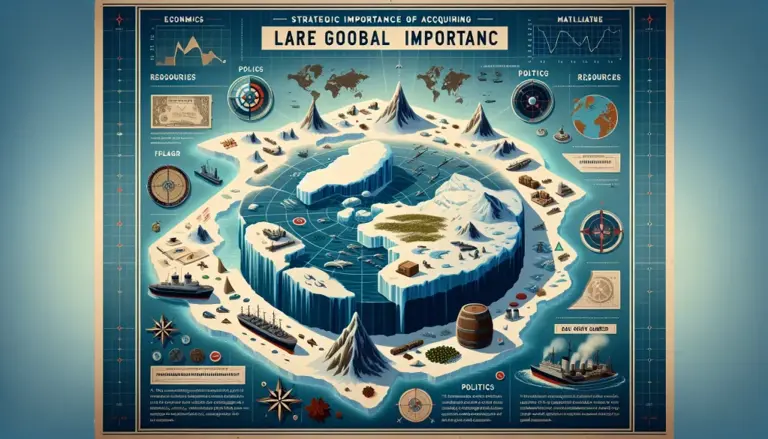
The ongoing Greenland acquisition controversy has emerged as a focal point in US military strategy and international relations. As tensions escalate, discussions surrounding the potential annexation of Greenland have raised alarms about Danish sovereignty and the implications for NATO Greenland relations. The White House asserts that the acquisition of Greenland is crucial for bolstering national security and deterring adversaries in the strategically significant Arctic region. President Trump’s administration has even labeled military action as “always an option” should negotiations falter, prompting strong warnings from European allies against such a move. With prominent nations like Germany and Denmark firmly defending the island’s autonomy, the issue threatens to disrupt established alliances and provoke a larger territorial dispute in the Arctic.
The debate surrounding the potential takeover of Greenland highlights a complex web of geopolitical interests and national security concerns. This highly strategic Arctic territory has become a point of contention, reflecting broader issues such as military expansion and sovereignty conflicts involving Denmark and its NATO partners. With whispers of military interventions and resource exploitation, discussions have sparked urgent conversations about Greenland’s status within the global geopolitical landscape. As various nations position themselves, the implications for regional security and diplomatic relations continue to unfold, giving rise to a myriad of perspectives on this provocative topic.
Understanding the Geopolitical Stakes of Greenland Acquisition
The acquisition of Greenland has emerged as a focal point in the broader narrative surrounding US military strategy and national security. Control over the Arctic region is increasingly viewed as vital, especially in the context of skyrocketing geopolitical tensions. With looming adversaries capitalizing on emerging opportunities, the US perceives Greenland as an essential geographic asset that could serve as a strategic military stronghold. Given its vast natural resources and logistical positioning, the island’s acquisition could significantly enhance the United States’ operational capabilities in the Arctic.
A crucial element in this equation is the historical and strategic relationship between Denmark and Greenland. As a part of the Kingdom of Denmark, Greenland has long been under Danish sovereignty, leading to international discussions over its status. The current geopolitical climate raises questions about alliances and territorial disputes. The US’s interest in Greenland, particularly under the Trump administration, is viewed through the lens of maintaining dominance in the Arctic against other nations. This complicated interplay between US military strategy and European diplomacy is poised to redefine NATO’s role regarding territory that, while not EU territory, remains significant to Western defense dynamics.
The Greenland Territorial Dispute and US Military Options
The Greenland territorial dispute epitomizes the clash between national interests and diplomatic relationships. The US government’s intention to consider military options has sparked outrage among European allies who fear that such actions could breach diplomatic norms. Denmark’s Prime Minister has voiced concerns that an aggressive American acquisition of Greenland risks destabilizing NATO’s cohesion. This potential threat is compounded by Trump’s earlier provocative remarks, which many interpreted as direct attempts to undermine Danish sovereignty.
Moreover, the discussion surrounding a military operation illustrates the extent to which the US is willing to go to secure its interests in Greenland. While military action has not been explicitly outlined, it’s clear that the acquisition remains a priority given the strategic advantages it presents for the US military. The assertion that ‘military force is an option’ reflects ongoing debates about NATO’s collective defense commitment and the implications for European security. As allied nations rally around Denmark’s claim over the territory, the future of Greenland and its alignment within the international community remains uncertain.
The Impact of Trump’s Greenland Threat on International Relations
Trump’s Greenland threat is not just a singular incident but encapsulates a broader trend of US assertiveness in global affairs. The former president’s rhetoric has exacerbated tensions not only with Denmark but across European capitals as well. In their joint statements, various European nations highlighted that Greenland’s destiny rests with its people and warned against infringing upon Danish sovereignty. The implications of this narrative stretch into NATO’s future and its collective defense strategy, especially in light of the growing military presence of the US in Greenland.
Additionally, Trump’s threats have raised questions about how America’s intentions are perceived by its allies. The perception of an intended acquisition has led to assertions by European leaders that they will not tolerate any aggressive maneuvers undermining the established territorial integrity of Greenland. As the US continues to emphasize its military interests within Greenland, Europe must navigate the delicate balance of ensuring that NATO remains united while also protecting the interests of its member states.
NATO Relations and Greenland’s Strategic Importance
NATO’s relationship with Greenland is pivotal as the island serves an important role in the defense architecture of the alliance. Given its strategic location in the North Atlantic, Greenland provides the US and NATO with crucial surveillance capability and logistical advantages over any adversary. The U.S. military bases already present in Greenland are testimony to the site’s significance in terms of defense readiness, and expanding these is a part of broader strategies to safeguard the Arctic from geopolitical threats.
The potential addition of Greenland to US territory is thus intertwined with NATO’s effectiveness. Any perceived American encroachment could challenge the alliance’s founding principles, causing friction between the US and its European partners. As discussions unfold regarding military preparedness and territorial sovereignty, the emphasis on Greenland’s importance within NATO cannot be overstated. An uneasy yet necessary collaboration will determine not only Greenland’s future but also the collective security framework of the NATO alliance.
Resource Exploitation Motivations in the Greenland Acquisition Debate
The discussions surrounding Greenland’s acquisition include a critical analysis of the island’s abundant natural resources. Trump’s perceived interest in Greenland extends beyond strategic military considerations, encompassing the vast mineral deposits that could yield significant economic benefits. Mineral wealth, including rare earth elements, places Greenland at the center of interests not just for the US but also for China and Russia, indicating that control over these resources could impact the balance of power in the Arctic.
As the world becomes increasingly focused on sustainable practices, the exploitation of Greenland’s natural resources poses both opportunities and ethical dilemmas. Balancing environmental concerns against economic aspirations is paramount. The interests of indigenous populations in Greenland cannot be overlooked, as discussions about resource management must involve their perspectives and rights. Hence, Greenland remains a critical case study in assessing how resource acquisition affects international dynamics and strategic partnerships.
Denmark’s Firm Stance on Greenland’s Sovereignty
Denmark’s refusal to entertain the idea of selling Greenland signifies its commitment to uphold its sovereignty. The Danish government has not only defended its territorial claims but also its role in promoting the welfare of Greenland’s indigenous population. In response to Trump’s remarks, Denmark has sought to reinforce the narrative that Greenland is not merely a geopolitical chess piece but a land with a rich cultural heritage.
Moreover, this firm stance by Denmark is critical in shaping foreign relations within NATO. By asserting its sovereignty over Greenland, Denmark positions itself as a resilient ally capable of standing up against external pressures while keeping the unity of the alliance intact. The argument that Greenland’s people must have the primary say in their future also resonates with global movements advocating for self-determination, reflecting broader principles consistent with democratic values.
Exploring the Future of Greenland in Global Politics
The future of Greenland on the global stage is indeterminate, with mounting pressures from various international players. As climate change alters the Arctic landscape, new trade routes and resource opportunities beckon a re-evaluation of the island’s strategic position. This evolving narrative can be anticipated to initiate further discussions on Greenland within global forums, as stakeholders contemplate the evolving geopolitical realities in the Arctic.
The implications of Greenland’s future are vast, influencing not just US foreign policy but also transatlantic relations. The outcomes of these discussions will shape how the Arctic is managed and protect the rights of indigenous communities as new powers vie for influence. Understanding the geopolitical dynamics in play will be critical for navigating future interactions and ensuring that Greenland’s sovereignty and resources are respected.
NATO’s Strategic Interests and Greenland’s Military Importance
NATO’s overarching objectives involve ensuring security and stability in the North Atlantic region, of which Greenland is a crucial part. The strategic military importance of Greenland cannot be overstated, especially considering its proximity to Russia and the potential for increased military activity in the Arctic. NATO’s interests align with maintaining a capable presence in Greenland to counter any measures taken by rival nations seeking to exert influence in the area.
With the presence of US military bases in Greenland, NATO’s operational capabilities are significantly enhanced. This significantly underscores the need for collaboration between Denmark and its NATO partners to ensure that any policy shifts regarding Greenland do not undermine the alliance’s collective defense commitments. The discussions surrounding Greenland’s future also reflect broader themes of international cooperation, responsibility, and the need for a unified approach among NATO allies.
International Response to the U.S. Aggression Over Greenland
The international community’s response to the U.S. aggression regarding Greenland acquisition emphasizes Denmark’s sovereignty and the rights of the Greenlandic people. European allies have rallied to support Denmark, articulating a clear message that annexation will not be tolerated under international law. This solidarity within Europe underscores a growing political maturity in addressing potential U.S. expansionist actions, which could destabilize trust within NATO.
Furthermore, the concerted pushback against U.S. military posturing over Greenland reflects a renewed commitment to multilateralism and diplomatic resolution. As tensions rise, fostering coalitions among European nations will play a vital role in managing U.S. ambitions in the region. By fortifying the importance of respectful dialogue, the goal is to promote stability while ensuring that Greenland’s future is determined by its inhabitants, rather than external pressures.
Frequently Asked Questions
What is the significance of the Greenland acquisition in US military strategy?
The Greenland acquisition is seen as a strategic move by the US to bolster its military presence in the Arctic. Control over Greenland is crucial for national security, as it allows for enhanced surveillance and deterrence against adversaries in this vital region.
How does the Greenland territorial dispute affect US relations with Denmark?
The Greenland territorial dispute has strained US-Denmark relations, especially after President Trump suggested the acquisition of the island. Denmark, asserting its sovereignty, has emphasized that Greenland belongs to its people, causing tensions between NATO allies.
What was Trump’s stance on the Greenland acquisition and NATO relations?
President Trump proposed the acquisition of Greenland as a means to strengthen US influence in the region, but this has led to warnings from NATO allies. The Danish Prime Minister has suggested that threats to Greenland’s status could jeopardize NATO relations.
How are NATO Greenland relations impacted by the discussion of territory acquisition?
NATO Greenland relations are currently under scrutiny due to the US interest in acquiring Greenland. As Greenland is NATO territory due to its association with Denmark, any discussions of its acquisition could lead to significant geopolitical implications for the alliance.
What resources in Greenland are influencing the US interest in acquisition?
The US is primarily interested in Greenland’s rich natural resources, including minerals and potential oil reserves. This desire for resource exploitation has been a driving factor behind the discussions on Greenland acquisition and its implications for US military strategy.
What consequences could arise from the US pursuing a military operation regarding Greenland?
If the US were to pursue a military operation regarding Greenland, it could lead to severe diplomatic fallout, including a possible break in NATO alliances. European nations have already cautioned against military actions, indicating such moves could destabilize the region.
| Key Point | Details |
|---|---|
| US Government’s Stance | The acquisition of Greenland is a top priority for US national security. |
| Military Operations | Military action remains ‘always an option’ as stated by the Trump administration. |
| Opposition from Europe | European nations, including Germany, have warned against any potential annexation. |
| Denmark’s Position | Danish PM Mette Frederiksen warned that NATO could break up over this issue. |
| NATO and Greenland | Greenland is considered NATO territory but not part of the EU. |
| US Military Presence | The US already has military bases on Greenland which could be expanded. |
| Natural Resources Interest | Speculation suggests Trump is interested in Greenland’s rich natural resources. |
Summary
The Greenland acquisition is becoming increasingly contentious as the US government emphasizes its desire for control over the island for national security purposes. With military operations considered as a last resort and strong opposition from European allies, the future of Greenland remains uncertain. The tension highlights the strategic importance of the region amidst growing geopolitical competition.

