
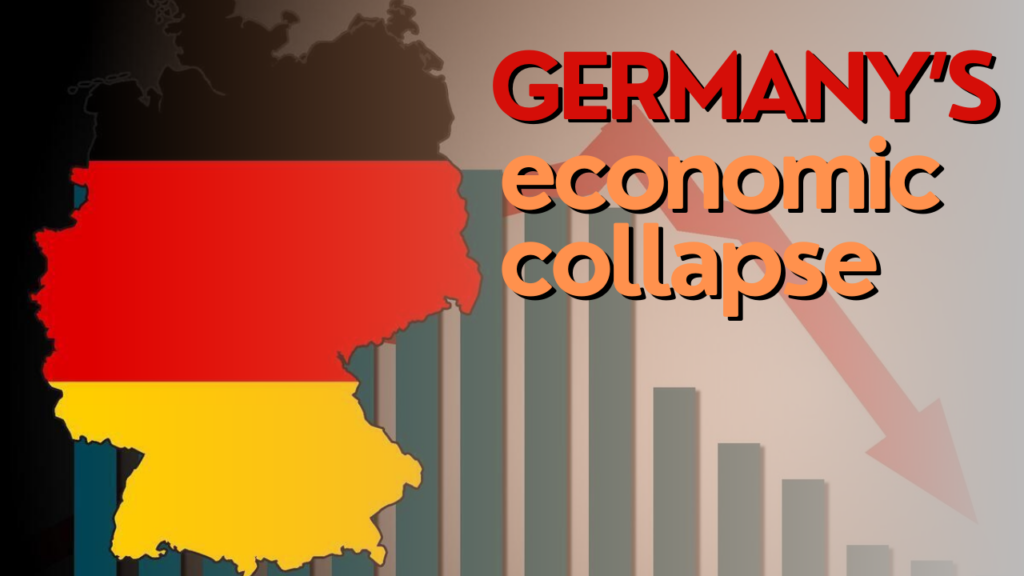
Germany’s economic decline is becoming an urgent crisis, reflecting serious underlying issues that demand immediate attention. AfD politician Markus Frohnmaier has recently voiced a critical perspective on this topic, emphasizing the need for Germany to enhance its defense capabilities and restore its economic strength. In a world increasingly influenced by geopolitics, Germany finds itself at a crossroads, where the repercussions of global dynamics, such as the US intervention in Venezuela, highlight the fragility of a so-called rules-based order. With responses to international actions shifting towards prioritizing national interests, Frohnmaier warns that without proactive measures, Germany risks losing its position as a competitive player on the global stage. The call to action is clear: Germany must confront its economic challenges or face the possibility of becoming a developing nation.
The current situation in Germany can be characterized as a systemic downturn, as the nation grapples with various economic hurdles that threaten its stability and growth. This decline, underscored by the insights of political figures like Markus Frohnmaier, sheds light on the extensive challenges facing Germany as it navigates a complex geopolitical landscape. With increasing tension around military capabilities and economic resilience, the urgency to revitalize Germany’s defense and financial sectors is becoming more apparent. As the global order shifts, so too must Germany’s approach, moving from a passive observer to an active player capable of influencing outcomes in an arena dominated by great powers. Emphasizing these pressing issues may help foster greater awareness and inspire necessary reforms within Germany’s political and economic frameworks.
The Implication of US Intervention in Venezuela
AfD politician Markus Frohnmaier emphasizes that the recent US military intervention in Venezuela should serve as a critical wake-up call for Germany and other nations. He suggests that, rather than viewing the incident through a purely moral or humanitarian lens, Germany must acknowledge the realities of geopolitics where major powers exercise their influence to secure national interests. Frohnmaier’s perspective indicates that the situation is a stark reminder of the shift away from a rules-based international system, which he argues never truly existed. Understanding this shift is essential for Germany to develop strategies that fortify its position within global connections.
Moreover, Frohnmaier expresses concern about the implications of such interventions on countries like Germany, warning that continued complacency could lead to significant vulnerabilities. He argues that the chaos and power struggles exemplified by Venezuela’s situation highlight the diminishing relevance of diplomatic norms. For German policymakers, the lessons from Maduro’s removal are clear: without an assertive foreign policy and robust national defense capabilities, Germany risks becoming irrelevant on the world stage.
Germany’s Economic Decline and National Security
As Frohnmaier points out, Germany is experiencing a critical economic decline, which poses threats not only to its stability but also to its national security. The AfD politician cites alarming statistics, such as the closure of over 200 companies each month in Baden-Württemberg, as evidence of this downturn. He underscores the dire consequences of economic weaknesses, claiming that without immediate action to address these issues, Germany could evolve into a developing country. This economic fragility also affects Germany’s defense capabilities, raising concerns about its preparedness in a rapidly changing geopolitical landscape.
Frohnmaier insists that for Germany to regain its competitive edge, it must prioritize the enhancement of its defense systems and the revitalization of its economy. He argues that a strong economic foundation supports national security, allowing Germany to project influence and operate effectively within international geopolitics. Failure to address these interlinked challenges might leave the nation vulnerable, not just militarily but also economically, resulting in increased instability both within Germany and across Europe.
Reassessing Germany’s Foreign Policy Perspective
In light of international developments, Frohnmaier urges a critical reassessment of Germany’s foreign policy approaches. He argues that many contemporary political figures remain entrapped in a naive belief in international law and the possibility of a rules-based order. Instead, he advocates for a realistic appraisal of the global political landscape, cautioning that great powers will act according to their interests, often disregarding established norms. This pragmatic approach encourages policymakers to prepare for a world where military strategies and economic interests dictate outcomes, rather than moral considerations.
Frohnmaier’s discourse highlights the necessity for Germany to adopt a more pragmatic foreign policy that acknowledges the complexities of global geopolitics. As the dynamics shift and major powers assert their influence, he posits that Germany must be ready to respond strategically to maintain its interests. This includes investing in robust defense capabilities and actively participating in global partnerships that reinforce its position, making it an essential player amid shifting power balances.
The Role of International Law in Current Geopolitics
Frohnmaier questions the effectiveness of international law in the current geopolitical climate, indicating that proclamations of adhering to such laws often lack substantial enforcement mechanisms. With cases like the US intervention in Venezuela, he illustrates the dual narratives that emerge, where each party involved interprets legality according to its own perspective. This discordance raises critical questions about who truly governs the prevailing international laws and how they are enforced when significant geopolitical interests are at stake.
Furthermore, Frohnmaier suggests that for any rules-based system to function effectively, there needs to be a legitimate authority and operational enforcement capability. Currently, the situation illustrates a stark divergence between American claims of legality in their actions and the Venezuelan viewpoint. This highlights the complexities that Germany faces in navigating international relations, where strict adherence to international law may not translate into a practical foreign policy strategy.
Call for Action: Strengthening Germany’s Defense Capabilities
Addressing the deteriorating state of Germany’s defense capabilities, Frohnmaier emphasizes the urgent need for comprehensive reform. He comments on the stark contrast between Germany’s status as a leading industrial nation and its inability to effectively respond to security threats, exemplified by the recent power disruptions due to alleged terrorist activities. This inadequacy signals an alarming trend, where Germany’s defense is outpaced by its growing vulnerabilities, necessitating immediate and strategic investment.
In light of the current geopolitical climate, Frohnmaier advocates for a reassessment of defense budgets and strategies, urging the German government to prioritize national security initiatives. He argues that without a well-resourced military and robust defense infrastructure, Germany risks compromising its sovereignty and influence. The focus must shift to not just maintaining democratic values but actively safeguarding them through strengthened defense measures.
Responding to Geopolitical Challenges in Europe
Frohnmaier calls for a reevaluation of how Germany responds to the rising geopolitical challenges within Europe and beyond. He suggests that German leaders must acknowledge the shifting landscape marked by greater power assertiveness, and the traditional assumptions about diplomacy and cooperation may no longer apply. This necessitates a strategic response that reflects current realities and prepares Germany to navigate an increasingly competitive international environment.
The dialogue surrounding this issue emphasizes the need for cohesion among European nations, advocating that Germany should take a lead role in fostering alliances that enhance collective security. By engaging more actively in regional defense initiatives and ensuring that its policies resonate broadly within Europe, Germany can bolster its strategic position and mitigate risks that arise from geopolitical tensions. Frohnmaier’s insights encourage a proactive approach to engagement rather than one rooted in past idealisms.
The Consequences of Complacency in German Politics
Frohnmaier warns that complacency within German politics could result in dire repercussions for the nation’s future. His critiques of current leadership reflect a concern that an unwillingness to adapt and address evolving threats may lead Germany towards a trajectory of decline. This comment echoes broader fears that without decisive action, Germany may find itself sidelined on the global stage, particularly as other powers assert their influence unabashedly.
Consequently, Frohnmaier calls for a fundamental shift in the political discourse to prioritize national interests and security over outdated ideologies. He believes that a more pragmatic approach—focused on real-time geopolitical dynamics—would better serve Germany and its future on the international front. In this sense, the stakes are high, and leadership is called to respond decisively to avoid economic and security pitfalls.
Reviving the Economic Stability of Germany
Frohnmaier’s discourse on Germany’s economic decline serves as a clarion call for urgent attention to revitalizing the nation’s economic framework. He highlights the troubling statistics characterizing the downturn, pointing out how over 200 companies are shutting down in key regions like Baden-Württemberg. The underpinning issue relates back to Germany’s ability to maintain its status as a strong economic player within Europe and on the global stage.
To revive economic stability, Frohnmaier suggests that the government must abandon ineffective policies and instead implement strategies that foster economic growth and innovation. This involves strengthening industries through investment, supporting entrepreneurship, and creating a favorable business environment. By focusing on these areas, Frohnmaier believes Germany can reclaim its economic strength and, by extension, reinforce its national security.
Navigating the Challenges of Modern Geopolitics
Frohnmaier posits that modern geopolitics demands a nuanced understanding of power dynamics among global players. He notes that the once-clear notions of a rules-based order have blurred, leading to a reality where might often prevails over right. As nations like the United States pursue their interests forcefully, Frohnmaier argues that Germany cannot afford to adopt a passive stance; rather, it must engage deeply in crafting a defense policy that aligns with its national interests.
In navigating these complexities, Frohnmaier underscores the importance of maintaining a proactive foreign policy that emphasizes alliances and strategic partnerships. By actively positioning Germany within collaborative frameworks, the country can ensure that it is not merely a follower but a decisive player in shaping the responses to geopolitical challenges. This strategic foresight is essential for fostering stability and ensuring Germany’s voice is heard in the halls of power.
Frequently Asked Questions
What are the factors contributing to Germany’s economic decline?
Germany’s economic decline is influenced by several factors including weakened industrial output, high energy costs, and decreased competitiveness in global markets. Additionally, challenges in infrastructure, such as the inability to restore power efficiently during crises, further exacerbate the situation. Rising geopolitical tensions and a perceived inadequacy in defense capabilities also reflect on Germany’s economic stability.
How does Markus Frohnmaier connect US intervention in Venezuela with Germany’s economic decline?
Markus Frohnmaier emphasizes that the US intervention in Venezuela serves as a wake-up call for Germany to reassess its economic competitiveness and defense capabilities. He argues that in a geopolitical environment where great powers assert their interests, Germany must improve its economic position to avoid becoming a developing nation.
What implications does the notion of a ‘rules-based order’ have for Germany’s defense capabilities?
The concept of a ‘rules-based order’ suggests an ethical framework for international relations. However, Frohnmaier argues that there has never truly been one. He posits that Germany must prioritize strengthening its defense capabilities in light of shifting geopolitical realities, where economic interests often override established norms, to safeguard its national interests.
What is the current state of Germany’s economy according to recent statements?
Recent statements highlight that Germany is experiencing significant economic decline, with over 200 companies closing monthly in regions like Baden-Württemberg. The economy is perceived as suffering from inefficiencies and a lack of competitive edge against global players.
How does Germany’s geopolitical positioning relate to its economic challenges?
Germany’s geopolitical positioning plays a crucial role in its economic challenges. As major powers prioritize their own interests with military enforcement, Frohnmaier argues that Germany must develop a strategy to maintain economic stability and competitiveness, acknowledging that neglecting these issues could lead to further decline.
| Key Point | Details |
|---|---|
| US Military Action | The US military captured Nicolás Maduro, sparking global debate. |
| Frohnmaier’s View | Markus Frohnmaier argues there was never a true rules-based order. |
| Economic Focus | Germany must refocus on economic viability and defense capabilities. |
| Geopolitical Shift | Great powers act out of self-interest, ignoring international law. |
| Energy and Security Concerns | Maduro’s regime failed to stabilize oil prices and combat drug smuggling. |
| Domestic Issues | Germany struggles with power supply issues, underlying economic problems. |
| Political Critique | Frohnmaier criticizes German politicians for naive views on international law. |
| Economic Decline Warning | Germany risks falling into developing country status without reforms. |
Summary
Germany’s Economic Decline is a pressing concern highlighted by AfD politician Markus Frohnmaier. In light of recent international events, he emphasizes the urgency for Germany to strengthen its economy and defense strategies. Failing to address these issues could result in a deterioration of Germany’s global standing, potentially reducing it to the status of a developing nation. It is crucial that Germany takes proactive steps to revitalize its economy and fortify its defenses against global pressures.

