
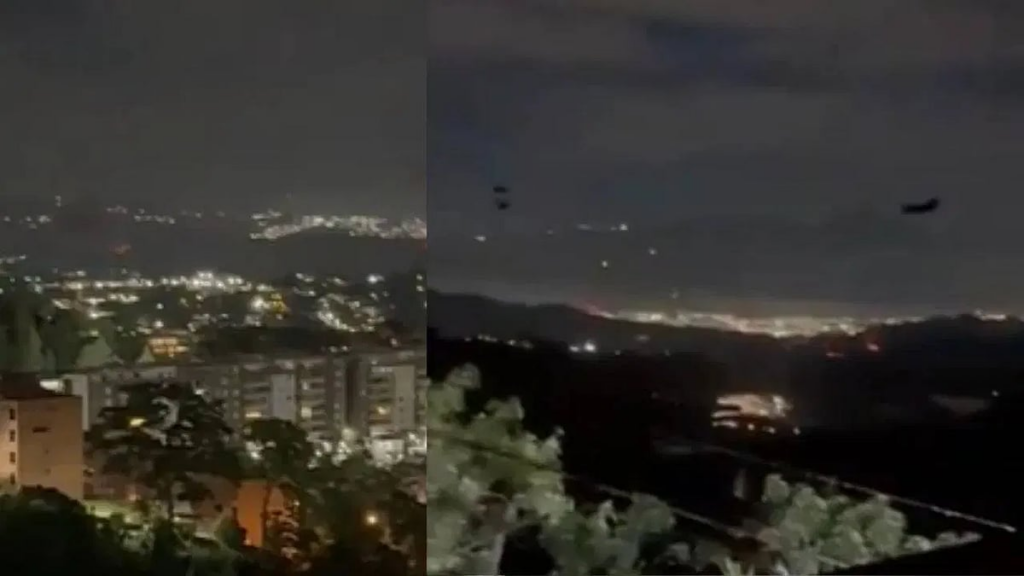
The recent U.S. attack on Venezuela has dominated headlines as President Nicolás Maduro finds himself in custody following a controversial military operation. This unprecedented move, criticized by both sides of the political spectrum in the U.S., raises questions about the motives behind such actions, particularly amidst concerns over Venezuela oil interests and U.S. foreign policy. Critics argue that without Congressional approval, the assault reflects an alarming disregard for international law, igniting debates on whether such aggression can bring about a sustainable Venezuela democracy. While the Trump administration claims its goal centers around law enforcement rather than military deployment, the implications of this operation suggest deeper ambitions linked to regime change. As the dust settles, the implications of this attack on Venezuela’s sovereignty and stability will continue to unfold, keeping global observers on high alert.
The recent military intervention in Venezuela represents a significant escalation in America’s foreign engagements, drawing intense scrutiny from various political factions. Long seen as a volatile player on the international stage, Venezuela is now the focal point of U.S. law enforcement strategies, particularly involving allegations against Nicolás Maduro. The implications of this operation resonate deeply, highlighting America’s intertwined interests in both regional stability and the vast oil reserves of the South American nation. As discussions about the efficacy and legality of such interventions gain traction, the future of Venezuela’s governance and its potential return to democratic processes remains uncertain. Questions abound regarding how the U.S. approach to regime change aligns with its commitment to uphold democratic ideals and respect national sovereignty.
The US Military Operation and its Controversies
The U.S. military operation in Venezuela has sparked intense debate across political lines, with critics labeling it as reckless and poorly planned. Democratic leaders, including Senate Minority Leader Chuck Schumer, have called out the operation for lacking congressional approval and a coherent strategy for the aftermath. The swift action against Nicolás Maduro, who has been portrayed as an illegitimate dictator, raises fundamental questions about the U.S.’s role in foreign interventions, particularly when it comes to regime change. Critics argue that without a clear plan, such military operations can lead to chaos and instability rather than restoring democracy, complicating U.S. foreign policy objectives in the region.
Moreover, the justification put forth by the Trump administration, positioning the operation as a matter of law enforcement rather than military intervention, fails to resonate with many lawmakers and citizens. The narrative surrounding the removal of Maduro focuses not only on stopping his alleged drug trafficking and corruption but also on securing Venezuela’s vast oil resources. This raises ethical concerns over whether the operation was truly about promoting democracy or primarily about advancing U.S. economic interests in Venezuela.
Criticism of US Foreign Policy in Venezuela
The backlash against the U.S. attack on Venezuela highlights a significant critique of U.S. foreign policy—an approach perceived as inconsistent and opportunistic. The indictment of Maduro, framed as a law enforcement action against corruption and drug smuggling, has been criticized as a facade for broader geopolitical ambitions, particularly regarding Venezuela’s valuable oil reserves. Commentators suggest that such tactics indicate a strategic pattern in U.S. foreign policy that chooses short-term gains over long-term stability and democratic governance.
Furthermore, the situation amplifies the skepticism surrounding U.S. intentions in Latin America. History professor Thomas Mokaitis emphasized that merely removing a dictator doesn’t guarantee the emergence of democracy; rather, it often results in power vacuums and continued civil unrest. This skepticism is compounded by previous U.S. interventions that have not led to positive outcomes for the countries involved, leading many to question whether U.S. actions are genuinely aimed at promoting democracy or merely protecting vested economic interests.
The Future of Venezuela’s Democracy Post-Military Operation
With Maduro’s arrest, many hope for a new chapter in Venezuela’s history, yet the path ahead remains fraught with challenges. The notion that democracy will automatically flourish following the removal of a dictator is, as experts suggest, overly simplistic. The complexities inherent in Venezuelan society, coupled with the ramifications of external military intervention, create a volatile environment that may hinder democratic processes. The U.S. must grapple with the implications of its actions, as hastily installed governments often struggle to attain legitimacy and support from the populace.
Critics argue that true democracy cannot be engineered from outside but must emerge organically. The U.S. must be cautious not to impose a solution that disenfranchises the very citizens it claims to help. As the dust settles from the military operation, stakeholders both within and outside of Venezuela will need to focus on fostering an environment where democratic institutions can grow, ensuring that the Venezuelan people have a voice in their future. Without a commitment to genuine democratic principles, the cycle of oppression may continue regardless of who holds power.
Exploring US Interests in Venezuela’s Oil Wealth
Venezuela’s vast oil reserves have long been a focal point of U.S. foreign policy, and the recent military operation intensifies scrutiny on the motivations behind U.S. interventions. The country’s economic collapse and the ensuing humanitarian crisis have drawn international concern, but the U.S. response often appears intertwined with its desire to control Venezuela’s oil resources. Former CIA Director John Brennan pointed out this connection, noting that securing these assets is a critical interest for U.S. energy needs. However, such an approach raises fundamental ethical dilemmas about exploitation versus genuine support for sovereignty.
Additionally, engaging in military action to secure resource wealth distorts the narrative surrounding America’s role as a promoter of democracy. While the U.S. positions itself against Maduro’s regime, critics argue that its focus on oil interests undermines its claims of supporting Venezuelan democracy. Historical precedents reveal that oil-rich nations frequently experience turmoil exacerbated by external interventions, often resulting in environments rife with corruption and conflict. This dynamic necessitates a reevaluation of how U.S. foreign policy balances national interests with ethical considerations supporting genuine democratic development in Venezuela.
Public Opinion on Military Interventions Abroad
Public sentiment regarding military interventions has shifted significantly, particularly in the aftermath of prolonged conflicts in Iraq and Afghanistan. Current polls indicate that even among Republican voters, support for a military operation in Venezuela is lukewarm at best. Recent CBS News findings suggest that only half of those polled back such actions, as many Americans are increasingly critical of costly military engagements that offer little foreseeable benefit. This apprehension has been further amplified by a historical lens that consistently reveals the adverse outcomes of foreign military interventions.
As U.S. leaders contemplate future actions, an understanding of public hesitance is vital to shaping foreign policy. The potential for backlash against overseas military operations could lead politicians to rethink their strategies, especially in light of the negative historical context surrounding military engagement. If public opinion remains largely against intervention, the administration must articulate a clear, compelling narrative that reframes military action not merely as a means to enforce U.S. interests, but as a genuinely beneficial endeavor for the people of Venezuela.
Legal and International Considerations Regarding the US Attack
One of the critical discussions that has emerged following the U.S. attack on Venezuela is the matter of international law and sovereignty. There are sharp debates about whether the U.S. operation violated international norms, particularly regarding a nation’s right to self-determination and non-interference. Critics highlight that the absence of congressional approval raises significant concerns regarding the commitment of the U.S. to uphold the very principles it seeks to promote abroad. This unilateral approach to intervention could set dangerous precedents for future foreign policy actions.
In contrast, the U.S. administration claims that its intervention was necessary not only to address the corrupt activities of Maduro’s regime but also to safeguard the democratic aspirations of the Venezuelan populace. However, this argument is contentious and calls for a reexamination of how interventions are framed legally. As the global community watches closely, it remains imperative to assess whether justifying military actions under certain pretext will create an erosion of international law, inviting greater conflict and instability in the region.
The Role of Diplomacy in Venezuelan Affairs
Amidst the turmoil following the U.S. military operation, the role of diplomacy takes center stage in the conversation surrounding Venezuela’s future. Many experts argue that military action should always be a last resort and that establishing dialogue with various factions within Venezuela could offer a more sustainable path to restoring order. Diplomatic approaches emphasize cooperation rather than coercion, fostering an environment where all stakeholders can have their interests represented in the political dialogue.
Moreover, history has shown that successful diplomatic resolutions can lead to meaningful change, even in politically tumultuous countries. The U.S. and international allies must consider engaging with Venezuela’s opposition, civil society, and even remnants of the current government to build a consensus for a peaceful and democratic future. Only through inclusive communication can the roots of sustained stability be sown, breaking the cycle of violence and conflict that often follows military interventions.
Implications of Maduro’s Arrest on Regional Stability
The arrest of Nicolás Maduro is a pivotal moment not just for Venezuela, but for the entire Latin American region. As power dynamics shift, neighboring countries are watching closely to gauge the implications for their own governance and security. The potential for a power vacuum following Maduro’s removal raises fears of increased instability and conflict, not only within Venezuela’s borders but also spilling into neighboring states. Historical instances of regime change have shown that interventions can have ripple effects that destabilize entire regions.
Additionally, the context of U.S. involvement complicates how neighboring countries will respond to this incident. Some regional leaders may interpret the U.S. action as a signal to intervene in their own domestic issues while others may rally against perceived U.S. imperialism. The delicate balance of power in Latin America requires astute diplomacy and strategic engagement to prevent escalation and ensure that the region does not face a new chapter of unrest exacerbated by external forces.
The Long-Term Consequences of Intervention in Venezuela
As the dust settles from the recent military operation, the long-term consequences for Venezuela and U.S. foreign policy are still unfolding. Interventions like the one executed against Maduro can lead to short-term gains, but they often come with detrimental side effects that complicate international relations and domestic stability. Many Venezuelans fear that another cycle of instability is imminent, which could reverse any progress made toward a more democratic society.
Moreover, the dilemma stretches beyond Venezuela; it shapes the international community’s perception of U.S. foreign intervention. Many nations are now questioning whether U.S. actions will always serve their economic interests or whether they can be trusted to support genuine democratic movements. The reputation of the U.S. as a champion of democracy may be severely tainted if future efforts are viewed as self-serving rather than altruistic. As such, there is an urgent need for an honest evaluation of intervention policies to align with broader aspirations of peace and democracy.
Frequently Asked Questions
What led to the US attack on Venezuela and the arrest of Maduro?
The US attack on Venezuela was initiated as a military operation aimed at detaining President Nicolás Maduro, who is accused of being involved in corruption and drug smuggling. This operation has been described as part of US foreign policy focused on regime change and controlling Venezuela’s oil interests.
How did US foreign policy contribute to the military operation against Maduro?
US foreign policy has emphasized regime change in Venezuela, portraying Maduro as an illegitimate dictator. This has justified military operations under the guise of law enforcement, despite lacking Congressional approval, highlighting the complex interplay between Venezuela’s oil interests and US geopolitical strategies.
What are the implications of the US military operation for democracy in Venezuela?
Many experts believe that removing Maduro does not guarantee a flourishing democracy in Venezuela. History shows that military interventions often lead to instability rather than democratic governance, raising concerns about the US approach to enforcing its interests in the region.
What was the reaction of US lawmakers to the US military action in Venezuela?
Reactions from US lawmakers have been mixed. Even Democrats, who generally oppose Maduro, criticized the military operation as reckless and lacking a clear plan for the aftermath. This reflects a wider apprehension about military actions in foreign nations without proper oversight.
How does Venezuela’s oil wealth influence US involvement in the country’s politics?
Venezuela’s vast oil reserves are a significant factor in US interest and involvement in its politics. The US government’s actions, framed as attempts to address corruption, are also seen as strategic moves to access and control Venezuela’s oil interests as part of broader foreign policy goals.
What does the US indictment against Maduro entail?
The US indictment against Nicolás Maduro accuses him of leading a conspiracy related to drug smuggling and corruption. However, details supporting these allegations remain sparse, suggesting that this indictment may serve more as a pretext for military operations rather than a straightforward legal action.
Are US military actions in Venezuela supported by the American public?
Public support for US military actions in Venezuela is limited and divided, even among Republican voters. Previous costly military interventions, like those in Iraq and Afghanistan, have made the American public wary of further military entanglements abroad.
What are the dangers of the US attack on Venezuela?
Critics argue that the US attack on Venezuela poses significant dangers, including potential violations of international law, the undermining of Venezuela’s sovereignty, and the risk of escalating military conflict. History has shown that such interventions often have unintended and destabilizing consequences.
| Key Points | Details |
|---|---|
| U.S. Attack on Venezuela | Nicolás Maduro is in custody following a military operation conducted by the U.S. |
| Criticism from U.S. Politicians | Both Democrats and Republicans criticize the attack. Senator Chuck Schumer labeled Maduro an ‘illegitimate dictator’ but condemned the lack of Congressional approval. |
| Legal Justifications | The Trump administration claims the operation was law enforcement, not military, thus avoiding Congressional consultation. |
| Underlying Motivations | The operation is perceived as part of U.S. foreign policy aimed at regime change and seizing Venezuela’s oil resources. |
| Public Sentiment | There is a notable unpopularity of military interventions, even among Trump’s supporters, as reflected in recent polls. |
| Concerns About Democracy | Experts warn that removal of dictators does not guarantee democracy, referring to historical examples. |
| Focus of the Discussion | Post-attack discussions center around the method of the attack rather than the justification regarding international law. |
Summary
The U.S. attack on Venezuela has been met with widespread criticism from various political figures and the public alike. As Nicolás Maduro faces consequences for his actions, the legality and rationale behind the military operation are hotly debated. Many fear that the pursuit of regime change may not lead to democratic solutions, raising important questions about the future of Venezuela. The operation, viewed as a strategic move for U.S. interests, underscores the complexities and potential pitfalls of foreign intervention.

