
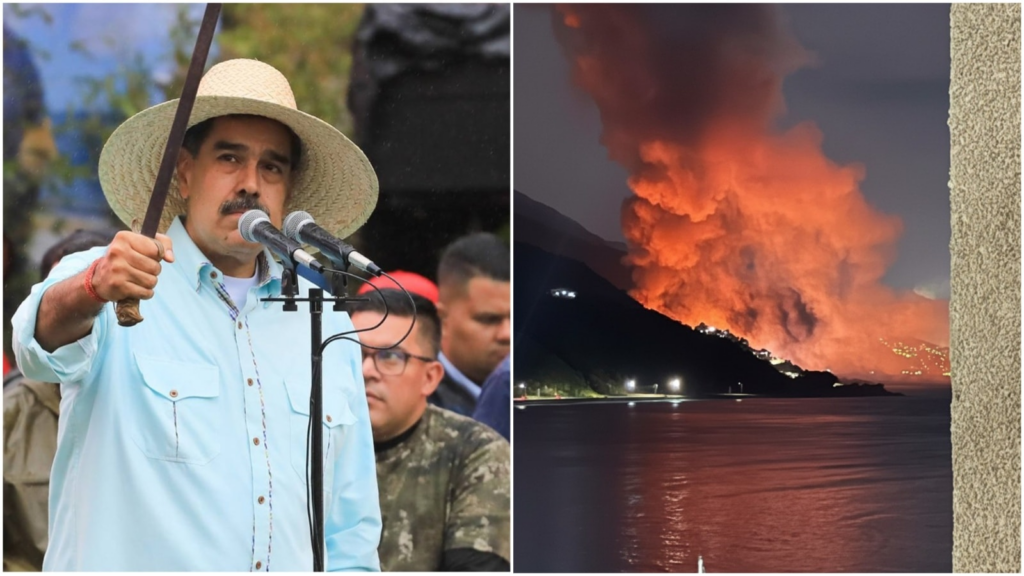
The recent US attack on Venezuela has ignited fierce debate regarding the legality of such military actions under international law. With President Trump heralding it as a “brilliant” military operation, the implications of capturing President Nicolás Maduro raise significant concerns about adherence to the UN Charter’s principles. International law mandates that states engage in peaceful interactions, and the military strikes carried out by the US appear to challenge this fundamental tenet. Experts suggest that the justification of self-defense, often cited by the US, has little legal standing given that Venezuela has not posed an imminent threat to the United States. This provocative engagement not only disrupts regional stability but also invites scrutiny over the legality of the US’s approach to regime change in its foreign policy dealings.
The recent military intervention involving the United States and Venezuela represents a pivotal moment in international relations, raising questions of sovereignty and legal standards governing armed conflict. The US’s decisive military operations in Venezuela echo historical precedents of interventionism, highlighting the complexities surrounding actions perceived as necessary for national security. With Nicolás Maduro’s controversial leadership drawing global condemnation, the question of international legitimacy for such strikes hinges on interpretations of self-defense and the UN Charter. This incident not only exemplifies governmental strategies for regime modification but also underscores the ongoing tension between state sovereignty and the application of force. As the international community observes the unfolding events, the discourse surrounding these military maneuvers continues to evolve, reflecting deeper geopolitical implications.
Understanding the US Attack on Venezuela Under International Law
The recent military strikes by the United States against Venezuela and the capture of President Nicolás Maduro raise significant questions regarding their legality under international law. As stipulated in the United Nations Charter, each member state must engage in peaceful relations, refraining from any use of force that undermines the territorial integrity or political autonomy of another state. This principle forms the cornerstone of international relations, indicating that violence is not an acceptable means of resolving disputes. The actions of the US not only entail direct military intervention but also reflect a broader trend of unilateralism that defies global legal frameworks.
Legal experts, including Professor Christoph Safferling, argue that the use of military force against a sovereign nation like Venezuela without explicit consent or provocation violates the fundamental tenets of the UN Charter. The ongoing debate revolves around whether the US can justify its actions under the pretext of self-defense, a right enshrined in Article 51 of the UN Charter. However, in the absence of a credible immediate threat, the narrative of combating terrorism or drug trafficking as a justification does not hold water legally. Instead, it highlights a disturbing precedent in international law where sovereignty can be compromised under vague justifications.
The Principle of Prohibition of Violence in International Relations
International law is built upon the principle of the prohibition of violence, which aims to foster stability and peace among nations. Article 2 of the UN Charter explicitly states the obligation of member states to abstain from any threat or use of force against the territorial integrity of other nations. This legal foundation serves to discourage military aggression and promotes diplomatic solutions instead. The recent US military strikes against Venezuela challenge this principle, as they not only disrupt peace but also endanger the lives of innocent civilians within the conflict zone, violating the tenets of humanitarian law.
Military strikes on foreign lands pose a significant threat to the established norms of international relations. If nations like the US can act unilaterally without international consensus, it could set a dangerous precedent, potentially leading to more conflicts worldwide. Furthermore, the designation of military operations as “successful” by leaders like President Trump may create a false narrative that such actions are justified under the banner of national security. However, the reality remains that deliberate military strikes serve to escalate tensions and create instability in regions already fraught with conflict.
Evaluating the Self-Defense Argument in the Context of Venezuela
The right to self-defense is one of the few exceptions to the prohibition of the use of force under international law. It allows a state to take countermeasures if it has been attacked or if an imminent threat exists. However, experts have raised serious doubts regarding the validity of the United States’ claim that its military actions in Venezuela were conducted in self-defense. According to Professor Safferling, the premise that Venezuela posed an actual or imminent threat to the United States is largely unfounded and misaligned with the realities on the ground.
Moreover, invoking the concept of self-defense in situations where no clear threat exists undermines international accountability and the legal obligations of states to engage peacefully. The expansive interpretation of self-defense, as seen in the US’s justification for asserting military might in Venezuela, can lead to eroded trust among nations and the potential for arbitrary aggressive actions under the guise of protection. Ultimately, the framework of international law must be reinforced to ensure that the principles of proportionality and necessity are respected in military engagements.
The Legal Implications of Capturing Nicolás Maduro
The violent capture of President Nicolás Maduro by US forces raises profound questions concerning adherence to international law, particularly regarding the sovereignty of nations and the immunity of heads of state. Under international law, leaders like Maduro, regardless of their perceived legitimacy, possess certain rights and protections that shield them from aggressive actions, including abduction by foreign entities. Experts such as Professor Thielbörger emphasize that Maduro’s status as president, despite allegations of human rights violations, grants him immunity that should have been respected under existing legal norms.
Additionally, allowing the capture of a recognized leader like Maduro could set alarming precedents regarding the treatment of state leaders and the integrity of international norms governing state sovereignty. Historically, instances of abducting or forcibly removing leaders have led to destabilization in their respective countries and complicated international relations. The risks associated with undermining the legal protections afforded to leaders are substantial, as they may embolden further extrajudicial actions by other states under similar justifications.
The Role of the United Nations in Responding to Military Strikes
The UN Security Council has the mandate to address breaches of international peace and security, which includes the authority to impose sanctions or apply pressure on countries that commit violations, such as the recent US attacks on Venezuela. While certain circumstances may warrant intervention, the geopolitical landscape complicates the ability of the UN to take decisive action, particularly given that the US holds veto power on the Council. This situation creates a paradox where the world’s foremost body designed to maintain peace may be stymied by the unilateral actions of its most powerful member.
Because the US and many Western nations tend to focus on the human rights abuses committed by leaders like Maduro, it may dilute the urgency of addressing violations of international law resulting from foreign military interventions. Thus, the focus often shifts from the legality of US actions to the alleged crimes of the Venezuelan government, creating a contentious atmosphere in international discourse. However, maintaining the integrity of international law necessitates that all states be held accountable for their actions, irrespective of their political motivations or the narratives surrounding internal conflicts.
Historical Context of US Interventions in Latin America
The US’s military actions in Venezuela are not isolated incidents but part of a broader historical pattern of American interventions in Latin America. Sessions of regime change, such as the overthrow of Manuel Noriega in Panama during the late 1980s, illustrate a troubling legacy of US foreign policy in the region that often prioritizes strategic interests over adherence to international law. Such interventions, while perhaps justified at the time under claims of promoting democracy or combating drug trafficking, highlight the continuing complexity of US involvement in Latin American governance.
The legacy of these past interventions continues to evoke skepticism and criticism from many international observers. Critics argue that the US actions often lead to instability and long-term consequences for the affected nations. With historical precedents establishing a pattern of interventionism, the recent apprehensions regarding the US military operations in Venezuela invite serious contemplation about the ethical implications of applying military force for political ends, casting doubts about the true intent behind such military endeavors.
Humanitarian Considerations Amid Military Actions
The implications of military operations extend beyond legal boundaries; they are deeply entwined with humanitarian concerns. In the context of the attacks on Venezuela, the civilian population undoubtedly bears the brunt of military actions, which can lead to increased suffering, displacement, and loss of life. The principles of distinction and proportionality, which guide military engagements under international humanitarian law, aim to safeguard non-combatants. However, in practice, the reality of warfare often infringes upon these principles, leading to dire humanitarian crises.
Moreover, the narrative surrounding US intervention often neglects the devastating impact on civilians. The focus tends to shift to political machinations, sidelining the urgent needs of those affected by violence. Therefore, it’s crucial to incorporate a humanitarian perspective into discussions about military actions, emphasizing the responsibility of nations to protect civilian lives and uphold international law even amidst conflicts. Failure to address these humanitarian aspects risks perpetuating cycles of violence and instability.
Future of International Law in the Context of Military Engagements
The ongoing developments surrounding the US attacks on Venezuela serve as a critical moment for reflecting on the future of international law, especially as it pertains to state conduct in military engagements. As global dynamics shift and the international order faces new challenges, a comprehensive reevaluation of legal frameworks governing the use of force is necessary. The debate surrounding the legitimacy of actions taken under the guise of national security must prompt discourse on establishing clearer definitions and limitations regarding military interventions, ensuring adherence to legal norms.
Additionally, international law must evolve to address the complexities of modern warfare, grappling with issues stemming from non-state actors, cyber operations, and hybrid warfare tactics. To successfully navigate these challenges, nations must reaffirm their commitment to the principles set forth in international law, emphasizing accountability and cooperation over unilateral actions. Only through collaborative efforts can the integrity and effectiveness of international law be preserved, ensuring a more just and equitable global landscape.
Frequently Asked Questions
What does international law say about the US attack on Venezuela?
The US attack on Venezuela raises significant concerns under international law, particularly regarding the prohibition of violence outlined in the UN Charter. According to international legal experts, such military strikes are generally considered violations unless they meet the requirements for self-defense, which experts argue is not applicable in this case.
Is the US justified in its military strikes in Venezuela under the UN Charter?
Experts suggest that the US military strikes against Venezuela are not justified under the UN Charter, which prohibits the use of force against the political independence or territorial integrity of any state. The US government’s claims of self-defense have been deemed insufficient to legalize such actions.
What are the implications of capturing Nicolás Maduro in an unlawful attack?
The capture of Nicolás Maduro by US forces can be seen as a violation of international law, as it infringes on the sovereignty of Venezuela. International humanitarian law does allow for the arrest of combatants, but since Maduro is the president, his immunity as the sitting head of state complicates the legality of the US’s actions.
Can the US claim self-defense in its military actions against Venezuela?
While the US has asserted that its military actions against Venezuela are acts of self-defense, legal experts argue this claim lacks merit. There is no concrete evidence of an imminent threat or attack from Venezuela against the US, which undermines the self-defense justification under international law.
What historical precedents exist for US attacks on foreign governments?
The US has a history of military interventions aimed at regime change in Latin America. Notably, the 1989 invasion of Panama to overthrow Manuel Noriega is an example where the US faced international criticism but ultimately faced no lasting consequences, demonstrating a pattern of selective military actions without significant international repercussion.
How might the UN respond to the US attack on targets in Venezuela?
The UN could theoretically respond to the US attack through coercive measures, but the US’s veto power in the Security Council complicates the likelihood of significant collective action against it. Given the geopolitical context, responses may vary based on international dynamics and existing controversies surrounding Maduro’s governance.
What legal challenges do the US military actions in Venezuela face?
The US military actions in Venezuela confront serious legal challenges under international law, particularly concerning the prohibition of violence and accusations of violating state sovereignty. Additionally, the arrest of Maduro raises questions around state immunity and the legitimacy of the intervention by foreign military forces.
| Key Point | Explanation |
|---|---|
| US Military Strikes | The US has conducted military operations against Venezuela, including the capture of President Maduro. |
| International Law and Violence | International law prohibits the use of violence among states, rooted in the UN Charter. |
| Self-Defense Principle | The right to self-defense allows military action only if a state is attacked, which experts argue does not apply to the US actions. |
| Capture of Maduro | The capture of a foreign head of state is seen as a violation of international law, particularly the UN Charter. |
| Regime Change History | The US has a history of intervening in Latin America for regime change, with previous actions receiving international criticism but little consequence. |
Summary
The US attack on Venezuela has raised significant questions about the legality of military intervention under international law. As outlined by experts, such actions, including the capture of President Maduro, not only breach norms established by the UN but also challenge the principles of state sovereignty and the prohibition against violence. The ongoing debate highlights the complexities and potential ramifications of international law when powerful states engage in actions perceived as regime change, echoing historical precedents that seldom face accountability.

