
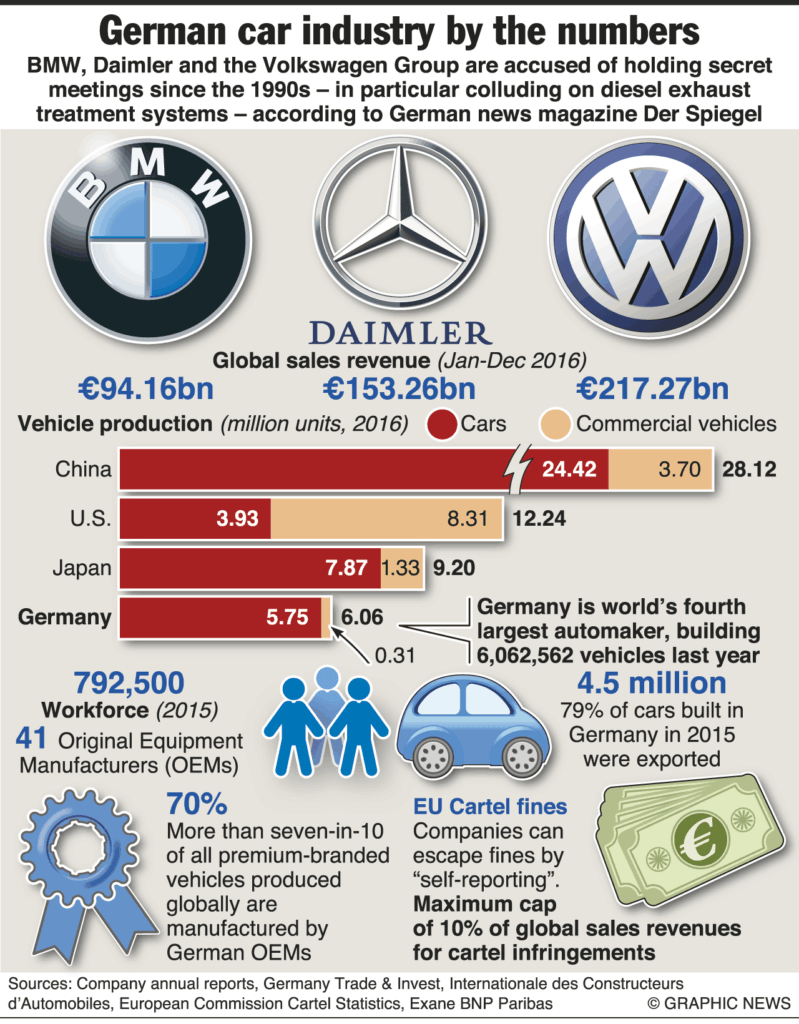
The German auto industry is currently facing unprecedented challenges that threaten its global standing and economic stability. As the automotive crisis deepens, car manufacturers are grappling with billion-euro losses and significant job cuts, largely driven by evolving political decisions and increased international competition. The impact of high tariffs on German vehicles in the U.S. market and struggles against aggressive pricing in China have forced manufacturers to reconsider their business strategies. Employment in the auto industry is at risk, with projections warning of potential job losses that could see the workforce shrink dramatically. As experts emphasize the need for a shift towards electric mobility, the future of this cornerstone of the German economy hangs in the balance, requiring urgent and effective action to secure its legacy in the rapidly changing automotive landscape.
The automotive sector in Germany, often regarded as a bastion of engineering excellence, is encountering significant turmoil that jeopardizes its future. Confronted by a crisis triggered by both self-inflicted wounds and external pressures, automakers are navigating a landscape filled with political obstacles and fierce rivalry. In this context, questions abound about employment in the automotive field, as manufacturers face mounting losses and the urgency to pivot towards sustainable mobility solutions. The shift to electric vehicles is seen as essential, yet it presents new challenges for profit margins. Stakeholders must grapple with the intricate interplay of regulations and market demands to steer this crucial industry towards a revitalized and competitive future.
The Crisis Facing the German Auto Industry
The German auto industry is currently facing unprecedented challenges that threaten its very existence. Repeated warnings from economic analysts indicate that major car manufacturers are experiencing billion-euro losses, leading to substantial layoffs and operational cutbacks. This crisis has been exacerbated by fierce competition both domestically and globally, with new entrants into the market, particularly in electric mobility, challenging traditional car makers. Such setbacks have left many to wonder if political intervention can provide a viable solution.
Political decisions have played a pivotal role in shaping the environment for the German automobile sector. For instance, high tariffs imposed by the United States have rendered German cars less attractive to American consumers, creating a significant hurdle in one of the industry’s key markets. Furthermore, German manufacturers are struggling to maintain their market share in China, where they once dominated with premium vehicles. These external pressures, coupled with internal mismanagement, have cultivated a perfect storm that jeopardizes both employment in the auto industry and the economic stability of regions reliant on automotive manufacturing.
Impact of Political Decisions on the Automotive Sector
Political decisions can significantly influence the trajectory of the automotive industry, particularly during a crisis. In the context of the German auto industry, recent political maneuvers, such as proposals to relax stringent CO2 regulations, have sparked debates about their efficacy. While these changes could provide immediate relief to beleaguered manufacturers struggling with compliance costs, they are not a panacea for the underlying issues plaguing the sector.
Critics argue that merely easing regulations will not address the fundamental shifts required for the industry’s long-term viability. For example, economic experts emphasize that the future of the auto industry hinges on embracing electric mobility rather than extending the life of combustion engines. The crux of the matter lies in finding a balanced approach that allows manufacturers to transition effectively without compromising on environmental responsibilities.
Employment Challenges in the Auto Industry
As the crisis in the auto industry deepens, employment challenges have emerged as a critical concern for both workers and policymakers. With estimates suggesting that the workforce could shrink from 720,000 to potentially below 700,000, the implications for job security in an industry known for its historical contributions to the German economy are staggering. Many individuals who have devoted their careers to automotive manufacturing face uncertainty, raising questions about the future of skilled labor in this sector.
In response to the crisis, some manufacturers have resorted to closing plants and relocating production to more cost-effective regions. This operational strategy, while aimed at preserving profitability, raises ethical concerns regarding the displacement of workers and the loss of jobs in key production hubs. As complicated dynamics unfold, it becomes essential for stakeholders to devise solutions that prioritize workforce retraining and support transitions towards competencies required in the emerging electric mobility market.
Shifts Towards Electric Mobility
The shift towards electric mobility represents a critical juncture for the German auto industry as it seeks to navigate through the current crisis. Economic analysts agree that the industry’s future cannot solely rely on traditional combustion engines if it hopes to remain competitive in a rapidly evolving marketplace. The transition to electric vehicles (EVs) is not only necessary to meet stringent environmental regulations but also to cater to the changing preferences of consumers who are increasingly opting for greener alternatives.
However, experts warn that the rapid increase in electric vehicle production is likely to impact profits negatively in the short term. Investing in new technologies and infrastructure necessary for EV development requires substantial resources, raising concerns about financial stability. Thus, while the long-term outlook may be promising, the path towards electric mobility poses immediate risks that necessitate careful consideration and strategic planning from all players within the automotive sector.
The Role of German Car Manufacturers in the Global Market
German car manufacturers have long held a prestigious position within the global automotive market, renowned for their engineering excellence and luxury vehicles. However, the current crisis reveals that this dominance is increasingly under threat from not only traditional competitors but also innovative startups specializing in electric mobility. Many of these new entrants are agile and better equipped to meet consumer demands and environmental regulations, putting pressure on established German brands to innovate and adapt quickly.
Additionally, the imposition of tariffs by countries like the United States has significantly altered the competitive landscape. This has raised existential questions about the long-term viability of German manufacturers in the face of rising operational costs and falling profit margins. Moving forward, it is imperative for these companies to reassess their strategies, embrace technological advances, and explore new markets if they hope to maintain their leadership in the global automotive sector.
Challenges Facing the Electric Vehicle Market
While transitioning to electric vehicles (EVs) is seen as the future of the auto industry, several challenges remain that could hinder this evolution. For German car manufacturers, the development of batteries, charging infrastructure, and the supply chain for raw materials necessary for EV production presents significant hurdles. Additionally, competition not only from other international brands but also from emerging electric vehicle manufacturers challenges traditional players to ramp up their innovation efforts and reduce costs associated with production.
Moreover, public perception of electric vehicles and concerns about their performance and range continue to pose obstacles. Consumers must be convinced of the reliability and benefits of EVs over the conventional combustion engine vehicles they are accustomed to. Therefore, comprehensive marketing strategies, coupled with government incentives, could play a crucial role in accelerating adoption rates, ensuring that the shift towards electric mobility gains the momentum it needs to succeed.
Future Predictions for the German Auto Industry
Looking ahead, the outlook for the German auto industry is a blend of uncertainty and potential opportunity. Industry experts predict that while the immediate future remains challenging, innovation and adaptability will determine the resilience of automotive manufacturers. Critical political decisions, such as potential incentives for electric vehicle development and infrastructure investment, will be crucial in shaping the road ahead. A collaborative approach involving government, manufacturers, and stakeholders is essential to build a sustainable future.
Furthermore, automakers need to prioritize research and development in electric mobility technology to maintain their competitive edge in a global market that is rapidly evolving. This will require not only technological advancements but also a commitment to workforce development, ensuring that employees are equipped with the skills necessary for a changing industry landscape. If effectively navigated, the current crisis could become a catalyst for transformation, paving the way for a more sustainable and innovative automotive sector.
The Importance of Strategic Decision-Making in Automotive Crisis
Effective strategic decision-making is paramount for the survival of the German auto industry amidst the ongoing crisis. As car manufacturers face mounting pressures from various fronts, including economic instability and an urgent shift towards electric mobility, the need to make informed and timely decisions has never been greater. Companies must leverage insights from economic experts and adapt their strategies to navigate the ever-changing landscape, especially when it comes to embracing technological advancements.
Moreover, collaboration with political entities could offer pathways to explore favorable conditions for manufacturers and provide necessary support mechanisms for the workforce. Striking a balance between profitability and social responsibility will likely be a defining characteristic of successful decision-making in the automotive sector going forward. Ultimately, a proactive approach will not only mitigate immediate dangers but set the stage for sustainable growth in the years to come.
The Impact of Global Competition on German Automakers
Global competition has intensified the crisis within the German auto industry, compelling manufacturers to rethink their traditional business models. New entrants from countries like China and the United States have disrupted the market, particularly in the electric vehicle segment, bringing innovative solutions and different approaches to consumer engagement. This heightened competition makes it more crucial than ever for German manufacturers to prioritize research and innovation to retain their market leadership.
Furthermore, the competition is not just limited to traditional automakers. Several tech companies are also venturing into the automotive space, offering alternative mobility solutions that challenge the very foundations of conventional car manufacturing. In response, German auto manufacturers must be agile and willing to embrace not only technological advancements but also shifts in consumer behavior if they are to maintain relevance in a global market increasingly dictated by innovation and sustainability.
The Essential Transition to Sustainability in the Auto Industry
Sustainability has emerged as a fundamental principle that the German auto industry must embrace to ensure its long-term survival. As consumer expectations evolve with an ever-growing awareness of environmental issues, car manufacturers are compelled to align their production processes with sustainable practices. The transition to electric mobility is a critical component of this sustainability narrative, as it presents an opportunity for automakers to reduce their carbon footprint while meeting regulatory requirements.
However, achieving sustainability extends beyond simply producing electric vehicles; it encompasses the entire supply chain from sourcing raw materials to manufacturing and beyond. Manufacturers must consider their entire operational impact and invest in technologies that foster a circular economy. By recognizing the importance of sustainability not as a trend but as a core value, the German auto industry can not only respond to the current crisis but also pave the way for a more environmentally conscious future.
Frequently Asked Questions
What is the current state of the German auto industry amid the automotive crisis?
The German auto industry is experiencing a profound crisis marked by billion-euro losses and substantial job cuts. Political decisions and increased competition have intensified these challenges, leading to existential questions for many car manufacturers.
How have political decisions impacted employment in the German auto industry?
Political decisions, particularly those related to tariffs and environmental regulations, are significantly affecting employment in the German auto industry. Experts predict that the workforce could decrease from 720,000 to under 700,000 due to ongoing struggles.
What role does electric mobility play in the future of the German automotive industry?
Electric mobility is viewed as a crucial element for the future of the German automotive industry. However, experts warn that the shift may initially burden profits while requiring a strategic focus on evolving the market to support this transition.
Which factors contribute to the automotive crisis faced by German car manufacturers?
The automotive crisis in the German car industry is attributed to a combination of self-inflicted issues, increased global competition, high tariffs in the U.S. market, and challenges in the Chinese market. These elements collectively jeopardize the stability of German auto manufacturers.
Can relaxing CO2 regulations help the German auto industry?
Relaxing CO2 regulations could provide short-term relief for the German auto industry, as supported by politicians like Chancellor Friedrich Merz. Nonetheless, experts caution that this alone won’t resolve the deeper, systemic problems facing the industry.
What predictions do experts have regarding the future business models of German car manufacturers?
Experts predict that many German car manufacturers may face an existential crisis, where their traditional business models are threatened. To adapt, they will need to innovate and align closely with the shift towards electric mobility.
How has competition from foreign markets affected the German auto industry’s performance?
Competition from foreign markets, particularly in China and the U.S., has compelled German car manufacturers to struggle with profitability. The high tariffs on exports to the U.S. have made German cars less appealing to American consumers, exacerbating the crisis.
What actions have German automakers taken in response to the automotive crisis?
In response to the automotive crisis, German automakers have taken drastic measures including closing plants, reducing production locations, and considering relocation abroad to mitigate financial losses.
| Key Points |
|---|
| The German auto industry is in crisis due to self-inflicted problems, competition, and political decisions. |
| The impact of high tariffs from the US has made German cars less attractive to American customers. |
| German auto manufacturers are seeing significant declines in profits, especially in the Chinese market. |
| Consulting firm EY warns of a ‘perfect storm’ with potential existential threats to many manufacturers. |
| Job cuts are imminent, with predictions of employment falling below 700,000. |
| The EU’s proposal to relax CO2 regulations has received mixed reactions from industry leaders. |
| Experts agree that the future lies in electric mobility, despite challenges to profitability. |
| Immediate action is necessary to secure the future of the German auto industry. |
Summary
The German auto industry is facing unprecedented challenges that require immediate action for survival. While political initiatives like relaxing CO2 regulations may offer temporary relief, the long-term focus must shift towards electric mobility to ensure sustainable growth and resilience in the market.

