
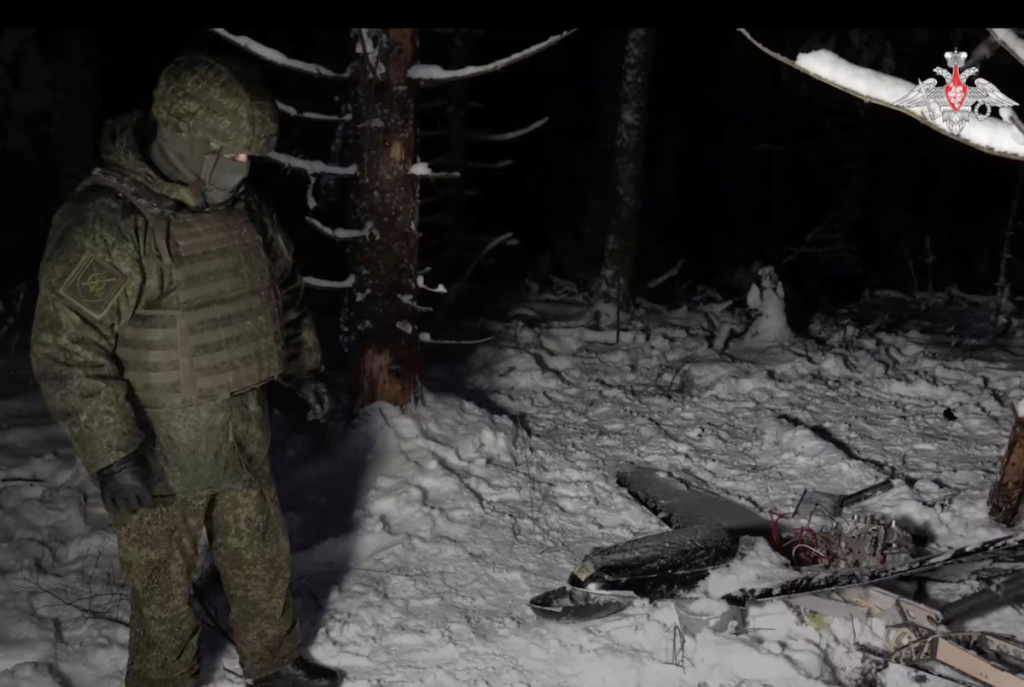
In a shocking turn of events, the alleged attack on Putin’s residence has escalated tensions between Russia and Ukraine, raising questions about the ongoing conflict. The Kremlin claims to have handed over purported evidence of a Ukrainian drone attack aimed at President Putin’s estate to the USA, igniting widespread speculation on its authenticity. As the narrative unfolds, CIA reports suggest that while a drone strike did occur in the vicinity, it targeted a military objective rather than the Kremlin leader’s home. Amid these claims, both the US intelligence community and Ukraine vehemently refute the allegations of direct targeting, further complicating the geopolitical landscape. The situation underscores a fraying relationship, with Kremlin accusations flying as Russia attempts to implicate Ukraine in a serious breach of sovereignty during a fraught period of international tensions.
The recent claims surrounding the alleged assault on the residence of President Putin have illuminated the volatile dynamics of the Russia-Ukraine conflict. This situation has led to accusations and counter-accusations as both sides navigate the intricacies of war propaganda. Reports suggest that while Moscow insists on producing evidence of a Ukrainian military target drone, the indication of a direct attack on Putin himself remains unverified. The CIA’s stance reinforces the complexities, unveiling a narrative that diverges from Russian assertions. As this scenario plays out on the global stage, the implications for international diplomacy and security continue to echo far beyond the borders of these two nations.
Understanding the Alleged Attack on Putin’s Residence
The alleged attack on Putin’s residence has sent shockwaves through international circles, raising questions about the validity of the claims made by the Kremlin. As reported, Russia’s Ministry of Defense has provided what it claims to be irrefutable evidence to the USA, indicating an orchestrated Ukrainian drone attack intended for Putin’s residence in Nizhny Novgorod. The captured drone navigation data, along with physical components of the drone, has surfaced as pivotal evidence in this ongoing saga. However, skepticism looms as both Ukraine and US intelligence have expressed doubts regarding the authenticity of Russia’s claims.
As the situation unfolds, it’s vital to consider the implications of such allegations. The Kremlin’s insistence on labeling the drone attack as a targeted attempt against President Putin could have far-reaching geopolitical ramifications. This accusation intertwines with various narratives already circulating, including those of Russian accusations against Western involvement, and the escalating conflict dynamics between Ukraine and Russia. Moreover, scrutiny is warranted regarding the evidence shared with the USA, as previous instances of misinformation have compelled both East and West to tread carefully in interpreting these events.
The Role of CIA in Supporting Ukrainian Claims
In a surprising twist, reports suggest that the CIA has provided insights that bolster Ukraine’s stance on the alleged attack. A comprehensive analysis by the CIA indicates that while a drone assault did occur in proximity to Putin’s residence, it targeted a military installation rather than the residence itself. This revelation has incited further debate regarding the true intent of the alleged drone, with the possibility that it may have been misrepresented by the Kremlin as a direct threat to President Putin.
The CIA’s support for Ukraine underscores the shifting dynamics of intelligence sharing and the intricate web of international relations at play. The ongoing conflict between Russia and Ukraine sees the involvement of various global players, including the USA, who are keen to understand the operational realities on the ground. By aligning with Ukrainian assessments, the CIA reinforces the notion that misinformation may be prevalent, particularly in the context of war, where narratives are often shaped by the parties involved.
Kremlin’s Accusations: Propaganda or Evidence?
The Kremlin’s accusations regarding the Ukrainian drone attack have sparked debates on the legitimacy of the evidence presented. With the Russian government claiming to have handed over decrypted navigation data to US officials, critics are wary of viewing this as an articulate propaganda strategy. Such accusations are not unprecedented within the realm of international conflicts, where narratives often diverge dramatically between involved parties. As both nations engage in information warfare, the reality of the military targets being labeled as threats necessitates a deeper investigation.
This skepticism not only stems from historical precedents of misinformation but also from the political maneuvering inherent in wartime communication. Russian media’s portrayal of Ukrainian actions as terroristic attempts adds to the narrative that seeks to unify domestic support against perceived external threats. The use of alleged evidence is thus examines the dual function of propagating a story while attempting to elicit a reaction from the international community, particularly from allies like the USA.
Ukraine’s Response to the Accusations
In stark contrast to the Kremlin’s assertions, Ukraine has categorically denied any wrongdoing. Ukrainian officials have emphasized that not only are the accusations baseless, but they also serve as a tactic for the Russian state to divert attention from ongoing failures in the conflict. Reports indicate that Ukraine’s foreign intelligence service has described the alleged evidence as false, including claims of that maps and drone components are fabricated, reinforcing the image of a robust defense against enemy propaganda.
As tensions escalate, Ukraine’s dismissal of Russia’s narrative reveals a strong defiance amidst adversity. Ukraine seeks to solidify international support by presenting an image of resilience and moral clarity. The stark responses from both Kiev and Moscow also reflect the broader themes of the conflict, where every claim is scrutinized through the lens of geopolitical strategy, garnering not only public support domestically but attention and assistance from allies abroad.
Military Targets and the Reality of Drone Operations
The discussions surrounding the alleged drone attack elucidate the complexities of modern warfare, especially the use of drones as strategic assets. This incident highlights the changing definitions of military targets in contemporary conflicts, where civilian structures may inadvertently shape operational decisions. The CIA’s assessment pointed out that while an attack did occur, military installations were the focal point, suggesting that the intention was far removed from targeting high-profile individuals like President Putin.
The utilization of drones signals a new era in warfare, where precision strikes and tactical advantages intertwine with the necessity of maintaining a secure operational structure. The ambiguity surrounding the whereabouts and intentions behind drone operations raises questions about accountability and the ethical dimensions of modern combat. As militaries adapt to technological advancements, the delineation between combatants and non-combatants becomes blurred, underlining the need for stringent regulations and transparency.
The Impact of International Evidence Sharing
The ongoing exchange of alleged evidence between Moscow and Washington signifies a wider issue regarding international intelligence collaboration in conflict situations. As Russia claims to have shared insights from the purported Ukrainian attack, the implications stretch beyond just this incident. Countries are increasingly evaluating how sharing intelligence affects diplomacy, strategy, and public perception, especially against the backdrop of the rising tensions between Russia, Ukraine, and Western nations.
This practice of sharing evidence is essential in maintaining trust amongst allied nations, while simultaneously ensuring that narratives do not skew perceptions of accountability. As the conflict unfolds, the response from the USA and its allies will play a crucial role in shaping geopolitical stances, particularly against allegations of state-sponsored aggression. The intricacies of this information exchange may determine future relations and engagements in a diplomatic landscape marked by uncertainty and suspicion.
The Role of LSI in Understanding the Conflict
In the context of modern content creation and SEO, leveraging Latent Semantic Indexing (LSI) can augment the comprehension of complex geopolitical narratives. By good usage of related terms such as “Ukrainian drone attack,” the implications of the CIA’s support for Ukraine, and the Kremlin’s accusations can be better articulated and more discoverable in digital spaces. This technique helps in connecting the dots between different facets of the conflict, enhancing content relevance and promoting a clearer understanding.
In realms where misinformation and fluid narratives dominate, the strategic integration of LSI terms also helps in filtering noise from genuine information. By embedding contextually relevant keywords, content creators can foster a more informative dialogue on critical issues that shape global affairs. This practice allows audiences to navigate the complexities associated with the Russian-Ukrainian conflict while catering to the demands of search engines and user engagement.
Future of US-Russia Relations: A Diplomatic Predicament
The alleged drone attack on Putin’s residence has the potential to significantly strain US-Russia relations further. The exchange of accusations and evidence not only exacerbates existing tensions but also sets a precarious stage for future diplomatic dialogues. Each side’s narrative will likely fortify existing positions rather than promote reconciliation, compelling observers to speculate on the feasibility of resolving underlying disputes amid an escalating war of information.
As both nations navigate this complex geopolitical landscape, the repercussions of the alleged attack could have lasting implications for international security dynamics. With a backdrop of shifting alliances and rising tensions, the conflict will require keen diplomatic maneuvering from key global players. The response from the USA following this incident will be pivotal, not only in affecting bilateral relations with Russia but also in shaping the geopolitical landscape of the region in pursuit of stability and peace.
Frequently Asked Questions
What happened during the alleged attack on Putin’s residence?
The alleged attack on Putin’s residence involved claims from Russia that a Ukrainian drone attempted a ‘terror attack’ on December 29, 2025. Russia’s Ministry of Defense provided purported evidence, including decrypted navigation data from the drone.
How did the CIA respond to the accusations of a Ukrainian drone attack on Putin’s residence?
According to reports, the CIA supports Ukraine’s position, indicating that while a drone attack occurred on a military target in the region, it was not directed at Putin’s residence. This analysis raises doubts about the Kremlin’s accusations.
What evidence has Russia provided regarding the attack on Putin’s residence?
Russia claims to have handed over evidence, including a drone component and decrypted navigation data, to the US. This evidence was presented during a video transfer with a representative from the US Embassy in Moscow.
What does Ukraine say about the allegations of an attack on Putin’s residence?
Ukraine has firmly denied the accusations regarding the attack on Putin’s residence, labeling the claims as fabricated and asserting that the provided evidence by Russia consists of fake maps and decoys.
What role does the US intelligence agency have in the assessment of the Putin residence attack?
The US intelligence agency, particularly the CIA, has been evaluating the situation and supports the belief that the drone attack aimed at a military target, not specifically at Putin’s residence, casting doubt on Russia’s accusations.
How has the Kremlin justified its accusations regarding the attack on Putin’s residence?
The Kremlin has justified its accusations by stating that it has collected and supplied alleged evidence of a Ukrainian drone operation intended for a terror attack on Putin’s residence, despite skepticism from intelligence sources.
What are the implications of the drone attack on a ‘military target’ near Putin’s residence for the conflict?
The implications of the drone attack on a military target near Putin’s residence suggest ongoing tensions in the conflict, highlighting differing views from Russia and Ukraine, and influencing international perceptions and responses.
How can we verify the claims made by both sides regarding the Putin residence attack?
Currently, claims from both the Russian and Ukrainian sides regarding the Putin residence attack cannot be independently verified, as the situation remains complicated and influenced by propaganda from both parties.
| Key Points | Details |
|---|---|
| Allegations Made | Russia claims there was an attack on Putin’s residence. |
| Evidence Provided | Russia handed over alleged evidence, including decrypted drone data, to the US. |
| Ukraine’s Response | Ukraine denies the attack, describing Russia’s claims as fake. |
| US Intelligence Position | CIA allegedly supports Ukraine’s position, stating the drone attack targeted a military site, not Putin’s residence. |
| Claims Verification | The conflict parties’ reports of the situation remain unverified. |
Summary
The Putin residence attack has raised concerns and controversy, as Russia asserts its claims while Ukraine firmly denies any involvement. The situation remains complex, with conflicting reports and an inability to verify the claims made by both parties. The emerging evidence and the role of US intelligence add layers to this already tense narrative, highlighting the ongoing geopolitical struggles involving Ukraine and Russia.

