
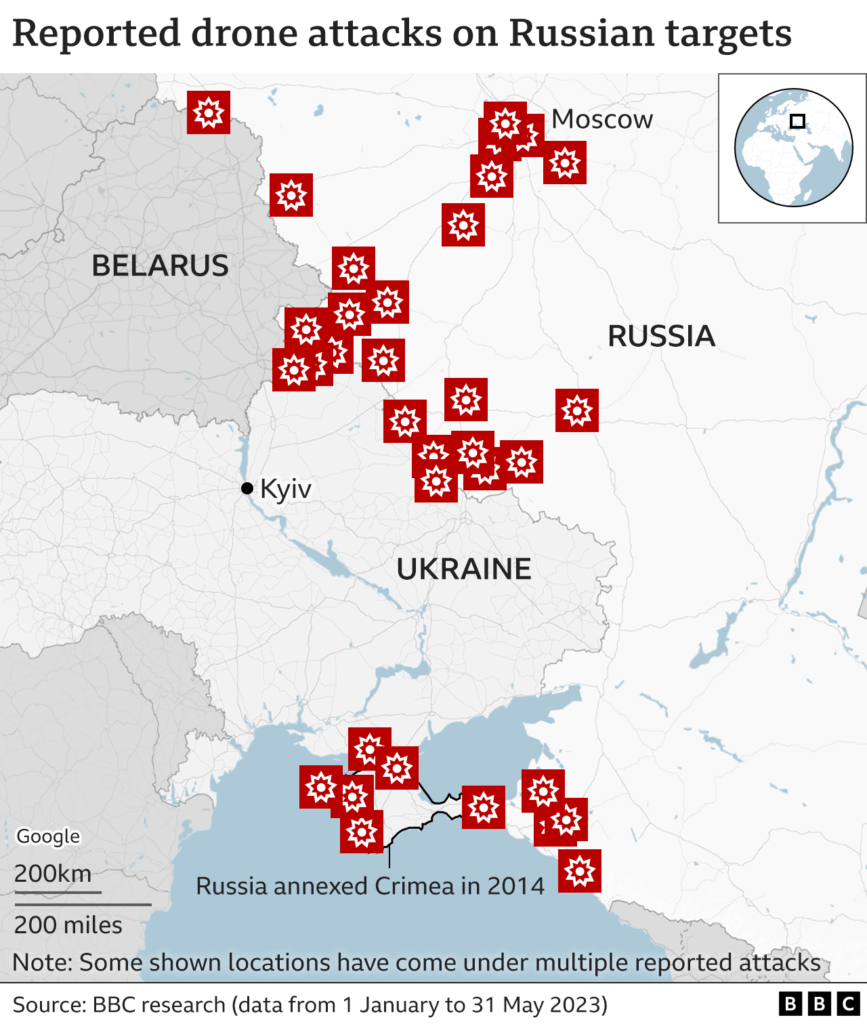
The consequences of the recent Russia drone attack have sparked a significant escalation in the ongoing Ukraine conflict. Following the allegations surrounding a drone strike targeting Putin’s residence, the Kremlin has hinted at potential repercussions, intensifying the geopolitical tension between Russia and Ukraine. Observers are now looking to the analysis of Christoph Wanner, who offers insights into the intricate dynamics at play. As Ukraine accuses Russia of leveraging this incident for propaganda purposes, the risk for further military confrontation looms large. Such developments not only threaten regional stability but also cast a long shadow over NATO’s response and the international community’s diplomatic efforts.
The fallout from the alleged drone strike aimed at President Putin’s residence has raised alarm bells about possible ramifications in Eastern Europe. With the backdrop of escalating hostilities, there are growing fears that this incident could serve as a catalyst for increased military actions by Russia. Experts and analysts are closely monitoring how these events may influence the broader conflict landscape, especially considering the narratives spun by state-controlled media in Russia. As various commentators assess the implications, it’s clear that tensions are heightening, placing immense pressure on all parties involved in this intricate geopolitical chess game.
Consequences of the Russia Drone Attack
The drone attack on President Putin’s residence has raised significant concerns regarding its potential consequences for the ongoing Ukraine conflict. Immediately following the incident, Russia issued stern warnings about retaliation, indicating that such an attack would not go unpunished. This stance not only heightens tensions between the two nations but also introduces the possibility of military escalation. For many analysts, this event could serve as a catalyst for a more aggressive Russian stance, ultimately altering the balance of power in the region.
Moreover, the consequences of this drone attack extend beyond immediate military responses. Russia’s narrative surrounding the incident serves as a tool for propaganda, aiming to rally nationalistic sentiment among its citizens. The government may exploit the attack to justify offensive actions in Ukraine, potentially aligning public opinion in favor of a tougher military response. As Christoph Wanner reports, this incident could escalate geopolitical tensions significantly, suggesting that the international community must remain vigilant as the situation unfolds.
Analyzing Russian Propaganda and Escalation Fears
In the wake of the drone attack, Ukrainian officials have pointed to a significant escalation in Russian propaganda efforts. By framing the incident as an act of aggression against the state, Russia can manipulate public perception domestically and internationally. This strategy serves to consolidate power for Putin, reinforcing the narrative that external threats necessitate a strong military response. The ensuing discourse within Russian media reflects an intention to galvanize support for renewed offensives in Ukraine, thus deepening the conflict further.
Analyzing these developments reveals a strategic pattern where propaganda serves not only to divert public attention but also to justify potential military incursions into Ukraine. Experts emphasize that such rhetoric often masks internal challenges faced by the Kremlin, including economic sanctions and growing discontent among the populace. As Wanner observes in his reports, understanding Russia’s narrative is essential for comprehending the broader implications of the conflict—the intersection of domestic politics and foreign policy cannot be overlooked as we navigate this unprecedented geopolitical climate.
Geopolitical Tensions in the Russia-Ukraine Conflict
The Russian drone attack on Putin’s residence symbolizes the escalating tensions that define the prolonged conflict between Russia and Ukraine. Geopolitical analysts are increasingly concerned that incidents like this could lead to a chain reaction, prompting a larger military engagement that may involve neighboring countries and extend the battlefield beyond Ukraine’s borders. The European Union and NATO are closely monitoring the situation, with implications for security policies and alignments in Eastern Europe.
Furthermore, the geopolitical implications are far-reaching, as the conflict continues to draw international scrutiny. The potential for escalation remains high, particularly as alliances are tested and countries reassess their positions in light of Russian aggression. Public opinion in Europe is particularly sensitive to Russia’s actions, which could influence future diplomatic resolutions. Ultimately, how the international community responds to the fallout from the drone attack will be crucial in determining the conflict’s trajectory and the future of regional stability.
Impact of Christoph Wanner’s Reporting
Christoph Wanner’s insights into the current developments in the Russia-Ukraine conflict are instrumental for understanding the complexities surrounding the recent drone attack. His thorough analysis provides context beyond mere headlines, illuminating how these events fit into the larger narrative of Russian aggression and Ukrainian resilience. Wanner emphasizes the importance of accurate reporting in a landscape filled with misinformation and propaganda, reminding us that a balanced perspective is essential in navigating the conflict’s evolving dynamics.
By drawing connections between the drone attack and the historical context of Russian military actions, Wanner enhances our comprehension of the stakes involved. His reporting also highlights the pressure on President Putin, detailing how the need to project strength and maintain a favorable public image could lead to increased military engagements. As tensions rise, Wanner’s contributions remind audiences of the need for critical evaluation of the information being disseminated.
The Role of Propaganda in the Ukraine Conflict
Propaganda plays a critical role in shaping public perception during the Ukraine conflict, particularly for Russia. Following the drone attack on Putin’s residence, the Kremlin has ramped up its messaging to cultivate a sense of victimization among its populace. This propaganda narrative not only seeks to unify the public behind the government but also serves to distract from opposition movements and economic challenges. In this context, the attack is leveraged as evidence of external threats to national security.
Additionally, Ukrainian responses to Russian propaganda are significantly influenced by these narratives. The need to counter misinformation becomes paramount as Ukraine seeks to maintain domestic and international support. Media outlets and governmental sources work tirelessly to debunk false claims while highlighting clear evidence of Russian aggression. This ongoing battle in the information arena is crucial to shaping the future course of the conflict, as both sides strive for legitimacy and moral high ground in the eyes of global audiences.
Potential Military Response from Russia
Following the alleged drone attack, speculation surrounding Russia’s possible military response intensifies. The Kremlin may perceive this incident as a direct challenge to its authority, prompting a range of retaliatory options. Analysts propose that any military escalation could feature increased air strikes or ground operations aimed at strategic targets within Ukraine. The unpredictability of the Kremlin’s reaction presents a significant concern for military planners and diplomats trying to navigate this delicate situation.
Moreover, as the international community watches closely, the ramifications of Russia’s response could extend far beyond Ukraine’s borders. Allies and adversaries alike are closely assessing how Russia will utilize its military capabilities in response to perceived threats. This could reshape alliances and alter defense strategies within NATO and the EU, as nations prepare for any escalation that may arise from Russia’s potentially aggressive posture following the drone attack.
Analyzing Ukraine’s Strategic Position
In response to the escalating tensions following the drone attack, Ukraine finds itself reassessing its strategic positioning in this protracted conflict. The government is acutely aware of the heightened risks posed by a potentially aggressive Russian military response. This necessitates careful calibration of Ukraine’s defense strategies, promoting a more robust military posture and the acquisition of advanced weaponry from allied nations. It is imperative for Ukraine to maintain unity among its international supporters to bolster its defensive capabilities against any Russian escalation.
Additionally, the political implications of this drone attack encourage Ukraine to engage more deeply with its Western allies. Strengthening partnership and intelligence sharing will be vital in preemptively countering any Russian actions. Ukraine’s leadership is strategically utilizing this moment to galvanize support, emphasizing the need for unified action against Russian aggression in the face of increasing propaganda and misinformation campaigns designed to undermine Ukrainian resolve.
International Community’s Response to Russia’s Aggression
The international community is facing increasing pressure to respond decisively to Russia’s ongoing aggression, particularly following the drone attack. Various nations are deliberating over potential responses, with considerations ranging from sanctions to increased military support for Ukraine. The need for a coordinated approach is paramount, as disjointed responses could embolden Russia and contribute to further destabilization in the region.
Furthermore, the significance of global alliances cannot be overstated in the context of this crisis. Nations like the U.S. and members of the EU are grappling with the implications of Russia’s actions on geopolitical stability. A united front in condemning the drone attack, coupled with tangible support for Ukraine, may serve to deter future escalations by Russia. It is essential that the international community aligns its diplomatic efforts to promote peace and discourage militaristic responses that could worsen the Ukraine conflict.
Future Prospects for Peace in the Region
As the situation evolves following the drone attack on Putin’s residence, the prospects for peace in the Russia-Ukraine conflict appear increasingly uncertain. Each escalation of hostilities raises questions about the potential for diplomatic solutions and long-term stability in the region. Observers are cautious in their outlook, noting that while the current situation presents opportunities for negotiation, the volatility of both nations’ leadership could undermine such efforts.
However, there remains hope that international mediation could pave the way for constructive dialogue. Should the global community intensify its engagement, focusing on de-escalation tactics and peacebuilding initiatives, there’s a chance for progress amidst the turmoil. It will be crucial for both Russia and Ukraine to prioritize dialogue over military confrontation, a delicate balance that will necessitate significant cooperation from both domestic and international stakeholders in the weeks and months ahead.
Frequently Asked Questions
What are the consequences of the Russia drone attack on Putin’s residence?
The drone attack on Putin’s residence has led to heightened tensions in the Ukraine conflict, with Russia threatening potential military repercussions. This incident may provide the Kremlin with a rationale for escalating its military actions against Ukraine, intensifying the geopolitical tension in the region.
How does the Ukraine conflict analysis relate to the recent drone attack on Putin’s residence?
The Ukraine conflict analysis suggests that the recent drone attack on Putin’s residence is a pivotal event that could lead to increased Russian propaganda and an escalation of military aggression. Analysts warn that Russia may use this incident to justify further intervention in Ukraine, complicating the already tense geopolitical situation.
What role does Russian propaganda play in the aftermath of the drone attack on Putin’s residence?
Following the drone attack on Putin’s residence, Russian propaganda is likely to escalate. The Kremlin can exploit the incident to rally domestic support and justify a more aggressive stance in the Ukraine conflict, thus shaping public perception while increasing geopolitical tensions.
Why is there a warning of escalation after the drone attack on Putin’s residence?
The warning of escalation after the drone attack on Putin’s residence stems from concerns that Russia may perceive the attack as a provocation. This could lead to retaliatory measures, further complicating the Ukraine conflict and exacerbating geopolitical tensions in the region.
What insights does Christoph Wanner offer on Russia’s response to the drone attack?
WELT reporter Christoph Wanner provides insights into Russia’s potential response to the drone attack on Putin’s residence, indicating that the Kremlin may seize this opportunity to escalate military operations in Ukraine, thereby intensifying the ongoing geopolitical tensions.
| Key Point | Details |
|---|---|
| Russia’s Threat | Russia threatens retaliation following a drone attack allegedly targeting Putin’s residence. |
| Ukraine’s Response | Ukrainian officials claim the accusations are a form of Russian propaganda, suggesting that it may be a strategy to justify further aggression. |
| Media Analysis | WELT reporter Christoph Wanner provides insights into the implications of these tensions. |
| Escalation Risks | The drone attack provides potential pretexts for Russia to escalate the conflict under the guise of a defensive response. |
| Pressure on Putin | Incidents related to the drone attack increase pressure on President Putin, highlighting the geopolitical volatility in the region. |
Summary
The Russia drone attack consequences are significant and multifaceted, as the threat of retaliation from Russia could lead to an escalation of hostilities in the region. This situation is exacerbated by Ukraine’s claims that the Russian narrative is primarily propaganda aimed at justifying further military actions. The tension highlighted by WELT’s reporting reveals a precarious geopolitical landscape where any incident, such as this drone attack, serves as a catalyst for potential conflict escalation, ultimately challenging regional stability and increasing the pressure on Russian leadership.

