
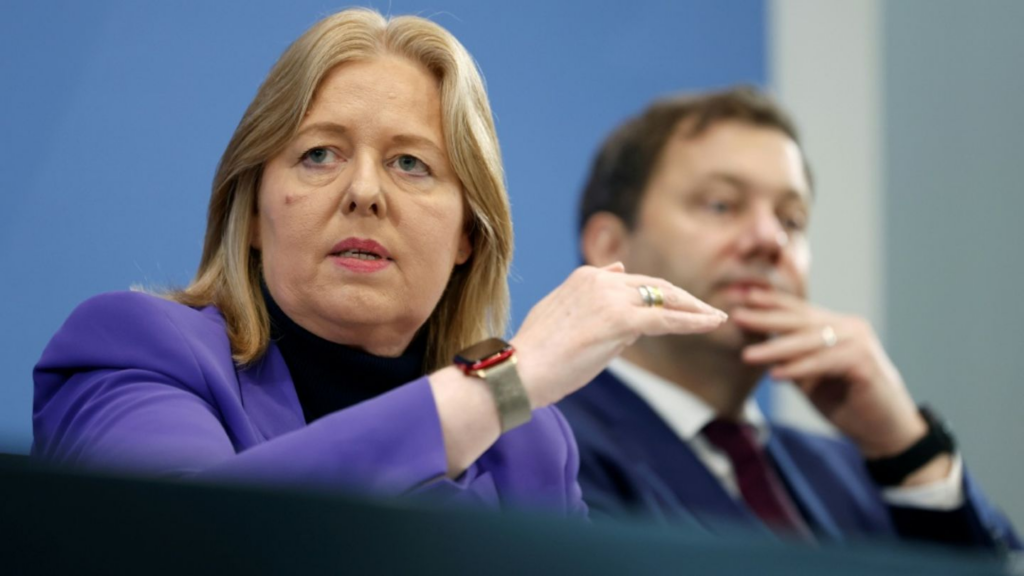
Criticism of Bärbel Bas, the Federal Minister of Labor in Germany, has intensified as she faces allegations of declaring war on small and medium-sized enterprises (SMEs). Prominent CDU member Saskia Ludwig has been vocal about her concerns, stating that Bas’s policies pose a serious threat to the backbone of the German economy. According to Ludwig, Bas’s alignment with leftist factions undermines the interests of these essential businesses, which are critical for job creation and economic stability. This bold criticism reflects the growing discontent within German politics, particularly regarding the effectiveness of current labor policies under her leadership. As the approval ratings for the ruling coalition decline, the spotlight remains on Bärbel Bas and her approach to addressing the needs of SMEs amid a challenging economic landscape.
The scrutiny surrounding Bärbel Bas, also recognized as the head of Germany’s labor department, highlights an increasing tide of dissatisfaction from economic stakeholders. Her recent maneuvers have been perceived as aggressive against the interests of small business operators, sparking intense discussions within the political arena. Critics, particularly from the CDU, argue that her alliance with more radical elements jeopardizes vital contributions from these enterprises to the national economy. Furthermore, the ongoing tension within the government underscores a broader conversation about labor reforms and the overarching implications for German commercial frameworks. As debates on fiscal responsibility and economic strategy unfold, the focus shifts to how policymakers can balance progressive initiatives with the realities faced by the business sector.
Bärbel Bas Criticism from CDU: A Call for Accountability
The recent assertion by Saskia Ludwig, a CDU member of parliament, that Bärbel Bas, the Federal Minister of Labor, is waging a ‘war’ on small and medium-sized enterprises (SMEs) in Germany, has triggered intense debate in German politics. Ludwig’s claims cast a spotlight on the growing concerns among the CDU regarding Bas’s small business policies, which many perceive as detrimental to the backbone of the German economy. Over the past months, businesses have voiced their discontent over increasing regulations and financial burdens, which, they argue, are exacerbated by policies allegedly favoring larger corporations. With a potential crisis looming for SMEs, many in the business sector are calling for a re-evaluation of the current government’s stance on labor and economic policies.
Moreover, Ludwig emphasizes that the rift between the CDU and the SPD is not merely about policy differences but also about trust. Her remarks highlight a wider sentiment within the CDU that Bärbel Bas’s association with left-wing factions is compromising the future of small businesses across the nation. This criticism is coupled with an urgent appeal for accountability, suggesting that if historical CDU leaders like Konrad Adenauer or Helmut Kohl were at the helm today, they might have swiftly dismissed someone whose policies are viewed as detrimental by party members. The implications of this narrative suggest a deepening divide within the coalition, raising questions about the viability of reforms that are critical for the growth of the German economy.
The Impact of Bärbel Bas’s Policies on German Small Businesses
Bärbel Bas’s policies and their perceived negative impact on small and medium-sized enterprises (SMEs) resonate with many entrepreneurs across Germany. The CDU, particularly its members like Saskia Ludwig, argue that the current administration’s approach does nothing to alleviate the burdens on these crucial components of the economy. Instead, critics claim that Bas’s policies appear to prioritize larger corporations while neglecting the needs and challenges faced by SMEs. Given that SMEs contribute significantly to innovation and employment in Germany, concerns about their marginalization under Bas’s leadership could have serious ramifications for the labor market and economic stability.
Furthermore, as the CDU criticizes the handling of small business policies, it emerges as a significant topic within German politics that may redefine party alliances and voter perceptions. Citizens are becoming increasingly attuned to the implications of economic policies on their daily lives, which may fuel shifts in support towards alternative parties, such as the AfD. With the current dissatisfaction echoed in various polls, the CDU’s focus on advocating for the interests of small businesses could play a pivotal role in regaining public confidence and electoral support amidst rising tensions surrounding Bas’s tenure.
Coalition Dynamics: The Struggle Between CDU and SPD
The ongoing struggle of Saskia Ludwig and her CDU colleagues reflects deeper coalition dynamics between the CDU and SPD within the German government. As criticisms mount against Bärbel Bas and her policy orientations, it is essential to understand how these tensions may reshape party politics and coalition stability. Ludwig’s declarations about not supporting any proposals that incur additional debts highlight a growing discontent within the CDU ranks, signaling a potential fracture that could affect the coalition’s decision-making and future legislative agenda. These internal conflicts bring into question the sustainability of the current coalition and whether there will be enough unity to address critical issues such as the economy, energy, and immigration.
Moreover, the dwindling support for the black-red coalition amid public dissatisfaction raises alarms about the future of such coalitions in Germany. With a government perceived as faltering in its responsibilities, especially towards SMEs, Ludwig’s remarks hint at a possible pivot away from consensus-driven politics. As the political landscape evolves, both the CDU and SPD must navigate public perception while addressing the urgent needs of various demographics, particularly small and medium-sized enterprises that are vital for economic health. The strategic responses to these challenges will likely dictate the coalition’s effectiveness and longevity.
Public Sentiment: The Role of Bärbel Bas in Recent Polls
Recent survey results show a troubling decline in public approval for the German government, highlighting the role of Bärbel Bas in these shifting sentiments. With satisfaction rates plummeting to mere 25 percent, voters are increasingly vocal about their frustrations with leadership within the SPD, particularly regarding Bas’s approach to small business policies. Polls often reflect the collective mood of the electorate, and the consistent criticisms from the CDU underline the importance of addressing these concerns to restore public confidence. As voters react to the perceived failings of the government, it becomes crucial for Bas and her allies to re-evaluate policies that are seen as antagonistic to the interests of SMEs.
Additionally, the fallout from Bas’s controversial decisions may impact more than just the immediate approval ratings; they could also shape electoral fortunes in upcoming snapshots of public opinion. If the trend of discontent continues, it may signal a potential reevaluation of party allegiances among voters who prioritize economic stability over ideological commitments. As criticism mounts, the SPD must respond proactively to ensure that its coalition remains viable and responsive to the needs of all citizens while addressing the concerns raised by figures like Saskia Ludwig and her CDU colleagues.
Bärbel Bas’s Relationship with the Left and Its Implications
Bärbel Bas’s alignment with leftist agendas has raised serious concerns among CDU members, particularly regarding small business policies that many see as hostile. Ludwig’s assertion that Bas has ‘declared war’ on SMEs speaks directly to a broader anxiety about the influence of the Left on government decision-making and economic frameworks. This relationship complicates the already tense dynamics within the coalition, as different factions vie for power and attention to their respective agendas. Critics argue that such alliances undermine progress that could be made through centrist or right-leaning policies, which tend to be more favorable for growing the economy, especially for smaller enterprises.
Furthermore, this connection with the Left sends a signal to voters uneasy with left-wing economics that could cost the SPD voter support in the long run. With anxiety surrounding the economic landscape, the CDU could capitalize on the public’s inclination towards stability and predictable policies. The coalition must navigate these pitfalls carefully, realizing that any continued association with the far-left could drive away moderate voters. As the geopolitical landscape continues to evolve, the SPD’s management of its internal dynamics and alliances will be pivotal in shaping the party’s future and its stance on crucial issues, including labor and economic reform.
Challenges Facing the CDU in the Current Political Landscape
The CDU is currently grappling with significant challenges in the ever-shifting political landscape of Germany, particularly due to internal dissent regarding the coalition’s direction and leadership. As criticisms such as those from Saskia Ludwig towards Bärbel Bas gain traction, it reflects a party struggling to assert its position amidst rising public dissatisfaction with government policies. This discontent is not merely a party issue but signifies broader public frustration with government performance, especially concerning economic management and support for SMEs. As Ludwig references past CDU leaders, it poses questions about appropriate responses to contemporary political challenges that may define the party’s resilience.
Moreover, the CDU must contend with the growing allure of alternative parties, including the AfD, which presents itself as a voice for citizens disenchanted with current political offerings. The party’s challenge will be to navigate the complexities of coalition governance while attempting to rebuild trust and credibility with the electorate. By focusing on core tensions around economic policies and small business rights, the CDU can work towards reclaiming its status as a dominant force in German politics. The outcome of such efforts may very well determine not just party fortunes but also the trajectory of the coalition itself.
The Future of Coalition Governance: Potential Scenarios
As the political landscape continues to evolve, questions about the future of coalition governance in Germany become increasingly pronounced. With dissatisfaction rising among voters and coalition tensions simmering beneath the surface, both the CDU and SPD face a reckoning that could drastically alter their political fortunes. The role of Bärbel Bas and her policies in shaping public opinion will be crucial to consider—particularly as entrepreneurs and citizens alike begin to vocalize their demands for change and accountability. If the SPD, alongside its coalition partners, cannot align their policies with public sentiment, they may find themselves facing significant challenges in retaining power.
Scenarios in which the coalition could either strengthen or fracture hinge largely on the parties’ ability to pivot and address ongoing dissatisfaction. If reforms can be introduced that prioritize the needs of small and medium-sized enterprises while demonstrating a commitment to fiscal responsibility, the coalition may stabilize. Conversely, if current trends continue, and criticisms of Bas’s policies persist without effective countermeasures, we could see a significant shift in the political landscape, potentially leading to reconfigurations of alliances and electoral outcomes favorable to opposition parties. As the dynamics unfold, all eyes will be on how both coalition partners respond to maintain viability amidst growing public scrutiny.
Conclusion: Assessing Bärbel Bas’s Legacy in German Politics
In conclusion, the legacy of Bärbel Bas within the scope of German politics remains ambiguous—a blend of strong criticism and calls for accountability that highlight her influence as Federal Minister of Labor. As issues surrounding small and medium-sized enterprises become central to discussions of economic viability and growth, how Bas navigates the pressures from both the CDU and the public will define her political narrative. Moving forward, understanding the complexities of her policies, especially in relation to critical sectors of the economy, is essential for evaluating her impact and the future directions of the SPD in coalition governance.
Ultimately, Bas’s role showcases the intricate balance required in coalition politics, reflecting broader societal debates about governance and economic principles. The dialogue that has emerged surrounding Bärbel Bas and her stance on issues impacting SMEs has the potential to reshape party strategies and voter alignments in the forthcoming elections. As both the CDU and SPD strive to cultivate a cohesive vision that responds to their constituents’ needs, Bas’s approach will serve as a barometer of success or failure in the evolving landscape of German politics.
Frequently Asked Questions
What are the main criticisms of Bärbel Bas as the Federal Minister of Labor?
Critics argue that Bärbel Bas has declared war on small and medium-sized enterprises (SMEs) in Germany, particularly through her policies that are seen as unfavorable to the business community. This sentiment is echoed by members of the CDU, like Saskia Ludwig, who believes that Bas’s actions align her with leftist ideologies that undermine these businesses.
How has the CDU responded to Bärbel Bas’s small business policies?
Saskia Ludwig from the CDU has been vocal in criticizing Bärbel Bas, stating that her policies represent a direct attack on small and medium-sized businesses in Germany. Ludwig argues that Bas’s collaboration with leftist factions has crossed a significant line and questions the support of the coalition with the SPD.
What impact has Bärbel Bas’s leadership had on the perception of the coalition government?
Bärbel Bas’s leadership as the Federal Minister of Labor has contributed to dwindling approval ratings for the coalition government. Many citizens, according to recent surveys, express dissatisfaction with the government’s performance, reflecting broader concerns about the SPD’s handling of labor policies.
Is there an internal conflict within the CDU regarding Bärbel Bas’s policies?
Yes, there seems to be internal conflict within the CDU, particularly highlighted by Saskia Ludwig’s refusal to support government initiatives that incur additional debt and her sharp criticisms of Bärbel Bas’s approach to labor and small business issues. This dissent reflects a broader concern about the coalition’s direction.
What historical context is cited in criticism of Bärbel Bas’s position?
Critics, including CDU members, have invoked the standards set by previous CDU Chancellors like Konrad Adenauer and Helmut Kohl, suggesting that they would have dismissed a minister like Bärbel Bas for her controversial stance on small businesses and collaboration with leftist groups.
How do citizens view Bärbel Bas’s influence on German politics?
Many citizens perceive Bärbel Bas’s influence as detrimental to small and medium-sized enterprises, further fuelling dissatisfaction with the current political landscape. Critics argue that her policies could lead to a perception that the SPD is out of touch with the realities facing German businesses today.
What historical examples are used to criticize Bärbel Bas’s policies?
Saskia Ludwig draws parallels to historical figures and their responses to ineffective ministers, suggesting that past political leaders would not tolerate Bärbel Bas’s current policies, especially those affecting the economic environment for small businesses.
What future implications could Bärbel Bas’s criticism lead to for the coalition government?
The ongoing criticism of Bärbel Bas, particularly from within the CDU, raises questions about the coalition’s longevity. Some predict that if dissatisfaction with labor policies continues, it may lead to significant political changes before the current government’s term ends.
| Key Point | Details |
|---|---|
| Criticism of Bärbel Bas | Saskia Ludwig criticizes Bas for declaring war on small and medium-sized enterprises in Germany. |
| Ludwig’s stance | Ludwig refuses to support government proposals incurring additional debt. |
| Government approval ratings | Only 25% of citizens are satisfied with the government’s performance according to Forsa. |
| Coalition’s future | Ludwig doubts the longevity of the coalition due to increased internal dissent and lack of faith in the SPD. |
| Historical context | Previous CDU chancellors would have dismissed a minister like Bas for such criticism. |
Summary
Bärbel Bas criticism highlights significant tension in the German government, particularly concerning the impact of policies on small and medium-sized enterprises. Saskia Ludwig’s comments underscore a growing dissatisfaction among CDU members, reflecting worrying trends about government approval ratings and coalition stability. The future looks uncertain as trust in the SPD diminishes, prompting questions about the viability of the current administration.

