
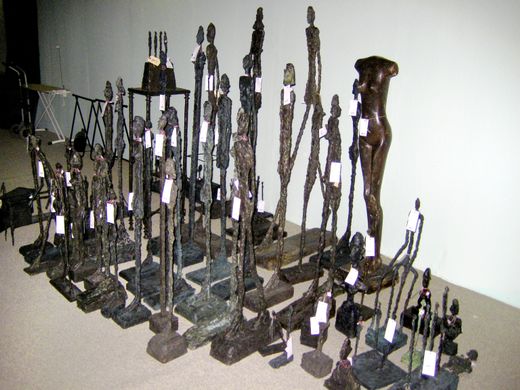
The Giacometti Forgery Scandal shocked the art world, revealing the dark side of high-end art dealing and the destructive impact of art fraud. This notorious case revolved around Robert Driessen, an art forger whose elaborate fake sculptures of the celebrated Swiss artist Alberto Giacometti conned collectors out of millions. Over 1,300 of these forged pieces flooded the market, obscuring the value and authenticity of Giacometti’s genuine works, which remain coveted among art enthusiasts. The scandal was not just about financial loss; it exposed the vulnerabilities within the art world and the audacity of those willing to forge renowned artists’ legacies for profit. As the investigation unraveled, it became clear that this was not merely an isolated incident, but a complex web of deceit woven by skilled criminals in pursuit of fame and fortune.
The Giacometti forgery affair is a striking example of the escalating issue of art forgery, where the integrity of famous artworks is compromised by skilled counterfeiters. This scandal unmasked a sophisticated network led by the notorious forger Robert Driessen, who produced thousands of fake bronze figures purported to be crafted by esteemed artist Alberto Giacometti. These counterfeit sculptures captivated collectors, leading to significant financial repercussions and shaking the foundations of the art market. As the investigation unfolded, it illuminated the desperate consequences of art fraud on both the market’s authenticity and the reputations of genuine artists. Ultimately, the scandal serves as a cautionary tale about the importance of vigilance in art transactions to safeguard the integrity of true artistic heritage.
The Rise of Robert Driessen: Master Art Forger
Robert Driessen’s journey from a burgeoning artist to one of the most notorious art forgers in history is a tale of ambition and deception. Born into a family of art dealers in the Netherlands, Driessen developed an early fascination with art that ultimately led him down a treacherous path. Starting his career by copying oil paintings, he soon progressed to forging signatures of well-known artists, thus sowing the seeds of an elaborate art fraud scheme that would defy belief. This trajectory culminated in his infamous production of fake sculptures attributed to the revered Swiss artist, Alberto Giacometti.
Driessen’s meticulous methods and connections, including his partnership with art dealer Herbert Schulte, enabled him to produce over 1,300 forged Giacometti sculptures. His work was marked by precision, replicating not just the artistry but also the authentic stamps and signatures, making it increasingly difficult for even discerning collectors to detect the duplicity. This careful orchestration of art fraud not only showcases Driessen’s skills but also highlights the vulnerabilities within the art market, raising questions about authenticity and value.
The Giacometti Forgery Scandal Unveiled
The Giacometti forgery scandal has emerged as one of the most significant cases of art fraud in Europe, stemming from the audacious activities of Robert Driessen and his collaborators. Initially, their operations went undetected, with forged sculptures being presented to eager collectors in a bid to cash in on the soaring values of Giacometti’s original works. As art prices soared, the appeal of acquiring a seemingly authentic Giacometti figure, regardless of its origin, grew among art enthusiasts and investors alike.
The scandal began to unravel in the early 2000s when investigators noticed a spike in the number of Giacometti figures entering the market. Ernst Schöller, an art investigator, played a pivotal role in uncovering the forgeries after posing as a potential buyer. His actions led to the first arrests and the seizure of numerous fake sculptures, pointing toward a well-financed operation orchestrated by Driessen and his co-conspirators. What followed was a protracted investigation, revealing intricate details about the creation and distribution of these fraudulent artworks.
The Role of Accomplices in the Art Fraud Case
Robert Driessen did not navigate this treacherous path of art forgery alone. His operation relied heavily on the involvement of accomplices, chiefly art dealer Herbert Schulte and the enigmatic Lothar Senke. Schulte’s role was crucial; he provided the necessary resources and connections to facilitate the sale of the forgeries. Their discreet meetings and transactions were characterized by a mix of cash and luxury items, painting a picture of an elaborate underground network dedicated to propelling the values of fake sculptures into the stratosphere.
On the other hand, Senke’s flamboyant persona and cunning marketing strategies helped further legitimize the forgeries. By fabricating an origin story that intertwined the Giacometti family and their legacy, he preyed on collectors’ narratives, making the forgeries appear irresistibly authentic. This collaboration among Driessen, Schulte, and Senke created a façade that momentarily concealed the reality of their fraudulent activities, showcasing how a mix of deceit and ambition could culminate in significant art-world turmoil.
The Destruction of Forged Giacometti Sculptures
The dramatic destruction of forged Giacometti sculptures marks a significant chapter in the art fraud narrative. Following the arrests of Driessen’s accomplices, authorities seized over 1,000 counterfeit sculptures, many of which were destined for the market. In a public display meant to reinstate trust in the art community and demarcate the line between authentic and counterfeit, these works were ultimately destroyed in a fiery furnace, symbolizing the collapse of a criminal empire built on deception.
Among the destroyed sculptures were 52 pieces owned by Wolfgang Schuppli, a high-stakes buyer who had unknowingly acquired numerous fakes. The annihilation of these works served as a stark reminder of the potential damage caused by art forgery, not just to individual collectors but to the integrity of the art market as a whole. By obliterating the forgeries, authorities aimed to convey a strong message about the importance of authenticity and the consequences of engaging in fraudulent dealings.
Undercover Operations that Led to Arrests
The art fraud case surrounding Robert Driessen and his accomplices was not merely a matter of art forgery but also a thrilling investigative pursuit that involved undercover operations. The pivotal moment came when Ernst Schöller and his team posed as potential buyers, successfully leading to the first arrests of Herbert Schulte. This tactic reflected the complexity of the investigation, which required careful planning and execution to infiltrate a world where deception was the norm.
The swift actions of law enforcement played a crucial role in uncovering the depths of the fraud network. For years, Driessen had eluded capture, fleeing to Thailand after the initial arrests. However, the determination of investigators and their relentless pursuit ultimately resulted in Driessen’s capture in 2014, highlighting the lengthy efforts taken to dismantle the operation. This case has since served as a model for art-related investigations, demonstrating the effectiveness of undercover tactics in addressing art fraud.
Impact of the Forgery Scandal on Art Valuation
The Giacometti forgery scandal has sent ripples through the art market, prompting a reevaluation of how art is authenticated and valued. With over 1,300 forged sculptures in circulation, the scandal raised immense concerns about the credibility of art sellers and the mechanisms employed to determine authenticity. As a result, art institutions and galleries have since adopted stricter validation measures, including the use of advanced technologies to confirm the provenance of high-value artworks.
Moreover, this scandal has instigated a cultural shift within the art community, where collectors have become more vigilant and informed about the artworks they purchase. The awareness surrounding the importance of authenticity has led to a reduced tolerance for forgery, pushing reputable dealers to prioritize transparency and verifiable documentation in their sales. As a consequence, the art world has taken significant strides toward rebuilding trust and integrity, significantly influenced by the lessons learned from the Giacometti forgery saga.
Legacy of Alberto Giacometti Amidst Forgery
Despite the shadow cast by the Giacometti forgery scandal, the legacy of Alberto Giacometti remains untarnished in the eyes of serious art aficionados. His unique expressionist style and the emotional depth of his sculptures have solidified his status as a master artist of the 20th century. Collectors continue to seek genuine Giacometti works at premium prices, further reinforcing the value of true artistry.
The ongoing interest in Giacometti’s original pieces, which have sold at auction for record amounts, demonstrates that the public’s affection for his art transcends the incidents of forgery. As the art world strives to recover from the fraud debacle, Giacometti’s true contributions are brought to light, prompting renewed appreciation for his authentic works and ensuring that his artistic vision remains celebrated.
Conclusion: Learning from the Past
The Giacometti forgery scandal serves as a potent reminder of the vulnerabilities within the art market and the lengths to which individuals might go in pursuit of wealth through deception. As the art community continues to evolve, it is imperative that lessons learned from this case are embedded in practices for buying, selling, and valuing art. Greater scrutiny, improved technology for authentication, and the establishment of a robust framework for provenance documentation are essential in safeguarding against future scams.
In conclusion, while the story of Robert Driessen and his criminal associates is steeped in deceit, it also sheds light on the resilience of the art world. As collectors and institutions remain vigilant, the integrity and appreciation of art—particularly the works of icons like Alberto Giacometti—will endure, reinforcing the notion that while some may forge, true artistry and authenticity will always prevail.
Frequently Asked Questions
What is the Giacometti Forgery Scandal involving Robert Driessen?
The Giacometti Forgery Scandal refers to a major art fraud case where art forger Robert Driessen, along with his accomplices, created over 1,300 fake bronze sculptures impersonating works by Swiss artist Alberto Giacometti. This scandal, which came to light in 2001, involved misleading art dealers and collectors, ultimately leading to millions in illicit earnings.
How did Robert Driessen manage to create forgeries related to the Giacometti artworks?
Robert Driessen, the mastermind behind the Giacometti Forgery Scandal, produced forged sculptures by initially learning to copy artworks and professional signatures. He worked discreetly in a small foundry, using equipment and methods similar to those used in producing genuine Giacometti pieces, enhancing the realism of his fake sculptures.
What was the impact of the Giacometti Forgery Scandal on the art market?
The Giacometti Forgery Scandal significantly threatened the integrity of the art market by flooding it with over 1,300 fake sculptures. Had these forgeries been sold widely, they would have devalued authentic works by Alberto Giacometti, who created only about 500 original pieces during his lifetime.
How were Robert Driessen and his accomplices caught in the Giacometti Forgery Scandal?
The Giacometti Forgery Scandal unraveled when investigators, including Ernst Schöller of the Baden-Württemberg State Criminal Police, intervened after detecting multiple forgeries offered to a collector. Undercover operations led to the arrest of accomplices Herbert Schulte and Lothar Senke, while Driessen was apprehended later in 2014.
What were the legal consequences for those involved in the Giacometti Forgery Scandal?
In the Giacometti Forgery Scandal, Lothar Senke received a nine-year prison sentence, Herbert Schulte was sentenced to seven and a half years, and Robert Driessen was sentenced to five years and six months. Their sentences were among the most severe ever imposed for art forgery in Europe, emphasizing the seriousness of their crimes.
What are the current activities of Robert Driessen after the Giacometti Forgery Scandal?
After serving his prison sentence for his involvement in the Giacometti Forgery Scandal, Robert Driessen returned to Thailand, where he continues to create and sell copied artworks, primarily targeting wealthy expatriates, albeit without signing them as original works.
What was the reaction of the art community to the Giacometti Forgery Scandal?
The art community reacted with shock and concern to the Giacometti Forgery Scandal, as it exposed vulnerabilities within the art market and raised awareness about the prevalence of art fraud. Major institutions began emphasizing the importance of provenance and expertise when dealing in high-value artworks.
How did the Giacometti Forgery Scandal influence art policy and regulations?
The Giacometti Forgery Scandal prompted significant changes in art policy, leading to more stringent regulations regarding the authenticity and provenance of high-value artworks. Markets began adopting better verification processes to protect against similar art fraud cases in the future.
What documentary features the Giacometti Forgery Scandal?
The Giacometti Forgery Scandal has been revisited in the ARD documentary series “Millionen Fake” and the NDR Culture podcast “Kunstverbrechen,” both of which explore the details of the case and the impact of art forgery on the market.
Was any of the forged Giacometti artwork recovered after the scandal?
Yes, following the investigations into the Giacometti Forgery Scandal, authorities discovered approximately 1,000 forged sculptures in a Mainz warehouse, of which many were later destroyed. Some of these forgeries were notable pieces that were almost sold to unsuspecting collectors.
| Key Points |
|---|
| Robert Driessen led a trio that forged over 1,300 sculptures attributed to Alberto Giacometti. |
| Driessen earned up to 8 million euros through the sale of these forgeries. |
| Driessen fled to Thailand after being sought by international police. |
| Lothar Senke and Herbert Schulte were accomplices, with Senke using a pseudonym to deceive buyers. |
| The conspiracy was uncovered in 2001 when several forgeries were offered to a Swiss collector. |
| Driessen was captured in 2014 and sentenced to 5.5 years; his accomplices received lengthy sentences. |
Summary
The Giacometti Forgery Scandal reveals a significant art fraud scheme orchestrated by Robert Driessen and his accomplices, who created and sold over 1,300 counterfeit sculptures attributed to the renowned artist Alberto Giacometti. With profits reaching approximately 8 million euros, this operation highlights the vulnerabilities within the art market, leading to Driessen’s eventual capture and a notable legal outcome. The case serves as a cautionary tale about the importance of provenance in the art world.

