
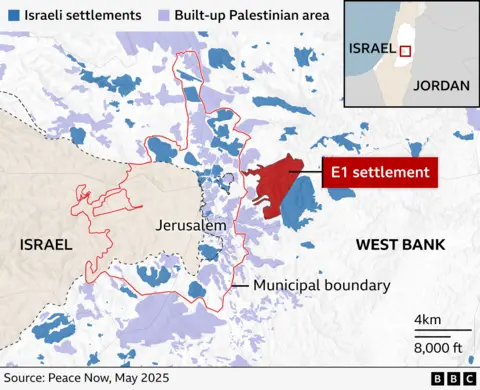
Israel settlement plans have ignited fierce debate both domestically and internationally, particularly in relation to the ongoing tensions in the West Bank. The Israeli government’s recent approval of 19 new settlements has raised serious concerns regarding compliance with international law, which explicitly deems these actions illegal. Countries like Germany and others have voiced strong opposition, fearing that such a move will jeopardize the fragile prospects for a two-state solution. The expansion of Israeli settlements threatens to erase potential Palestinian territory, fueling settler expansion radicalism instead of fostering peace. As international scrutiny increases, the ramifications of these settlement plans could alter the geopolitical landscape of the region for years to come.
The ongoing developments in Israel’s housing projects in disputed territories are drawing significant attention from global leaders. Decisions regarding new housing units in these contested areas are viewed as not only politically contentious but also legally problematic under international frameworks. The ramifications of such construction plans extend beyond local disputes, potentially destabilizing the broader Middle Eastern dynamics. As various nations weigh in on the implications for peace negotiations, the conversation often circles back to the viability of a two-state framework for Israeli and Palestinian coexistence. Understanding the complexities of these building initiatives requires an examination of the underlying political motivations and international reactions they provoke.
Israel’s Settlement Plans and Global Reactions
The recent approval of 19 new Israeli settlements in the West Bank has drawn widespread condemnation from various countries, highlighting the complex dynamics surrounding Israel’s settlement plans. Specifically, Germany and 13 other nations vocalized their strong opposition to what they deem a blatant violation of international law. These countries, including prominent European nations and others, have underscored that the expansion of settlements not only undermines peace efforts but also exacerbates tensions within the region. The collective stance against settler expansion emphasizes a growing international consensus that prioritizes adherence to international law over unilateral actions taken by the Israeli government.
The implications of Israel’s settlement plans extend beyond mere diplomatic disputes; they threaten the viability of a future two-state solution. As settlements encroach further into areas that are meant to be part of a future Palestinian state, the prospects for achieving a lasting peace diminish. Countries such as Belgium, France, and Norway have particularly stressed that the expansion of settlements compromises the potential for establishing a contiguous and sovereign Palestinian state, thereby increasing the complexity of negotiations. This ongoing criticism signals a pivotal moment in how the international community perceives Israel’s policies and their long-term impacts.
Legal Perspectives on West Bank Settlements
Under international law, particularly the Fourth Geneva Convention, the establishment of Israeli settlements in the occupied West Bank is widely regarded as illegal. The United Nations and various human rights organizations have noted that the settlement construction constitutes a violation of the rights of the Palestinian people and disrupts their ability to establish an independent state. Despite these legal frameworks, the Israeli government has continued to promote and expand settlements, leading to a significant number of Israeli settlers now residing in the area. This ongoing legal defiance raises questions about accountability and the enforcement of international law in territories characterized by occupation.
The debate surrounding the legality of these settlements is further complicated by the political motivations that drive the Israeli government’s policies. While some factions within Israel argue that the settlements are necessary for security reasons, critics point to the negative implications of such expansion on peace talks. The ongoing struggle to reconcile these competing narratives reveals the challenges inherent in addressing the situation in the West Bank. Ultimately, the legality of settlement construction will play a crucial role in any future negotiations aimed at reaching a two-state solution.
The Impact of Settler Expansion on Peace Efforts
Settler expansion in the West Bank has emerged as a critical barrier to peace negotiations aimed at resolving the Israeli-Palestinian conflict. As more Israeli settlements are established, the geographical fragmentation of Palestinian territories becomes increasingly pronounced, which complicates the feasibility of creating a viable Palestinian state. The United Nations and many international observers contend that this encroachment not only undermines the Palestinian right to self-determination but also sows profound distrust between the two communities. As settlement construction continues unabated, the chances for dialogue and cooperation diminish in tandem with the aspirations of peace.
Moreover, the tension stemming from settler expansion can provoke violent confrontations, further destabilizing an already volatile region. The Israeli government’s steadfast support for these settlements is perceived by many as an act of provocation, exacerbating resentment among Palestinians and their supporters. Consequently, this creates a cycle of conflict that distracts from the critical need for a negotiated peace agreement based on mutual recognition and respect. The urgent need for addressing settler expansion is evident, as any path toward reconciliation requires acknowledging and remedying the injustices borne out of these ongoing policies.
The Future of Two-State Solution Amid Settlement Policies
The vision of a two-state solution remains a focal point of discussions surrounding the Israeli-Palestinian conflict, yet it faces severe challenges due to the ongoing settlement policies pursued by the Israeli government. As new settlements are approved and constructed in the West Bank, the prospects for a viable Palestinian state diminish significantly. Analysts warn that the continued expansion of settlements disrupts the geographical contiguity required for a functional state and leads to an irreversible alteration of the demographic landscape. This transformation threatens the core principles of the two-state solution, which aims to establish peaceful coexistence between Israel and an independent Palestine.
Furthermore, the international community is tasked with responding to these developments while advocating for a diplomatic resolution to the conflict. The growing criticism of Israel’s settlement plans, particularly from European nations and organizations, reflects a collective understanding of the necessity for renewed commitment to peace negotiations. If these patterns persist, the foundation of a two-state solution may erode further, pushing both parties toward unilateral actions rather than collaborative discussions. The call for a comprehensive approach that respects international law and supports the aspirations of both peoples will determine the future trajectory of peace in the region.
International Law and Israeli Settlement Policies
The discourse surrounding Israeli settlement policies inevitably leads to a profound examination of international law. Many legal experts argue that the expansion of settlements contravenes not only the Fourth Geneva Convention but also various United Nations resolutions that affirm the rights of occupied peoples. As the Israeli government continues to endorse the establishment of new settlements, the question arises: how can the international community effectively uphold these laws? The ongoing disregard for international legal standards can foster an environment of impunity, further complicating the quest for justice from both Palestinian and global perspectives.
Additionally, the interplay between international law and state sovereignty shapes much of the debate regarding settlements in the West Bank. While Israel frames its settlement policies as a form of national security, critics maintain that such justifications do not absolve the country from legal obligations under international norms. This dynamic not only challenges the perceptions of legality surrounding the settlements but also serves as a rallying point for various international actors advocating for compliance with established law. As the international community grapples with the implications of these settlement policies, the subsequent dialogues will be indispensable in forging pathways toward peace.
Settlements: A Catalyst for Regional Instabilities
Israel’s settlement plans in the West Bank have not only drawn ire from foreign nations but have also served as a catalyst for regional instabilities across the Middle East. As these settlements expand, they often result in conflict over land and resources, putting additional strain on an already fraught relationship between Israelis and Palestinians. The international implications of these actions are considerable, as they evoke responses from neighboring countries that may feel compelled to support the Palestinian cause, thereby increasing geopolitical tensions. The settlements are not just localized issues; they reverberate throughout the broader geopolitical landscape.
Moreover, the settlement expansion impacts relations between Israel and its traditional allies. Countries that have historically supported Israel may reassess their positions in light of the ongoing controversies surrounding settlements in the West Bank. The risk of destabilization in the region is heightened as the grievances of the Palestinian people are neglected, fueling extremist sentiments and unrest within Palestinian territories and beyond. As such, addressing the realities of settler expansion is crucial not just for Israel and Palestine, but for maintaining regional stability and fostering an environment conducive to peace.
Diplomatic Efforts and Settlement Challenges
Diplomatic efforts aimed at resolving the Israeli-Palestinian conflict have long been hindered by the ongoing challenges posed by settlement expansion. Recent initiatives undertaken by various states and international organizations to broker peace have frequently stumbled upon the stubborn reality of new settlement approvals by the Israeli government. The challenges are compounded by internal political pressures within Israel that prioritize settlement growth over meaningful negotiations. This deadlock reinforces the perception that true peace remains elusive as settlement planning continues to dominate the agenda.
Negotiating a resolution to the conflict requires a two-pronged approach that involves ceasing settlement expansion while simultaneously revitalizing talks for a two-state framework. Many diplomats stress that without a firm commitment from Israel to halt further construction, achieving lasting peace becomes nearly impossible. Moreover, enhancing collaboration among international stakeholders and reformulating strategies that pressure adherence to international law may foster a more conducive environment for resolving the conflict. Ultimately, a re-examination of the current diplomatic landscape is essential to move beyond the ongoing challenges posed by settlement policies.
The Role of International Organizations in Settlement Issues
International organizations play a pivotal role in addressing the complex issues surrounding Israeli settlements in the West Bank. Entities like the United Nations have repeatedly condemned the expansion of settlements, affirming that such actions violate international law and threaten the peace process. The UN’s persistent focus on this topic recognizes the intricate relationship between settlement policies and the broader instability experienced in the region. As peace efforts stagnate, international organizations are tasked with not only raising awareness but also advocating for accountability in the face of these ongoing violations.
Moreover, various NGOs and human rights organizations have mobilized efforts to document and report on the impacts of settlement expansion on Palestinian communities. These groups work to elevate the narrative surrounding the human rights infringements tied to settlements, thus forcing the international community to confront the realities on the ground. By shining a light on these issues, international organizations contribute to the discourse on settlements not merely as political maneuvers but as barriers to achieving social justice and enduring peace.
Settlement Policies and Their Long-Term Implications
The long-term implications of Israeli settlement policies extend well beyond immediate geopolitical considerations, entrenching grievances that could stifle peace for generations. As the demographic landscape shifts with the increasing number of Israeli settlers, the dream of a two-state solution grows increasingly hazy. The expansion of settlements not only fractures the Palestinian territories but also fosters divisions and animosities, which complicate future endeavors for reconciliation. Such developments hint at a bleak future where negotiations become increasingly futile under the weight of an irreversible reality.
Additionally, the Israeli government’s settlement policies may inadvertently influence youth and societal perspectives within both communities. In Palestinian territories, the growth of settlements can breed resentment and distrust among younger generations, cultivating a narrative of victimhood and resistance. In contrast, Israeli youth may grow up perceiving these settlements as a normative aspect of their national identity. The social fabric of both societies is thus at risk of becoming increasingly polarized, fundamentally altering the landscape in which any future negotiations will occur. Addressing these long-term implications is crucial for fostering an environment ripe for dialogue and mutual respect.
Frequently Asked Questions
How do Israel’s settlement plans in the West Bank violate international law?
Israel’s settlement plans in the West Bank are deemed a violation of international law because the Fourth Geneva Convention prohibits an occupying power from transferring its own civilian population into the territory it occupies. As a result, the construction of new Israeli settlements, including the recent approval of 19 new ones, is considered illegal under international standards.
What impact do Israel’s West Bank settlement plans have on the two-state solution?
Israel’s plans for expanding West Bank settlements greatly hinder the viability of a two-state solution. These settlements disrupt the continuity of Palestinian territories and make it increasingly difficult to establish a sovereign Palestinian state alongside Israel, a key aspect of the two-state framework.
Why has the international community condemned Israel’s settlement expansion plans?
The international community, including countries like Germany and France, has condemned Israel’s settlement expansion plans due to the perceived violation of international law and the threat these plans pose to regional stability and peace efforts. The joint declaration from 14 nations emphasizes their rejection of annexation and settlement expansion as detrimental to the peace process.
What are the consequences of Israeli government policies on settlement construction in occupied territories?
The Israeli government’s policies on settlement construction lead to several consequences, including increased tensions between Israelis and Palestinians, further entrenchment of occupation, and potential escalation of violence. Additionally, these policies risk isolating Israel on the international stage, as many nations view the settlements as illegal under international law.
How many Israeli settlers currently live in the West Bank, and how does this affect settlement plans?
Currently, there are over 700,000 Israeli settlers living in the West Bank, which complicates any future peace negotiations. The presence of these settlers and the continuous expansion of settlements form significant obstacles to negotiating a peace agreement, as the settlements fragment Palestinian land and undermine the feasibility of a contiguous Palestinian state.
What is the stance of the United Nations on Israel’s settlement plans in the West Bank?
The United Nations holds a critical stance on Israel’s settlement plans in the West Bank, labeling these activities as illegal and an obstacle to achieving a two-state solution. The UN argues that the expansion of settlements disrupts the possibility of establishing a viable and independent Palestinian state alongside Israel.
What are the historical roots of Israeli settlement plans in the West Bank?
Israeli settlement plans in the West Bank trace back to the 1967 Six-Day War when Israel occupied the territory. Since then, the Israeli government has pursued policies aimed at establishing settlements, which have been fueled by political, ideological, and security considerations, despite opposition from the international community and the violation of international law.
| Key Points | Details |
|---|---|
| Approval of New Settlements | Israel’s government has approved 19 new settlements in the West Bank. |
| International Condemnation | Germany, along with 13 other countries, condemned the settlement approvals. |
| Violation of International Law | The construction of settlements in the West Bank is viewed as a violation of international law. |
| Impact on Peace Prospects | The settlements undermine long-term peace and the feasibility of a two-state solution. |
| Historical Context | The West Bank has been under Israeli occupation since 1967. |
Summary
Israel settlement plans have drawn widespread criticism from several states, particularly following the recent approval of 19 new settlements in the West Bank. The actions of the Israeli government have been condemned for violating international law, which states that such settlements are illegal. This is not simply a legal issue; it poses significant risks to regional stability and peace efforts, as highlighted in statements from 14 countries, including Germany, Belgium, and the United Kingdom. The growing Israeli presence in the West Bank could further complicate prospects for a viable two-state solution, pushing the possibility of peace further from reach.

