
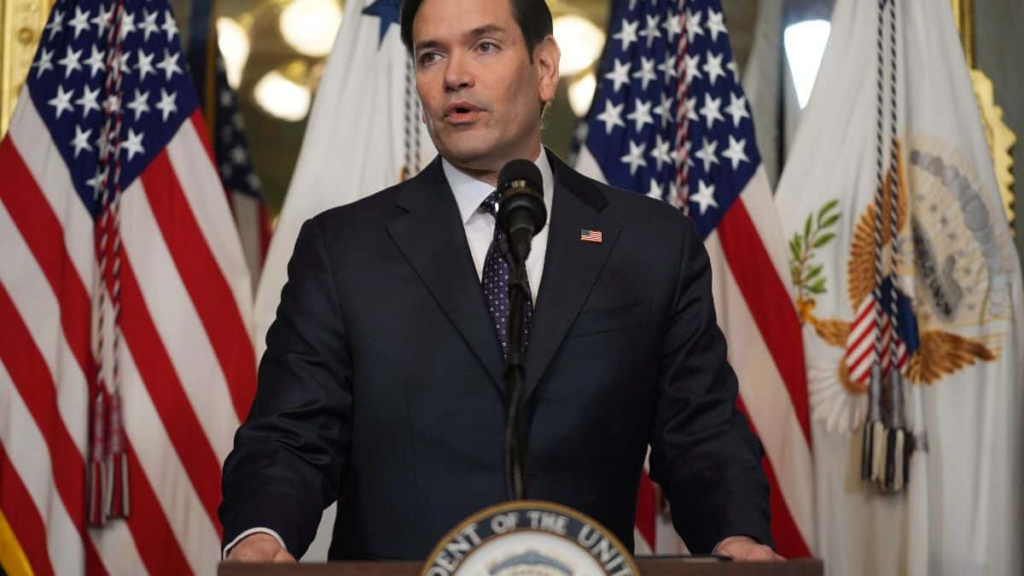
Marco Rubio AfD contacts have stirred significant dialogue about the evolving dynamics of U.S. foreign policy, particularly regarding right-wing parties in Europe. As the U.S. Secretary of State, Rubio emphasized the importance of understanding the political spectrum of foreign nations, bolstering his department’s strategic interests as outlined in the latest U.S. security strategy. This strategy notably includes support for Republicans in Europe, who are forging alliances with groups like the AfD (Alternative für Deutschland) amid concerns over free expression and political opposition suppression. In a recent meeting, Rubio’s Assistant Secretary of State for Public Diplomacy hosted Markus Frohnmaier of the AfD, highlighting a growing relationship that some see as controversial yet strategically beneficial. Despite the potential implications, Rubio clarified that these engagements do not equate to endorsing the AfD or its electoral candidates.
The interplay between U.S. officials and European right-wing factions, particularly the Alternative für Deutschland, reflects a broader trend in international relations. Marco Rubio’s interactions and insights into these policies shed light on a critical aspect of America’s diplomatic history with Europe. As the U.S. aims to maintain its influence, understanding various political currents becomes paramount, especially when navigating alliances with emerging right-leaning parties. Known for their controversial stances, these groups are often viewed through a lens of skepticism; however, they also represent a significant shift in the European political landscape. The strategic partnerships being cultivated underscore a pivotal moment as U.S. engagement with such entities evolves in the context of global security and ideological democracy.
Marco Rubio’s Approach to AfD Contacts
U.S. Secretary of State Marco Rubio has recently addressed the nature of contacts with the Alternative für Deutschland (AfD), arguing that such interactions are essential for comprehending the broader political landscape of foreign nations. Rubio emphasizes that gaining insights into various political factions is crucial for informing U.S. foreign policy and the upcoming U.S. elections. He stated, ‘Because in the end, we don’t know how elections will turn out,’ highlighting the unpredictability of political outcomes and the need for the U.S. to maintain a pulse on international political dynamics.
In recent months, Rubio’s Assistant Secretary of State Sarah Rogers met with the AfD’s foreign policy expert, Markus Frohnmaier, demonstrating a willingness to engage with right-wing parties in Europe. This approach aligns with the broader Republican strategy under President Trump, which seeks to form alliances with similar ideological groups across the Atlantic. Such connections are deemed vital as they could potentially lead to future collaborations, especially if these parties gain verifiable influence in their respective countries.
Republicans and the Rise of Right-Wing Parties in Europe
Under the Trump administration, Republicans have increasingly forged relationships with right-wing parties in Europe, including the AfD. This trend reflects a strategic pivot towards alliances that share conservative values and skepticism towards traditional political establishments. The engagement with these parties serves multiple purposes, such as bolstering U.S. security strategies and expanding diplomatic relations with nations that have similar ideological leanings. By fostering these connections, the U.S. aims to form a network of support among ideological allies in Europe.
Key figures within the Republican party, including Vice President JD Vance, have made favorable comments regarding the AfD, signaling a shift in the U.S. political discourse towards acceptance of right-wing politics abroad. This growing rapport is indicative of a broader strategy to combat what U.S. officials perceive as political repression and censorship in Europe. The new U.S. security strategy illustrates this focus, outlining a commitment to counteract forces that threaten free expression and political diversity across the continent.
Understanding U.S. Security Strategy and European Politics
The recent update to the U.S. security strategy explicitly mentions the need for establishing contacts with various political elements in Europe, including right-wing parties like the AfD. This approach highlights the Trump administration’s commitment to engaging with groups that challenge the status quo. In doing so, the U.S. aims to support movements that resist what officials describe as ‘covert tyranny,’ particularly in response to concerns regarding political opposition and censorship in countries like Germany.
Such measures reflect an understanding that political dynamics in Europe are changing, and the U.S. must adapt its foreign policy accordingly. The classification of the AfD as ‘firmly right-extremist’ by Germany’s Federal Office for the Protection of the Constitution has not deterred U.S. officials from exploring potential partnerships. Rather, it underscores a complex relationship where understanding and information exchange may lead to unexpected collaborations that reshape political landscapes in both the U.S. and Europe.
The Role of Public Diplomacy in Engaging Political Extremes
Public diplomacy plays a crucial role in how the U.S. engages with political actors like the AfD. Rubio’s administration has made it clear that meetings and discussions with foreign political figures are part of a broader strategy to understand and potentially influence political tides abroad. By holding dialogues with those on the fringes of the political spectrum, the U.S. seeks to assess their agendas and impact on regional security and political stability.
Moreover, the outreach efforts led by officials such as Sarah Rogers indicate a willingness to explore all facets of diplomacy, even if they involve controversial figures. The rationale behind this is to ensure that the U.S. is prepared for any political shifts in Europe, particularly with the rise of right-wing parties. Understanding these dynamics allows U.S. policymakers to craft responses that promote stability and security within the region, aligning with long-term strategic interests.
Assessing the Implications of Forming Alliances with the AfD
The implications of building alliances with parties like the AfD are multifaceted and controversial. On one hand, these partnerships may foster a sense of solidarity among right-wing factions across the globe, potentially creating a unified front on issue areas such as immigration and national sovereignty. Conversely, there are concerns that such relationships could legitimize extremist ideologies and provoke backlash from more moderate or left-leaning groups in both the U.S. and Europe.
Rubio’s remarks in defense of these dealings suggest a strategic calculus focused on potential gains rather than immediate repercussions. As the U.S. navigation through this political landscape becomes increasingly complex, it raises critical questions about the long-term effects of endorsing or engaging with right-wing parties. In this charged environment, the U.S. must balance its commitments to democratic values with the pragmatic demands of contemporary geopolitics.
The Future of Political Engagement with European Right-Wing Parties
Looking ahead, the future of U.S. engagement with European right-wing parties like the AfD is likely to become a focal point of foreign policy discussions. As these parties continue to gain traction in their respective nations, the question remains: how should the U.S. proceed in its diplomatic relations with arguably controversial groups? The evolving political landscape in Europe poses both opportunities and challenges for U.S. interests and its ideological allies.
Political analysts indicate that the U.S. may need to consider its strategies and rhetoric carefully to navigate the complexities of endorsing right-wing movements while also promoting democratic values and human rights. As difficulties in European politics escalate, the need for clear communication and thoughtful engagement strategies will be paramount. Ultimately, how the U.S. chooses to approach these relationships could significantly shape its influence and stability in transatlantic relations.
Evaluating the Right-Wing Influence on U.S. Foreign Policy
The influence of right-wing parties in Europe, like the AfD, has substantial implications for U.S. foreign policy. As Republicans increasingly express admiration for these groups, it raises questions about the direction of American diplomacy in Europe. This trend could lead to a fundamental shift in the U.S. approach, potentially prioritizing partnerships based on shared populist sentiments rather than traditional diplomatic norms.
Furthermore, as the Republicans’ connection with these right-wing factions deepens, it may also signal a broader acceptance of similar movements worldwide. This paradigm shift can encourage an authoritarian drift in governance and undermine efforts to uphold democratic principles. Hence, careful evaluation of how these alliances form and evolve will be critical in determining their impact on global perceptions of U.S. leadership and influence.
Communication Strategies in Igniting Political Discussions
Effective communication strategies will be essential as the U.S. continues to navigate engagements with right-wing parties, especially the AfD. Utilizing platforms like social media to share insights and foster dialogue will be key. Rubio’s interactions with AfD representatives indicate an understanding of the power of communication in shaping narratives, not only domestically but also internationally, as the U.S. seeks to assert its influence in global political conversations.
By framing discussions around shared values and strategic interests, U.S. officials can promote a dialogue that aims to find common ground rather than deepening divides. Additionally, harnessing positive communication techniques could counteract criticism surrounding partnerships with controversial political factions, ultimately allowing for a more comprehensive engagement strategy that respects diverse political landscapes while serving U.S. interests.
Monitoring the Effects of Political Contact on International Relations
Ongoing monitoring of the effects of political contact with the AfD and similar parties is crucial for U.S. foreign policy effectiveness. As these political entities gain prominence within their nations, it is important for the U.S. to assess how these dynamics impact bilateral relationships and global political alliances. Continuous evaluation of these contacts will help ensure that the U.S. remains responsive and adaptable to changing political contexts in Europe.
Furthermore, understanding the responses from both domestic and international audiences to U.S. engagement with right-wing groups will be critical in shaping future strategies. By actively tracking sentiments and results, the U.S. can make well-informed decisions regarding its diplomatic outreach that align with its security strategies and support democratic resilience in Europe.
Frequently Asked Questions
What is Marco Rubio’s stance on his contacts with the AfD (Alternative für Deutschland)?
U.S. Secretary of State Marco Rubio has downplayed his contacts with the AfD, stating that such interactions are part of understanding the entire political spectrum of other countries. He emphasized that these contacts do not equate to U.S. support for the party’s candidates in elections.
How does Marco Rubio justify the U.S. contacts with right-wing parties like the AfD?
Marco Rubio justifies U.S. contacts with right-wing parties, including the AfD, by explaining that it is essential to be informed about various political entities globally. He noted that understanding these parties is important as they may emerge victoriously in elections, impacting U.S. foreign policy.
What role does the U.S. Secretary of State play in contacts with European right-wing parties such as the AfD?
The U.S. Secretary of State, including Marco Rubio, plays a crucial role in managing interactions with European right-wing parties like the AfD to inform U.S. security strategy and anticipate political shifts in Europe, as outlined in recent policy documents.
What is the significance of the U.S. security strategy regarding contacts with the AfD?
The new U.S. security strategy highlights the importance of maintaining contacts with parties like the AfD, as it reflects the U.S. commitment to monitoring and addressing challenges to free expression and political opposition in Europe.
Are there any notable figures in the Republican Party that support contacts with the AfD?
Yes, notable figures in the Republican Party, including Vice President JD Vance, have made positive remarks about the AfD and support maintaining close contacts with right-wing parties in Europe, as part of broader political alignment and strategy.
What recent actions has the AfD taken concerning their interactions with the U.S. government?
Recently, several AfD politicians, including Markus Frohnmaier and Anna Rathert, have visited the U.S. to strengthen ties with the U.S. government, emphasizing the desire for collaboration as a strong German partner.
How do Marco Rubio’s comments reflect U.S. perspectives on political movements in Europe?
Marco Rubio’s comments reflect the U.S. perspective that understanding and engaging with a diverse political spectrum in Europe, including right-wing movements like the AfD, is essential to preparing for and responding to future political developments.
| Key Points | Details |
|---|---|
| Marco Rubio’s Stance | Downplays the significance of contacts with the AfD. Emphasizes understanding the full political spectrum. |
| Assistant Secretary Hosts AfD Expert | Sarah Rogers hosted Markus Frohnmaier in December, reflecting open channels of communication. |
| U.S. Republican Relations with AfD | The Trump administration has maintained connections with right-wing European parties. |
| Implications for U.S. Elections | Understanding foreign officials could be useful if they gain power. |
| New U.S. security strategy | Details U.S. aim to support resistance against political suppression in Europe. |
| Rubio’s Accusations | Accused Germany of ‘covert tyranny’ due to the Federal Office’s classification of the AfD. |
Summary
Marco Rubio AfD contacts illustrate the complexities of U.S. diplomatic relations with European right-wing parties. Rubio’s comments suggest a strategic interest in understanding a wide range of political affiliations abroad. By hosting AfD representatives, the Trump administration signals a willingness to engage with parties that align with its broader political challenges, particularly in response to perceived threats to free speech and political opposition in Europe. This nuanced approach highlights the ongoing geopolitical shifts and the U.S. desire to influence political landscapes internationally.

