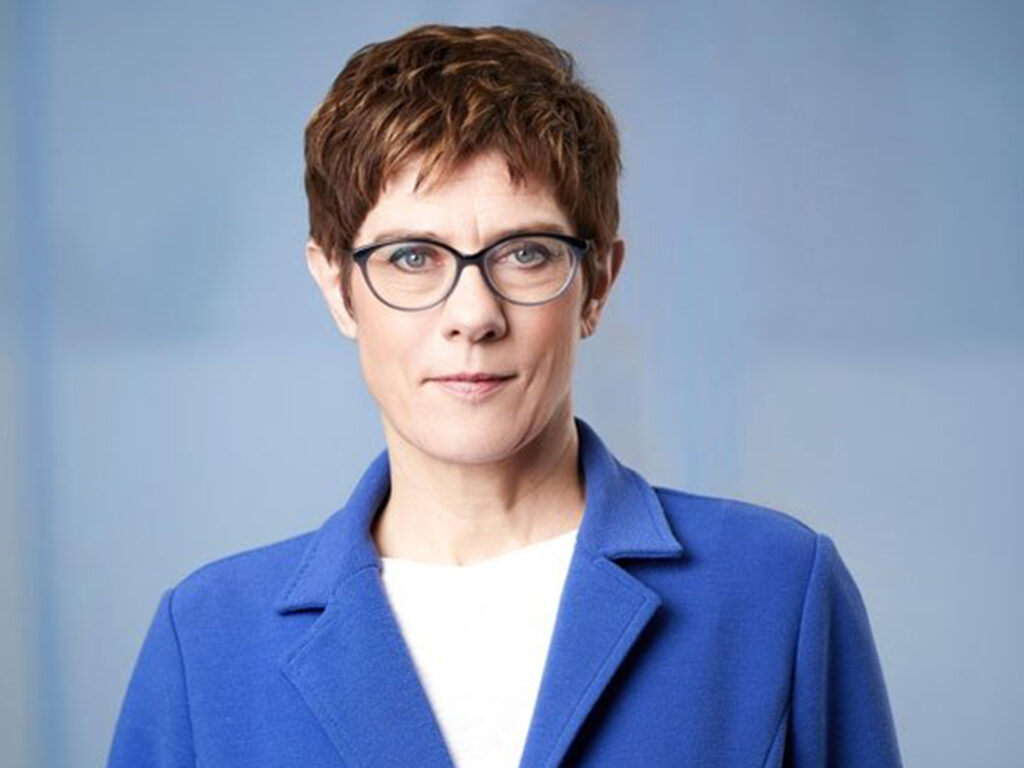
Annegret Kramp-Karrenbauer has made history by being appointed as the new chairperson of the Konrad Adenauer Foundation (KAS), a significant achievement in her political career. Her rise to leadership is not just a personal triumph but has broader implications for the CDU party leadership and the political dynamics in Germany. This shift comes at a time when the Chancellor is facing criticism, prompting a deeper analysis of his recent defeats, particularly relating to the controversial endorsements made by Merz and Krings. Kramp-Karrenbauer, who previously held roles as the CDU chairperson and Minister of Defense, successfully convinced the majority of KAS members of her suitability for this influential position. As the first woman to lead the foundation, her appointment is a pivotal moment, reflecting the evolving landscape of German politics and the challenges it brings with it.
This new development in German politics represents a significant reshuffling within the CDU and the Konrad Adenauer Foundation. With Annegret Kramp-Karrenbauer at the helm, the foundation is expected to navigate complex political dynamics and tackle ongoing controversies, including the recently discussed Merz and Krings affair. Following her leadership in various prominent roles, her election signals a potential shift in the party’s approach to governance and collaboration. As the CDU grapples with internal tensions and public confidence issues, understanding Kramp-Karrenbauer’s leadership will provide insights into the future trajectory of the party. The ongoing analysis of the Chancellor’s defeats and the implications for CDU leadership underscore the critical nature of these developments for Germany’s political landscape.
Annegret Kramp-Karrenbauer’s Leadership in the Konrad Adenauer Foundation
Annegret Kramp-Karrenbauer’s ascension to the role of chairperson of the Konrad Adenauer Foundation (KAS) marks a significant shift within the CDU party leadership structure, particularly in a moment fraught with political intricacies. Her prior experience as both the Minister of Defense and the Prime Minister of Saarland has positioned her as a formidable leader capable of navigating the political dynamics in Germany. Many view her election as not merely a personal victory, but a strategic move to unify the party under a common vision that emphasizes both stability and progress.
The implications of Kramp-Karrenbauer’s leadership extend beyond her personal achievements; they resonate deeply within the CDU. She has the potential to steer the foundation towards a more inclusive approach that could integrate diverse viewpoints, particularly at a time when the party faces internal divisions. With a firm grasp of the challenges ahead, Kramp-Karrenbauer’s leadership will be pivotal in addressing the criticisms stemming from various factions within the party, creating a pathway for renewed trust and collaboration.
The Chancellor’s Defeat: Analyzing the Circumstances
The recent leadership shift at the Konrad Adenauer Foundation has ignited discussions surrounding the Chancellor’s political maneuvering and subsequent failures. The analysis of this defeat sheds light on the chancellor’s handling of party dynamics, particularly the controversial decision to endorse Günter Krings over Kramp-Karrenbauer. By not extending support to a rival who is now creating waves with her leadership, the Chancellor has allowed a significant fracture within the CDU’s power structure to go unaddressed, questioning his ability to maintain party unity.
Furthermore, this incident raises critical questions about how internal party dynamics influence broader political outcomes. The Chancellor’s measured approach has led to perceptions of instability, especially considering the recent controversies surrounding the Merz and Krings endorsements. Analyzing these political missteps through the lens of power struggles and decisions made (or not made) under the mounting pressure reveals deeper implications for the CDU’s future, especially as they prepare for upcoming electoral challenges.
Merz and Krings Controversy: Impacts on CDU Cohesion
The controversial interplay between Friedrich Merz and Günter Krings significantly informs the current landscape within the CDU. Merz’s open endorsement of Krings, despite the possibility of Kramp-Karrenbauer’s candidacy, suggests a deeper allegiance that could alienate segments of the party. His failure to recognize the broader implications of these endorsements not only reflects a miscalculation of political dynamics but also raises concerns about the cohesiveness of the CDU moving forward. The internal conflict between Merz’s support and the differing preferences of KAS members has undoubtedly complicated the party’s structure.
As the political landscape evolves, it becomes imperative for party leaders like Merz to navigate these controversies with careful consideration. By prioritizing faction loyalty over broader party unity, Merz risks deepening divisions that could impact the CDU’s operational efficacy. Establishing a clear vision that encompasses various opinions and addressing criticisms from grassroots members on representation will be crucial in mitigating further conflicts, ensuring the CDU remains a dominant force in German politics.
The Role of the CDU in Shaping German Politics
The CDU’s position within German politics has historically been one of power and influence. As the party grapples with internal conflicts, such as the recent controversies surrounding leadership choices, it becomes imperative to consider how these events shape the party’s role in the larger political narrative. The Konrad Adenauer Foundation, under Annegret Kramp-Karrenbauer’s leadership, is now positioned to redefine its impact on policy discussions and civic engagement in Germany. This new direction could see the KAS play a vital role in advocating for democratic values and stability in the face of evolving political challenges.
However, the CDU cannot afford to overlook the importance of addressing its internal discontent and factional strife. As the party navigates through criticisms and examines its leadership decisions, including the fallout from the Merz and Krings scandal, it must unify its base to be an effective influence in German politics. This struggle for cohesion highlights the delicate balance the CDU must maintain—acknowledging past grievances while striving to embrace innovative approaches to future governance and policy formation.
The Future of KAS Under Annegret Kramp-Karrenbauer
With Annegret Kramp-Karrenbauer at the helm, the future of the Konrad Adenauer Foundation appears promising yet challenging. Her leadership style, characterized by pragmatism and engagement, signals a transition that might rejuvenate the foundation’s mission. As political dynamics continue to evolve, KAS’s role as a think tank supporting the CDU’s vision will be paramount. Kramp-Karrenbauer’s experience in defense and state governance will likely inform the foundation’s approach to key issues, ensuring relevance in discussions that impact not just party members but the larger German populace.
Moreover, Kramp-Karrenbauer’s ability to bridge gaps between differing factions within the CDU could prove invaluable in restoring trust. As the foundation expands its outreach and influence, her leadership may inspire a fresh discourse that aligns with current societal expectations. The future of the KAS will hinge significantly on its ability to adapt to these changing environments while upholding the foundational principles established by its namesake, Konrad Adenauer.
Political Dynamics in Germany: A Broader Perspective
The political dynamics in Germany are characterized by a multifaceted landscape influenced by various factions, ideologies, and regional variances. The CDU, with its historical roots and changing leadership, must navigate these complexities to maintain its relevance in German politics. Key relationships and internal power plays, such as those exemplified by the controversies surrounding Kramp-Karrenbauer’s and Merz’s actions, underscore the extent to which individual decisions can ripple through the party and beyond. Recognizing this intricate web of interactions is crucial for understanding how the party can effectively respond to external pressures.
At the same time, the interplay of the CDU with emerging political forces illustrates the fluidity of the German political scene. As parties adapt to shifts in voter sentiment and social expectations, traditional power dynamics are being challenged. The role of institutions like the Konrad Adenauer Foundation is vital in advising on these transitions and fostering a dialogue that prepares the political arena for upcoming challenges. This holistic understanding of political dynamics will be essential for both party leaders and constituents alike as they seek a sustainable path forward.
Analyzing the CDU’s Internal Conflicts
The analysis of the CDU’s internal conflicts reveals a party at a crossroads, struggling to reconcile differing perspectives within its ranks. The recent tensions between various party factions, highlighted by strategic missteps such as Merz’s endorsement of Krings and the subsequent election of Kramp-Karrenbauer, cast a shadow on the party’s cohesiveness. As these members grapple with their shared objectives and individual ambitions, the path ahead requires careful navigation if they hope to emerge stronger amidst external challenges.
Understanding these conflicts is pivotal not solely for resolving present tensions but also for shaping a strategy that aligns with constituents’ expectations. Acknowledging diverse viewpoints within the CDU can foster a more inclusive environment, potentially bridging the gap between traditional ideals and the evolving landscape of German politics. Improving dialogue and collaboration will aid the CDU in solidifying its base while addressing the broader concerns of its electorate, fortifying its position as a key player in shaping Germany’s political future.
Lessons from the Recent Leadership Election
The recent leadership election at the Konrad Adenauer Foundation offers valuable lessons for the CDU as it navigates an increasingly complex political environment. Annegret Kramp-Karrenbauer’s successful ascension to chairperson underscores the importance of aligning leadership choices with the aspirations of the party’s grassroots. This election serves as a reminder that party unity and cohesion must be prioritized to mitigate the risk of division, particularly when competing interests come into play. The implications of such leadership elections extend beyond immediate results, shaping the future direction of the CDU as it confronts social and political challenges.
Furthermore, analyzing the miscalculations made by prominent figures such as Merz not only provides insight into the factors influencing the outcome but also emphasizes the need for strategic foresight in political decisions. Embracing adaptability and recognizing shifts within the party dynamics may enable the CDU to better position itself for upcoming elections and interactions with its constituents. By learning from these recent experiences, the CDU can cultivate a more robust leadership framework that aligns with the aspirations of both its members and the electorate.
Future Challenges for the CDU and KAS
As the CDU looks ahead, the challenges it faces are manifold, particularly with the recent changes within the Konrad Adenauer Foundation. The ability of Annegret Kramp-Karrenbauer to unify the party and navigate the contentious landscape shaped by internal rivalries will be critical. Future challenges include restructuring the foundation’s influence in German politics and responding effectively to external pressures from emerging parties and public sentiment. Ensuring that the CDU’s policies resonate with the electorate while maintaining internal harmony will be paramount as they prepare for future electoral contests.
Additionally, the CDU must confront the implications of its internal conflicts and leadership decisions, including those surrounding Merz’s controversial endorsements. Addressing these issues candidly will be essential to reclaiming trust within the party and among its supporters. The road ahead will require strategic repositioning and a commitment to reflective leadership to ensure that the CDU remains not only a vehicle for political power but also a representative voice for the citizens of Germany.
Frequently Asked Questions
What does Annegret Kramp-Karrenbauer’s election as chairperson of the Konrad Adenauer Foundation signify for the CDU?
Annegret Kramp-Karrenbauer’s election as chairperson of the Konrad Adenauer Foundation (KAS) is a significant development for the CDU, reflecting her leadership capabilities and support among party members. Her success comes at a time of intense political dynamics in Germany, highlighting the internal challenges faced by the CDU.
How does the recent election of Annegret Kramp-Karrenbauer affect the CDU party leadership?
The election of Annegret Kramp-Karrenbauer as chairperson of the Konrad Adenauer Foundation impacts CDU party leadership by establishing a strong figure aligned with the party’s future direction. This leadership decision comes amid controversies like the Merz and Krings situation, posing questions about party unity and strategy.
What are the implications of Annegret Kramp-Karrenbauer’s role at the Konrad Adenauer Foundation for Chancellor’s leadership?
Annegret Kramp-Karrenbauer’s role at the Konrad Adenauer Foundation challenges the Chancellor’s leadership as it raises questions about his ability to secure majority support within his affiliated organizations, especially following the recent defeats in party dynamics.
What controversies surrounded Annegret Kramp-Karrenbauer’s election as KAS chairperson?
The controversies around Annegret Kramp-Karrenbauer’s election as chairperson of the Konrad Adenauer Foundation involved Friedrich Merz’s public support for Günter Krings, highlighting divisions within the CDU party leadership and the dynamics of loyalty among key figures.
How can Annegret Kramp-Karrenbauer’s election as KAS chairperson influence future political dynamics in Germany?
Annegret Kramp-Karrenbauer’s election as chairperson of the Konrad Adenauer Foundation could influence future political dynamics in Germany by strengthening the CDU’s position and potentially altering power balances within the party, impacting their response to upcoming electoral challenges.
What analysis was made regarding the Chancellor’s defeat linked to Annegret Kramp-Karrenbauer’s success?
The analysis suggests that the Chancellor’s inability to manage internal support effectively, as highlighted by Annegret Kramp-Karrenbauer’s successful election to the Konrad Adenauer Foundation, signifies a broader failure in party leadership amid rising tensions within the CDU.
What key qualifications did Annegret Kramp-Karrenbauer showcase to win the KAS chairperson role?
Annegret Kramp-Karrenbauer showcased her political experience as a former CDU chairperson and Saarland prime minister, alongside her recent role as Minister of Defense, to convince KAS members of her qualifications for the chairperson role.
What does the situation involving Merz and Krings reveal about CDU party dynamics?
The situation involving Merz’s endorsement of Krings over Annegret Kramp-Karrenbauer sheds light on the underlying tensions and factions within CDU party dynamics, revealing challenges in unifying support among key leadership members.
| Role | Individual | Key Points |
|---|---|---|
| Chairperson | Annegret Kramp-Karrenbauer | Successfully elected as the new chairperson of the Konrad Adenauer Foundation. |
| Former Positions | Annegret Kramp-Karrenbauer | Former chairperson of the CDU, Prime Minister of Saarland, and Minister of Defense. |
| Chancellor’s Impact | Chancellor Olaf Scholz | The election outcome is seen as a defeat for the Chancellor. |
| Conflict | Friedrich Merz | Merz supported another candidate, reflecting poor strategic planning. |
| Foundation Dynamics | KAS Members | Concerns about representation from North Rhine-Westphalia and party independence. |
| Competitor’s Background | Günter Krings | His candidacy faced criticism within the KAS due to party affiliation. |
| Strategic Failure | Friedrich Merz | The failure to secure a majority in the KAS raises questions about Merz’s leadership. |
Summary
Annegret Kramp-Karrenbauer’s election as chairperson of the Konrad Adenauer Foundation marks a significant political shift, reflecting the current landscape of the CDU and the challenges faced by Chancellor Scholz and party leader Friedrich Merz. Her successful campaign and election indicate not only her personal qualifications but also a shift in party dynamics that highlights the strategic missteps of Merz in failing to unify the party’s support. This event raises critical questions about future leadership within the CDU and its implications for the governance and direction of the party.