
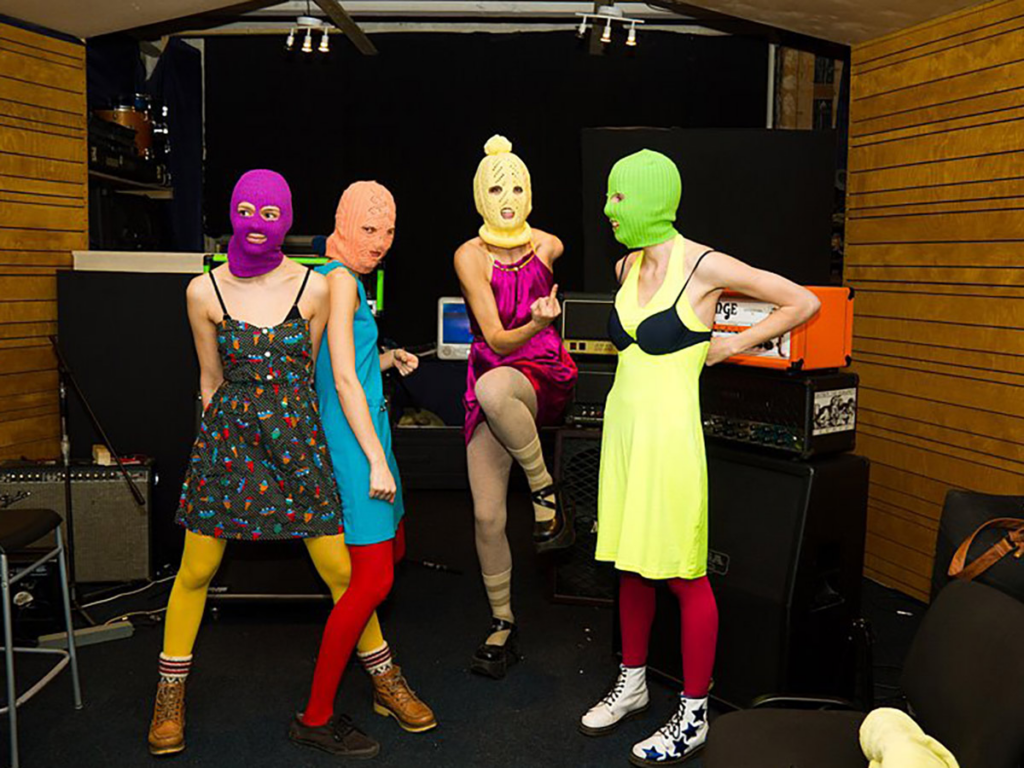
Pussy Riot, the iconic feminist punk band known for its audacious protests against the Russian government, has recently been branded as “extremists” by the Kremlin. This classification marks a significant escalation in the ongoing Russian government crackdown on dissent, with the authorities declaring the group’s activities illegal and any previous support for them now punishable. The recent ruling highlights the regime’s determination to stifle any opposition, particularly amidst the turmoil following the Ukraine invasion in 2022. Nadya Tolokonnikova, one of the band’s founders, has boldly stated that being labeled “extremist” could resonate positively with those who value freedom of expression. The situation underscores the urgent need for global awareness of Pussy Riot’s plight as they continue to champion human rights through their music and protest actions.
The bold collective known as Pussy Riot has emerged as a symbol of resistance against oppressive regimes, particularly in Russia. Defined by their provocative performances and outspoken criticism of the government, they have drawn international attention to issues of freedom and rights. This escalation in governmental hostility towards such dissenters underscores a broader pattern of repression against activists, echoing the sentiments of other groups deemed dangerous by the state. Meanwhile, statements from key members like Nadya Tolokonnikova reflect a deep commitment to their cause, highlighting the risks associated with their stance against authoritarianism. As the struggle for voice and identity in Russia intensifies, Pussy Riot remains at the forefront, embodying the fight against oppression.
Pussy Riot’s Legal Status in Russia
The recent classification of Pussy Riot as an “extremist organization” marks a significant escalation in the Russian government’s crackdown on dissent. Following a Moscow court ruling that declared the band illegal, authorities now lump any form of interaction with the group—including previous online engagements—under this new prohibition. This development illustrates the Kremlin’s ongoing efforts to stifle voices of opposition, especially in the wake of heightened tensions since the Ukraine conflict began. The harsh measures taken against Pussy Riot reflect a broader trend of repressing artistic and activist expressions deemed unfriendly to the state.
Pussy Riot’s classification is not just a label; it is a significant infringement on civil liberties in Russia. The government’s decision serves to erase not only the group from public consciousness but also the discourse surrounding free speech and protest in the nation. Nadya Tolokonnikova, a central figure in the group, has articulated that this legal action aims to silence critics and entrench the state’s narrative, highlighting the dire situation for activists under President Putin’s regime. The implications of this ruling extend far beyond just the band; they create a chilling atmosphere for anyone who dares to speak out.
The Impact of the Russian Government Crackdown on Activism
The intensified crackdown on Pussy Riot is indicative of a larger pattern of suppression affecting various activist groups and dissenting voices in Russia. Since the start of the conflict in Ukraine, the Kremlin has enacted increasingly stringent laws aimed at stifling dissent. This approach not only targets high-profile organizations like Pussy Riot but also involves a systematic silencing of independent media and civil society. The heavy-handed tactics employed by authorities make it clear that activism, especially that which challenges the state, is now viewed as a threat to national stability.
Moreover, the crackdown underscores a growing fear within the Russian government of a burgeoning grassroots movement that could catalyze significant political change. By categorizing Pussy Riot and similar activists as “extremists,” the state aims to discredit their causes and rally public support against them. However, such measures often have the opposite effect; they expose the regime’s vulnerabilities and highlight the lengths to which it will go to maintain control. The resilience of groups like Pussy Riot suggests that efforts to suppress them may ultimately ignite greater public awareness and opposition to government repression.
Public Response to Pussy Riot’s Classification
The public reaction to Pussy Riot’s designation as an extremist organization has been mixed but significant, highlighted by an increase in solidarity actions both within Russia and globally. Many supporters view the label as a badge of honor that signifies the group’s commitment to freedom of expression and human rights. While the Kremlin aims to stigmatize Pussy Riot, their legacy as a provocative force in Russian culture continues to resonate with many who push back against authoritarianism.
Social media platforms have been flooded with expressions of support for Pussy Riot, and many users have found creative ways to circumvent government censorship. Given the harsh penalties associated with being associated with an “extremist” entity, individuals are taking significant risks to voice their opposition. The wave of support for Pussy Riot signals a burgeoning underground movement willing to challenge the status quo in Russia, illustrating that while the state can attempt to silence dissent, it cannot eradicate the desire for freedom and justice among its people.
Nadya Tolokonnikova’s Advocacy for Free Speech
Nadya Tolokonnikova’s statements following the court’s ruling underscore her commitment to free speech and her role as a spokesperson for marginalized voices in Russia. By publicly declaring pride in being labeled an “extremist,” she confronts the narrative spun by the government and reclaims the term as a symbol of resistance. Her bravery resonates particularly with human rights advocates around the world who see her as a champion of truth in the face of oppression. Tolokonnikova’s unwavering stance demonstrates the power of art and activism to challenge authoritarian narratives.
Through her advocacy, Tolokonnikova not only raises awareness about the plight of Pussy Riot but also amplifies the struggles of countless individuals facing repression. Her determination to speak the truth in a climate where it has become dangerous to do so serves as an inspiration. As the public continues to rally behind her and the band, their message becomes increasingly potent; it shows a collective resolve that—despite governmental oppression—resistance through art and expression remains a powerful tool for social change.
Pussy Riot and the International Movement for Human Rights
Pussy Riot has garnered international support in their fight against repression, igniting a global dialogue on the importance of defending human rights defenders in Russia. Their artistic expressions have transcended locales, becoming an anthem for many fighting against authoritarianism across the world. The international response not only demonstrates solidarity with Pussy Riot but also sheds light on the broader implications of the Kremlin’s actions. Activists and organizations far beyond Russia have rallied to denounce the categorization of the punk band as extremists, highlighting a shared struggle for freedom worldwide.
This global attention on Pussy Riot serves to remind the Russian government that its efforts to control dissent will be met with resistance both domestically and internationally. As more people become aware of the group’s plight, they are likely to seek avenues for support and advocacy, thereby amplifying their message. The collective fight for free expression, spearheaded by Pussy Riot’s courage, illustrates the interconnectedness of human rights movements around the globe, reinforcing the notion that the struggle for freedom cannot be suppressed.
Historical Context of Pussy Riot’s Activism
Pussy Riot’s activism is rooted in a rich tradition of dissent and artistic expression in Russia, dating back to the post-Soviet era. The band gained worldwide attention for their bold acts of protest, especially during their 2012 performance in the Christ the Savior Cathedral, which challenged the close ties between the Russian Orthodox Church and the state. This moment not only marked a pivotal point in their activism but illuminated the broader struggle for freedom of expression in an increasingly repressive societal landscape.
Since then, Pussy Riot has consistently used their platform to address issues such as gender equality, LGBTQ+ rights, and political corruption. The historical context of their protests sheds light on the socio-political climate that necessitates such radical forms of expression. The repression faced by Pussy Riot today is a continuation of the fight for civil rights that has characterized the Russian landscape for decades, making their contributions to activism even more vital in this current era of heightened state control.
The Role of Art in Political Protest by Pussy Riot
Art has always been a powerful vehicle for political expression, and Pussy Riot exemplifies how creativity can challenge the status quo. Through their provocation-driven performances, the band has brought attention to pressing issues within Russia while also engaging audiences worldwide. Their artistic expressions not only highlight the absurdities of censorship and repression but also inspire others to consider the role of art in social movements. Pussy Riot’s blend of punk rock, performance art, and political commentary showcases how creative expression can galvanize action and foster resilience.
As the Russian government clamps down on dissent, art remains a crucial tool for activists like Pussy Riot who seek to expose the truth and advocate for change. Their performances serve as a rallying cry for those who share their vision of a more just society, transcending language and cultural barriers. The legacy of Pussy Riot’s art as a form of rebellion continues to influence a new generation of artists and activists, underscoring the profound impact of art as a means of resistance against oppression.
Pussy Riot and the Fight for Gender Equality
Pussy Riot has also become a symbolic figure in the ongoing battle for gender equality in Russia. The all-female collective defies traditional gender roles by placing women at the forefront of their activism. Their protests challenge the patriarchal norms entrenched in Russian society, advocating for not just political freedom, but also gender rights. By addressing issues like misogyny and sexism, Pussy Riot highlights the intersectionality of activism in a country where women’s voices are often marginalized.
The band’s commitment to feminist ideals resonates deeply within a global context, rallying support from various movements focused on gender equality. Their bold performances and statements have sparked conversations about the representation of women in activism and their rightful place in societal dialogues. As Pussy Riot continues to advocate for gender rights, they reinforce the idea that gender equality is a fundamental aspect of any broader human rights movement, inspiring many to join the fight in whatever capacity they can.
Future Implications for Pussy Riot and Dissent in Russia
The classification of Pussy Riot as extremists presents significant implications for the future of dissent in Russia. As the government intensifies its crackdown, activists face increasing risks, potentially leading to a quieter civil society. However, this move may also backfire; by labeling dissenters as extremists, the government inadvertently elevates their status and galvanizes support for their causes. The determination of Pussy Riot, alongside a global network of allies, continues to illuminate the oppressive nature of the Russian regime, igniting hope for eventual change.
The challenges that lie ahead for Pussy Riot and other activists are immense, as the Russian government tightens its grip on freedom of expression. Yet history shows that repression often fosters resilience and solidarity among dissenters. The future of dissent in Russia may hinge on the ability of groups like Pussy Riot to inspire collective action and mobilize support internationally. As they navigate these turbulent times, Pussy Riot’s legacy may very well serve as a beacon of hope for those fighting for justice and reform in a post-Putin Russia.
Frequently Asked Questions
What recent Pussy Riot news highlights the Russian government’s crackdown on the group?
Recent Pussy Riot news indicates that the Russian government has classified the activist group as “extremist.” A Moscow court declared that any activities related to Pussy Riot are now illegal, reflecting a significant increase in the Kremlin’s crackdown on dissent since the Ukraine conflict began in February 2022.
How has the Russian government classified Pussy Riot and why?
The Russian government has classified Pussy Riot as an “extremist organization” following a court order. This classification aims to suppress the group’s activities and erase their presence from Russian society, especially after Pussy Riot’s vocal criticism of the government and its policies.
What are the implications of the recent court ruling on Pussy Riot’s protests?
The recent court ruling prohibiting Pussy Riot protests makes any past or present interaction with the group illegal within Russia. This decision further silences dissent and reinforces the cracked down on activist expression under Putin’s regime.
What did Nadya Tolokonnikova state about Pussy Riot’s classification as extremists?
Nadya Tolokonnikova proudly stated that she feels honored to be classified as “extremist,” emphasizing that in today’s Russia, speaking the truth is deemed extremist. This reflects the group’s commitment to their message and activism despite government oppression.
How does the crackdown on Pussy Riot affect their supporters in Russia?
The crackdown on Pussy Riot poses significant risks to their supporters within Russia, who now face legal repercussions simply for engaging with the group, lending support, or expressing admiration for their activism.
What was Pussy Riot’s reaction to the government’s efforts to erase them from public memory?
Pussy Riot expressed that they anticipated the extremist classification and see the government’s efforts as a strategy to erase their influence from Russian memory. They view this as an attack on free speech and a signal of the regime’s intolerance toward dissent.
Why is the classification of Pussy Riot as extremists significant in the context of Russian politics?
The classification of Pussy Riot as extremists indicates a broader trend in Russian politics where the government increasingly suppresses dissent and frames criticism as a threat to national security, thereby stifling any form of opposition or activism.
What historical protest by Pussy Riot brought them international attention?
Pussy Riot gained international recognition for their 2012 protest at the Christ the Savior Cathedral in Moscow, where they performed a “punk prayer” that openly criticized President Vladimir Putin. This act of defiance led to several band members being imprisoned.
How has the Russian government’s stance on Pussy Riot evolved since their formation?
Since their formation, Pussy Riot has faced escalating hostility from the Russian government, culminating in their recent classification as extremists. Initially celebrated for their art and activism, they have now become targets of state repression aimed at quelling dissenting voices.
| Key Point | Details |
|---|---|
| Ban on Activities | Pussy Riot’s actions and interactions are now illegal in Russia, as deemed by the authorities. |
| Classification as Extremist | A Moscow court has classified Pussy Riot as an extremist organization, reflecting increased repression of dissent. |
| Impact on Supporters | The ruling raises concerns for the safety of Pussy Riot supporters who remain in Russia. |
| Historical Context | Pussy Riot is known for their 2012 protest against Vladimir Putin, leading to incarceration and exile for several members. |
| Response of Band Members | Founding member Nadya Tolokonnikova expressed pride in the extremist label, emphasizing the truth as a form of extremism in current Russia. |
Summary
Pussy Riot faces severe repression from Russian authorities as their activities are now illegal. The designation of Pussy Riot as an “extremist organization” marks a troubling escalation in the crackdown on dissent in Russia, especially post-Ukraine offensive. The government’s moves aim not only to silence the group but also to erase its influence and legacy from the Russian public’s consciousness. With increasing dangers for supporters remaining in Russia, the collective’s message continues to resonate globally, reflecting the courage to speak truth to power.

