
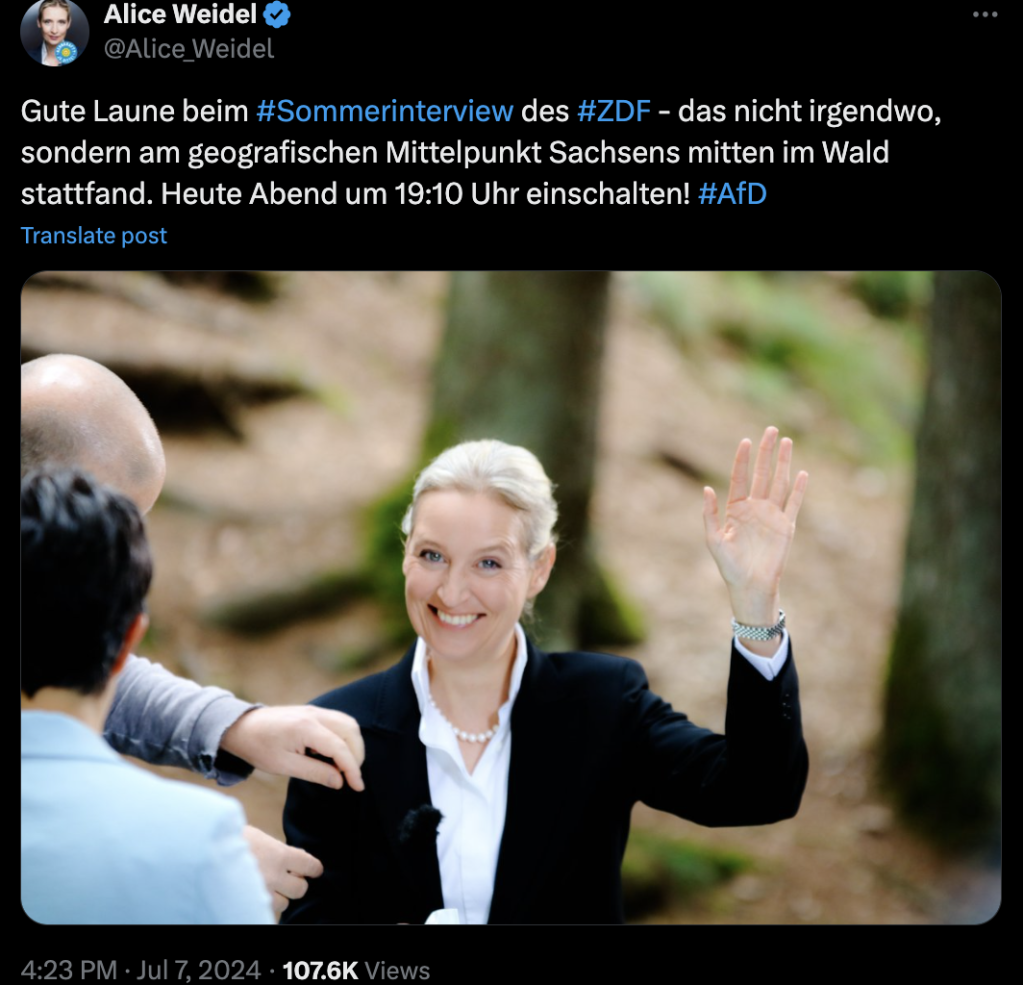
In the midst of increasing scrutiny over far-right rhetoric, AfD leader Alice Weidel has sparked controversy by characterizing Nazi slogans like “Everything for Germany” and “Youth must be led by youth” as unproblematic in a recent WELT TV interview. Her remarks come at a time when her party colleague, Björn Höcke, faces legal repercussions for endorsing similar sentiments, raising questions about the normalization of extremist views within the Alternative for Germany (AfD). Legal experts have been quick to weigh in on Weidel’s comments, emphasizing the potential implications of endorsing such historical slogans. The Nazi slogans controversy surrounding Alice Weidel not only reflects internal party dynamics but also poses challenges for broader societal acceptance. As conversations swirl around her statements, the political landscape in Germany becomes increasingly polarized, further complicating the narrative of right-wing ideologies.
The recent remarks made by Alice Weidel regarding controversial historical phrases tied to Nazi ideology have ignited debates on their relevance and impact in contemporary political discourse. Many are questioning the legitimacy of using such terms, especially given the legal challenges faced by figures like Björn Höcke within the same political context. The implications of Weidel’s viewpoint, labeled by some as normalization of dangerous rhetoric, signal a troubling trend among far-right parties in Germany. As public sentiment shifts, the focus narrows on how these opinions affect societal cohesion and the legal boundaries surrounding free speech and hate symbols. Ultimately, the discussion surrounding extreme nationalist sentiments invites broader reflection on the boundaries of acceptable political discourse today.
Alice Weidel’s Controversial Remarks on Nazi Slogans
AfD leader Alice Weidel sparked considerable outrage when she described Nazi slogans such as “Everything for Germany” and “Youth must be led by youth” as unproblematic during a WELT TV interview. This declaration raises critical questions about the normalization and interpretation of historical narratives surrounding the Nazi regime. Weidel, who has often been in the spotlight for her controversial views, appears to downplay the dark implications these slogans carry, which are deeply entrenched in Germany’s past.
The reactions to Weidel’s statements have been largely negative, with many commentators arguing that such rhetoric can incite division and evoke the painful memories of Nazism. As opponents of her views call for accountability, the implications of normalizing these phrases cannot be underestimated. Legal experts have weighed in, suggesting that such statements pose potential challenges to Germany’s laws regarding hate speech and the promotion of fascist ideologies.
Björn Höcke’s Legal Troubles and the Nazi Slogans Controversy
Björn Höcke, a prominent figure within the Alternative for Germany (AfD), has faced multiple convictions for promoting the Nazi slogan “Everything for Germany.” Despite encountering legal challenges, Höcke continues to assert a nationalist agenda, which resonates with a segment of the population seeking reform in Germany’s political landscape. His ability to navigate the legal system while simultaneously espousing controversial ideologies reflects the complex interplay of politics and law in contemporary Germany.
The controversies surrounding Höcke serve as a backdrop to Alice Weidel’s recent comments. Analysts have noted that both leaders represent a faction within the AfD that is willing to flirt with dangerous ideological boundaries. Legal experts are concerned that Weidel’s and Höcke’s actions may embolden other far-right movements in Germany, challenging the delicate balance of discourse in a country that has worked hard to confront its Nazi history.
Legal Experts Weigh In on Weidel’s Statements
Legal experts are now dissecting Alice Weidel’s statements regarding Nazi slogans following her WELT TV interview. Many emphasize that such pronouncements can potentially breach Germany’s laws which aim to combat the resurgence of extremist ideologies. The legal framework in Germany is stringent concerning historical symbols and language, aiming to prevent the spread of hate speech and the glorification of Nazi beliefs.
Experts highlight that Weidel’s attempts to downplay the significance of these slogans could be seen as a provocative act, especially in a nation that has historically struggled with its past. They argue that it is the duty of political leaders to approach discussions of Germany’s Nazi era with careful consideration and respect, particularly in light of the country’s legal standards against the promotion of hate.
The Impact of Weidel’s Views on German Politics
The impact of Alice Weidel’s views on Nazi slogans stretches beyond mere controversy; it signifies a shift in political rhetoric that could redefine the boundaries of acceptable discourse in Germany. As the AfD seeks to position itself as a mainstream political entity, statements like Weidel’s can influence public perceptions and debates around nationalism, identity, and historical memory. The normalization of such rhetoric can embolden extremist sentiments, ultimately shaping voter behavior and political alignment across the nation.
Political analysts argue that Weidel’s comments reflect a broader strategy by the AfD to capture the frustrations of voters disillusioned with traditional parties. By invoking contentious historical slogans, the AfD positions itself as the voice of a certain demographic yearning for a return to more nationalistic and authoritarian ideals. This potentially paves the way for further polarization within German society, as parties and citizens grapple with the implications of such rhetoric in a post-war context.
Public Reaction to Weidel’s Statements and Their Implications
Public reaction to Weidel’s statements has been swift and severe, with many calling for her to clarify her position. Social media platforms and news outlets have been flooded with criticism from across the political spectrum, emphasizing the dangers of normalizing Nazi slogans. This pushback is crucial in maintaining Germany’s commitment to combating hate speech and remembering its history responsibly.
Furthermore, the implications of Weidel’s comments extend into the realm of electoral politics. As public sentiments evolve and a significant portion of the electorate becomes more vocal against extremist ideologies, the AfD must navigate these waters carefully. Will they continue to adopt provocative stances, or will they pivot to appease a more moderate voter base? Only time will tell how this dynamic plays out in future elections.
The Role of Media in Shaping the Narrative Around Extremism
The media plays a pivotal role in shaping public discourse around extremism and political rhetoric in Germany. Alice Weidel’s remarks on WELT TV were not simply isolated incidents but rather reflections of a growing trend within political media to engage with controversial figures and ideologies. By giving platforms to such discussions, media outlets have the power to either condemn or legitimize these extremist viewpoints.
Conversely, the media also serves as a watchdog, highlighting the concerns raised by legal experts and historians about the consequences of normalizing Nazi slogans. Ethical journalism demands a balanced approach, whereby the necessity to address these issues is accompanied by a commitment to historical accuracy and contextual understanding. This multifaceted role of the media will be crucial as society grapples with the complexities of modern nationalist movements.
Alice Weidel: A Controversial Leader in German Politics
As the leader of the AfD, Alice Weidel embodies the controversial nature of modern German politics. Her willingness to engage in discussions about Nazi slogans has positioned her as a polarizing figure, appealing to some while repelling others. This dynamic reflects the challenges that come with leading a party that often walks the line between nationalist rhetoric and public acceptance.
Weidel’s statements not only reflect her political philosophy but also raise important questions about the future trajectory of the AfD. Will she continue to climb the ranks of German political leadership, or will backlash against her views stymie her ambitions? The scrutiny surrounding her comments will likely intensify as observers keep an eye on how the AfD navigates its place in a society that is increasingly resistant to extremist ideologies.
Understanding the Legal Framework Around Hate Speech in Germany
Germany’s legal framework concerning hate speech is notably stringent, aimed at preventing the re-emergence of extremist ideologies reminiscent of the Nazi regime. Laws such as the Strafgesetzbuch (StGB) criminalize the promotion of hate speech and symbols associated with the Nazi party. Legal experts point to these protections as vital in maintaining social harmony and reparation for historical wrongs.
The discussions surrounding Alice Weidel’s remarks highlight the tension between free speech and the legal limitations placed on hate speech. This delicate balance is at the core of many debates in Germany, as political figures navigate the boundaries of acceptable discourse while staying within the legal confines. Understanding this legal landscape is essential for both politicians and citizens as Germany moves toward a more complex and contentious political future.
The Future of the AfD in Light of Controversies
The future of the AfD is uncertain as controversies like Alice Weidel’s statements on Nazi slogans come to the forefront. While the party has carved out a niche for itself by challenging mainstream political narratives, it must confront the repercussions of its leadership’s stands on sensitive historical issues. Many wonder whether the AfD can sustain growth amidst increasing scrutiny and public backlash.
Moreover, the legal ramifications of endorsing controversial slogans could pose significant challenges for the party’s viability. As legal experts continue to evaluate the implications of extremist rhetoric, the AfD may find itself at a crossroads, forced to either recalibrate its messaging or risk alienating a broader voter base. The coming months are critical for the party as it seeks to balance ideological persistence with the need for electoral success.
Frequently Asked Questions
What did Alice Weidel say about Nazi slogans in her WELT TV interview?
During her WELT TV interview, AfD leader Alice Weidel claimed that the Nazi slogans “Everything for Germany” and “Youth must be led by youth” are unproblematic. This statement has raised concerns and ignited controversy regarding the normalization of Nazi rhetoric in modern politics.
How does the Björn Höcke conviction relate to Alice Weidel’s comments on Nazi slogans?
Björn Höcke, a colleague of Alice Weidel in the AfD, has faced multiple convictions for his use of the slogan “Everything for Germany.” This context highlights the controversial nature of Weidel’s comments and raises questions about accountability within the party regarding Nazi slogans.
What is the controversy surrounding Nazi slogans and Alice Weidel’s political stance?
The controversy surrounding Alice Weidel’s endorsement of Nazi slogans stems from her dismissal of their implications as unproblematic. Legal experts and commentators argue that such statements could trivialize the historical significance of these slogans and their impact on society.
What do legal experts say about Alice Weidel’s statements on Nazi slogans?
Legal experts have varied opinions on Alice Weidel’s statements regarding Nazi slogans. Some suggest that her comments could potentially lead to legal implications, while others focus on the sociopolitical consequences of normalizing such language in contemporary discourse.
How are Alice Weidel and Björn Höcke viewed in the context of Nazi slogans in Germany?
Alice Weidel and Björn Höcke are often scrutinized for their relations to Nazi slogans in Germany’s political landscape. Weidel’s comments, coupled with Höcke’s previous convictions, reflect ongoing debates about far-right rhetoric and its acceptability in mainstream politics.
| Key Point | Details |
|---|---|
| Alice Weidel’s statements | Describes Nazi slogans as unproblematic in an interview with WELT TV. |
| Convictions of Björn Höcke | Party colleague Björn Höcke has multiple convictions related to the slogan ‘Everything for Germany’. |
| Legal experts’ views | There is ongoing debate about the implications of Weidel’s statements and their legality. |
Summary
Alice Weidel’s remarks regarding Nazi slogans raise significant concerns and discussions about their implications. By labeling the slogans “Everything for Germany” and “Youth must be led by youth” as unproblematic, Weidel touches upon a sensitive topic that is deeply rooted in German history. The conviction of her party colleague Björn Höcke for using similar slogans complicates the narrative, emphasizing the need for careful consideration and legal examination surrounding such rhetoric.

