
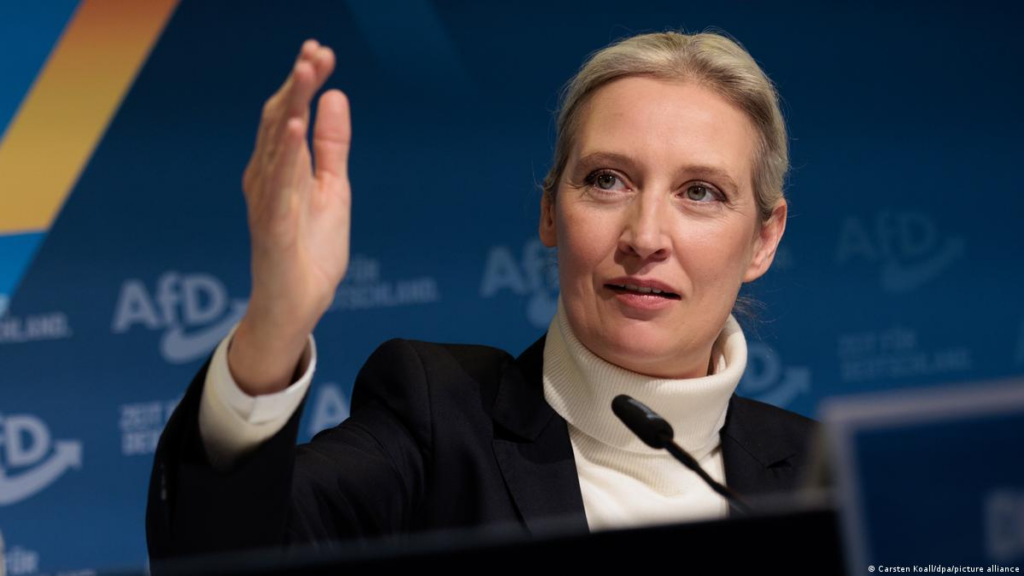
AfD leader Alice Weidel has dominated headlines in recent months, particularly due to her controversial statements that have drawn the ire of many in Germany. Accusations regarding her use of Nazi slogans have sparked intense discussions around right-wing extremism in Germany, challenging her party’s stance on such issues. While critics, including the Federal Office for the Protection of the Constitution, scrutinize her rhetoric, experts like Volker Boehme-Neßler assert that there is insufficient evidence to label Weidel as a right-wing extremist. This ongoing controversy continues to fuel public debate, with Weidel facing significant criticism from various sectors of society. As the political climate shifts, the implications of her statements may reshape perceptions of the AfD as a whole.
The figure of Alice Weidel has become central to the dialogue about nationalist sentiments and extremist rhetoric in Germany. As the leading voice of the Alternative für Deutschland (AfD), she stands at the forefront of a movement that challenges traditional political norms. The controversy surrounding her remarks often revolves around accusations of adopting slogans reminiscent of Germany’s dark past. Critics argue that such language not only promotes divisive ideologies but also raises alarms regarding the implications of right-wing populism. This unsettling intersection of political discourse and historical context invites deeper examination of the future of Germany’s democratic landscape.
Controversial Statements by AfD Leader Alice Weidel
Alice Weidel, the leader of the Alternative für Deutschland (AfD), has once again sparked outrage with her remarks that have been interpreted as alluding to Nazi ideologies. Her use of phrases that evoke historical hate has intensified the scrutiny she faces, leading to widespread debates about the boundaries of political rhetoric in Germany. As the AfD continues to position itself on the far-right fringes of the political spectrum, Weidel’s statements appear to serve as ammunition for critics who accuse the party of harboring extremist views.
Despite the backlash, legal expert Volker Boehme-Neßler argues that there is insufficient evidence to classify Weidel or the AfD as outright right-wing extremists. He emphasizes the need for objective criteria when labeling political figures, which can complicate the public discourse surrounding Weidel’s rhetoric. This position highlights the tension between freedom of speech in political contexts and the historical sensitivities surrounding Nazi-era expressions in contemporary Germany.
The AfD Controversy and Its Implications for German Politics
The ongoing controversy surrounding the AfD and its leader Alice Weidel has significant implications for the political landscape in Germany. As right-wing extremism becomes an increasingly pressing issue, debates are intensifying over how parties like the AfD fit into the nation’s political framework. Weidel’s latest comments and her contentious relationship with the Federal Office for the Protection of the Constitution have further polarized public opinion, leading many to question whether the AfD represents a legitimate political movement or a resurgence of extremist ideologies.
Furthermore, the role of the Federal Office for the Protection of the Constitution is crucial in monitoring potential threats posed by far-right groups. The ongoing evaluations and classifications of individuals like Weidel affect not only public perceptions of the AfD but also how mainstream parties engage with them. The challenges in addressing right-wing extremism arise from the delicate balance between democratic principles and safeguarding against hate-driven politics.
Alice Weidel’s Criticism of the Federal Office for the Protection of the Constitution
Alice Weidel’s frequent criticism of the Federal Office for the Protection of the Constitution reflects a broader disdain some right-wing figures have for state institutions that monitor extremist activities. By challenging the credibility of this office, Weidel seeks to undermine its authority and assert the AfD’s narrative as a legitimate political voice, despite the party’s controversial slogans and history. This dynamic raises questions about the accountability of political figures and institutions tasked with protecting democratic values.
The criticism extends beyond just Weidel’s personal sentiments; it symbolizes a larger strategy among right-wing populist parties, which often portray state institutions as left-leaning and biased. By framing the Federal Office for the Protection of the Constitution as antagonistic towards them, leaders like Weidel aim to rally their base while simultaneously attempting to diminish the perceived legitimacy of any oversight of their actions and ideologies.
The Discourse on Right-Wing Extremism in Germany
The discourse surrounding right-wing extremism in Germany is fraught with complexity, particularly in light of the AfD’s rising influence in recent years. Discussions often center around specific individuals, such as Alice Weidel, whose statements can either perpetuate or challenge the narrative of right-wing extremism. The continued analysis of her speeches against the backdrop of historical context reveals a delicate balancing act in Germany’s approach to extremism versus free expression.
As public attention remains focused on extremism, there is a growing concern about how the country’s political parties respond to the threat posed by extremism. By engaging in proper discourse around figures like Weidel and the AfD, political leaders can influence perceptions and potentially curb the normalization of extremist rhetoric within political debates.
The Legacy of Nazi Ideology in Contemporary Politics
The legacy of Nazi ideology looms large over contemporary political discussions in Germany, particularly when figures like Alice Weidel employ slogans reminiscent of that dark chapter in history. These echoes of past extremism compel many citizens to remain vigilant against sentiments that could lead to similar ideologies resurfacing. As Germany grapples with its historical identity, the rise of right-wing parties like the AfD challenges the nation’s commitment to a democratic and inclusive future.
The invocation of Nazi slogans not only challenges the foundations of Germany’s post-war democracy but also serves as a reminder of the importance of fostering a political culture that prioritizes tolerance and understanding. As debates continue about the implications of such language, it becomes increasingly vital for citizens and politicians alike to engage thoughtfully with the past, ensuring that history does not repeat itself.
Weidel’s Political Strategy and Its Wider Effects
Alice Weidel’s political strategy seems to be rooted in polarizing rhetoric designed to galvanize the AfD’s base. By invoking controversial statements, she effectively positions herself as a challenger to the political status quo, appealing to voters disillusioned with traditional parties. This tactic often invites backlash but also serves to energize a segment of the electorate that values provocative discourse over diplomatic norms.
The wider effects of this approach can be seen in the increasing normalization of extreme viewpoints within political conversations. As Weidel and others in the AfD continue to assert their positions, the implications for electoral dynamics become significant, impacting how mainstream parties adapt their platforms to counter the rise of right-wing extremism. The ongoing reaction to her statements can also shape the broader perception of the AfD within the political sphere.
Public Reactions to Alice Weidel’s Controversies
Public reactions to Alice Weidel’s controversial statements are varied and highlight the deep divisions within German society regarding issues of nationalism and identity. Many individuals vehemently criticize her for trivializing the past, arguing that such rhetoric is a dangerous play that can incite further division. This public sentiment underscores the broader anxiety around the normalization of extremist viewpoints in political discourse.
Conversely, some supporters view Weidel’s rhetoric as a necessary challenge to political correctness, believing that she speaks truths that need to be heard. This division illustrates a significant ideological rift in Germany, as societal debates on freedom of speech and historical remembrance continue to evolve amidst an increasingly active far-right movement.
The AfD’s Positioning in German Politics
The AfD’s political positioning has seen it firmly entrench itself as a significant force on the right, often adopting populist tactics to resonate with disenfranchised voters. Alice Weidel, as the party leader, navigates this landscape by invoking narratives that challenge the established political order, which is seen as out of touch with the concerns of ordinary citizens. This positioning has made the AfD a primary representative of right-wing sentiment, but it has also earned them criticism for fostering a divisive atmosphere that could threaten societal cohesion.
Political analysts observe that Weidel’s leadership style may redefine how political parties engage with issues of nationalism and conservatism in Germany. As the AfD continues to advocate for more extreme policies, there is a growing discussion about the future of German politics and the potential legitimization of right-wing rhetoric in parliamentary discourse.
Addressing Right-Wing Extremism and Legal Frameworks
As Germany confronts the realities of right-wing extremism, the role of legal frameworks becomes crucial in maintaining democratic integrity. The government, along with institutions like the Federal Office for the Protection of the Constitution, must navigate the complexities of identifying when rhetoric crosses the line into extremism. The ongoing debate surrounding Alice Weidel’s remarks exemplifies the challenges faced in applying these frameworks effectively.
Furthermore, society must grapple with ensuring that laws designed to protect against extremism do not inadvertently stifle legitimate political expression. Balancing these interests is an ongoing challenge as Germany seeks to uphold its democratic values while confronting the threats posed by rising far-right ideologies represented by figures like Weidel.
Frequently Asked Questions
What controversies surround AfD leader Alice Weidel?
AfD leader Alice Weidel has been at the center of numerous controversies, particularly concerning her use of Nazi slogans, which have sparked sharp criticism and debates about right-wing extremism in Germany. These incidents have led to public outrage and scrutiny over her political statements and the implications for the AfD party.
Has Alice Weidel been classified as a right-wing extremist by the Federal Office for the Protection of the Constitution?
Despite controversies surrounding her remarks, constitutional law expert Volker Boehme-Neßler has stated that there are no objective indications to classify Alice Weidel as a right-wing extremist. This assertion reflects the ongoing debate about her views and the AfD’s positioning within the spectrum of German politics.
What are the implications of Alice Weidel’s statements regarding Nazi slogans?
Alice Weidel’s statements have significant implications for her credibility and the AfD party’s image, especially regarding right-wing extremism in Germany. The backlash from her use of Nazi slogans reignites discussions about the party’s ideology and the perception of its leaders by the public and political institutions.
How has public perception shifted regarding Alice Weidel and the AfD amid recent controversies?
Public perception of Alice Weidel and the AfD has become increasingly polarized due to her controversial Nazi slogans and the scrutiny from political analysts. While some support her outspoken nature, others view her statements as dangerous and indicative of rising right-wing extremism in Germany.
What criticism has Alice Weidel directed at the Federal Office for the Protection of the Constitution?
Alice Weidel has criticized the Federal Office for the Protection of the Constitution by questioning its assessments of her and the AfD, implying bias in its evaluations of right-wing extremism. This criticism highlights her defiance against state scrutiny and contributes to the ongoing dialogue about political freedoms in Germany.
| Key Point | Details |
|---|---|
| Controversial Statements | Alice Weidel has made statements reminiscent of Nazi slogans. |
| Expert Opinion | Volker Boehme-Neßler, a constitutional law expert, sees no reason to classify her as a right-wing extremist. |
| Political Impact | Weidel’s remarks have ignited political debate in Germany, raising questions about their implications. |
Summary
AfD leader Alice Weidel has sparked significant controversy with her provocative statements that echo Nazi slogans. Despite the outcry, constitutional law expert Volker Boehme-Neßler argues that there is no objective evidence to label her as a right-wing extremist. The discourse surrounding her remarks continues to evoke strong reactions in the political landscape of Germany, emphasizing the ongoing tensions and debates regarding extremism in political rhetoric.

