
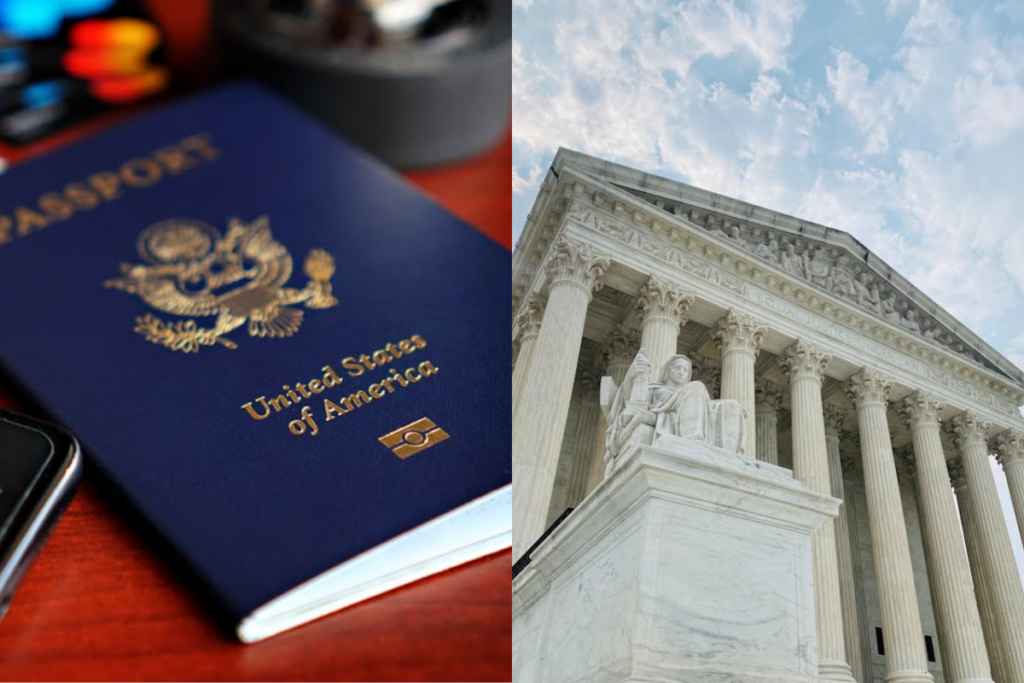
Birthright citizenship is a vital concept rooted in the U.S. Constitution, granting citizenship to those born on American soil. Recently, this principle has come under scrutiny as President Trump has introduced an executive order that aims to restrict its application. The U.S. Supreme Court is set to weigh in on this controversial issue, as they consider the implications of Trump’s birthright citizenship ruling. With historical precedent dating back to the 19th century, the potential changes could significantly affect citizenship for children born in the U.S. The ongoing debate highlights the delicate balance between immigration policy and constitutional rights, raising questions about the future of the 14th Amendment citizenship.
The principle of automatic citizenship at birth is increasingly at the forefront of legal discussions, particularly in light of recent political actions by the Trump administration. This fundamental right, which has historically ensured that all individuals born in the United States receive full citizenship, faces potential alteration. As challenges arise and cases progress through the courts, the ramifications of these decisions could redefine how legal status is determined for the next generation. With the U.S. Supreme Court poised to review the potential restrictions under Trump’s directive, the landscape of nationality rights may shift dramatically. Consequently, understanding terms like ‘inherited citizenship’ and ‘native-born citizenship’ becomes crucial as we navigate through this evolving dialogue.
Understanding Birthright Citizenship in the U.S.
Birthright citizenship is a fundamental principle established by the 14th Amendment of the United States Constitution. This landmark amendment guarantees that every person born on U.S. soil is automatically recognized as a U.S. citizen, a doctrine firmly rooted in the nation’s laws since its ratification in 1868. This right applies irrespective of the immigration status of the parents, offering a legal and moral foundation for citizenship that has withstood the test of time.
However, recent developments have put this cornerstone of American identity into jeopardy. With President Trump’s executive order aiming to redefine this principle, the implications of altering birthright citizenship could have profound effects on millions of individuals born in the United States. The upcoming rulings from the U.S. Supreme Court could either affirm or dismantle this historic right, making the legal discourse around birthright citizenship increasingly urgent for many families across the country.
The Impact of Trump’s Executive Order on Citizenship
Trump’s executive order alters the established principle of birthright citizenship by proposing that citizenship will be denied to children whose parents are not U.S. citizens or do not possess a permanent residency card. This move has stirred significant debate around the interpretation of the 14th Amendment and has attracted legal challenges from advocacy groups. Many argue that this order violates existing legal standards by interfering with the rights guaranteed to children born in the U.S.
As the legal landscape evolves, the U.S. Supreme Court’s involvement is paramount. The court is set to deliberate on the legality of Trump’s order after a lower court blocked its enactment, citing conflicts with constitutional protections. The decision made by the Supreme Court is anticipated to set a precedent that could influence citizenship laws for generations, which underscores the necessity for vigilant monitoring of this issue by citizens and lawmakers alike.
The Role of the U.S. Supreme Court in Citizenship Cases
The U.S. Supreme Court plays a crucial role in interpreting the Constitution and its amendments, particularly in cases involving citizenship rights. As the final arbiter, the Supreme Court’s rulings on controversial topics can initiate significant shifts in legal precedent. In this scenario, the justices will weigh the arguments surrounding Trump’s executive order against the foundational principles enshrined in the 14th Amendment.
Furthermore, the Court’s upcoming ruling on this contentious issue is critical for families affected by the proposed changes to citizenship policies. Legal experts and citizens alike are eager to see how the justices will navigate the complexities presented by this executive action, especially given the historical context of birthright citizenship and its implications for children born in the U.S. without respect to their parents’ citizenship status.
Examining the 14th Amendment and Its Implications
The 14th Amendment, ratified in 1868, is a pivotal element of American jurisprudence as it formalizes the citizenship rights of all individuals born or naturalized in the United States. This amendment was initially introduced to secure the rights of former slaves post-Civil War, but its scope has broadened over time to include all individuals born on U.S. soil. It assures that no state can make or enforce any law that abridges the privileges or immunities of U.S. citizens.
In recent years, the interpretation of the 14th Amendment has come under scrutiny, particularly in relation to birthright citizenship. With Trump’s efforts to challenge established norms, the debate sobre immigration and the legal status of children of undocumented immigrants is reigniting discussions about the Amendment’s relevance. The Supreme Court’s interpretation of this Amendment in the context of Trump’s executive order will significantly influence future citizenship laws and immigrant rights.
Challenges to Birthright Citizenship Policy
The legal challenges posed against Trump’s executive order reflect a broader societal debate on immigration policy and human rights. Organizations advocating for immigrant rights have consistently argued that the push to eliminate birthright citizenship fundamentally undermines the rights of children and their families. Such changes are viewed as a direct attack on the core values of equality and justice that the 14th Amendment aims to uphold.
As court cases regarding this executive order progress, the debate continues to polarize communities across the nation. Many Americans are mobilizing to safeguard birthright citizenship as a crucial aspect of American identity, highlighting the potential negative societal impacts if these policies were to be implemented. The upcoming Supreme Court rulings will be pivotal in either reinforcing or curtailing these rights.
Potential Outcomes of Supreme Court Rulings
The outcomes of the Supreme Court’s consideration of Trump’s executive order could have far-reaching consequences, potentially reshaping national discourse on immigration and citizenship. If the court upholds the president’s directive, we could see a significant decrease in the number of children recognized as U.S. citizens, adversely affecting millions nationwide. This could alter family structures and have lifestyle ramifications for countless families who may be faced with new uncertainties regarding their legal status.
Conversely, if the Supreme Court strikes down the executive order, it would reaffirm the longstanding principle of birthright citizenship, fortifying the protections granted under the 14th Amendment. Such a ruling would not only maintain the status quo for many families but also potentially spur legislative action to prevent similar executive challenges in the future, thereby strengthening the legal framework surrounding citizenship rights.
Public Opinion on Birthright Citizenship Changes
Public opinion on birthright citizenship has shown significant division, reflecting broader societal attitudes toward immigration. While some citizens support measures to restrict citizenship based on parental status, others vehemently argue that these changes violate fundamental human rights. Polls indicate that many Americans view birthright citizenship as an essential element of American values, cementing the idea that anyone born in the country should enjoy the same rights and privileges.
This division in public sentiment can complicate the political landscape as lawmakers grapple with the implications of Trump’s executive order. As debates intensify, advocacy groups are mobilizing campaigns to raise awareness about the importance of birthright citizenship, emphasizing humanitarian aspects while urging the public to recognize the potential consequences of altering established laws.
The Future of Citizenship Rights in America
The future of citizenship rights in America hangs in the balance as the United States grapples with changing immigration policies and evolving interpretations of the Constitution. As courts deliberate on the ramifications of Trump’s executive order, both the short-term and long-term futures of citizenship rights remain uncertain. The decisions made in these high-stakes cases will likely influence how society defines legal citizenship and the rights afforded to those born within its borders.
Moreover, as the nation moves forward, debates surrounding birthright citizenship will continue to ignite discussions on America’s values and principles, prompting citizens and lawmakers alike to evaluate what it truly means to be a citizen in a country built on ideals of equality and inclusion. As grassroots movements gain momentum advocating for the preservation of birthright citizenship, the ongoing legal battles will shape an essential chapter in America’s civic story.
Navigating Legal Challenges Related to Citizenship
Navigating the legal complexities surrounding citizenship in the U.S. has become increasingly difficult in the face of executive orders and proposed changes to established laws. Families facing challenges under Trump’s order are often left to wonder about their rights and the status of their children as U.S. citizens. With cases reaching the U.S. Supreme Court, it is paramount for those affected to remain informed and engaged in the ongoing debates.
Legal advocacy is crucial in this context, providing affected families with representation and guidance in navigating potential changes to their citizenship status. Organizations dedicated to upholding immigrant rights are mobilizing support to ensure that voices are heard in the legal system, reminding citizens of the fundamental importance of birthright citizenship as a central tenant of American identity.
Frequently Asked Questions
What is the significance of birthright citizenship in the U.S. Constitution?
Birthright citizenship is established by the 14th Amendment of the U.S. Constitution, which grants citizenship to anyone born on U.S. soil, ensuring that children born in the U.S. automatically receive citizenship. This principle has been upheld since the 19th century and is crucial for maintaining the rights of millions of U.S. citizens.
How has the Trump executive order impacted birthright citizenship?
The Trump executive order aims to change the long-standing principle of birthright citizenship by denying citizenship to children born in the U.S. unless at least one parent is a U.S. citizen or holds a permanent residency card, or ‘Green Card’. This order has prompted legal challenges and discussions about the future of citizenship rights in America.
What role does the U.S. Supreme Court play in determining the future of birthright citizenship?
The U.S. Supreme Court’s role is pivotal in addressing challenges related to birthright citizenship. It will hear arguments regarding President Trump’s executive order, which seeks to restrict the principle established by the 14th Amendment. The Court’s ruling will have significant implications on citizenship for children born in the U.S.
What are the potential consequences of the birthright citizenship ruling by the Supreme Court?
If the Supreme Court upholds Trump’s order, the consequences could include the denial of U.S. citizenship for children born to non-citizen parents, fundamentally altering the landscape of citizenship in America and impacting millions of families. A ruling that supports the birthright citizenship principle would maintain the status quo, affirming the rights established under the 14th Amendment.
What arguments are being presented against the Trump executive order on birthright citizenship?
Opponents of the Trump executive order argue that it violates the 14th Amendment, which guarantees birthright citizenship. Legal challenges cite historical precedent and the importance of protecting the rights of children born in the U.S. regardless of their parents’ immigration status.
| Key Points | Details |
|---|---|
| Trump’s Action | Overrode birthright citizenship through an executive order. |
| Historical Context | Birthright citizenship has been a principle since the 19th century. |
| Supreme Court Involvement | The U.S. Supreme Court will address Trump’s restriction on birthright citizenship. |
| Eligibility Changes | Children born in the U.S. will be denied citizenship if parents are not citizens or permanent residents. |
| Legal Challenges | A lower court blocked the order, claiming it violates the 14th Amendment. |
| Upcoming Ruling | Supreme Court expected to rule by end of June after hearing arguments. |
Summary
Birthright citizenship is a significant principle in U.S. law that automatically grants citizenship to anyone born on U.S. soil. However, recent actions by former President Trump have challenged this long-standing norm through an executive order. This has sparked legal disputes, with the U.S. Supreme Court set to determine the legality of Trump’s order and its implications on citizenship eligibility. The outcome of this case will have lasting effects on the interpretation of birthright citizenship in the United States.

