
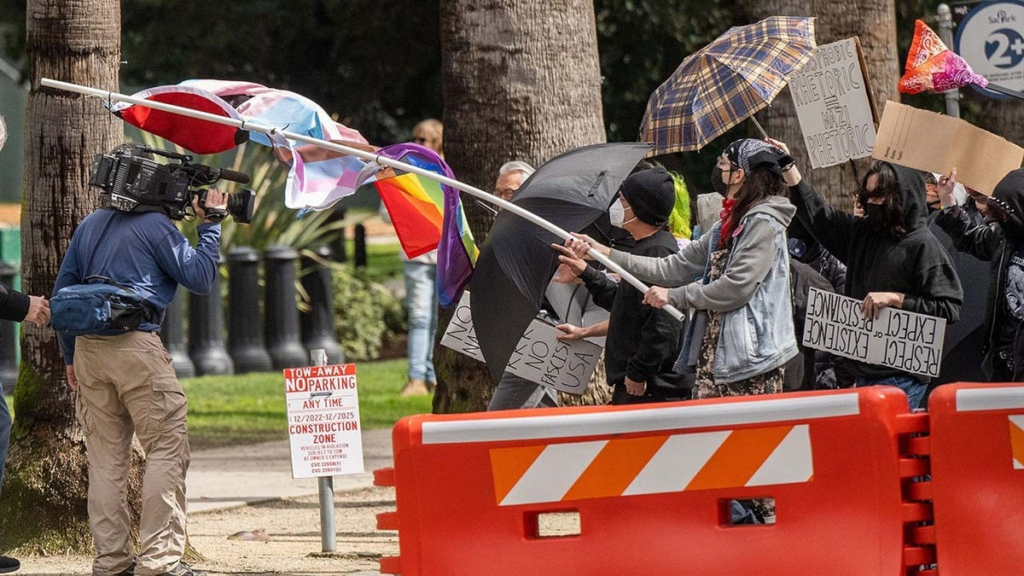
Antifa violence has become a pressing concern as left-wing extremism takes center stage in contemporary political discourse. No longer confined to targeting just right-wing extremists, the Antifa movement is broadening its scope, targeting anyone deemed a “fascist.” This shift raises questions about the dynamics of political violence, as individuals and groups find themselves in the crosshairs of an increasingly aggressive ideology. The recent Hammer Gang trial has brought to light these extremist dynamics, highlighting a troubling trend where diverse political opinions are met with aggressive hostility. As the confrontation escalates, it challenges societal norms and prompts a reevaluation of how we safeguard free expression in a thriving democracy.
The recent surge in violent actions attributed to the Antifa movement reflects a broader trend of left-wing radicalism within society. This shift in focus indicates that various political factions are now viewed as potential adversaries, leading to a rise in politically motivated aggression. Particularly alarming is how these groups, often driven by a fervent ideology, are not just reacting but actively seeking out those they perceive as threats to their narrative. The implications of this radicalization are profound, raising important questions about civil liberties and the extent of acceptable dissent. As we analyze these trends, understanding the motivations and behaviors within such groups becomes critical to addressing and mitigating the risks of escalating political hostilities.
The Rise of Antifa Violence: A New Era of Political Conflict
Antifa violence has surged in recent years, marking a critical shift in how left-wing extremism is manifesting in contemporary political landscapes. Historically, political violence was often associated with right-wing extremists, but recent events, particularly in places like Gießen, showcase how Antifa is actively targeting individuals and groups they deem as ‘fascist’. This increased aggressiveness not only reflects a growing intolerance towards opposing viewpoints but also signals a dangerous escalation in political conflict, thrusting Antifa into the limelight as a significant player on the radical left.
Reports from the ongoing trial of the ‘Hammer Gang’ have further highlighted the extremist dynamics that underpin these violent encounters. Experts, such as Peter R. Neumann, suggest that this evolution of Antifa’s tactics is not an isolated phenomenon but rather part of a broader trend in political violence that includes both left and right factions. As the ideological battleground expands, the confrontations become increasingly intense, raising concerns about the implications for public safety and civil discourse.
Understanding Left-Wing Extremism Through Antifa’s Actions
Left-wing extremism, exemplified by organizations like Antifa, has been gaining momentum as it challenges the status quo and seeks to disrupt what it perceives as systemic injustices. Antifa’s methods—often employing violent and aggressive tactics—underline a complex landscape of opposition against perceived fascism and injustice. This form of extremism reflects not only a desire for ideological purity but also a willingness to engage in confrontational violence as a means of achieving political goals.
The labels that Antifa assigns to their targets—ranging from ordinary citizens to political leaders—are significant. By defining various individuals as ‘fascists’, Antifa legitimizes their confrontational approaches, fostering an environment where political violence is accepted among their ranks. This dynamic complicates discussions around political engagement, as many individuals fear being subjected to violence simply for expressing opposing viewpoints. As Antifa continues to broaden its scope, understanding the nuance behind left-wing extremism becomes increasingly critical for navigating these turbulent political waters.
Antifa Targets: Who Are They Really Fighting Against?
The Antifa movement has dramatically expanded its targets in recent years, making it imperative to understand who these groups are focusing their actions against. Traditionally, Antifa might have zeroed in on avowed neo-Nazis and right-wing extremists. However, as the complexity of political landscapes evolves, so do their targets, now frequently including moderate activists and even mainstream political figures. This shift from targeting the fringe to mainstream perceptions raises questions about the motivations behind such actions and the implications for civil society.
This broadening of targets often creates a chilling effect, deterring individuals from expressing counterarguments or dissenting opinions. As everyday citizens find themselves caught in the crosshairs of Antifa’s anti-fascist campaign, the fear of violence can stifle productive political discourse. Thus, understanding the landscape of Antifa’s targets is essential for anyone engaged in political activism or simply looking to ensure a safe and inclusive dialogue within civic spaces.
Political Violence: Antifa and the Legacy of Left-Wing Extremism
Political violence has deep roots in left-wing extremism, and Antifa has re-energized this debate through its actions in recent years. The ideological underpinnings that drive such groups are often steeped in revolutionary rhetoric and an inclination to use violence as a tool for change. With their recent escalation in confrontations, the legacy of left-wing violence may evolve into a more sustained struggle that challenges democratic norms and civic order.
Furthermore, the implications of Antifa’s tactics extend beyond immediate confrontational episodes. As political violence entrenches itself within the methodology of protest, the lines between justified action and extremism can become dangerously blurred. This interplay serves as a reminder of the necessity for thoughtful engagement and dialogue across the political spectrum to prevent further spiraling into violence.
The Hammer Gang Trial: Insights into Left-Extremist Dynamics
The trial of the ‘Hammer Gang’ has emerged as a pivotal moment in understanding the dynamics of left-wing extremism. This case highlights not only the violent activities of the group but also the psychological and social factors that drive individuals toward extremism. The courtroom proceedings shed light on the organizational structures and motivations behind these groups, offering a glimpse into the mindsets that fuel such a radical ideology.
As observers analyze the testimonies and evidence presented, the trial has become a microcosm of the larger issues surrounding political violence in society. It emphasizes how these extremist dynamics can infiltrate mainstream political discourse, forcing society to grapple with uncomfortable truths about ideological extremism. Understanding these narratives is essential for addressing the root causes of violence and working toward potential solutions that prioritize dialogue over conflict.
The Social Implications of Antifa’s Growing Influence
As Antifa gains more notoriety in the public sphere, its influence on societal norms and values cannot be understated. The group’s approach has challenged traditional frameworks of protest and resistance, often prioritizing confrontational tactics over dialogue—reshaping how average citizens perceive political engagement. This shift has significant implications, as it alters public expectations of social movements and the acceptable boundaries of political expression.
Moreover, the increasing visibility of Antifa has raised questions about the impacts of radicalization in society. With its distinctive ideology centered around anti-fascism, Antifa appeals to a wide range of individuals, thereby creating a diverse coalition that can either promote social justice or lead to further polarization. Understanding these dynamics is crucial in navigating the space between activism and extremism, as society works to find a balance that fosters healthy discourse.
Antifa’s Tactics: Defining New Forms of Protest
Antifa’s tactics embody a new form of protest that diverges from conventional demonstrations, incorporating elements of direct action and sometimes violent confrontation with perceived threats. These methods raise crucial questions about the efficacy of protest strategies aimed at disrupting far-right gatherings and other events that fall under their scrutiny. As traditional forms of activism are challenged by more radical approaches, the broader implications for political engagement need to be examined.
While some supporters argue that such tactics are necessary to combat rising extremism, critics warn that they can alienate potential allies and breed resentment among the populace. This ongoing debate about the legitimacy and effectiveness of Antifa’s tactics thus plays a critical role in shaping future movements and political engagements across the ideological spectrum.
Localization of Antifa Activity: From Global to Local
Antifa’s influence is not confined to prominent urban centers; rather, its local chapters are sprouting up across diverse regions, adapting their tactics to fit their communities. This localization of Antifa activity complicates the narrative surrounding left-wing extremism, as each chapter may focus on specific local issues while still aligning with broader ideological goals. Understanding these localized movements is integral to grasping the overall impact of Antifa in contemporary political landscapes.
As Antifa continues to target various community issues—from racial justice to anti-fascism—their localized approach appeals to younger activists who seek immediate relevance in their political engagement. This grassroots activism not only fosters a community of like-minded individuals but also raises significant questions about the potential for collaboration with more mainstream political entities. The challenge remains to maintain a balance of passionate activism without succumbing to the violent tendencies that have characterized certain instances of Antifa involvement.
Future Trajectories for Antifa and Left-Wing Extremism
As we look toward the future, the trajectories of Antifa and other forms of left-wing extremism remain uncertain. The public’s response to political violence will heavily influence how these groups evolve and adapt their strategies in the coming years. The legitimacy of their objectives continues to be debated, even as their tactics spark fear and concern among a broader audience.
Moving forward, it is crucial for communities, scholars, and policymakers to engage in discussions that address the underlying issues of extremism while promoting peaceful forms of activism. By fostering an environment where diverse viewpoints can be shared, society may be able to mitigate the risks associated with political violence and reinforce the democratic values that guide civic participation.
Frequently Asked Questions
What is the impact of Antifa violence on left-wing extremism?
Antifa violence exemplifies a growing trend within left-wing extremism, where groups increasingly target individuals and organizations they label as ‘fascists.’ This shift highlights the evolution of extremist dynamics, indicating that those outside of traditional right-wing targets are now at risk.
How do Antifa targets influence political violence in society?
Antifa targets have broadened, leading to heightened political violence. By labeling more individuals as fascists, Antifa escalates confrontations with a wider array of opponents, effectively challenging the entire political system. This behavior contributes to a charged environment that may incite further violence.
What can be learned from the Hammer Gang trial regarding Antifa violence?
The Hammer Gang trial sheds light on the extremist dynamics of Antifa violence, showcasing how left-wing extremist groups can mobilize and organize to confront perceived threats. It serves as a cautionary tale about the potential for violence in politically charged groups, emphasizing the importance of understanding their motivations and tactics.
Are there specific incidents of Antifa violence that illustrate their expanding targets?
Yes, recent incidents of Antifa violence demonstrate a marked expansion in their targets, moving beyond typical right-wing extremists to include individuals from a range of political affiliations. This expansion suggests a more aggressive stance against any perceived ideological opponents, raising concerns about safety and political discourse.
What role does Antifa play in the current landscape of political violence?
Antifa plays a significant role in today’s landscape of political violence, acting as a response to what they perceive as rising fascism. Their strategies often include direct action and confrontation, which can escalate tensions and lead to violence against various political factions. This raises important questions about extremism and societal safety.
| Key Point | Description |
|---|---|
| Expansion of Targets | Antifa is increasingly targeting a broader array of individuals, labeling them as ‘fascists’. |
| New Left-Extremist Dynamics | Expert Peter R. Neumann points out a shift in tactics among left-extremists, moving beyond just confronting right-wing extremists. |
| Confrontation with the System | The ultimate goal appears to be a confrontation with the entire societal system rather than isolated groups. |
Summary
Antifa violence is emerging as a significant concern as the group’s tactics evolve beyond targeting only right-wing extremists. Recent events in Gießen, characterized by violent protests and clashes, indicate a broader strategy where various individuals are labeled as ‘fascists’ and subsequently targeted. This shift highlights the growing complexity of left-wing extremism and poses challenges for public safety and law enforcement. Experts like Peter R. Neumann suggest that this trend may lead to more widespread confrontations with societal structures, indicating a potential escalation in both violence and the sociopolitical climate.

