
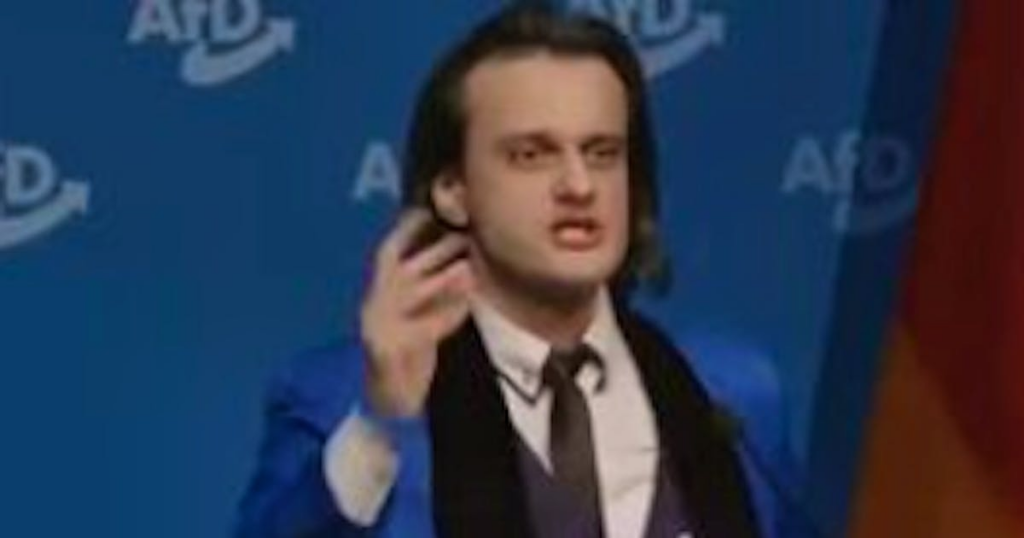
At the recent AfD youth congress, Alexander Eichwald delivered a provocative speech that mimicked the style of historical figures like Hitler, leaving many in shock. This Eichwald speech has ignited discussions about the current state of political discourse, with journalist Hasnain Kazim remarking, “All of this shows that we are living in truly bizarre times.” As Eichwald’s address unfolded, it became clear that the thin line separating political satire from grim reality is becoming increasingly blurred. The Eichwald controversy emphasizes how our atmosphere has become charged with unprecedented reactions and critique. With such events, one must question where we stand amid this bizarre political climate and what it means for our future conversations.
In a striking display of rhetoric, Alexander Eichwald’s recent address at the youth gathering of the Alternative for Germany (AfD) has raised eyebrows and stirred intense debate. By employing an oratory style reminiscent of controversial figures, Eichwald’s remarks have drawn attention not only for their content but also for their theatrical flair. The incident has been met with a flood of opinions, including sharp criticism from media personalities like Hasnain Kazim, who highlighted the peculiarity of our times. As the lines between humor and serious political commentary blur further, such moments remind us of the challenges facing our contemporary political landscape. The ongoing discourse around the Eichwald speech reveals a society grappling with its views on identity, ideology, and the nature of political engagement.
The Quirky Speech of Alexander Eichwald at the AfD Youth Congress
Alexander Eichwald’s speech at the AfD youth congress drew significant attention not only due to its quirky delivery but also for its controversial content reminiscent of historical figures like Hitler. As Eichwald addressed the audience, his tone and mannerisms blurred the lines between humor and seriousness, prompting many to question the appropriateness of such political satire in today’s context. The speech became a focal point for discussions about the current state of political discourse in Germany and beyond.
Critics argued that Eichwald’s performance was not just a reflection of personal style but a symptom of the bizarre political climate we’ve been witnessing in recent years. The juxtaposition of outlandish rhetoric with serious political content has made it increasingly difficult for the public to discern genuine discussions from exaggerated dramatizations. This phenomenon raises essential questions: Has political satire gone too far, and are we risking desensitization to alarming ideologies?
Hasnain Kazim’s Comments on Eichwald’s Speech and Political Climate
Journalist Hasnain Kazim’s observations regarding Alexander Eichwald’s theatrical presentation at the AfD youth congress are particularly noteworthy. Kazim remarked, ‘All of this shows that we are living in truly bizarre times’, highlighting how such performances no longer shock but instead fit into a growing trend where extreme rhetoric is normalized. This shift in the political landscape suggests a troubling acceptance of potentially dangerous ideas dressed up as humor or political commentary.
Kazim’s comments prompt a broader discussion about the role of journalists in interpreting political satire amidst a chaotic political era. The responsibility lies not only with the speakers, like Eichwald, but also with media professionals to provide context and critique. As political commentary intertwines with humor, it raises the stakes for how audiences process and react to these ideas, making Kazim’s insights crucial in understanding the implications of such public speech.
The Lines Between Satire and Political Reality
Eichwald’s speech underscores a critical issue: the fading distinction between satire and political reality. In an age characterized by absurdity and outrageous political occurrences, audiences may become numb to the implications of what was once clearly understood as satire. The blurring of these lines can lead to a situation where audiences accept hyperbolic statements or absurd style as part of mainstream political engagement, which can be dangerous.
In the realm of political discourse, the challenge lies in maintaining a healthy skepticism toward both satirical expressions and legitimate political statements. Analysts argue that this merging of satire with genuine ideology presents a unique dilemma for society, as it becomes increasingly difficult to challenge ideas that seem ludicrous yet garner public support. Understanding this interplay is essential for navigating the current political landscape, as exemplified by Eichwald’s controversial moment.
Reactions to the Eichwald Controversy and Its Implications
The reactions to Alexander Eichwald’s speech at the AfD youth congress have been mixed, with some praising his boldness and others condemning the seemingly careless use of historical references. The controversy has ignited discussions across various platforms, with commentators analyzing the implications of his speech in relation to current political trends in Germany. What does Eichwald’s acceptance reveal about the young voters of the AfD, and how does it reflect shifting societal norms regarding political expression?
As the backlash continues, the Eichwald controversy raises essential questions about accountability among political figures. When humor and serious rhetoric collide, it can lead to a fracturing of societal perceptions regarding acceptable discourse. The reactions are indicative of a broader discomfort with the erosion of boundaries in political speech, emphasizing a need for reflection on how we engage with such figures and narratives in our rapidly changing political landscape.
Exploring the Bizarre Political Climate Today
In recent years, the political climate has taken on a bizarre quality that often seems more like a theatrical play than a serious arena for governance. Events such as Eichwald’s speech highlight the absurdity that can permeate political discussions, showcasing how unconventional ideas gain traction. This strange atmosphere often leaves citizens feeling bewildered and uncertain about the future, as they grapple with the consequences of embracing entertainment over substance in political dialogues.
Moreover, the influence of social media amplifies these bizarre occurrences, allowing fringe ideas to enter mainstream conversations with alarming ease. As audiences become desensitized to extreme rhetoric, they may unintentionally sanction the very ideologies they wish to combat. Thus, understanding and reflecting on the bizarre political climate is urgent, as it shapes the narrative moving forward in the public sphere.
Political Satire: A Double-Edged Sword
Political satire serves as a double-edged sword, capable of entertaining while simultaneously provoking thought. Alexander Eichwald’s speech illustrates this dichotomy perfectly, where humor intertwined with controversial statements can elicit both laughter and discomfort. The challenge remains in how such satirical performances are consumed by the public, especially in a context where lines between satire and genuine political discourse become increasingly blurred.
This form of expression can engage audiences in significant discussions about ideology and policy, yet it can also contribute to the trivialization of serious political issues. As society navigates through a boring and often chaotic political landscape, the role of satire becomes more critical than ever. It urges a reevaluation of how humor can influence political views and the need for audiences to approach such content with nuance and discernment.
The Role of Political Commentary in Shaping Perception
Political commentary plays a vital role in shaping public perception, particularly in the wake of events like Eichwald’s speech at the AfD youth congress. Commentary from figures like Hasnain Kazim adds layers of interpretation to political performances, guiding audiences to consider implications beyond mere entertainment. The influence of journalists and commentators is significant in framing discussions around controversial events, helping the public navigate the bizarre political climate effectively.
In this regard, the responsibility of journalists extends far beyond reporting; it involves critically analyzing and the societal context of such events. Commentators can either amplify the absurdity or provide insightful critiques that challenge audiences to reflect on their beliefs. As political narratives become increasingly complicated, the role of informed commentary becomes essential to fostering a well-informed citizenry capable of engaging with the ever-changing landscape.
Navigating Political Apathy in a Changing World
The bizarre nature of contemporary politics often leads to political apathy, where citizens feel overwhelmed and disengaged from the system. Alexander Eichwald’s speech serves as a stark reminder of how bizarre performances can eclipse pressing political issues, encouraging individuals to tune out rather than engage meaningfully. Apathy, in this context, poses a significant threat to democratic processes, as it diminishes public participation and accountability.
Combatting political apathy requires not only awareness of the absurdities present in political communications but also active participation in discourse. Recognizing the power dynamics at play can empower individuals to reclaim their voices, pushing back against the normalization of bizarre rhetoric. As citizens navigate through this changing world, fostering critical engagement with political satire and commentary can be instrumental in revitalizing interest in actual political processes and outcomes.
Conclusion: The Future of Political Discourse
The future of political discourse remains uncertain as we witness the effects of bizarre events like Eichwald’s speech and the mixed reactions that follow. It invites a reevaluation of the standards to which politicians are held and the extent to which satire can encroach upon serious dialogue. While some argue that these performances dilute the seriousness of political engagement, others maintain that they function as necessary outlets for critique and reflection in an increasingly surreal political environment.
Moving forward, it is essential for voters, commentators, and candidates alike to reflect on the nature of political discourse. Maintaining a balance between humor and gravity ensures that we remain engaged in meaningful discussions. As society evolves, so must our understanding of the narratives we construct and share, always considering the implications of entertainment in shaping our political landscape.
Frequently Asked Questions
What happened during Alexander Eichwald’s speech at the AfD youth congress?
During the AfD youth congress, Alexander Eichwald delivered a controversial speech that mimicked the style of Hitler, sparking significant public reaction and media coverage. His performance blurred the lines between political satire and reality, contributing to the ongoing Eichwald controversy.
How did Hasnain Kazim respond to Eichwald’s speech at the AfD youth congress?
Journalist Hasnain Kazim commented on Alexander Eichwald’s speech, stating, ‘All of this shows that we are living in truly bizarre times.’ His remarks reflect the wider sentiment about the concerning trends in political discourse, particularly in the context of the bizarre political climate surrounding such events.
Why is the Alexander Eichwald speech considered politically charged?
The Alexander Eichwald speech is deemed politically charged due to its provocative nature and the imitation of Hitler’s style, which resonates through the current political landscape. This has fueled the Eichwald controversy and represents the challenges in differentiating between political satire and genuine political rhetoric.
What does the Eichwald controversy reveal about today’s political climate?
The Eichwald controversy highlights a bizarre political climate where extreme expressions and satire are becoming commonplace. It raises questions about the state of political discourse and how individuals interpret satire in the context of serious political discussions.
In what ways does Eichwald’s speech intersect with political satire?
Eichwald’s speech at the AfD youth congress serves as an example of political satire taken to an extreme. By mimicking historical figures like Hitler, it demonstrates how satire can challenge political norms, although it can also lead to confusion about the boundaries of acceptable political commentary.
What are the implications of the bizarre political climate highlighted by Eichwald’s speech?
The bizarre political climate evident in Eichwald’s speech suggests a growing tolerance for extreme rhetoric and provocative performances, often blurring the distinction between satire and political reality. This trend raises concerns about the impact on public perception and discourse in contemporary politics.
| Aspect | Details |
|---|---|
| Speech Style | Quirky style reminiscent of Hitler |
| Event | AfD youth congress |
| Reactions | Journalist Hasnain Kazim’s comment and general public shock |
| Key Takeaway | Confusion between satire and political reality |
| Political Climate | Reflects the bizarre times we are living in |
Summary
In light of the recent incident at the AfD youth congress, Alexander Eichwald’s speech has significantly impacted the political landscape. This peculiar address highlights the increasingly blurred lines between satire and genuine political discourse, responding to the sensational nature of current events. The stir caused by Eichwald’s remarks sheds light on a broader sentiment that resonates with many, indicating a society grappling with its own absurdities. As we analyze the implications of such speeches, it’s essential to recognize how they shape our understanding of political dialogue today.

